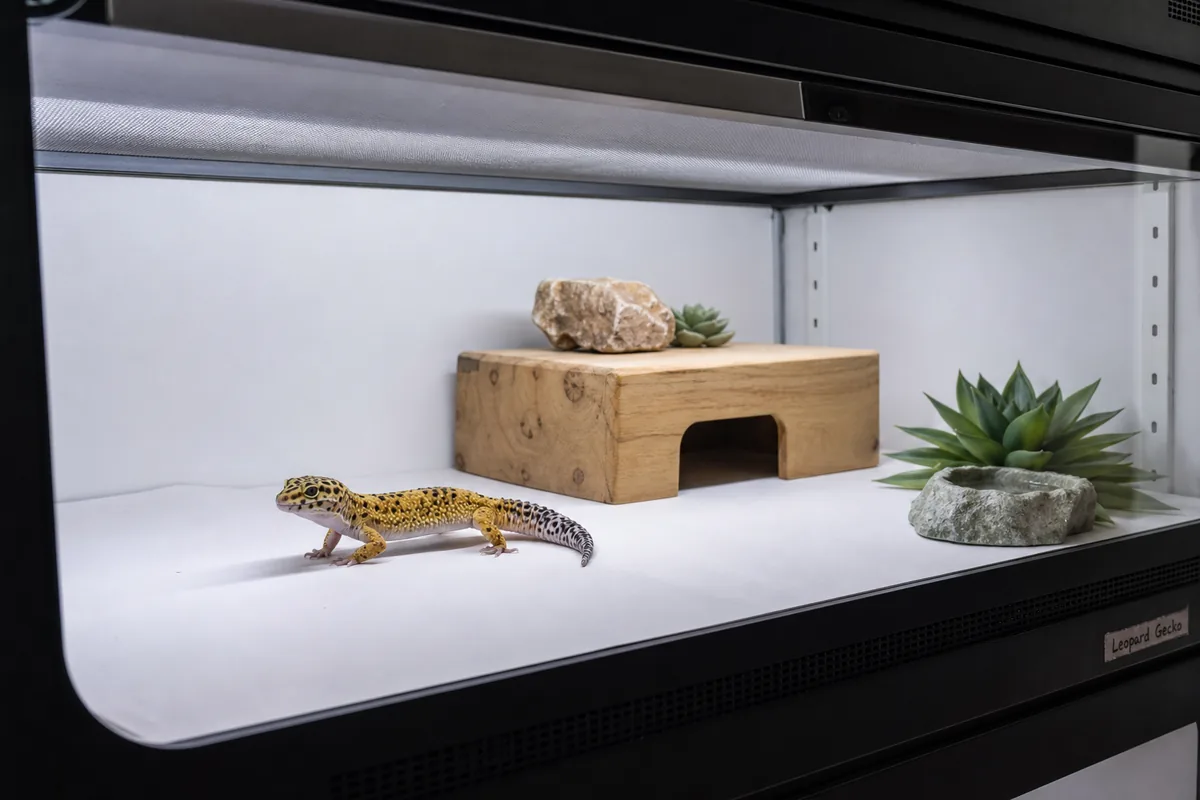
Leopard Gecko Tank Setup: The Crepuscular Keeper's Reptile
The leopard gecko tank setup is one of the most forgiving in reptile keeping, which is why this species earns its reputation as the best beginner lizard. Before your leopard gecko comes home, get the heat working and test it for 48 hours straight.
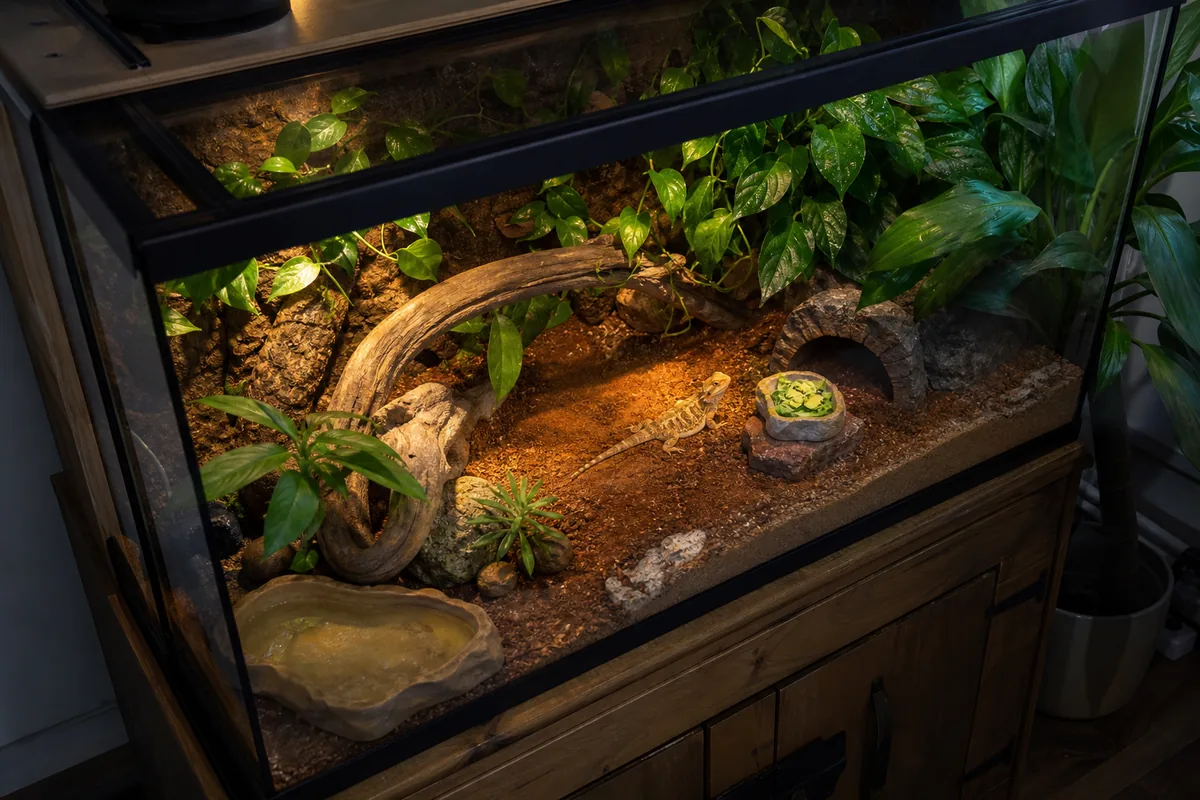
Adults need a 20-gallon long tank (30x12x12 inches) at minimum. The "long" shape matters because footprint is more important than height for ground-dwelling species.
Temperature Zones: 88-92°F Belly Heat Is the Core Requirement
The leopard gecko is crepuscular, most active at dusk and dawn, and relies on belly contact with warm surfaces rather than basking under overhead lamps like Pogona vitticeps.
The warm side floor surface must reach 88-92°F measured with a digital probe or IR gun at floor level. The cool side sits at 72-78°F.
Ambient air temperature ranges from 75-85°F across the enclosure.
- Warm floor surface: 88-92°F (under the warm hide, measured with probe)
- Cool side floor: 72-78°F
- Ambient air: 75-85°F
- Nighttime minimum: 65°F (UTH handles this automatically)
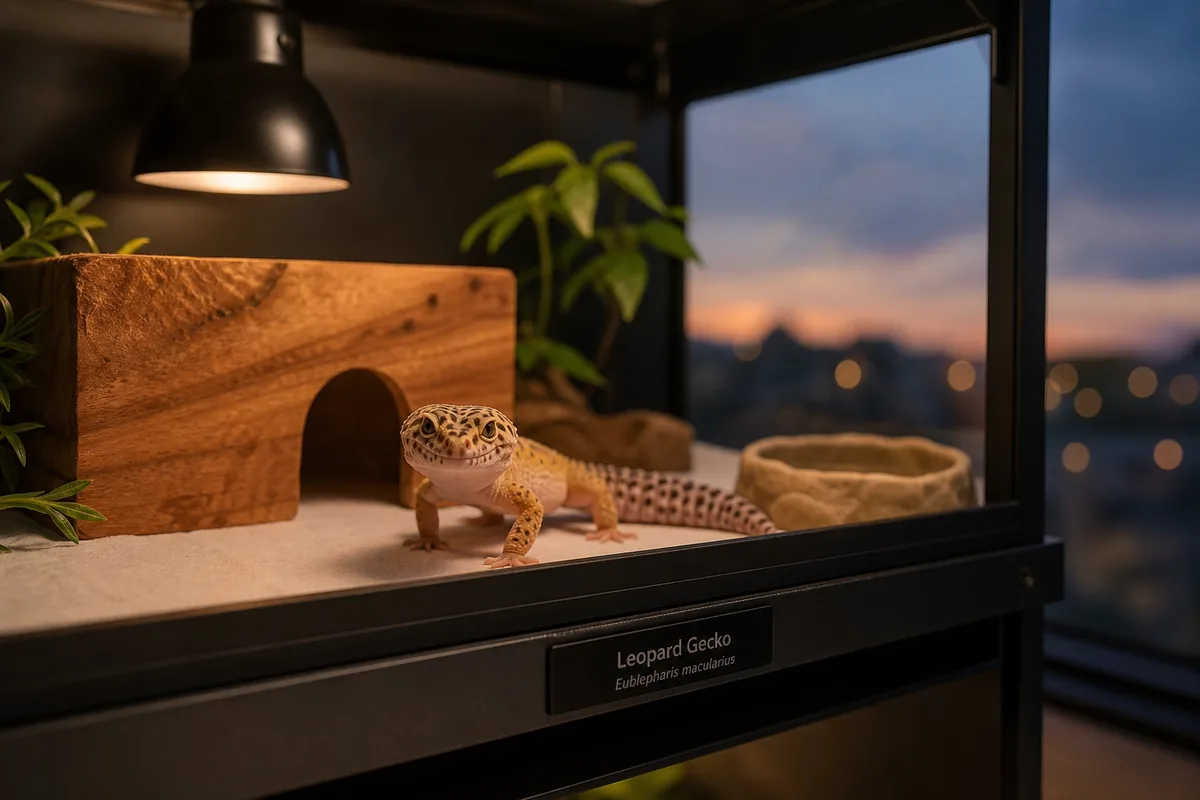
The Three-Hide Rule: Every Leopard Gecko Needs All Three
A leopard gecko without proper hides will stress, stop eating, and develop immune problems within weeks. The three-hide system is not optional decoration.
The warm hide sits directly over the UTH. The cool hide goes on the opposite end.
The moist hide, filled with damp sphagnum moss or coco coir, belongs on the warm side and is critical for clean sheds. Paper towel and ceramic tile both sit flush under hide interiors without the uneven surface issues that loose substrate creates.
- Warm hide: Over the UTH, just big enough for the gecko to turn around
- Cool hide: Far end from heat source, same snug sizing
- Moist hide: Warm side, packed with damp sphagnum moss, entrance on the side
- Position the TankPlace the enclosure on a stable surface away from cold drafts and direct sunlight. The UTH needs airflow underneath, so use tank risers or place the tank on a stand with open sides.
- Install and Set the UTHAttach the UTH to the outside bottom of the tank, covering the rear ⅓ of the warm side. Connect it to a mat thermostat with the probe between the mat and glass. Set to 88-90°F.
- Add SubstrateLay reptile carpet, ceramic tile, or paper towel across the floor. Paper towel is the best choice for new keepers because it makes waste visible and is replaced in 30 seconds.
- Position the HidesPlace the warm hide directly over the UTH zone. Put the cool hide at the far end. Place the moist hide on the warm side with damp sphagnum moss inside.
- Add Water Dish and DecorPlace a shallow water dish on the cool side. Add one or two cork bark tubes or artificial plants for sight breaks. Leopard geckos feel safer in a space that is not wide open.
- Verify Temperatures for 48 HoursRun the setup empty. Check warm floor, cool floor, and ambient air temperatures at morning, midday, and evening. Adjust the thermostat setpoint until the warm surface holds 88-92°F consistently.
Leopard Gecko Setup Cost Breakdown
Leopard geckos are one of the most affordable reptiles to set up correctly.
The UTH thermostat combo is the most important investment and should not be skipped.
Comparing costs with arboreal species like the crested gecko shows that taller enclosures drive up costs significantly due to height requirements and more complex lighting rigs.
| Item | Budget Option | Recommended Option | Cost Range |
|---|---|---|---|
| 20-gallon long tank | Used glass tank | Exo Terra 30x30x30 cm | $30-$120 |
| Under-tank heater | Zilla Heat Mat 8W | Jumpstart 10W seedling mat | $15-$30 |
| Thermostat | Inkbird ITC-306A | Herpstat 1 or Vivarium Electronics VE-100 | $25-$90 |
| Thermometer | Digital probe thermometer | IR temperature gun | $10-$25 |
| Three hides | Tupperware with hole cut | Cork bark rounds + Exo Terra cave | $10-$40 |
| Substrate | Paper towel (ongoing) | Ceramic tile ($1/sq ft) | $0-$20 |
| Moist hide moss | Gallon bag sphagnum moss | Exo Terra Forest Moss brick | $5-$15 |
| Water dish + decor | Bottle cap + cork tubes | Slate dish + real cork bark | $5-$30 |
| Total | $100-$370 |
Does It Need UVB Light?
Leopard geckos synthesize D3 from dietary supplementation alone, which is why they have been kept successfully without UVB for decades. Recent research from the University of Lincoln (2022) shows that access to low-output UVB (2.0-5.0% T5 HO) improves calcium metabolism, reduces supplement dependence, and increases activity levels.
If you add a UVB bulb, mount it 12-14 inches above the enclosure floor and run it for 10-12 hours daily. The gecko must be able to retreat from UVB exposure, so the bulb should cover only the warm half of the enclosure.
The contrast becomes clear against higher-demand species.
The blue tongue skink needs a stronger UVB output and significantly more floor space than a 20-gallon long supports, making it a logical step up rather than a comparable alternative.
For keepers weighing the two most popular beginner lizards directly, the bearded dragon vs leopard gecko comparison covers basking zones, UVB intensity, and handling expectations side by side.
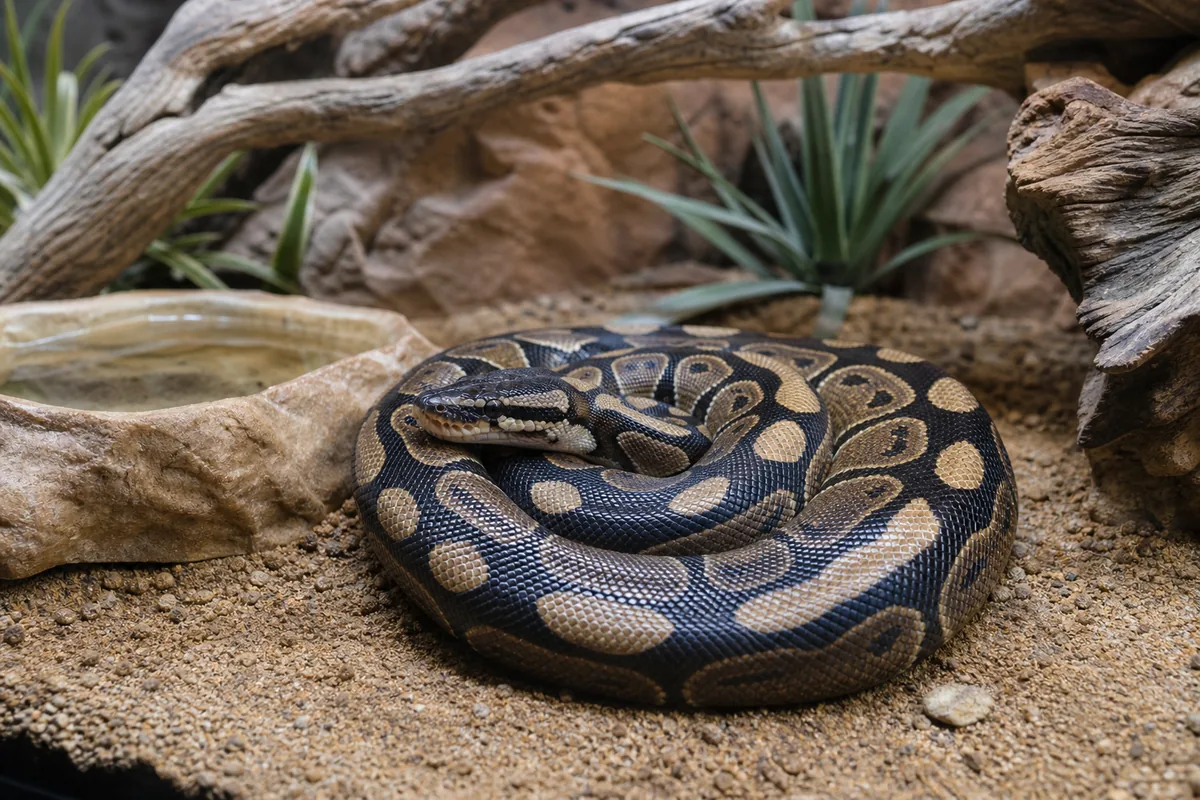
Keepers drawn to snakes will find the ball python enclosure setup uses the same under-tank heat logic but requires a focus on ambient humidity that a leopard gecko enclosure does not.
Leopard Gecko Shedding and Humidity Guide
Normal shed frequency: Every 4-8 weeks for adults, every 2-4 weeks for juveniles Ambient humidity target: 30-40% (dry gecko enclosure environment) Moist hide humidity: 70-80% inside the hide using damp sphagnum moss Stuck shed warning signs: Retained eye caps, constricted toes, dull gray patches after 24+ hours Treatment: Warm shallow soak for 10 minutes, then gentle manual removal with wet cotton swab
Sources and references
- Behavioural responses of leopard geckos to UV-B provisionof Lincoln Animal Behaviour Lab, 2022
- Thermal Biology of Eublepharis macularius in CaptivityHerpetological Bulletin, 2018
- Reptile Husbandry Guidelines: Eublepharis maculariusAssociation of Reptilian and Amphibian Veterinarians, 2020