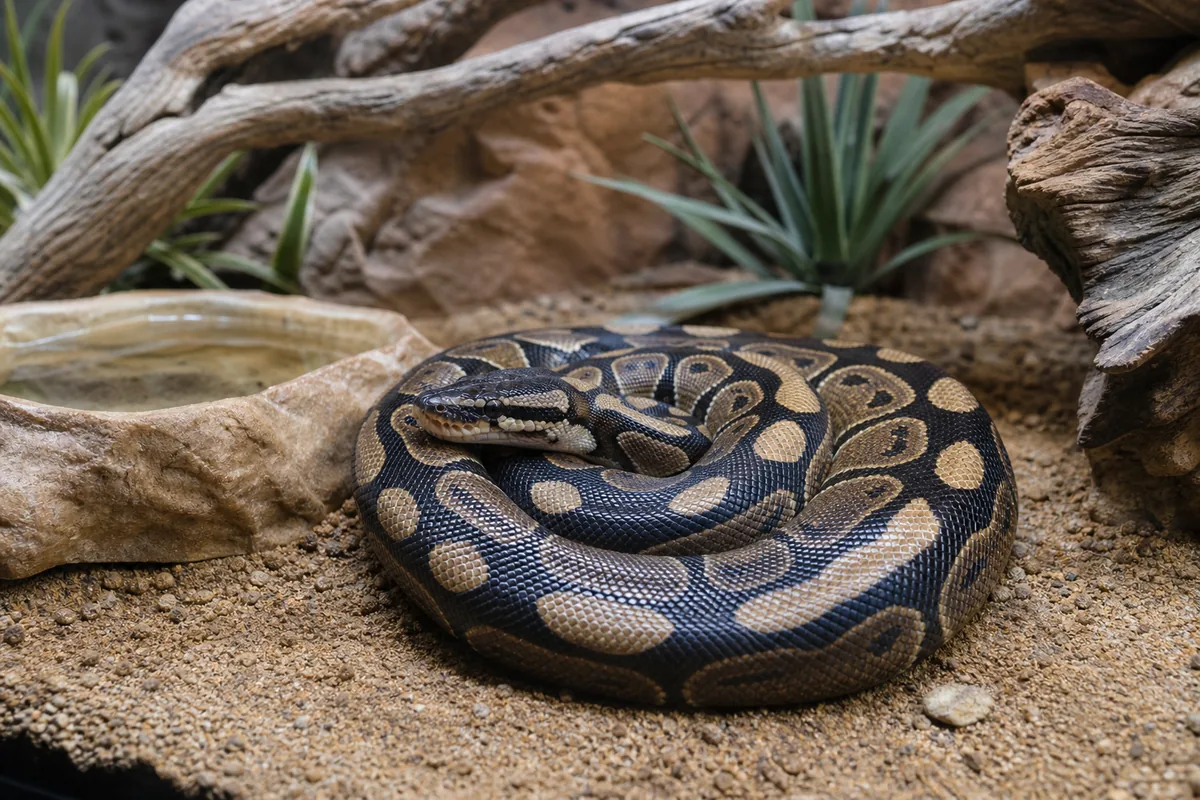
Ball Python Enclosure Setup: Build for the Snake That Hides 23 Hours a Day
Ball pythons spend the vast majority of their lives inside a tight hide, so the ball python enclosure setup must prioritize security over display.
Before your ball python arrives, run the enclosure at target temps and humidity for a full 72 hours.
For a broad overview of reptile care across all species, browse our complete silo.
Adult ball pythons need a minimum 4x2x2 foot enclosure. Despite common advice online, a 40-gallon breeder tank is too small for an adult and too difficult to maintain at 60-80% humidity.
Temperature Requirements: The Warm Hide Is the Most Critical Point
Ball pythons are ambush predators from West Africa's grasslands and forests, where they occupy rodent burrows that maintain consistent warmth.
The warm hide floor must reach 88-92°F, which is what the snake feels through belly contact.
Review the complete ball python care profile for feeding schedules, health, and handling guidelines.
Ambient warm side air temp runs 80-85°F. The cool side drops to 76-80°F.
Nighttime temperatures can drop to 72°F without issue, which simplifies overnight heating in most homes.
- Warm hide floor: 88-92°F (measured with probe directly under the hide)
- Warm ambient: 80-85°F at mid-enclosure height
- Cool side: 76-80°F
- Nighttime minimum: 72°F
Humidity: 60-80% Is the Range That Prevents Retained Sheds
Ball pythons come from humid forest-grassland habitats and require 60-80% humidity consistently. Dropping below 50% causes retained sheds, where the old skin dries and constricts around the body, including the eye caps and tail tip.
The single most effective tool for maintaining humidity is a deep cypress mulch or coconut fiber substrate. A 3-4 inch substrate depth holds moisture between mistings and acts as a humidity buffer throughout the day.
- Choose and Position the EnclosureSelect a PVC or wood enclosure with front-opening doors. Place it at or below waist height so the snake does not feel threatened by your overhead approach. Avoid cold exterior walls.
- Install HeatingAttach an under-tank heater to the outside floor of the warm side, or mount a radiant heat panel inside the top of the warm half. Connect to a thermostat with the probe at warm hide floor level.
- Add Deep SubstrateFill the enclosure with 3-4 inches of cypress mulch or coconut fiber. Dampen it so it clumps slightly when squeezed but does not drip. This pre-moistened base holds humidity from day one.
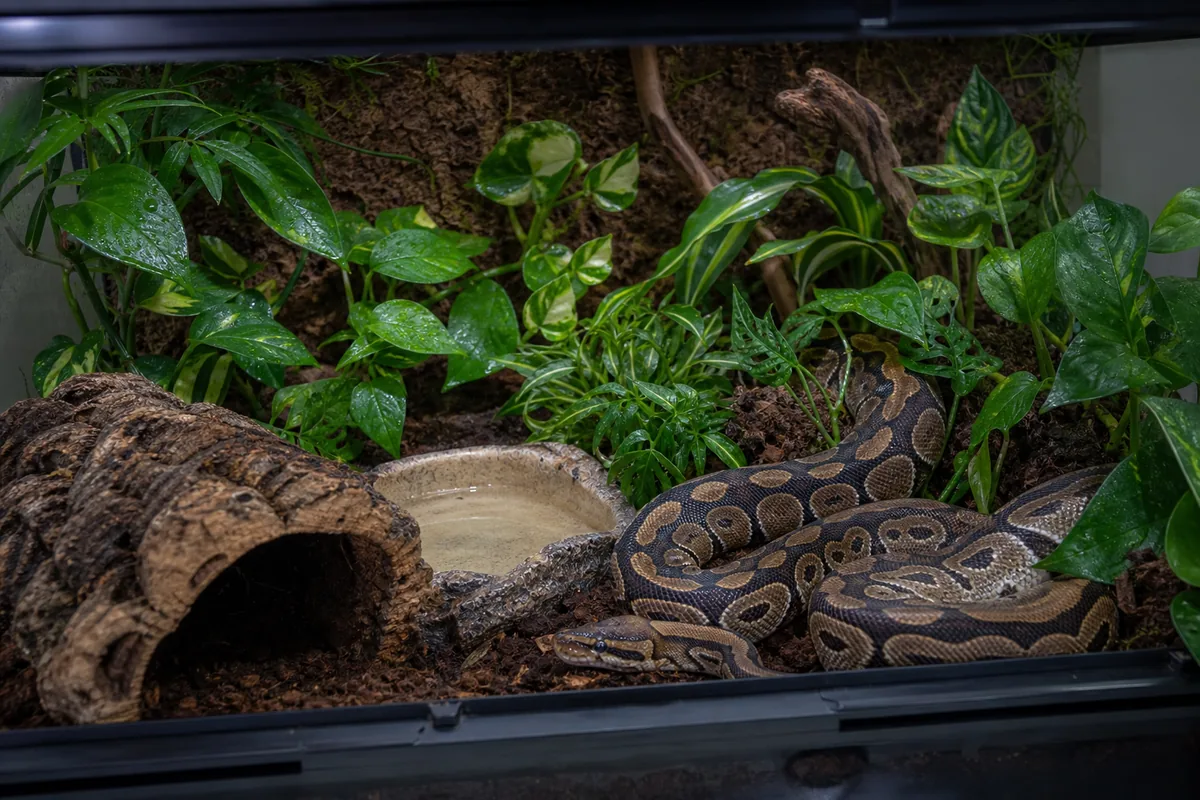
- Position HidesPlace the warm hide directly over the heat source. The hide must be snug: the snake should be able to touch all sides simultaneously. Add the cool hide at the far end, same sizing rule.
- Add Water DishPlace a heavy ceramic water dish on the cool side. Ball pythons frequently soak before shedding, so the dish must be large enough for the snake to coil inside fully.
- Verify Temps and HumidityRun the enclosure for 72 hours before adding any animal. Check warm hide floor temp, cool side temp, and humidity morning and evening. Target 60-80% humidity with 88-92°F at the warm hide floor.
- Introduce the SnakeAdd the snake and leave it alone for 7-10 days. Do not handle or feed during this acclimation period. A ball python that can smell food while stressed will refuse it for weeks.
Enclosure Setup Cost Breakdown
The biggest cost variable is the enclosure itself.
PVC enclosures like those from Reptile Basics or Animal Plastics cost more upfront but pay back through easier humidity control and durability over a 20-year lifespan.
Keepers comparing beginner snake options should read the ball python vs corn snake breakdown covering enclosure needs, feeding reliability, and temperament differences.
| Item | Budget Option | Recommended Option | Cost Range |
|---|---|---|---|
| Enclosure (4x2x2) | DIY wooden box with latches | Animal Plastics T8 or Reptile Basics PVC | $100-$400 |
| Heating (UTH or RHP) | Large UTH mat | Radiant heat panel (100W) | $20-$80 |
| Thermostat | Inkbird ITC-306A | Herpstat 2 (dual zone) | $25-$180 |
| Thermometers (x2) | Digital probe x2 | IR gun + probe | $15-$40 |
| Hygrometer | Inkbird humidity sensor | Govee digital hygrometer | $10-$25 |
| Substrate (bag) | Reptibark large bag | Cypress mulch 40L bag | $15-$40 |
| Hides (x2) | Tupperware with hole | Reptile Basics half-log hides | $5-$40 |
| Water dish | Large ceramic dog bowl | Exo Terra rock water dish | $5-$25 |
| Total | $195-$830 |
Hide Size: The Snug Fit Rule
Many ball python feeding strikes trace directly to hides that are too large. A hide that is too spacious does not give the snake the 360-degree contact it needs to feel secure.
Test the hide before buying: put the snake inside and watch whether it fits snugly with its body touching the walls.
If there is open air above the coiled snake, the hide is too big.
Keepers also interested in lizards should explore bearded dragon care, which requires significantly more complex lighting than any snake setup.
Ball Python Shedding Schedule and Signs
Pre-shed signs: Eyes turn blue-grey (opaque), skin dulls to pinkish-grey, activity increases Pre-shed duration: 7-14 days before actual shed Feeding during shed: Skip the feeding. Snakes cannot see well during blue phase and will often refuse food or strike defensively. Post-shed check: Confirm the shed came off in one piece including the eye caps Retained shed treatment: 30-minute warm water soak, then gentle peel with damp cloth
Other species setups worth comparing: ground gecko enclosures use belly heat rather than overhead lamps.
The crested gecko care guide covers arboreal builds.
Blue tongue skink care suits keepers wanting a larger lizard.
Red eared slider care covers aquatic enclosures.
Chameleon care serves advanced keepers.
Corn snake care and king snake care offer lower-humidity colubrid alternatives.
Green anole care rounds out small-lizard options.
Sources and references
- Python regius Husbandry StandardsBritish and Irish Association of Zoos and Aquariums (BIAZA), 2020
- Thermal ecology of python regius in West African forest habitatsAfrican of Herpetology, 2017
- Retained Ecdysis in Captive Snakes: Causes and Managementof Exotic Pet Medicine, 2019