Bananas rank among the most-asked-about fruits in reptile feeding questions, mainly because keepers always have them on hand. The sweet smell draws most bearded dragons in fast.
The fruit is not toxic, but its nutritional profile creates two real problems: too much phosphorus and too much sugar. Both limit how often you can safely offer it.
Bananas for Bearded Dragons
- ripe flesh onlySafe
- peel (pesticide riskUnsafe
- tough texture)Unsafe
Prep: Peel completely. Slice flesh into small cubes no wider than the space between the dragon's eyes. Freq: Once per month maximum Amount: 2-3 small cubes per feeding
Banana Nutrition: 12g Sugar and Inverted Ca:P Ratio per 100g
The core problem with bananas is the calcium-to-phosphorus ratio of 0.3:1. Phosphorus in the diet binds to calcium before the body can absorb it, which over time depletes calcium stores and leads to metabolic bone disease.
Bananas contain roughly 5mg calcium and 22mg phosphorus per 100g. That inversion makes them one of the worst fruits for regular feeding.
| Nutrient | Amount | Relevance to Beardies |
|---|---|---|
| Sugar | 12.2g | High , obesity and gut dysbiosis risk |
| Calcium | 5mg | Very low |
| Phosphorus | 22mg | Very high relative to calcium |
| Potassium | 358mg | High , fine in moderation |
| Vitamin B6 | 0.4mg | Useful micronutrient |
| Water | 74.9g | Moderate |
The sugar content of 12.2g per 100g is notably higher than strawberries (7.7g) or watermelon (6g). A single adult banana can contain 14-16g of sugar total.
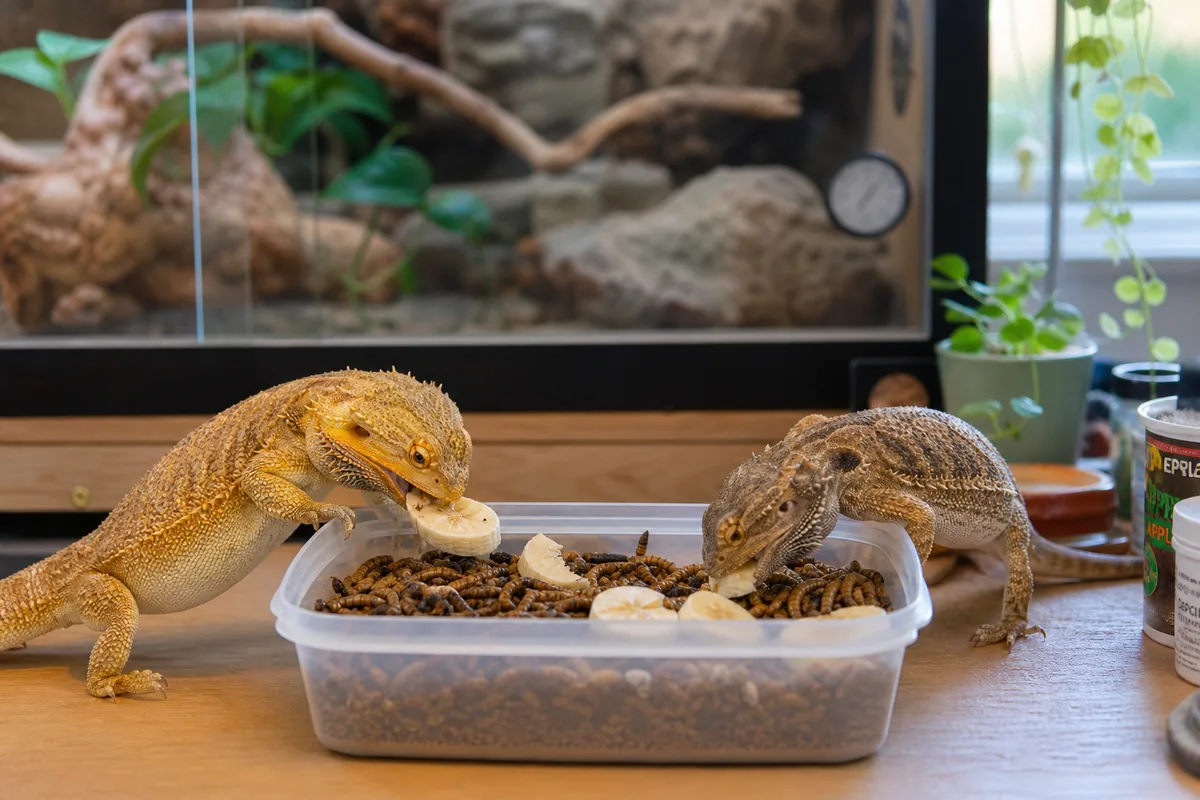
Can Bearded Dragons Eat Banana Peels?
The peel is not worth the risk. Commercial bananas carry significant pesticide residue on the skin, and the tough fibrous texture is a choking hazard for reptiles.
Some sources suggest organic banana peel is safe in tiny amounts, but there is no nutritional reason to offer it. Stick to the flesh only.
- Ripe yellow flesh: safe in small amounts, soft texture
- Overripe black flesh: higher sugar concentration, avoid
- Green unripe banana: harder texture, higher starch, not recommended
- Banana peel: pesticide risk, tough fiber, skip entirely
How to Prepare Bananas for Bearded Dragons
Keep portions tiny. A full banana contains far more sugar and phosphorus than a bearded dragon should consume in a month of treats.
Two to three small cubes from a single banana is the right serving. That is roughly 10-15g of fruit, not a full finger of banana.
How Often Can Bearded Dragons Eat Bananas?
Once per month is the upper limit. Some keepers stretch this to once every six weeks to further reduce phosphorus loading.
Bananas should never be the primary fruit treat.
Fruits with better calcium-to-phosphorus ratios make smarter choices for more frequent fruit days.
Blueberries have lower sugar at 10g per 100g.
Apples offer a more neutral phosphorus balance.
Grapes are higher in sugar than bananas at 16g per 100g, so both should be rare.
Strawberries at 7.7g sugar are a better monthly treat.
Watermelon is fine occasionally for hydration.
On days you offer banana, pair it with staple vegetables: carrots, low-oxalate greens, and romaine over iceberg to ensure the meal still contributes usable nutrition.
- Adults (18+ months): 2-3 cubes, once per month maximum
- Juveniles (under 18 months): avoid entirely, calcium needs are too high to afford phosphorus interference
- Dragons showing MBD signs: eliminate all fruit including bananas until calcium levels recover
Signs of Banana Overfeeding
Occasional overfeeding will not cause immediate visible harm. The damage from too many high-phosphorus foods is cumulative and shows up gradually.
The most serious long-term consequence is metabolic bone disease (MBD), characterized by soft bones, limb tremors, and difficulty walking.
- Soft jaw or limb bones: early MBD sign, reduce phosphorus foods immediately
- Limb tremors: calcium deficiency affecting nerve function
- Refusal to eat greens: sugar preference from too much fruit
- Loose stools: excess sugar feeding gut bacteria imbalance
- Lethargy: blood sugar crash following a high-sugar feeding
13.
Metabolic bone disease in reptiles: a review of pathophysiology and clinical management
Veterinary Clinics of North America: Exotic Animal Practice, 2020
Journal
14.
USDA FoodData Central: Bananas, raw
USDA Agricultural Research Service, 2024
Government
15.
Reptile nutrition: current knowledge and future directions
Journal of Exotic Pet Medicine, 2019
Journal