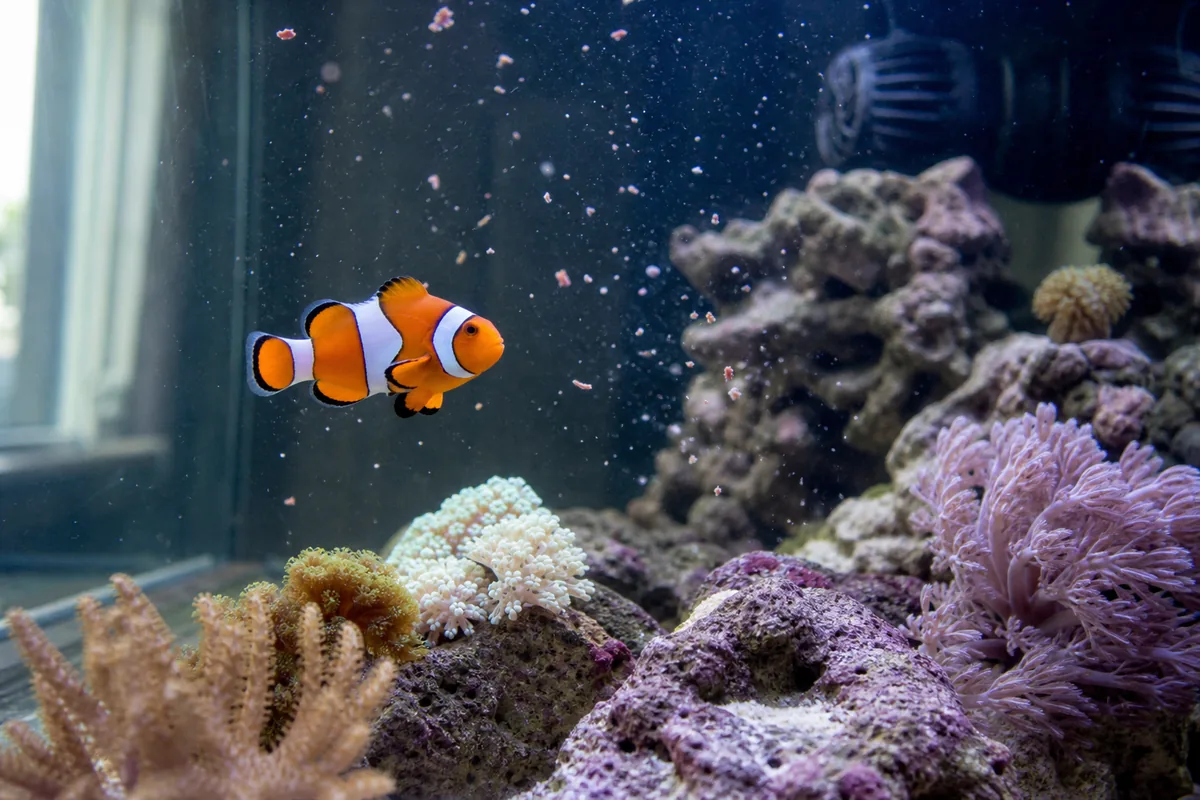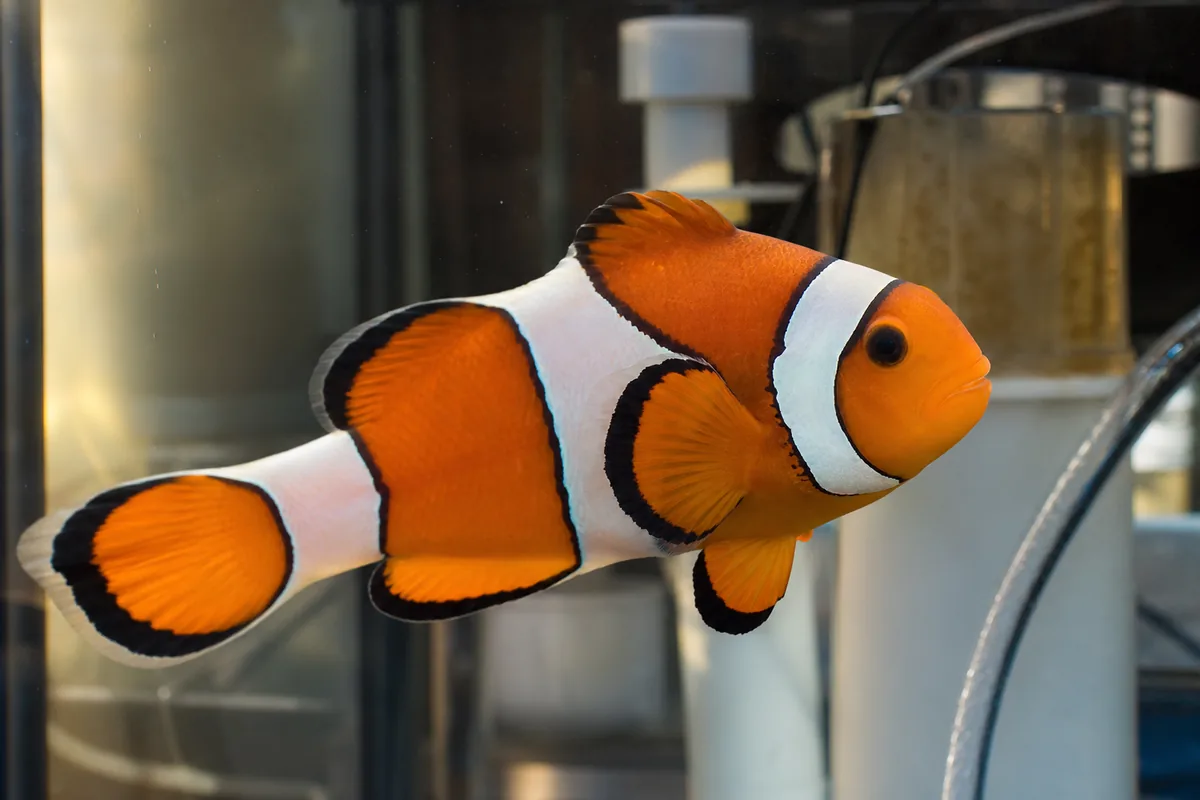
Clownfish are among the easiest saltwater community fish to stock around because their aggression stays close to the host site.
Most workable companions still need at least 30 gallons and a different water zone from the clownfish pair.
Territory overlap causes more problems than water chemistry.
This ranking focuses on real reef-community pairings, not just species that share the same temperature and salinity range.
Compatibility verdict
- Clownfish + Peaceful Reef FishCompatibleClownfish pair well with peaceful reef fish that avoid the hosting zone. Conflict rises fast when another fish uses the same territory or the tank is too small to separate zones.
Why clownfish work in community tanks when other reef fish do not
Clownfish aggression is site-specific, not tank-wide.
A bonded pair usually defends a circle of roughly 12 to 18 inches around its host structure. Fish that stay outside that zone are often ignored.
Royal grammas work so well because they stay in caves and rock crevices instead of challenging the host site.
That is the basic rule behind every good clownfish pairing on this page.
Top clownfish tank mates ranked by tank size and compatibility
| Species | Minimum Tank | Compatibility | Primary Zone | Best Use |
|---|---|---|---|---|
| Royal gramma | 30 gallons | Excellent | Caves and mid-water | Best all-around pairing |
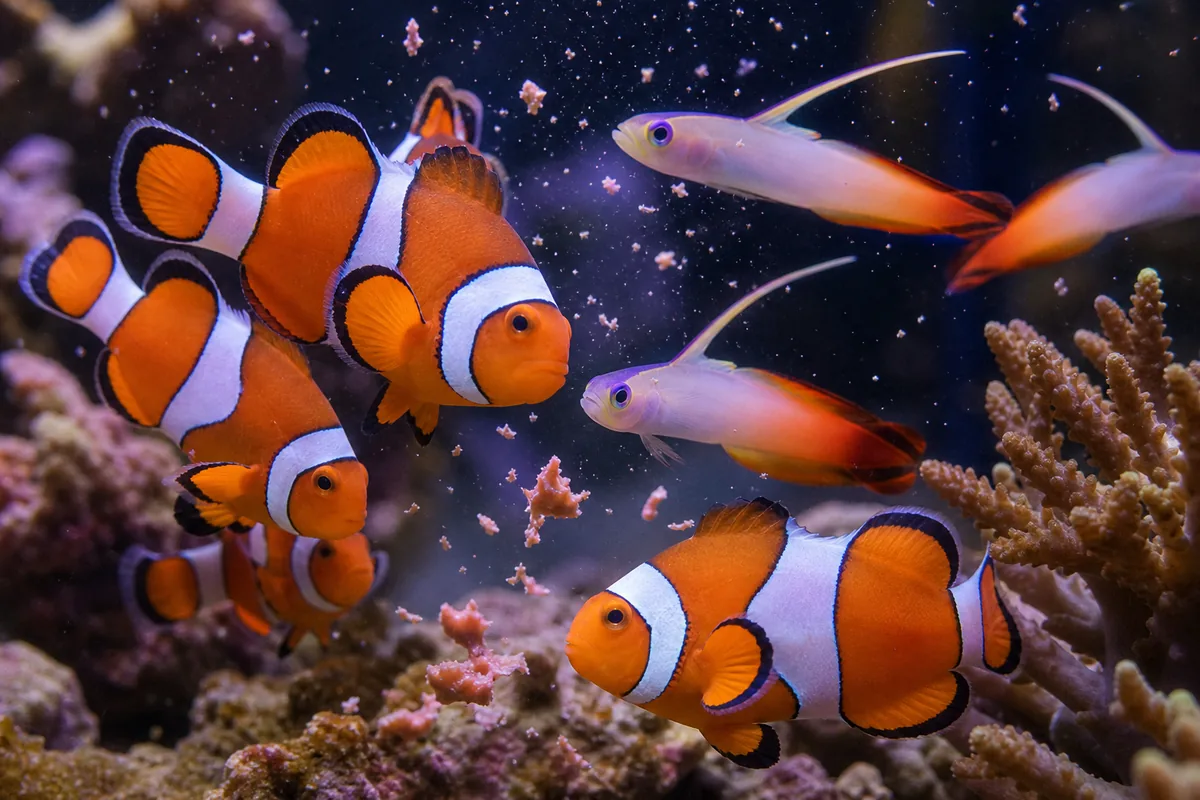
| Firefish | 30 gallons | Excellent | Lower water column | Best peaceful nano companion |
| Banggai cardinalfish | 30 gallons | Excellent | Mid-water hover zone | Best calm mid-water fish |
| Yellow watchman goby | 30 gallons | Excellent | Substrate and burrow | Best bottom-dweller |
| Tailspot blenny | 30 gallons | Excellent | Rock face | Best algae grazer for smaller tanks |
| Blue-green chromis | 55 gallons | Excellent | Open mid-water | Best schooling option |
| Yellow tang | 75 gallons | Excellent | Open water and rock face | Best large-tank grazer |
| Coral beauty angelfish | 70 gallons | Good | Rock face | Best color upgrade for larger reefs |
| Six-line wrasse | 50 gallons | Good with caution | All zones | Best pest-control fish if added last |
| Neon goby | 20 gallons | Excellent | Rock face and cleaning stations | Best nano helper fish |
The 30-gallon tier is where most beginner clownfish community tanks operate.
firefish pairing fits that tier especially well because it uses a lower hover zone and rarely challenges the clownfish pair.
Banggai cardinalfish add a slow mid-water presence without increasing territorial pressure.
Best 30-gallon clownfish community if you want the safest setup
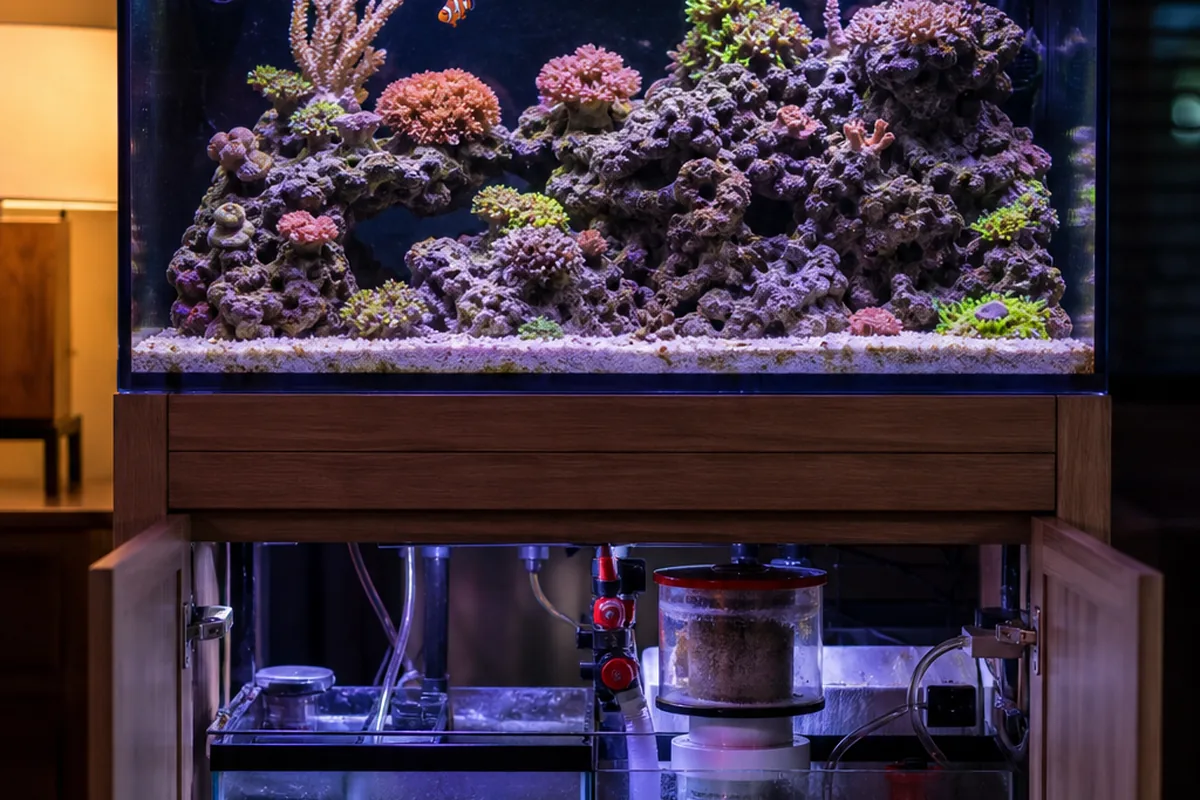
A 30-gallon reef with a clownfish pair, one royal gramma, and one firefish covers three distinct water zones.
Add a cleanup crew and you get a beginner-friendly community with almost no territorial overlap.
- Clownfish pair: Holds the host zone and provides the main focal behavior
- Royal gramma: Occupies rock caves and adds contrast without direct competition
- Firefish: Uses the lower hover zone and stays out of the host area
- Cleanup crew: Snails, hermits, and a cleaner shrimp handle basic scavenging and algae support
Pros
- Clownfish accept peaceful fish that stay out of the hosting zone
- A 30-gallon tank already supports several proven pairings
- Royal gramma and firefish fit beginner reefs cleanly
- Larger tanks open options like tangs and chromis schools
- The ranking format makes stocking choices faster
Cons
- Two clownfish pairs do not coexist in one community tank
- Aggressive damsels destabilize small reefs fast
- Most good pairings still need at least 30 gallons
- Bad introduction order can ruin an otherwise safe stocking list
- Large-tank options like tangs demand a major size jump
The neon goby deserves a special mention because it fits smaller tanks and can clean external tissue and parasites from larger fish. Clownfish often tolerate that behavior even near the host zone.
Which fish should you avoid with clownfish?
Most clownfish community failures come from one of a few predictable stocking mistakes. The list below causes more problems than almost any other clownfish decision.
- Other clownfish pairs: One pair per tank is the rule, not a suggestion
- Aggressive damsels: Domino and three-stripe damsels usually turn the whole tank hostile
- Lionfish and scorpionfish: Any clownfish small enough to swallow is prey
- Large triggerfish: Strong jaws and territorial pressure make them poor clownfish partners
- Very aggressive dottybacks: Small-tank harassment is common and persistent
The other common mistake is using the wrong damsel species. Our clownfish-damselfish guide explains why chromis can work while aggressive damsels usually do not.
What changes in a 55-gallon or 75-gallon clownfish tank?
Larger tanks give you enough room to add active open-water fish without forcing overlap around the clownfish pair.
A yellow tang is one of the cleanest 75-gallon upgrades because it grazes rock surfaces and uses open water that clownfish rarely control.
If you are planning a tang build, the clownfish-and-tang guide covers the tank-size jump and stocking order that pairing needs.
Does introduction order matter with clownfish tank mates?
Yes. Introduction order matters almost as much as species choice.
A clownfish pair introduced first can start treating the whole layout as open territory before other fish arrive.
For a 30-gallon community, introduce the firefish first, then the royal gramma, then the clownfish pair last.
The damselfish care guide shows the same rule from the opposite angle: even peaceful fish behave worse when they get the tank to themselves first.
Sources and references
- Amphiprioninae territorial behavior and community tank compatibilityMarine Behaviour and Physiology, 2018
- Reef fish stocking guidelines for home aquariaAdvanced Aquarist, 2021
- Mutualistic cleaning behavior between gobies and reef fishCoral Reefs, 2019