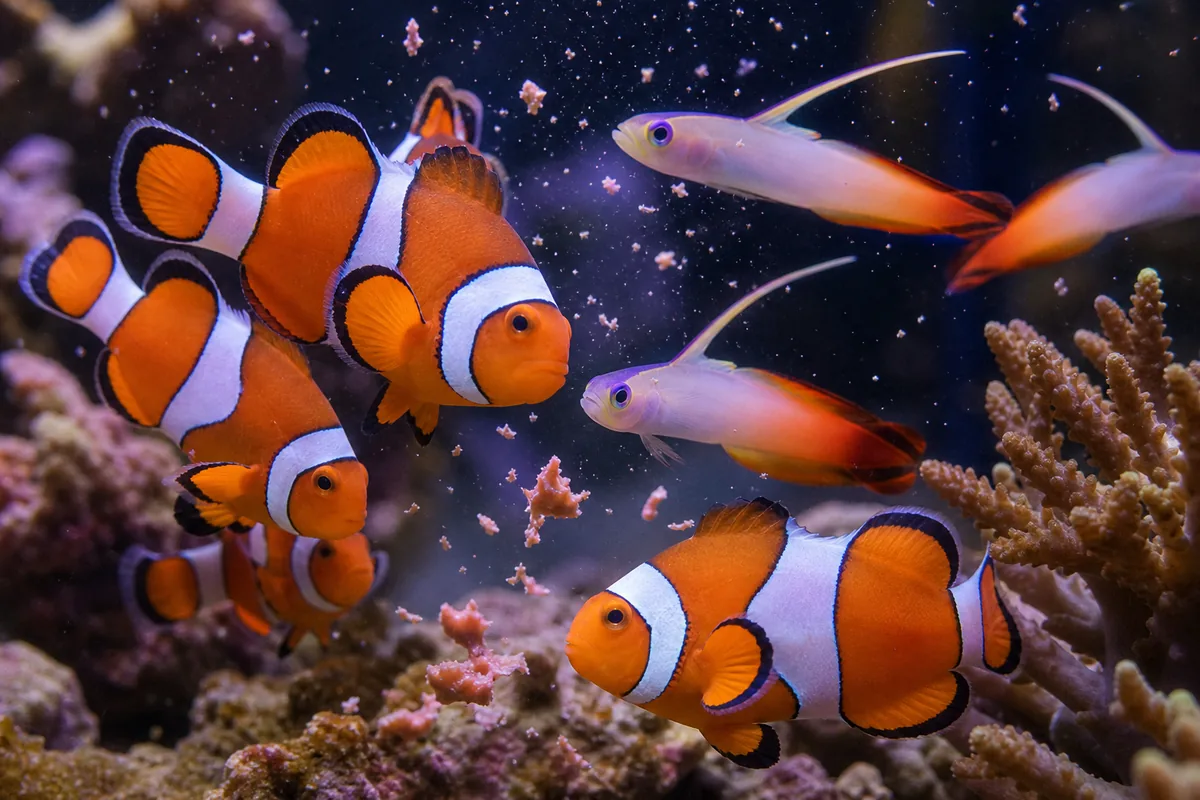
If you want a peaceful reef pairing, this is one of the cleaner options in the saltwater fish category. The main risk is not clownfish aggression.
The real issue is keeping the firefish calm enough to stay out in the open.
Read the firefish care guide before stocking.
Success comes from meeting both species' shelter needs at the same time.
What a calm firefish tank looks like
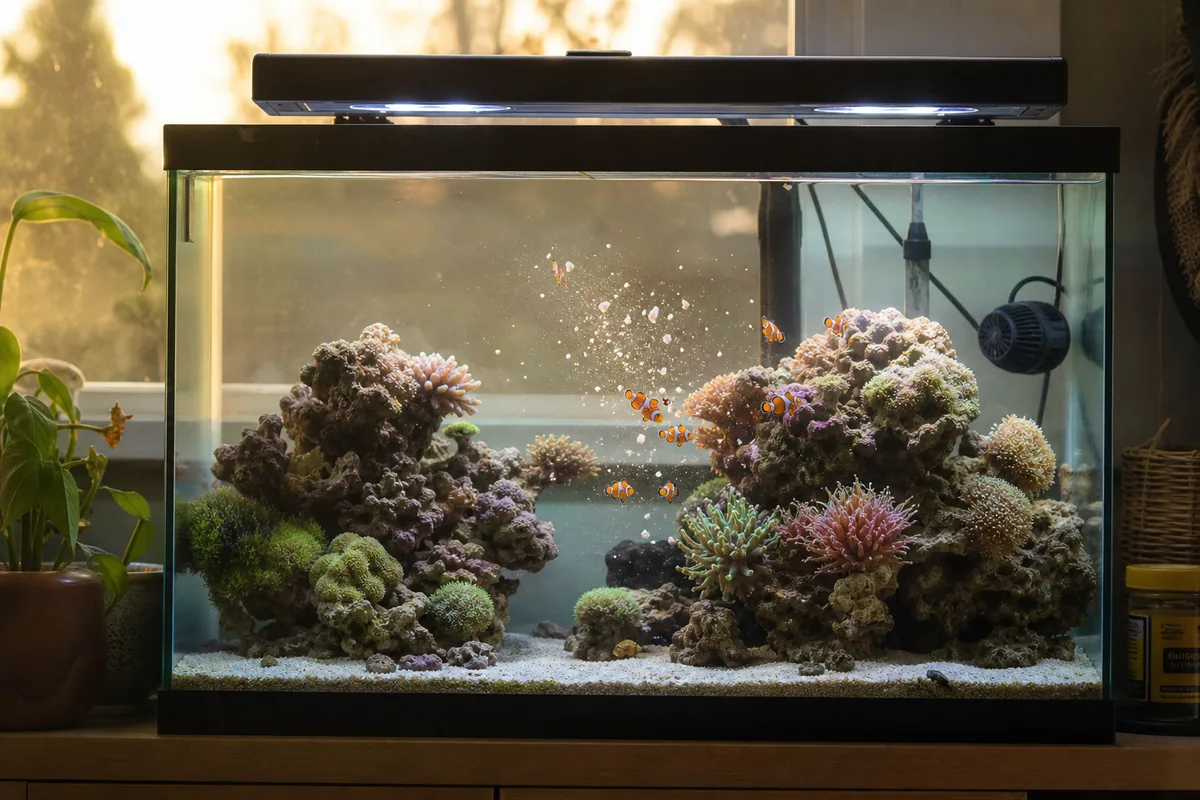
The best firefish tanks are predictable. The fish knows where to hide, where to feed, and which part of the tank belongs to the clownfish pair.
- One shelter point: A single cave or ledge that the firefish can claim quickly
- One open lane: Space in front of that shelter so the fish can feed without feeling trapped
- One lid: A tight cover with no escape gap around cords, plumbing, or mesh edges
- One calm neighbor set: Fish that do not rush the same food lane every time you feed
That setup is easier to maintain than it sounds. Once the firefish trusts the shelter, it spends less time hiding and more time using the open lane you built for it.
Compatibility verdict
- Clownfish + FirefishDependsA very good pairing in 30+ gallon tanks with a lid, rock caves, and peaceful stocking. The firefish's timid nature is the only real limit.
Why clownfish and firefish usually get along
Clownfish defend a small hosting zone. Firefish hover near a bolt-hole and retreat fast when they feel pressure.
Those behaviors fit together well because the clownfish hold one area while the firefish uses open water near shelter. Neither fish needs to chase the other around the full tank.
The two species also share normal reef parameters.
If you already built the tank around clownfish needs, you do not need a major chemistry compromise to keep a firefish healthy.
- Territory overlap: Low, because clownfish defend a host while firefish guard a retreat point
- Feeding style: Simple, because both species accept small meaty foods in a mixed reef routine
- Aggression level: Manageable, because firefish usually flee instead of escalating a dispute
- Main weakness: Firefish panic and jump if the tank is too open or the community is too rough
The clownfish tank setup guide already covers how to build a calm hosting zone. Add one secure cave at the opposite end of the rockwork and you give the firefish a clean retreat.
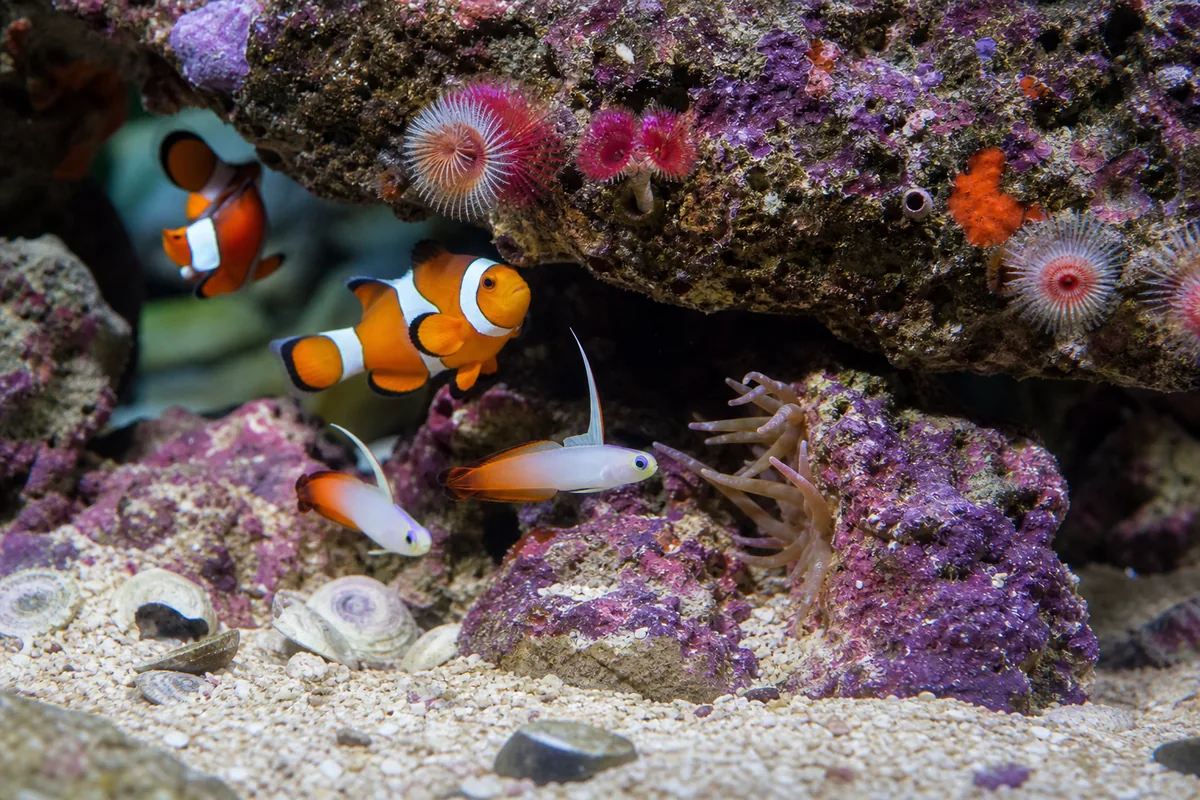
The setup details that make this pairing work
A covered tank matters more here than many new keepers expect. Firefish are famous jumpers, and a startled fish can hit the gap around a return line in seconds.
Rock structure matters just as much. A firefish needs one dependable cave and clear open water in front of it.
Clownfish need one stable site they can claim without crossing the whole tank.
If you are still in planning mode, the saltwater setup guide will help you place rock, pumps, and open swim lanes before either fish arrives.
A good layout gives the firefish one cave, one open lane, and one reason to keep moving after the lights come on.
Use the reef setup guide when you are ready to balance rock cover with stable flow.
Pros
- Low territory overlap makes this pairing easy to manage
- Both species fit a peaceful mixed reef plan
- A firefish adds open-water movement without crowding the clownfish host
- Prepared foods work for both fish in the same feeding routine
Cons
- Firefish jump when startled and need a tight lid
- Aggressive tank mates can keep the firefish hidden all day
- A bare tank with no bolt-hole leaves the firefish stressed
- Fast, pushy feeders can outcompete the firefish at meal time
What usually causes this pairing to fail
The pairing fails when the firefish feels unsafe.
Clownfish are not natural enemies here. An uncovered tank, harsh flow near the firefish shelter, or a bully species added later can push the firefish into constant hiding.
The second failure pattern is a rough community plan. If you add aggressive damsels before the firefish settles, you create a tank where the firefish never claims a safe retreat.
The third failure pattern is too much open space with too little structure.
Firefish need a visible bolt-hole and a path back to it. Without that, they spend too much time hiding or jumping instead of living normally.
| Need | What To Provide | Why It Matters |
|---|---|---|
| Lid | Tight cover with no gap around equipment | Stops jump losses |
| Retreat point | One fixed cave or ledge | Gives the fish a safe home base |
| Open lane | Clear space in front of the shelter | Lets the fish feed without feeling trapped |
| Flow | Moderate, not blasting | Supports movement without pinning the fish down |
How to build a calm clownfish community around firefish
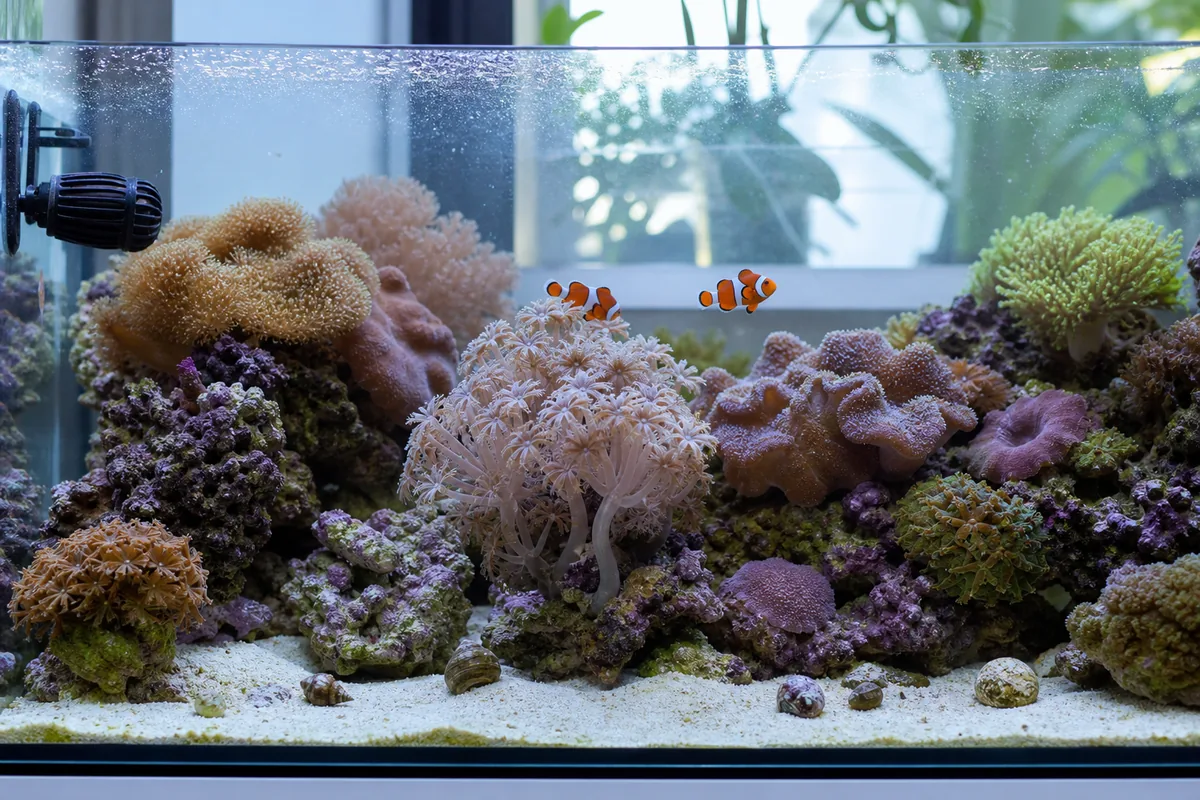
Start with live rock that creates two or three quiet pockets. The live rock guide helps you build those pockets without blocking flow through the reef.
Once the clownfish pair and the firefish settle, you can add another peaceful species like a royal gramma. If you want a broader shortlist, the clownfish tank mates page ranks the community fish that usually fit this style of reef.
Skip rougher options unless the tank is much larger and the stocking order is planned well. The clownfish damselfish guide shows why even one pushy species can change the whole tone of the tank.
If the firefish starts hiding for long stretches, do not assume it is just shy.
Look at flow, lid gaps, and the placement of the nearest cave. Those three things usually explain the behavior faster than fish personality does.