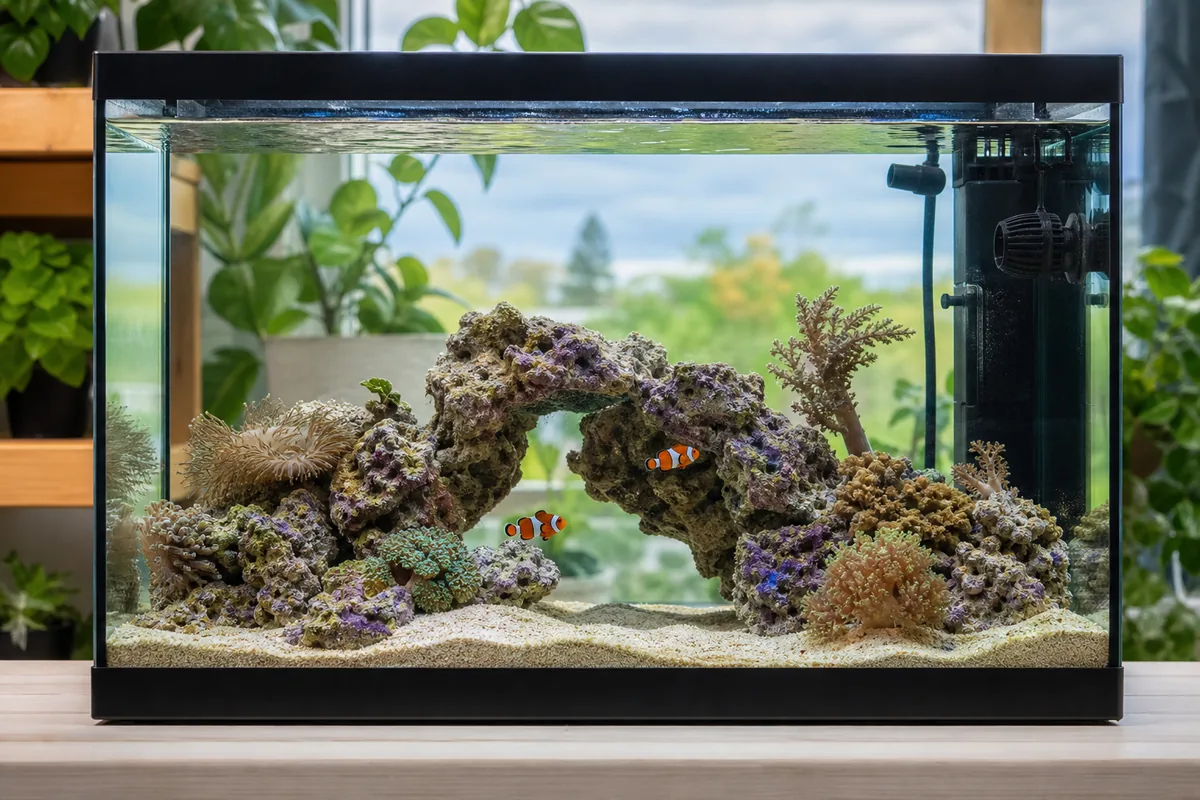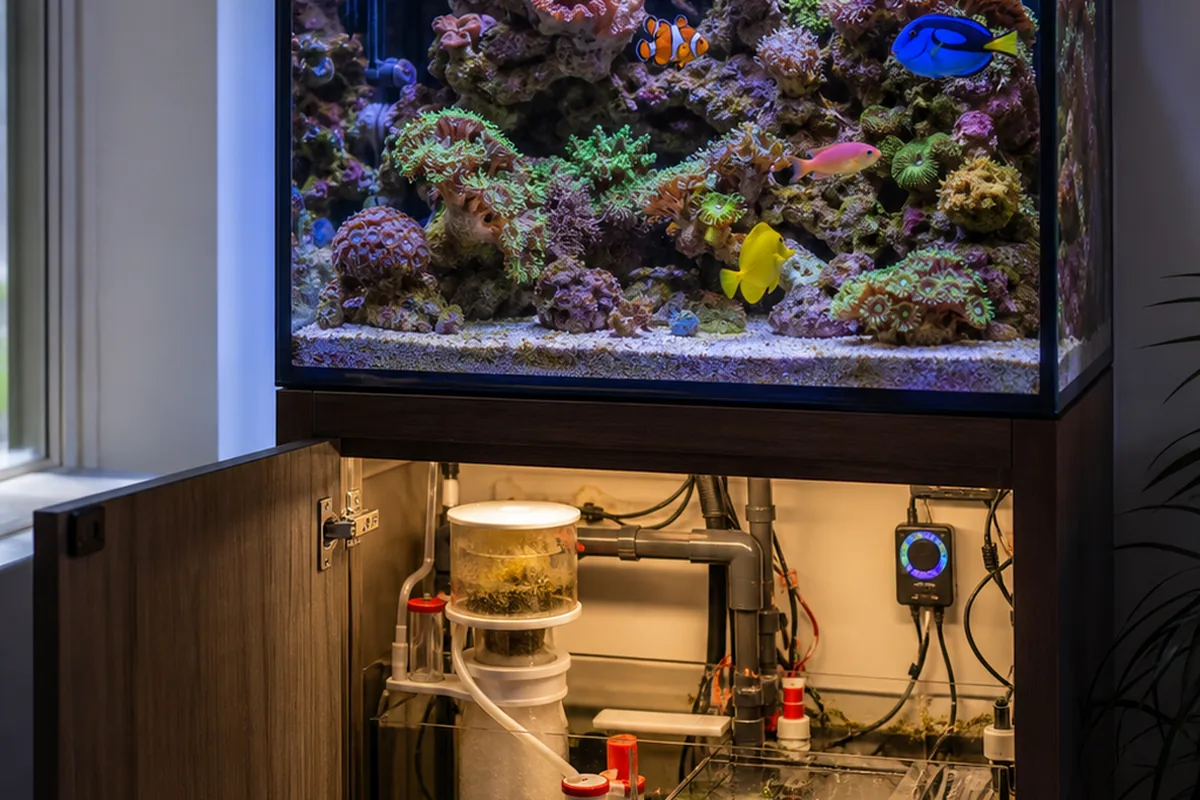
A reef tank is a coral system first and a fish tank second. That is the key difference most new keepers miss.
We build the setup from the same saltwater aquarium basics used in any marine tank, then tighten the chemistry, lighting, and flow around coral needs.
This guide shows the 40-gallon starter path that gives you enough water volume, enough rock, and enough margin to keep mistakes recoverable.
What does a beginner reef tank need before the first coral goes in?
A beginner reef needs stable targets before it needs expensive coral. The first job is holding the same numbers every day, not chasing perfect numbers once a week.
Our clownfish tank guide can run with looser chemistry because fish tolerate drift better than coral. A reef cannot.
| Category | Starter Target | Why It Matters |
|---|---|---|
| Tank size | 40 gallons or larger | Gives salinity and temperature more room to stay stable |
| Salinity | 1.025 to 1.026 SG | Coral reacts badly to repeated swings |
| Temperature | 76 to 78°F | Steady heat matters more than chasing the warm edge |
| Alkalinity | 8 to 9 dKH | Supports calcification and exposes dosing drift quickly |
| Calcium | 400 to 450 ppm | Supports skeletal growth in stony coral |
| Magnesium | 1280 to 1380 ppm | Helps alkalinity and calcium stay balanced |
| Nitrate | 2 to 10 ppm for soft coral and LPS | Too clean can stall coral, too dirty fuels algae |
| Phosphate | 0.03 to 0.10 ppm | Excess slows growth and drives nuisance algae |
| Budget | $900 to $1,800 | Below that, equipment compromises start stacking up |
Those targets are realistic for soft coral and LPS. SPS coral asks for the same stability with even less drift tolerance.
What equipment do you actually need for a first reef tank?
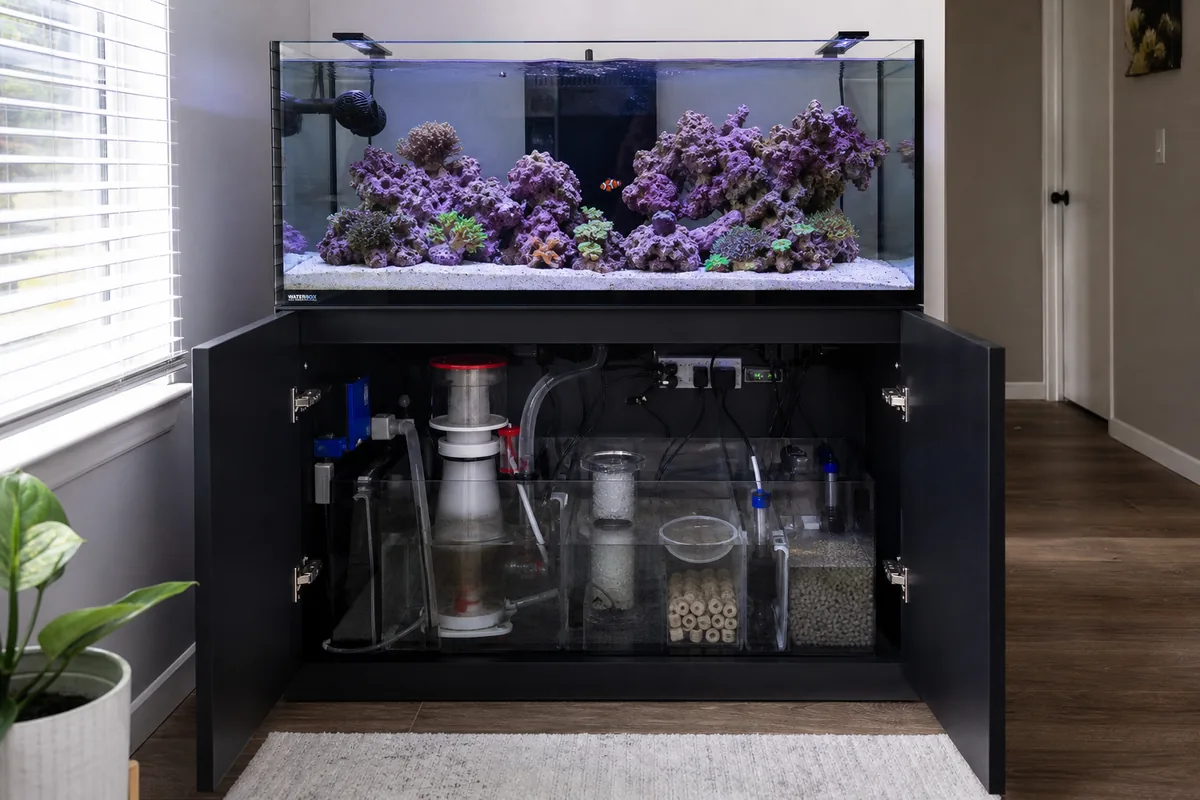
The non-negotiable equipment list is shorter than reef forums make it sound. You need clean source water, enough light, enough flow, and a way to export waste.
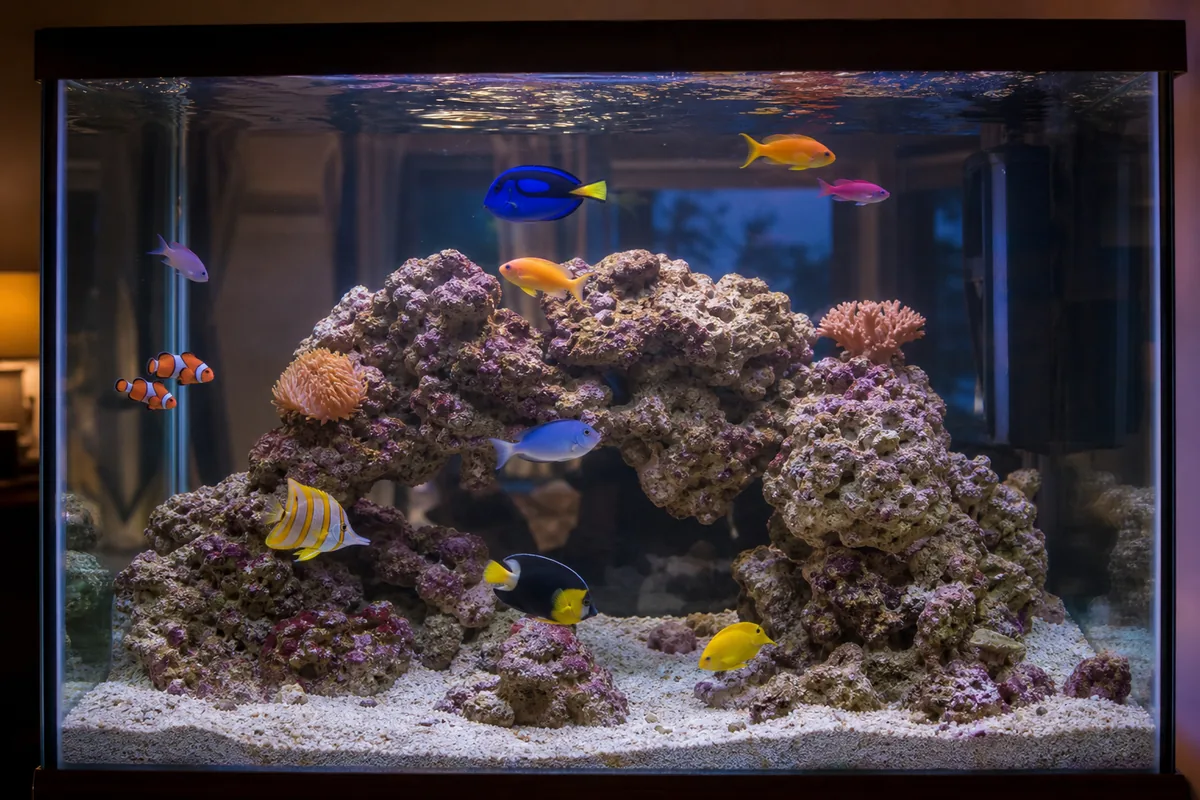
Good live rock structure matters as much as hardware because it creates bacterial surface area, coral shelves, and swim lanes that last for years.
You can delay automation, but you cannot delay measurement. If you do not test salinity and alkalinity consistently, you are guessing at the two numbers that crash beginner reefs fastest.
How do you set up a reef tank step by step?
The setup order matters because reef tanks punish rushing. Each stage makes the next stage safer.
Move forward only when the current stage is stable for several days, not because the calendar says it should be done.
- Step 1: Level the tank and test the system with fresh waterPlace the tank on a level stand, install the return, skimmer, heater, and powerheads, then run everything with fresh water for a leak test. Fix noise, splash, and plumbing issues now, before salt and rock make every adjustment harder.
- Step 2: Mix saltwater with RO/DI water before the tank is stockedMix the full batch to 1.025 to 1.026 specific gravity with heated, circulating RO/DI water. Do not mix salt directly in a stocked display later unless it is an emergency correction.
- Step 3: Build the rockwork before coral limits your optionsPlace the rock on the bare bottom or on secure supports, then add sand around it. Leave open channels for flow and future coral growth instead of building one solid wall.
- Step 4: Cycle the tank fully with an ammonia sourceRaise ammonia, test every 48 hours, and wait until the tank clears both ammonia and nitrite within 24 hours. Most new reefs need 4 to 8 weeks here, and shortcuts usually show up later as algae or coral loss.
- Step 5: Stabilize reef chemistry before coral goes inAfter the nitrogen cycle ends, begin testing alkalinity, calcium, magnesium, nitrate, and phosphate on a schedule. Hold stable ranges for at least 1 to 2 weeks before the first soft coral or cleanup crew goes in.
- Step 6: Add the cleanup crew and first fish conservativelyStart with snails and one or two hardy fish, not a full stocking list. If your first fish plan is a pair, our clownfish pairing guide explains why a bonded pair works but a third clownfish does not.
- Step 7: Add soft coral first, then LPS, then SPS much laterSoft coral and easy LPS tell you whether the system is really stable. SPS should wait until the tank has months of consistent alk consumption, clean flow, and predictable nutrient control.
A reef is ready for coral when the tank keeps the same chemistry all week. A reef is not ready because the glass looks clean.
Which fish, cleanup crew, and corals should you add first?
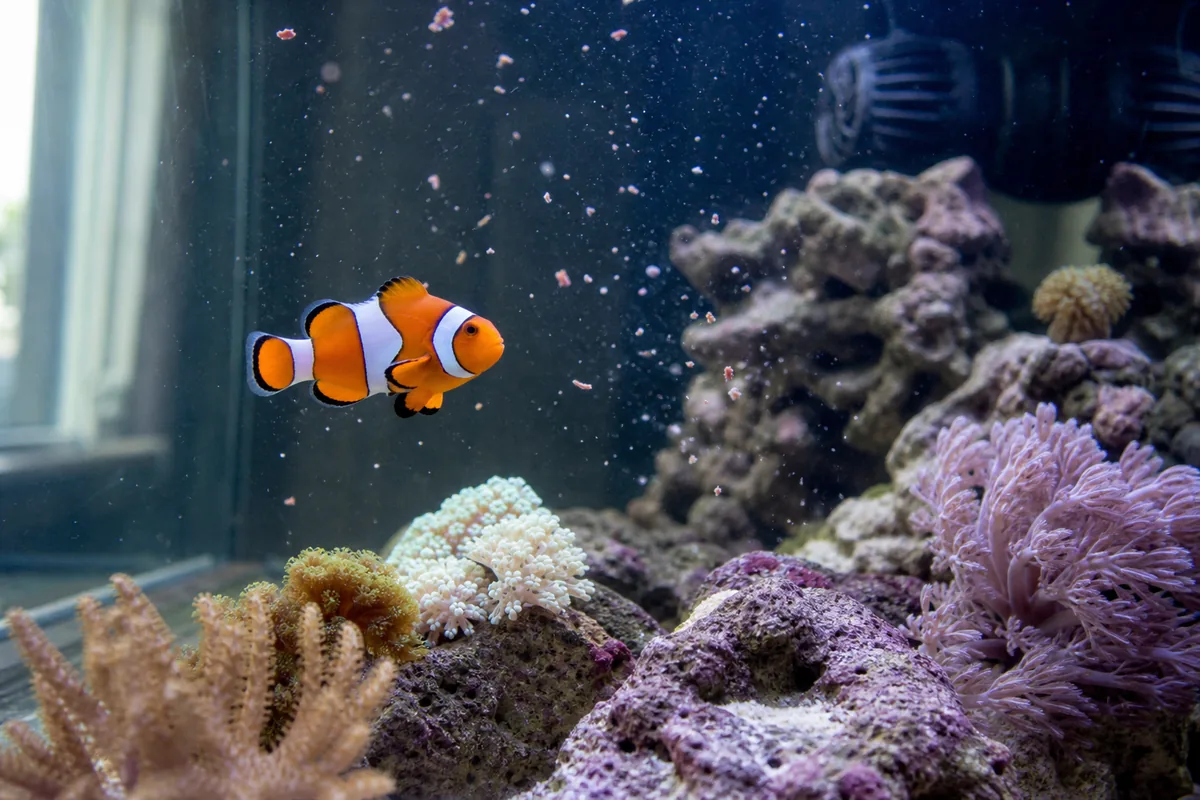
The safest first fish for most beginner reefs is still a captive-bred clownfish pair. They adapt well, eat readily, and fit the same early stocking path used in our clownfish tank mate list.
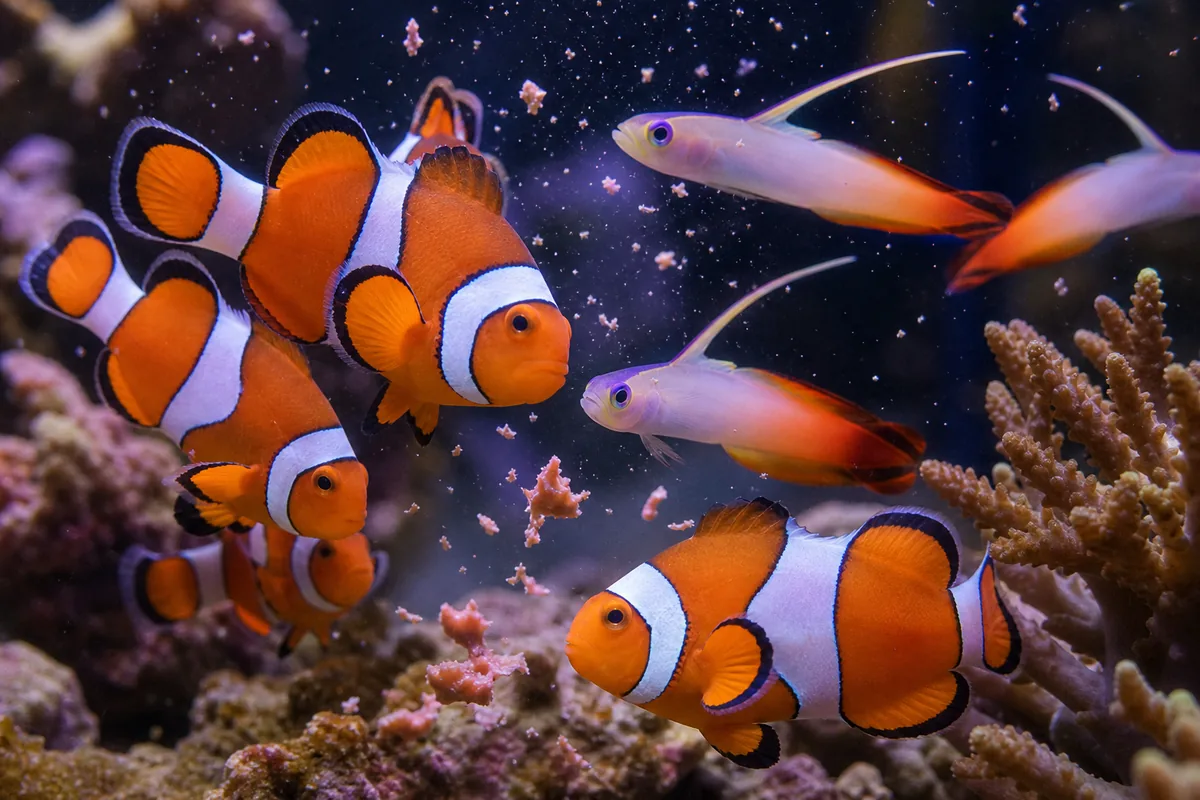
If you want a second fish after the tank settles, the clownfish and firefish pairing is one of the cleanest early combinations.
Firefish stay out of the hosting zone and keep the aggression map simple.
A cleanup crew should begin with snails before anything decorative. Our clownfish and snails guide shows why snails usually integrate cleanly even in smaller reef builds.
Cleaner shrimp can work early too, but they are still optional. The clownfish and shrimp guide covers when a shrimp becomes a real helper instead of just another mouth to feed.
Seahorses do not belong in this beginner path. The clownfish and seahorses comparison explains the flow, feeding, and stress conflict that makes that pairing fail.
For coral, start with mushrooms, zoanthids, and other forgiving soft coral. Add hammer, frogspawn, or Duncan coral only after you can hold alkalinity steady without guessing.
Do not make Acropora your first coral purchase. New tanks rarely keep the stability that SPS demands, even when the numbers look acceptable on one test day.
Which beginner mistakes crash reef tanks fast?
Most reef failures come from stacking several small mistakes, not one dramatic event. The tank usually warns you first with algae, closed polyps, or falling alkalinity.
- Using tap water: extra nutrients and contaminants make algae control and chemistry harder from day one
- Adding coral too early: a completed nitrogen cycle is not the same as reef stability
- Buying weak lighting: budget fixtures that cannot cover the full tank create dead coral zones fast
- Underestimating flow: low flow leaves detritus in the rock and weakens coral tissue
- Changing too many things at once: new salt, new dosing, and new livestock on the same weekend hides the real cause of stress
- Overstocking around clownfish: the store may say yes, but stocking pressure compounds nutrient swings and territorial stress
Stability is a habit, not a device. Even good gear fails if you react to every test result with a different correction.
What does weekly reef tank maintenance look like?
A reef tank asks for short, frequent maintenance instead of rare marathon cleanups. Small weekly corrections are safer than waiting for a monthly rescue.
If alkalinity falls every week, start there before chasing nitrate or phosphate. In a growing reef, alkalinity drift is often the first clear sign that the system has begun consuming more than your routine replaces.
Sources and references
- Coral calcification and alkalinity demand in closed marine systemsof Experimental Marine Biology and Ecology, 2020
- Refugium design and pH stabilization in reef aquariaAdvanced Aquarist, 2021
- Marine aquarium lighting and coral PAR requirementsof Miami Rosenstiel School of Marine Science, 2019