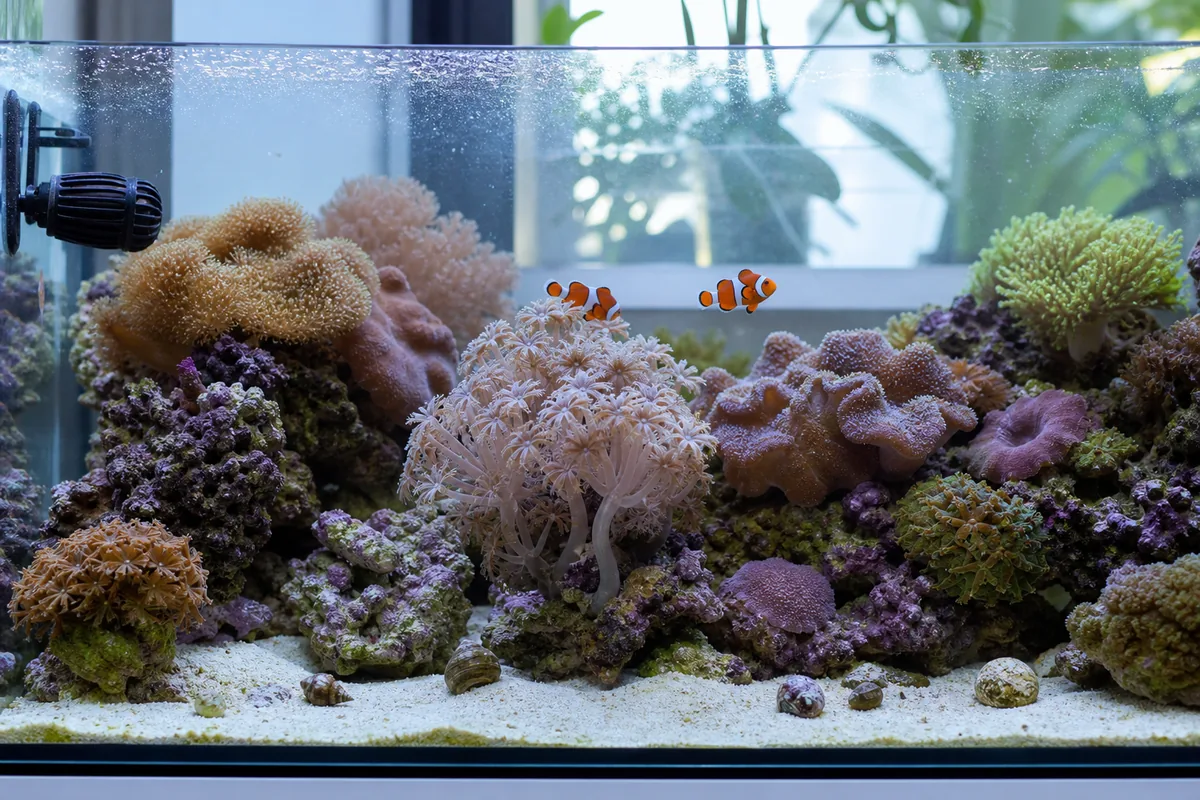
For most keepers, this is a low-risk add to a saltwater fish tank. Snails clean surfaces, clownfish hold one zone, and neither species needs the same shelter or feeding spot.
The clownfish care guide still matters. A breeding pair can become far more defensive around one coral head, powerhead, or anemone than new keepers expect.
Compatibility verdict
- Clownfish + SnailsDependsA very easy pairing in most reef tanks. Snails use different surfaces and rarely trigger lasting aggression from clownfish.
Why this pairing is usually so easy
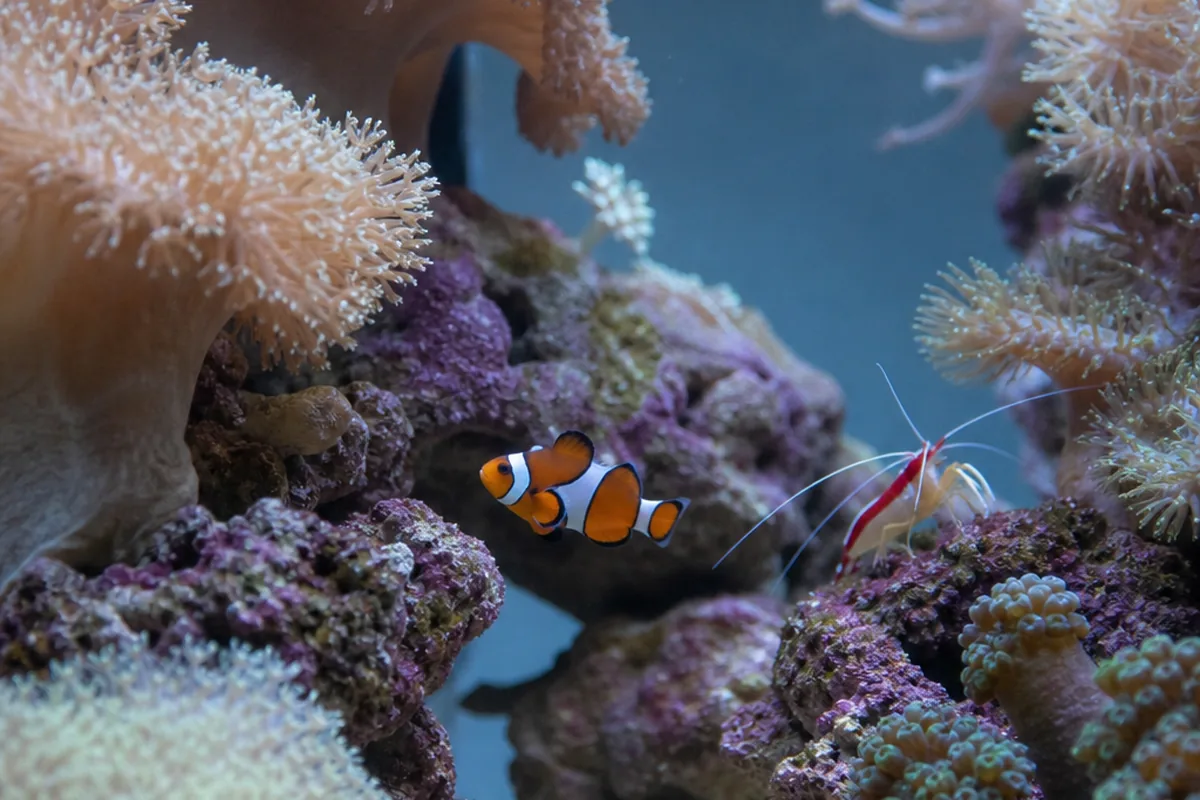
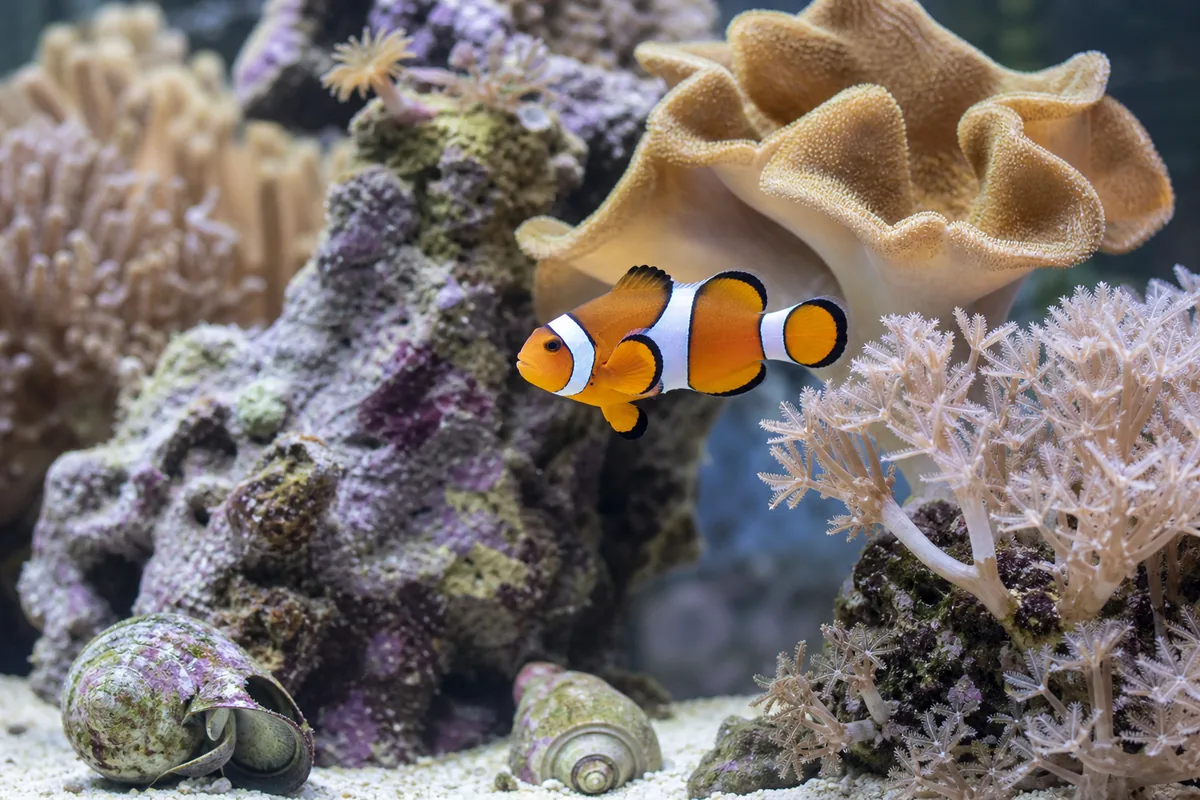
Snails are cleanup crew, not open-water tank mates. They move across hard surfaces and spend little time in the same part of the tank that clownfish defend.
That separation keeps conflict low. The clownfish notice the snail, but they usually have no reason to keep chasing it once it moves off the host area.
- Territory overlap: Very low because snails travel on surfaces while clownfish hover near one chosen site
- Feeding overlap: Minimal because snails graze film algae and leftover detritus rather than competing at the water column feeding lane
- Bioload impact: Manageable because snails add utility without creating a large fish-level waste load
- Main risk: A highly defensive clownfish pair may nip when a snail keeps crossing the host area
The clownfish tank setup guide helps because host placement decides how often snails wander through the defended zone.
The setup rules that keep it simple
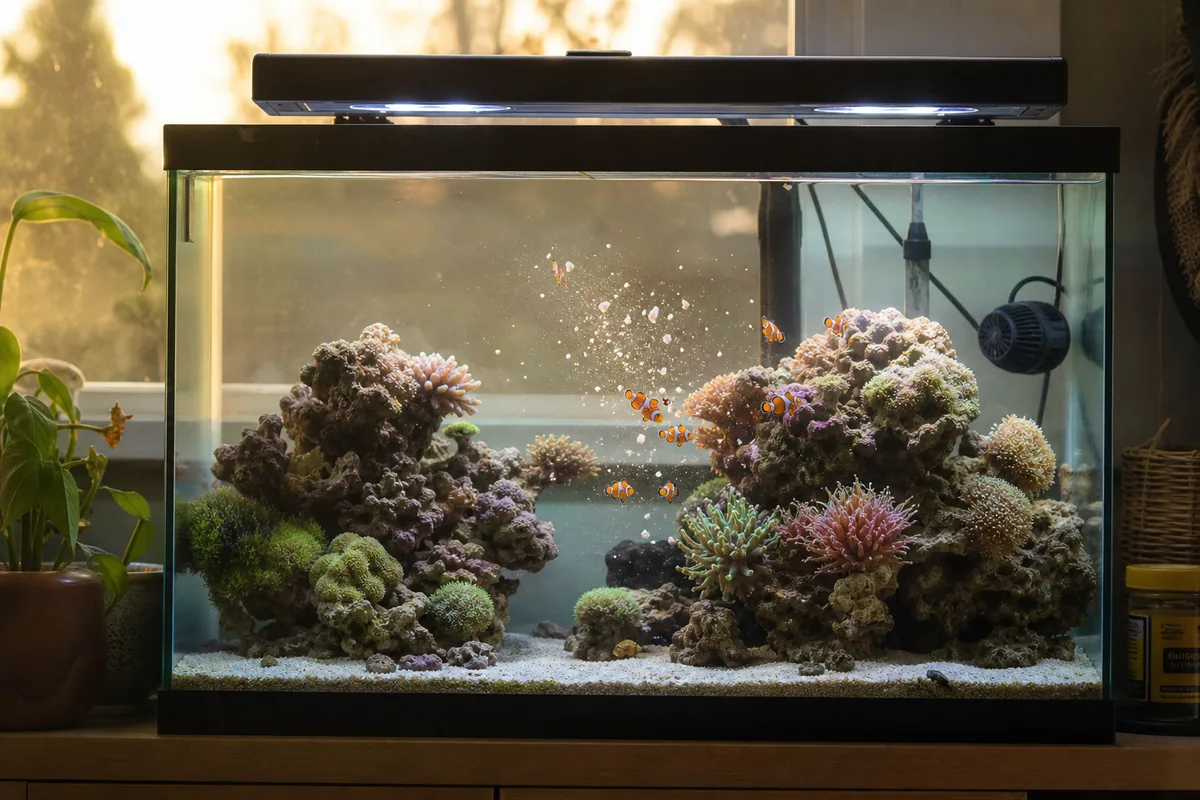
Keep the tank stable, mature, and stocked with enough algae film or leftover organics to support the cleanup crew. The reef tank setup guide helps you build enough surface area for snails to do useful work.
The live rock guide helps you keep that surface area useful as the reef fills in.
Do not treat snails as a fix for unstable nutrients. If the tank is still swinging through early setup problems, slow down and revisit the saltwater setup guide before you keep adding cleanup crew.
Most keepers do best with a small, mixed cleanup crew rather than a huge snail count. A few snails can keep glass and rock clean without turning the tank into a grazing shortage.
How many snails to start with
Start smaller than most people expect. A few healthy snails that can move around the tank safely are more useful than a large crew that runs out of food.
The exact number depends on algae, rock surface, and how clean the tank already is. A mature reef can support more than a new reef, but the host site still needs to stay easy for the clownfish.
- Underfed tank: Fewer snails, because the cleanup crew needs enough film to graze
- Mature reef: Small mixed crew, because the tank can support a little more surface cleaning
- Breeding clown pair: Keep host traffic low, because extra movement near the host raises nip risk
| Tank State | Snail Plan | Why |
|---|---|---|
| New reef | Wait | The tank is still stabilizing |
| Stable mature reef | Small cleanup crew | Enough food film to support them |
| Very clean tank | Fewer snails | Prevents starvation |
| Breeding clown pair | Place host structure carefully | Reduces repeated nipping routes |
Pros
- Very low conflict with clownfish in most tanks
- Snails add cleanup value without crowding the water column
- Works in small and medium reef systems
- No major dietary conflict with clownfish
Cons
- A breeding pair may still nip at snails near the host site
- Too many snails can starve in a clean tank
- Some snails fall and need help righting themselves
- Cleanup crew cannot solve unstable tank husbandry on its own
When clownfish and snails can become a problem
The usual problem is not real incompatibility. It is poor tank planning.
Examples include adding more cleanup crew than the tank can feed or letting one snail keep rolling through the clownfish host site every day.
A defensive pair may nip at the snail, especially if eggs are present. That does not always mean the pairing has failed, but repeated harassment tells you to move the host structure or reduce traffic through that area.
What else fits well in this same community
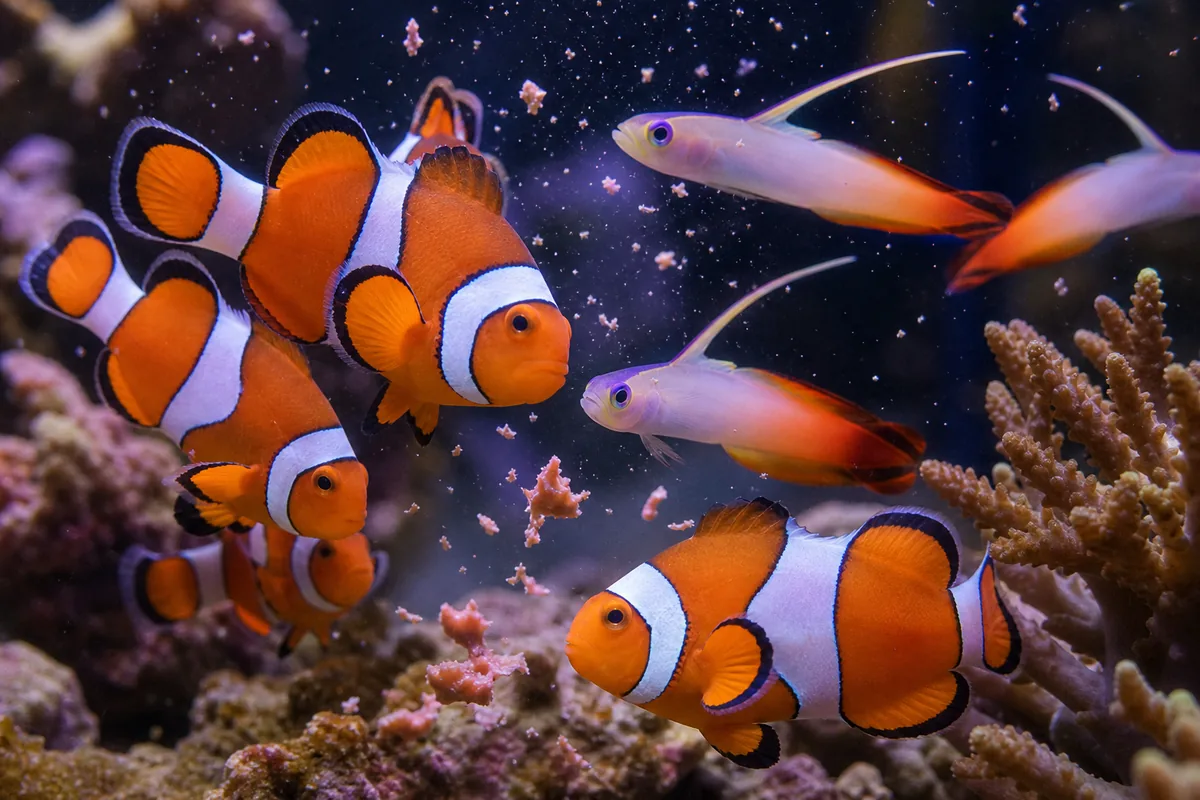
Once the snail crew is settled, you can add peaceful fish that stay out of the hosting zone. A firefish fits this style of reef well, and the clownfish tank mates page gives more low-drama options.
If you want one more reef-safe show fish in a larger tank, a coral beauty angelfish can work. The tank needs to be mature, and the stocking order needs to stay calm.
If the snails keep ending up in the host zone, move the host or change the rock path. That small change usually fixes the problem without changing the livestock list.
How to keep the cleanup crew from starving
A healthy reef gives snails enough film algae and detritus to graze without stripping the tank bare. If the glass stays spotless for days, you may already have more snails than the tank can support.
- Feed the tank, not the snails: A stable reef naturally supports more cleanup crew than a sterile one
- Watch the glass: If the algae never grows back, the crew may be too large
- Check the rock: Snails need surface film, not just one polished path
- Keep the host site clear: Fewer random crossings means fewer chances for clownfish to nip
The best snail plan is small and useful. You want enough cleanup to keep the reef tidy, but not so many snails that the tank becomes a food race for invertebrates.
Sources and references
- Clownfish species profile and host defense behaviorAquarium of the Pacific
- Marine reef stocking and husbandry referenceAdvanced Aquarist
- Reef cleanup crew and community husbandry referenceReefkeeping Magazine