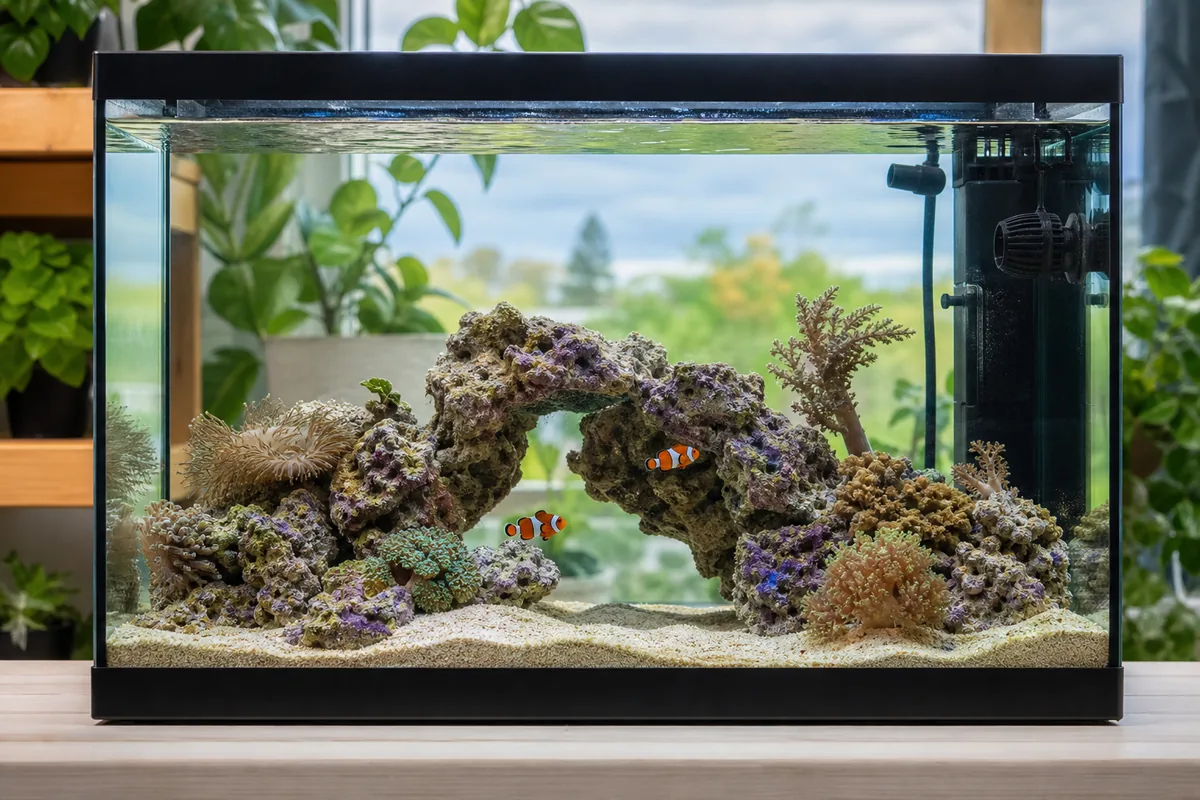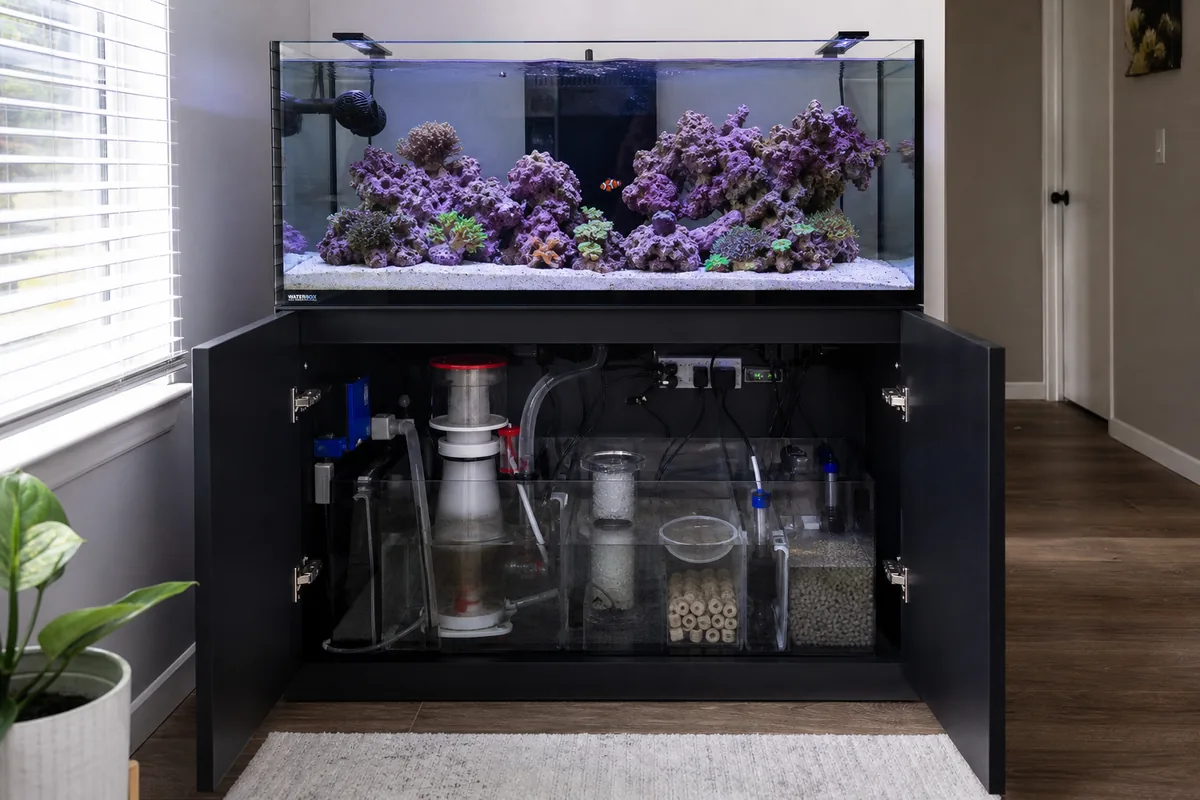
A beginner saltwater tank is not just a freshwater tank with salt added. The equipment list is longer, the cycling process takes more patience, and the cost of mistakes is higher because marine fish are more expensive.
But the process is not complicated. It's sequential.
This guide covers the complete setup process for a saltwater fish tank at the beginner level: equipment selection, water mixing, cycling, and first fish selection. Follow each step before moving to the next.
Beginner saltwater tank costs: realistic budget breakdown
The most common cause of beginner failure is underbudgeting. A reef-ready tank setup bought piecemeal almost always costs more than buying a complete starter system.
Budget accurately before you start purchasing.
| Item | Budget Option | Mid-Range Option | Notes |
|---|---|---|---|
| Tank (30-gallon) | $80-$120 | $180-$250 | AIO (all-in-one) kits include sump |
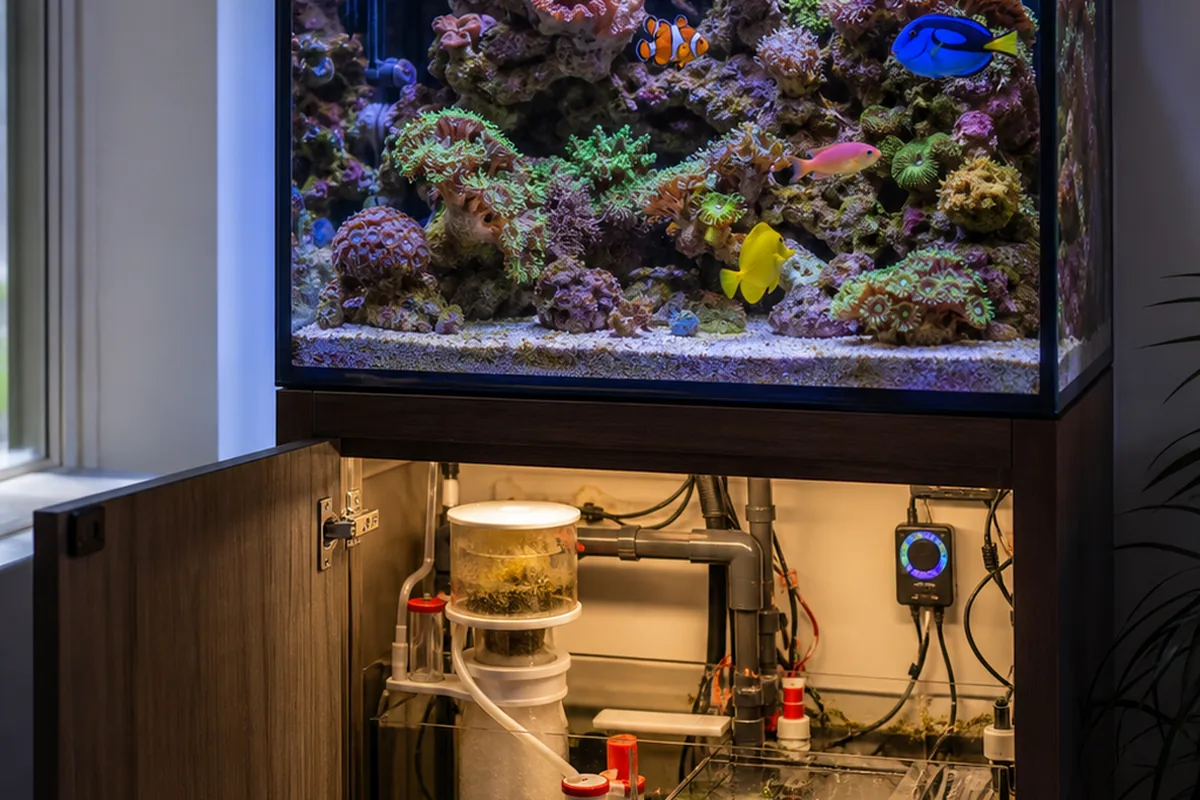
| Filter/Sump | $40-$80 (HOB) | $150-$300 (sump) | HOB adequate for FOWLR |
| Protein skimmer | $60-$100 | $150-$250 | Don't skip - essential for saltwater |
| Heater + thermometer | $30-$50 | $80-$120 | Controller heater prevents overheating |
| Powerhead | $30-$60 | $80-$150 | Two smaller pumps better than one large |
| Lighting | $50-$100 | $150-$400 | Reef lighting costs more; FOWLR needs less |
| Refractometer | $15-$25 | $30-$60 | One-time purchase, calibrate with RO water |
| Test kit | $30-$45 | $45-$80 | API master kit is minimum; Salifert more accurate |
| Salt mix (10-gallon bucket) | $30-$40 | $50-$70 | Covers initial fill + 3 months of water changes |
| Live rock (45 lbs) | $90-$135 | $180-$270 | Aquacultured rock costs more but arrives cleaner |
| Sand (30 lbs) | $25-$40 | $40-$60 | Aragonite only - not silica sand |
| Total | $480-$795 | $1,103-$1,980 | Before fish and coral |
Fish and cleanup crew add $100-$300 for a modest beginner stocking. Buy fish over time - one or two per month - rather than all at once.
How to set up a beginner saltwater tank: step-by-step process
Each step builds on the one before it. Do not skip or reorder steps.
The nitrogen cycle (steps 5-7) is where most beginners fail by rushing.
- Step 1: Rinse and position the tankPlace the tank on a level, load-bearing surface. A 30-gallon filled with saltwater weighs approximately 300 lbs. Rinse the tank with fresh water only - no soap or cleaning products. Position it away from direct sunlight to reduce algae pressure.
- Step 2: Rinse and add the substrateRinse aragonite sand in a bucket with fresh water until the runoff runs mostly clear. Add 2-3 inches of sand to the dry tank. Do not use more than 3 inches in a beginner setup - deep sand beds require specific management to avoid anaerobic pockets.
- Step 3: Mix saltwater and fill the tankMix marine salt with RODI water in a separate container to 1.025 specific gravity. Measure with a refractometer, not a hydrometer. Add the saltwater slowly to the tank to avoid disturbing the sand. Fill to the operating level.
- Step 4: Install equipment and add live rockInstall the heater, powerhead, and filter. Set the heater to 78 degrees F. Add live rock in a three-dimensional arrangement that creates caves and swim lanes. Do not pile rock against the back glass - allow water flow behind the rock structure.
- Step 5: Seed the cycle and add ammonia sourceAdd a bacterial starter culture (Fritz TurboStart 900 or Dr. Tim's One and Only) and an ammonia source. Use Dr. Tim's Ammonium Chloride to raise ammonia to 2 ppm. Do not add fish. Test every 48 hours.
- Step 6: Monitor the nitrogen cycle for 3-6 weeksWatch for ammonia to spike, then drop as nitrite rises. Nitrite then peaks and drops as nitrate builds. When ammonia and nitrite both read 0 ppm within 24 hours of adding 2 ppm ammonia, the cycle is complete. This takes 3-6 weeks.
- Step 7: Perform a water change and add first fishDo a 25-30% water change after the cycle completes to reduce nitrate below 20 ppm. Add the first fish: a captive-bred clownfish pair or a small group of chromis damsels. Wait 2-4 weeks before adding a second species.
First fish for a beginner saltwater tank: 5 reliable choices
The best beginner saltwater fish share three traits: they tolerate minor water quality fluctuations, they accept prepared foods without training, and they stay small enough for a 30-gallon tank.
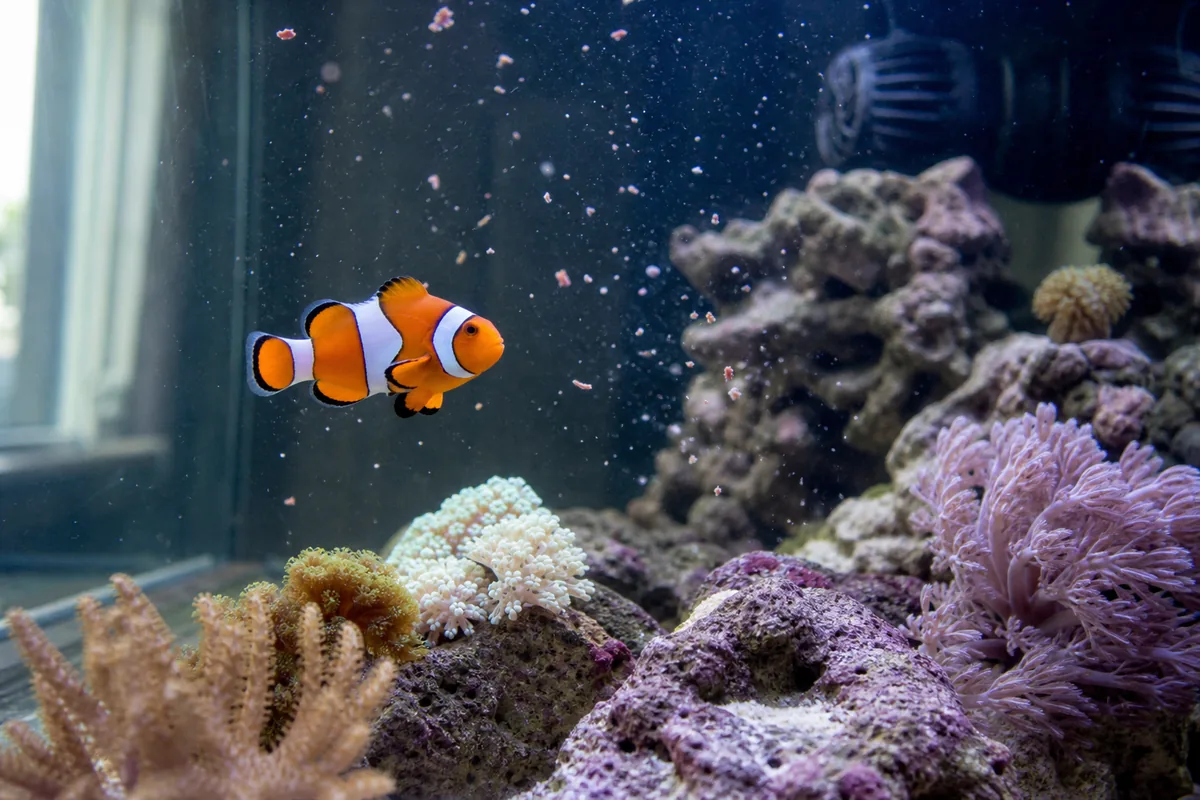
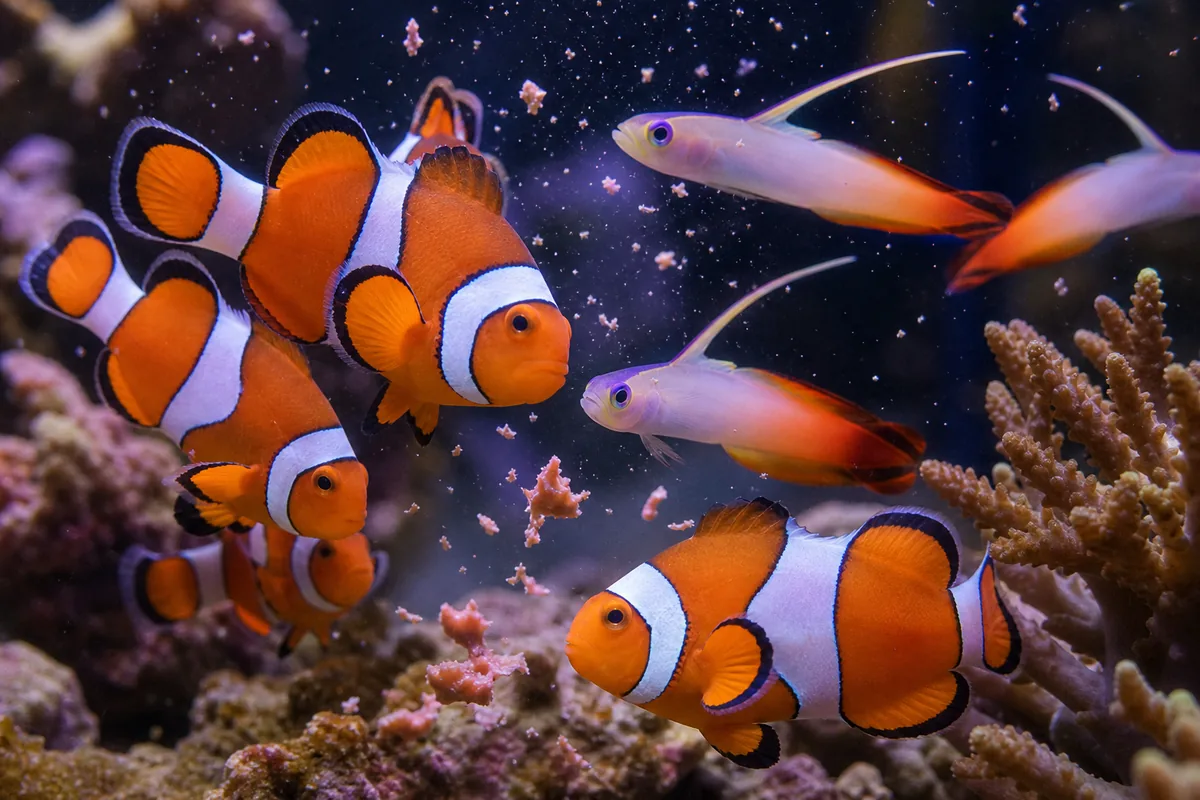
- Ocellaris clownfish: The safest first fish - captive-bred, hardy, stays under 3.5 inches, eats pellets from day one
- Royal gramma: Colorful, 3-inch max, tolerates moderate nitrate, reef safe
- Firefish goby: Peaceful, 3-inch max, works in 10-gallon nano, needs a tight lid
- Banggai cardinalfish: Slow-moving, accepts all prepared foods, unique mouthbrooding behavior
- Blue-green chromis: Schooling fish, peaceful, active mid-water swimmers, best in groups of 5+
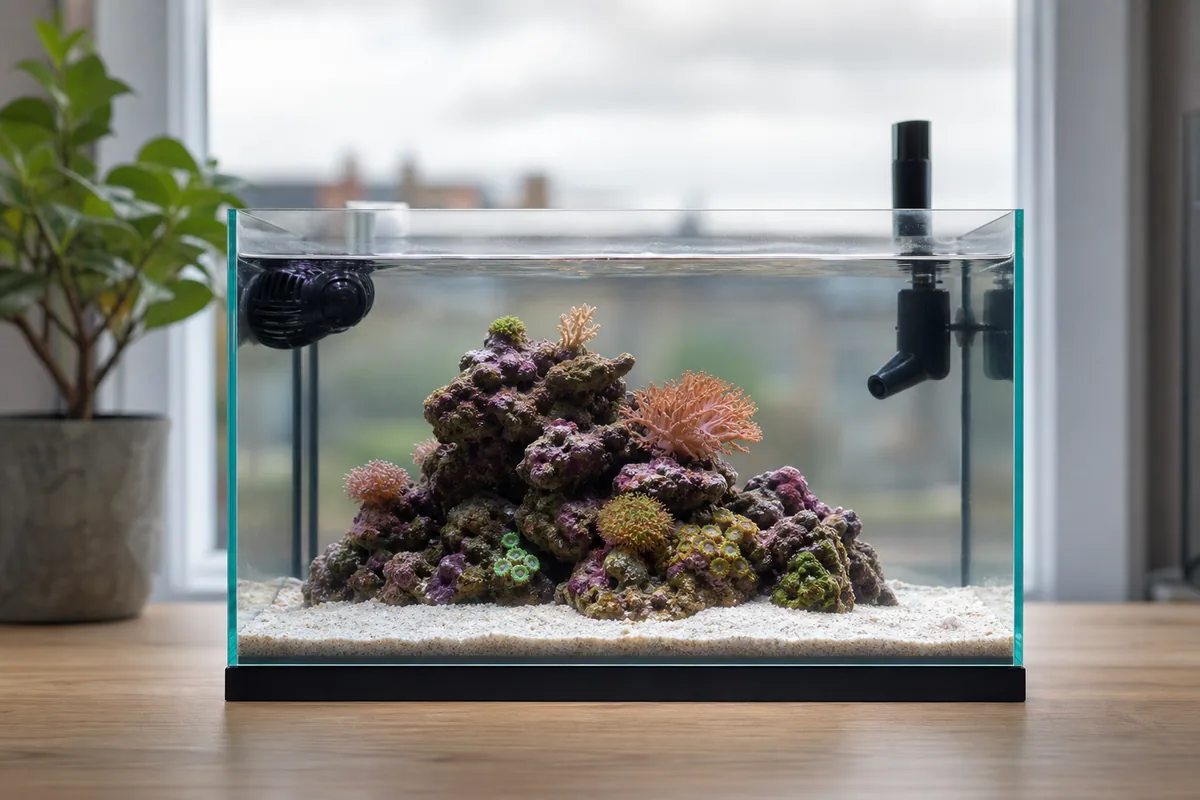
Beginner saltwater tank maintenance schedule
Consistent maintenance prevents the parameter swings that kill marine fish. The schedule for a 30-gallon fish-only tank is manageable at under 2 hours per week once the system is established.
For keepers planning to add coral, the reef tank setup guide covers the additional equipment and parameter monitoring a reef system requires beyond this fish-only foundation.
Yellow tang is a popular addition once a tank matures. The yellow tang minimum tank size is 75 gallons, making it a species to plan for in an upgrade rather than a starter tank.
Blue tang is frequently requested by beginners. The blue tang care requirements include a 100-gallon minimum and high ich susceptibility that classify it as intermediate despite its fame.
Mandarin dragonet requires a mature reef. The mandarin dragonet pod requirements make it unsuitable for any first-year setup regardless of water quality.
Coral beauty angelfish works in larger systems. The coral beauty size requirements cover the 70-gallon minimum relevant to planning a stocking upgrade.
Six-line wrasse controls pests and adds color. The six-line wrasse compatibility notes explain the stocking order needed to prevent aggression problems.
Damselfish are commonly suggested but often problematic. The damselfish territorial aggression guide explains why adding aggressive species first creates long-term community problems.
Sources and references
- Nitrogen cycle dynamics in marine aquarium systemsof Florida IFAS Extension Aquaculture, 2020
- Marine aquarium water quality managementAdvanced Aquarist Online Magazine, 2021
- RODI water quality standards for marine aquariaAquarium Science Association of the Americas, 2019