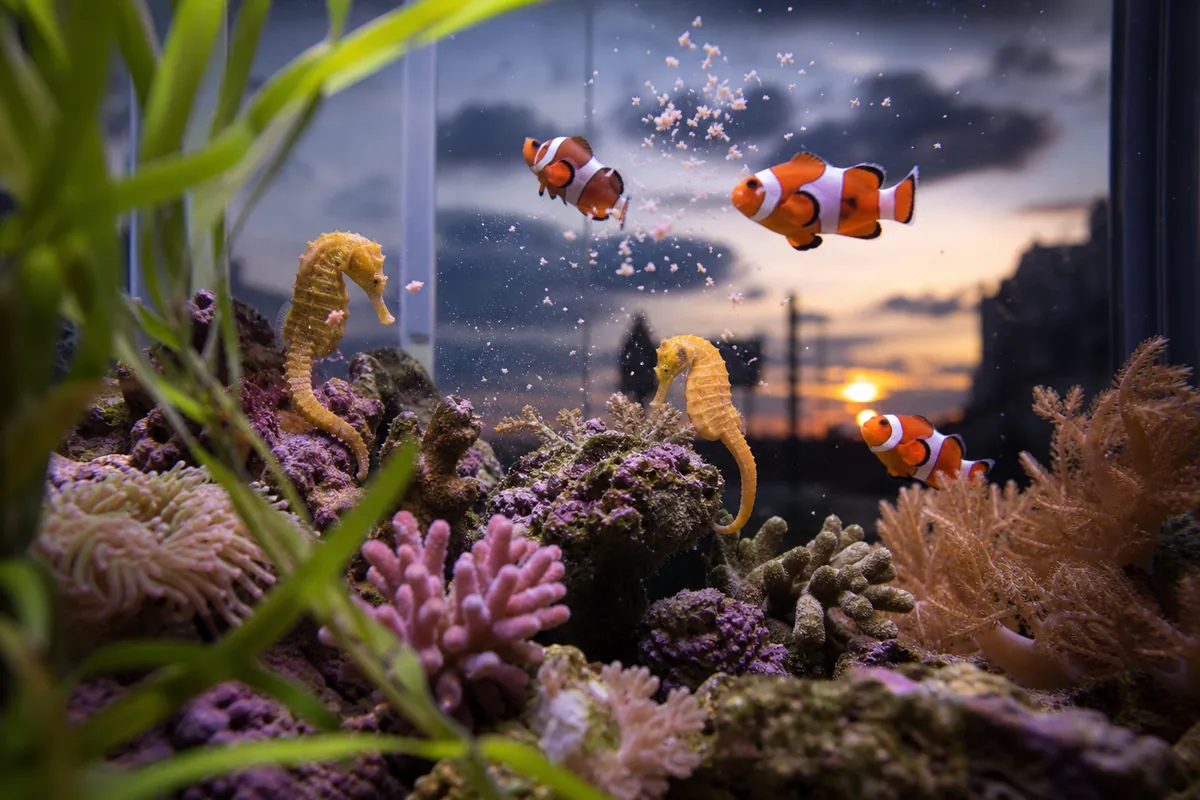
If you are choosing between these animals, build the tank for one path, not both. A standard saltwater fish reef with clownfish usually runs too active for seahorses.
A proper seahorse setup is also too specialized to justify adding clownfish.
If you still want to plan the clownfish side of the tank, the clownfish care guide is the better starting point.
The clownfish tank setup guide explains the clownfish side in more detail.
Compatibility verdict
- Clownfish + SeahorsesDependsDifferent feeding pace, different flow preference, and different stocking style make this a poor long-term match in most home tanks.
Why clownfish and seahorses want different tanks
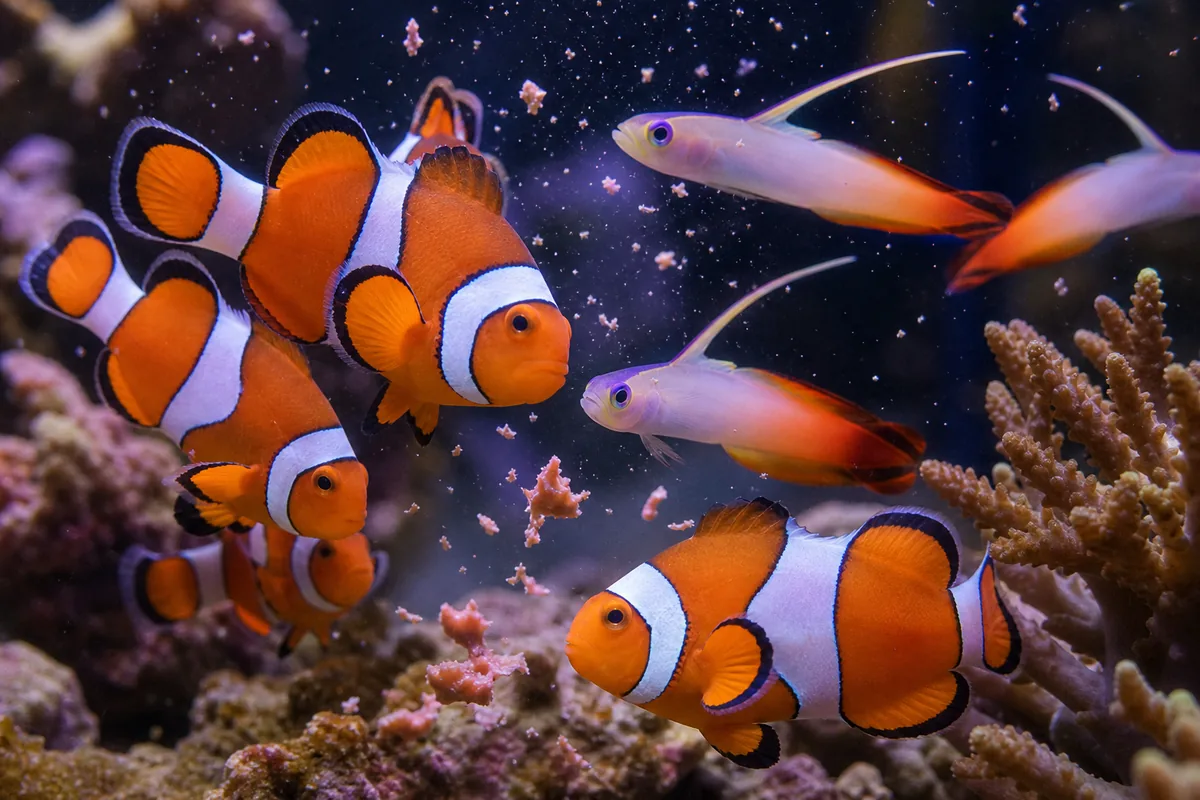
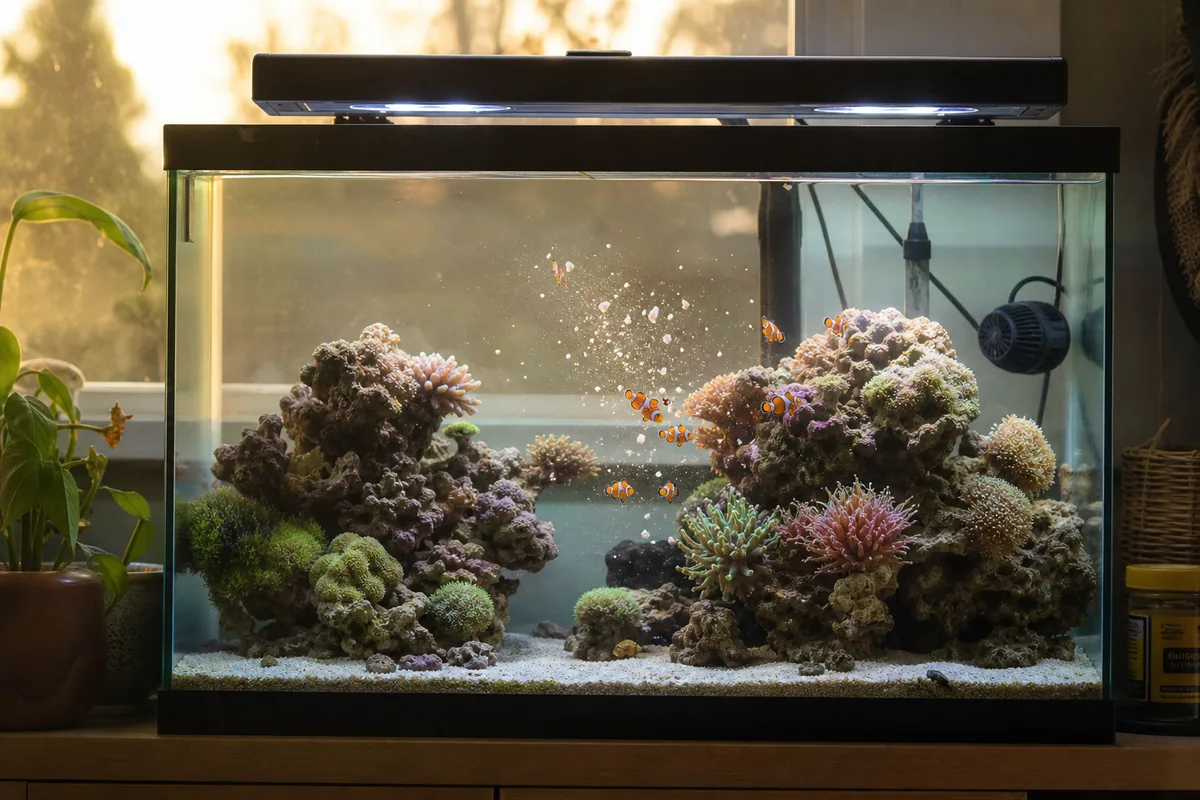
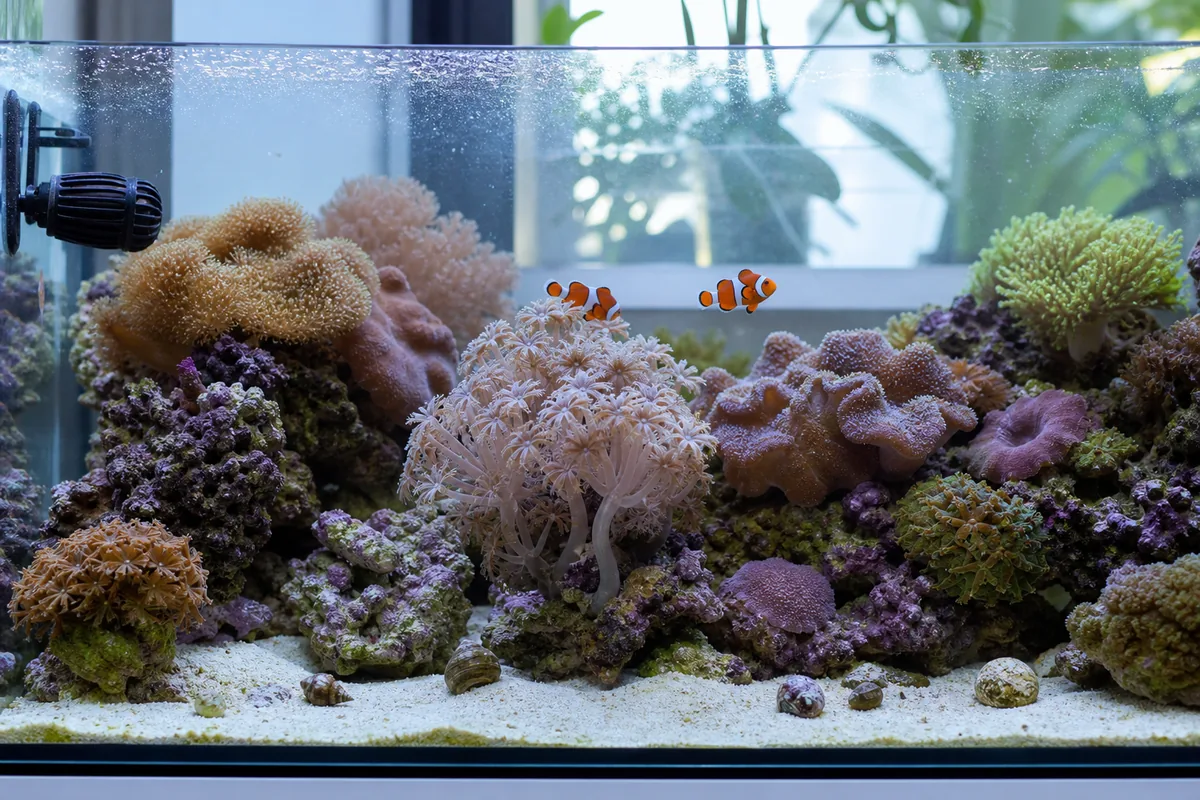
Clownfish do well in active reef systems with brisk circulation, strong biological filtration, and a community plan built around one defended host site. They grab floating food quickly and settle into a territorial routine that makes sense in a normal mixed reef.
Seahorses need a slower tank. They hitch to structure, feed more deliberately, and do best when they do not have to compete with quicker fish for every meal.
That is why the pairing feels wrong even when neither fish is openly hostile. The tank rhythm is built for the clownfish, but the seahorse pays the price in stress and feeding access.
| Need | Clownfish | Seahorses | Mixing Result |
|---|---|---|---|
| Flow | Moderate reef flow | Gentler flow with calm zones | Compromise usually favors clownfish |
| Feeding speed | Fast, direct, opportunistic | Slow, target-based, deliberate | Seahorses lose the food race |
| Tank layout | One host site and open swim lanes | Multiple hitching posts and quiet pockets | Layout becomes cluttered or too open |
| Stocking style | Mixed reef compatible | Specialized community | Two different husbandry plans in one tank |
The saltwater setup guide is a useful baseline for reef fish, but it does not remove the seahorse problem.
What a seahorse tank actually needs
A seahorse tank needs calm zones that let the fish hitch and eat without getting pushed around. It also needs structure that gives each animal a place to rest, because seahorses are not built to spend the day swimming against current.
That usually means more vertical support, more protected corners, and less emphasis on broad open-water movement. The live rock guide helps with the structure side, but the water movement still needs to stay gentler than a typical clownfish reef.
Feeding matters even more. Seahorses often do better with a slower, more controlled feeding routine, while clownfish dart in and dominate the front of the tank.
Pros
- Seahorse tanks reward calm structure and patient feeding
- A dedicated tank makes it easier to control husbandry details
- No fast fish means less food competition at meal time
Cons
- The setup is less flexible than a standard reef
- Clownfish behavior works against the slower seahorse feeding rhythm
- A mixed tank often forces compromises that weaken both animals
- More structure can reduce swimming room for active reef fish
If you want a good reef fish companion for clownfish instead, the clownfish tank mates page is a better fit.
The point is to choose fish that match the same tank pace, not fish that need a different one.
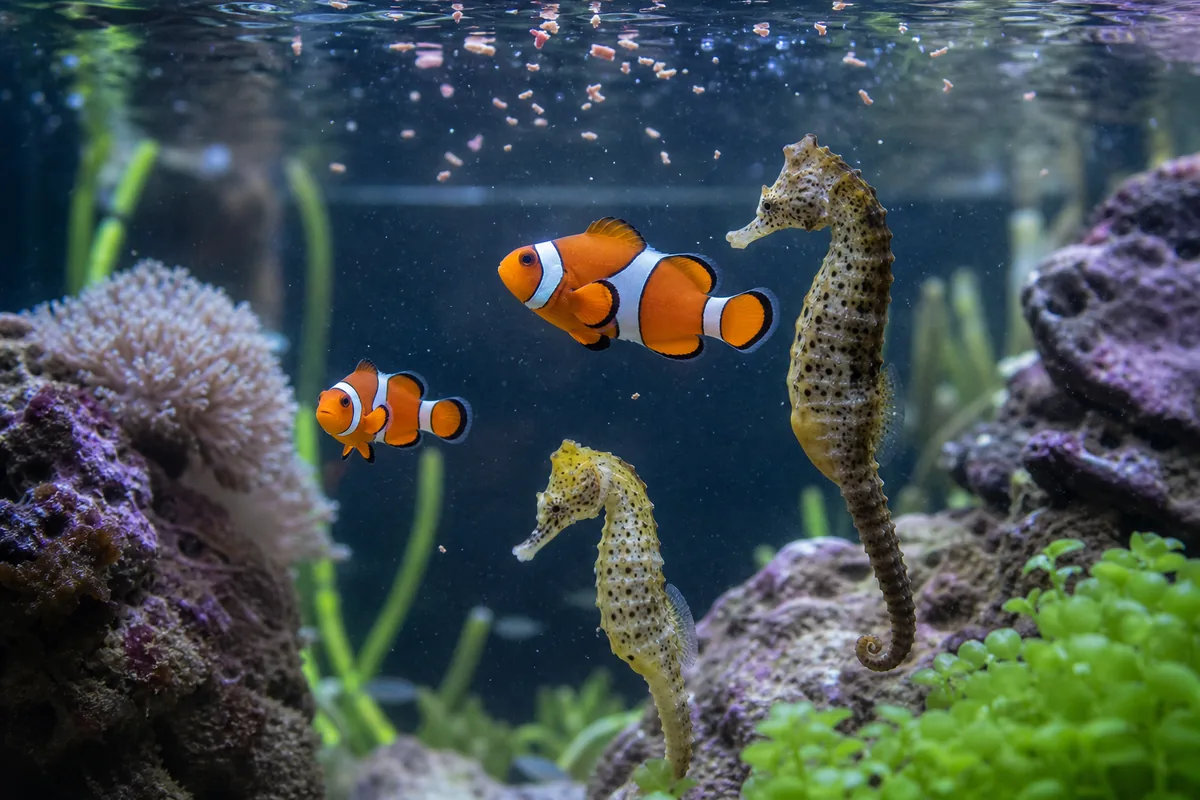
Where this pairing breaks down in real tanks
The biggest problem is feeding. Clownfish dart into pellets and frozen food fast, while seahorses need a slower target area and more control over how food moves through the tank.
The second problem is flow. A reef built around clownfish, coral placement, and normal pump turnover often leaves seahorses working too hard just to stay hitched and eat properly.
The third problem is behavior around one defended corner. A clownfish pair that guards a host site adds another source of pressure in a setup where the seahorse already struggles to compete.
Even if you never see a dramatic fight, the seahorse can still lose condition over time. That is the part many keepers miss when they look only for visible aggression.
If your current goal is a calm reef with personality fish, a firefish guide fits that role much better than a seahorse.
It is easier to match to a normal reef pace.
Warning signs in the first week
Most failed mixed tanks do not collapse on day one. They fail through small stress signals that keep stacking until the seahorse stops eating well or stops using the tank the way it should.
If you see the same warning twice, treat it as a setup problem, not a temporary adjustment period.
- Less feeding: The seahorse misses food because the clownfish reaches the meal first
- Less hitching: The seahorse stops using the best perch and starts floating in the open
- More hiding: The seahorse stays tucked into corners instead of exploring the tank
- More chasing: The clownfish keeps patrolling the same calm area that the seahorse wants to use
Those signs usually mean the tank is asking one fish to compromise too much. In a mixed reef, that fish is usually the seahorse.
What to keep with clownfish instead
If your goal is a peaceful clownfish reef, build around fish that can handle normal reef flow and active feeding. A firefish fits that style much better than a seahorse.
For larger systems, a coral beauty angelfish can work when the tank is mature and the stocking order stays calm. The bigger point is that the tank should stay in the clownfish lane instead of trying to bridge two very different husbandry models.
The clownfish damselfish guide is another useful read if you are comparing community options. It shows a pairing that stays within the same reef logic instead of crossing into seahorse-only territory.
If you want to build the tank from scratch, start with the clownfish tank setup guide.
Then decide whether the rest of the stocking plan really belongs in a standard reef.
Sources and references
- Clownfish species profile and reef host behaviorAquarium of the Pacific
- Syngnathid husbandry manual for public aquariums and captive careProject Seahorse
- Hippocampus species reference and aquarium trade dataFishBase