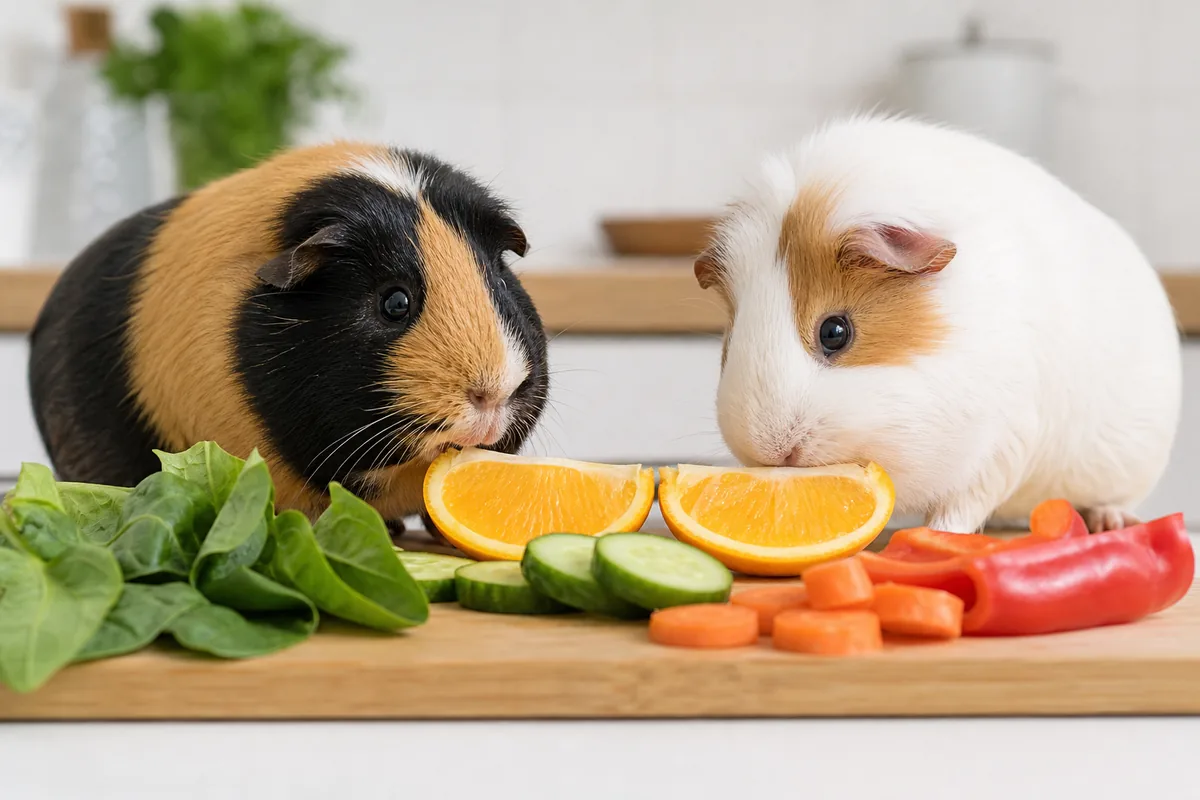
Oranges solve one of the core dietary challenges of guinea pig ownership: delivering vitamin C in a form animals actually want to eat. Their small mammal diet requires 10-30mg of vitamin C daily, and unlike many other vitamin C-rich foods, oranges are almost universally accepted with enthusiasm.
The limiting factor is not sugar but citric acid. High citric acid intake causes mouth sores in guinea pigs with repeated exposure, and the acidic content can irritate the digestive lining if offered too frequently.
Once or twice a week balances the vitamin C benefit against the acid risk.
Oranges for Guinea Pigs
- Orange flesh segmentsSafe
- no seedsSafe
- Orange peel (pesticide concentrationUnsafe
- essential oils irritating to guinea pigs)Unsafe
- seedsUnsafe
- orange pith in large amountsUnsafe
Prep: Peel completely, remove all seeds and strings of pith, separate into segments, cut segments in half for smaller animals Freq: 1-2 times per week Amount: 1-2 small segments (approximately 10-20g) per serving
Orange Nutrition: 53.2mg Vitamin C Per 100g at Moderate Sugar
Fresh orange flesh contains 53.2mg of vitamin C per 100g, placing it among the top vitamin C sources in a guinea pig's diet. A single segment weighing 15g delivers approximately 8mg of vitamin C, a meaningful portion of the daily 10-30mg requirement.
The sugar content of 9.4g per 100g is moderate and manageable at once or twice weekly servings. The fructose and glucose present are no different from other safe fruits at similar sugar levels like apple or blueberry.
- Vitamin C: 53.2mg per 100g, strong contribution to the daily 10-30mg requirement
- Sugar: 9.4g per 100g, moderate, lower than banana or grapes
- Folate: 30mcg per 100g, supports cell division, relevant for pregnant sows
- Potassium: 181mg per 100g, electrolyte supporting heart and muscle function
- Citric acid: 0.6-1.5g per 100g, beneficial at low frequency, irritating with daily feeding
The folate content makes oranges particularly useful for breeding sows. Folate supports rapid cell division during pregnancy, and a twice-weekly orange segment provides a natural, palatable dietary source alongside leafy greens.
Strawberries deliver slightly more vitamin C than oranges at lower acid cost. Our strawberries for guinea pigs guide explains why they are the preferred regular fruit for vitamin C supplementation when acid sensitivity is a concern.
Why the Peel Must Be Removed
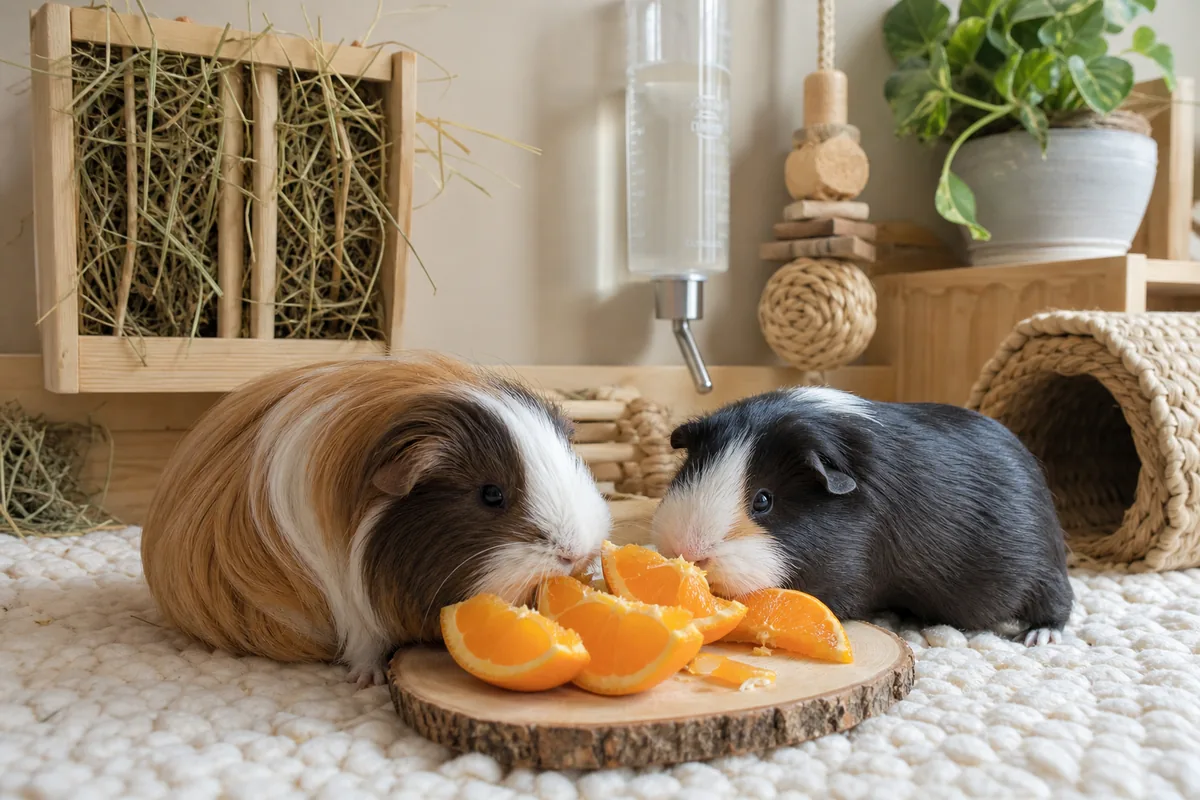
Orange peel is not appropriate for guinea pigs for two distinct reasons. First, it concentrates pesticide and wax residue from the growing and processing stages far more than the flesh.
Second, orange peel contains d-limonene and linalool, essential oil compounds that are safe for humans but can irritate the digestive tract of small rodents.
The white pith between the peel and the flesh is safe in small amounts. It contains hesperidin, a flavonoid with anti-inflammatory properties, and a modest amount of fiber.
Thin strings of pith attached to a segment present no concern. Large chunks of pith, however, add bitterness that most guinea pigs reject and contribute unnecessary bulk.
Orange vs Other Top Vitamin C Sources
| Food | Vitamin C per 100g | Acid Level | Max Frequency |
|---|---|---|---|
| Parsley | 133mg | Low | Daily (small amount) |
| Red bell pepper | 127.7mg | Very low | Daily |
| Kale | 93.4mg | Low | 3-4 times weekly |
| Strawberry | 58.8mg | Low-moderate | 3-4 times weekly |
| Orange | 53.2mg | High | 1-2 times weekly |
| Banana | 8.7mg | Very low | 1-2 times weekly |
Red bell pepper and parsley are the most efficient daily vitamin C delivery vehicles because their acid level allows daily feeding without the mouth sore risk. Orange occupies an important role as a flavorful, high-C treat on days when the guinea pig's enthusiasm for pepper or parsley is lower.
Bananas sit at the bottom of this comparison on vitamin C. Our bananas for guinea pigs guide explains how the once-or-twice-weekly limit applies and why oranges outperform them on nutritional value despite similar sugar levels.
Grapes carry more sugar than oranges at 16g per 100g and less vitamin C. Our grapes for guinea pigs guide covers the once-weekly maximum and how grapes fit in the same rotation as oranges without stacking sugar.
For a full picture of the daily vitamin C strategy, our guinea pig care guide covers how to build a reliable rotation across the week using orange alongside other C-rich foods.
How to Prepare Oranges for Guinea Pigs
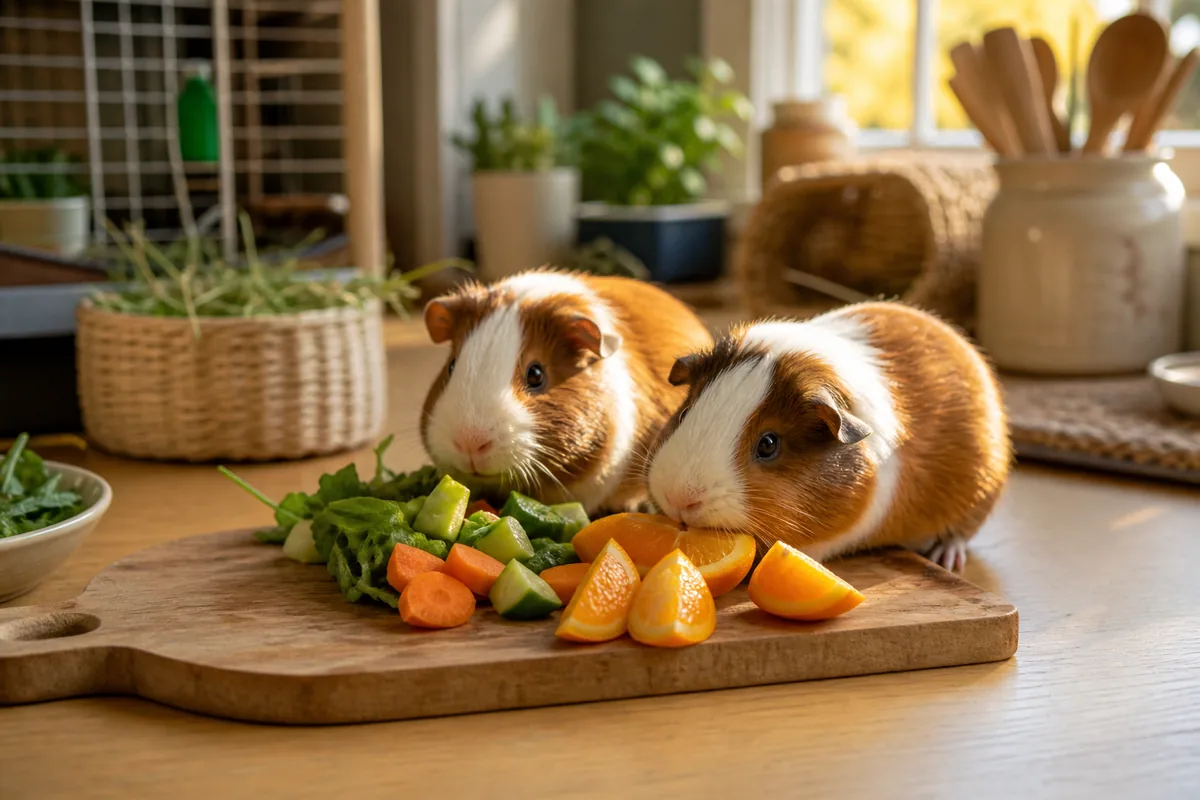
Washing the outer peel before peeling is not redundant. The knife blade transfers surface contaminants from the peel to the flesh as you cut through it.
A washed orange produces cleaner flesh even after peeling, reducing pesticide transfer to the segments.
Celery makes an ideal pairing with orange on the same serving day: the hydration benefit of celery complements the vitamin C value of orange without any sugar conflict. Our celery for guinea pigs guide covers the essential string-chopping prep step.
Spinach is a strong vitamin C companion for orange on non-citrus days. Our spinach for guinea pigs guide explains the twice-weekly oxalate limit and how it fits into the same rotation.
Signs the Acid Is Too Much
Citric acid irritation develops gradually with regular orange feeding. The signs are specific enough to distinguish from other dietary issues.
- Mouth sores or redness around the lips: direct citric acid irritation, reduce or remove orange
- Reluctance to eat hard foods: mouth discomfort from acid sores making chewing painful
- Drooling: excess saliva production in response to oral irritation
- Soft droppings: excess fructose and acid load affecting gut environment
- Pawing at the mouth: discomfort response, warrants visual inspection of the oral cavity
Mouth sores resolve within 5-7 days once the acid source is removed from the diet. If sores persist beyond a week or the guinea pig stops eating, a veterinary examination is needed to rule out unrelated dental or bacterial causes.
Tomatoes are a lower-acid treat that contributes vitamin C without the same oral irritation risk. Our tomatoes for guinea pigs guide covers the solanine safety concern and how tomatoes fit as a more frequent addition to the rotation.
Watermelon provides hydration on the days between orange servings without adding acid load. Our watermelon for guinea pigs guide covers the 1-inch cube serving and 2-3 times per week frequency.
Hamsters also enjoy oranges but at very different portion sizes due to their smaller body weight. Our hamster care guide explains how body weight changes the math for citrus-based treats across species.
Sources and references
- Vitamin C content and citric acid levels in orange varietiesUSDA FoodData Central, 2023
- Ascorbic acid metabolism and requirements in Cavia porcellusof Nutrition, 2019
- Oral health and dietary acid in small herbivoresVeterinary Clinics of North America: Exotic Animal Practice, 2021