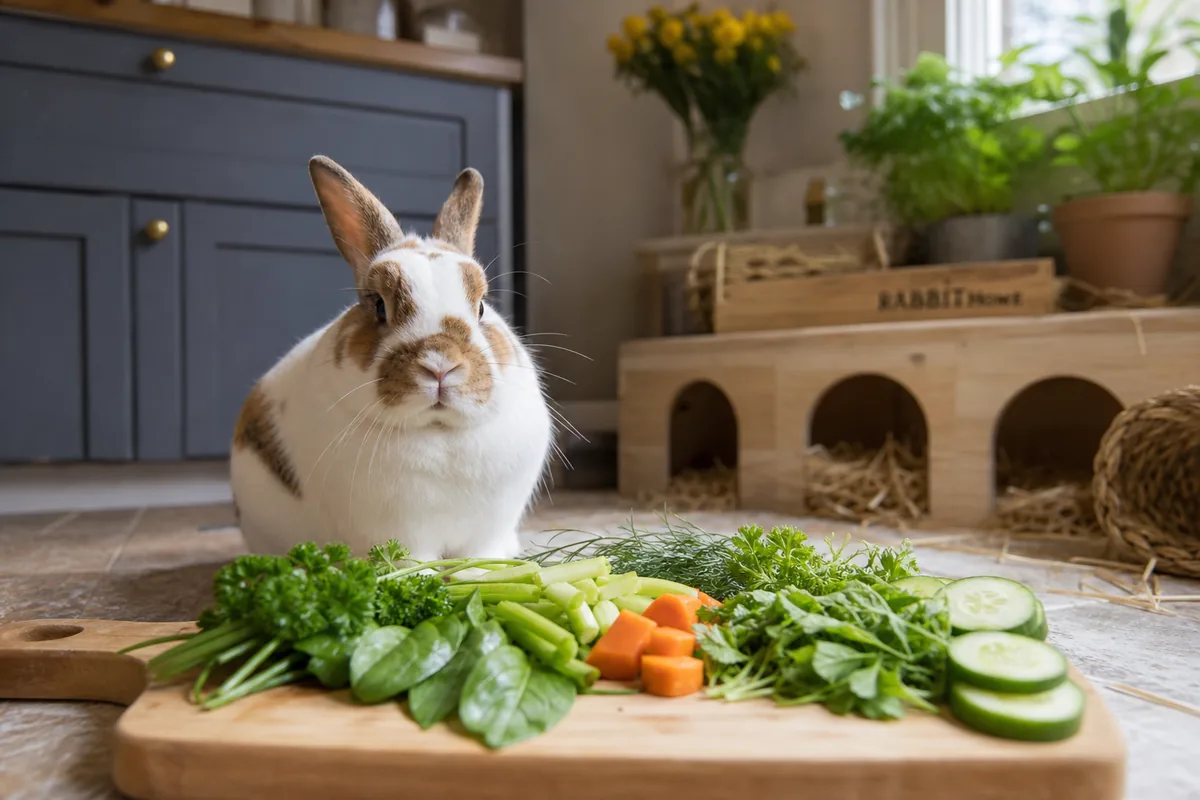
Rabbits need a feeding plan that protects gut motility first. If you need the short version from this small-mammals feeding hub, think hay all day, greens every day, measured pellets, and very small treats.
That structure matters because a rabbit's digestive tract never really stops working. The more you replace fiber with watery treats or starchy snacks, the more you raise the risk of soft cecotropes, weight gain, and gut slowdown.
Our rabbit care guide covers the broader husbandry picture. This page focuses only on what belongs in the food bowl.
Foods for Rabbits
- Unlimited timothy or orchard haySafe
- daily leafy greens like romaine and cilantroSafe
- rabbit-safe herbsSafe
- measured plain pelletsSafe
- small portions of low-sugar vegetablesSafe
- ChocolateUnsafe
- avocadoUnsafe
- onionUnsafe
- garlicUnsafe
- tomato leaves and stemsUnsafe
- houseplant cuttingsUnsafe
- processed snacksUnsafe
- sugary cerealUnsafe
- bread as a routine foodUnsafe
Prep: Base the diet on grass hay, wash greens thoroughly, introduce new foods one at a time, remove spoiled produce quickly, keep water available at all times Freq: Hay always, greens daily, pellets daily in measured portions, treats once or twice per week Amount: Hay unlimited, mixed greens daily, pellets in small measured amounts based on body weight, fruit treats in very small pieces only
Hay Must Stay The Main Food
Grass hay should make up roughly 70 to 80 percent of an adult rabbit's diet. Timothy, orchard grass, and meadow hay all work well.
Hay keeps the gut moving and wears the teeth down through long chewing sessions that pellets and treats cannot match.
When keepers say a rabbit eats well because the bowl empties fast, that usually misses the point. A rabbit can rush through pellets and still eat too little hay.
We judge a good rabbit diet by hay intake, droppings, and steady appetite, not by how excited the rabbit gets over sweet foods.
- Best daily base: timothy hay, orchard grass, or meadow hay for adult rabbits
- What hay does: supports gut motility and helps control molar overgrowth
- What to avoid as the base: muesli mixes, seed blends, and sugary commercial treats
- Alfalfa note: reserve alfalfa for babies, underweight rabbits, or vet-directed cases
Leafy Greens Belong In The Daily Rotation
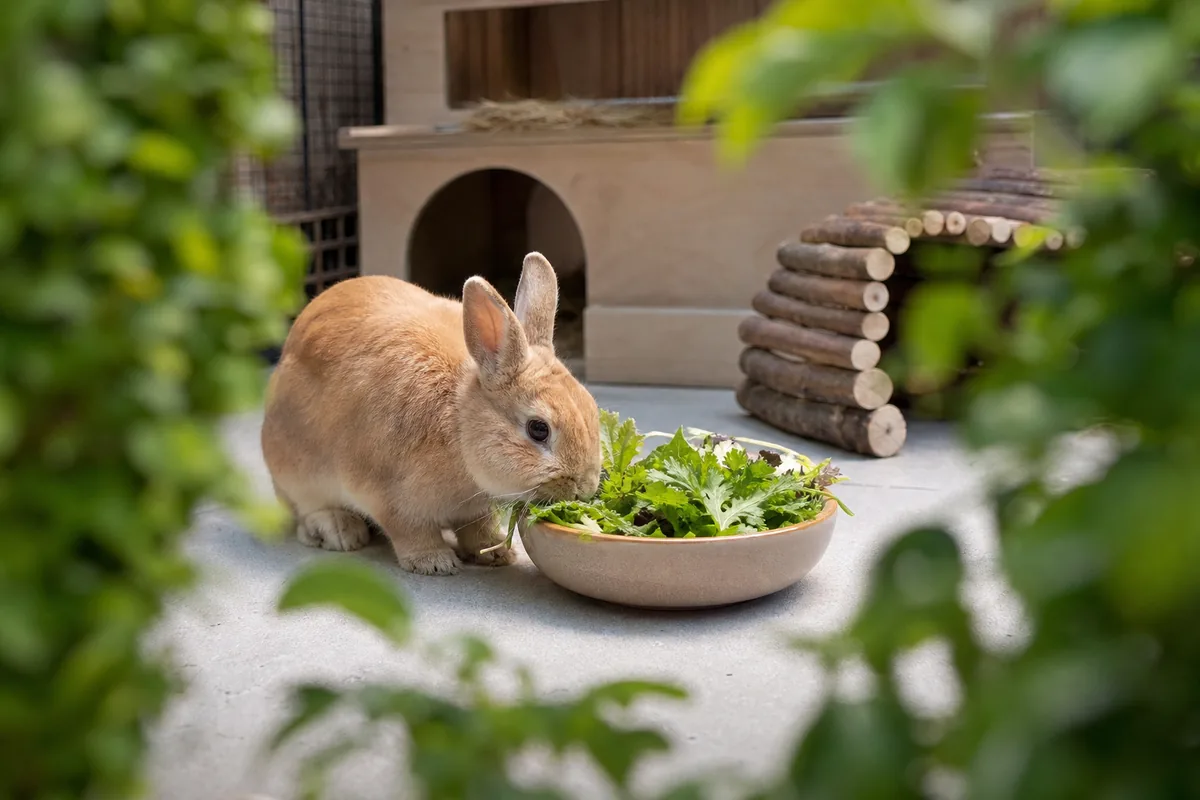
Daily greens give rabbits moisture, variety, and micronutrients without pushing sugar too high. Romaine, cilantro, bok choy, basil, dill, and similar greens fit well into a normal rotation.
The key is variety. One excellent green fed every day is still a weaker plan than several good greens rotated through the week.
Some leaves need tighter limits because the mineral or oxalate load climbs too fast with frequent use. Our guide on spinach for rabbits is the clearest example.
Spinach is not acutely toxic, but its oxalate load makes it a rotation green, not a daily staple.
| Group | Examples | How Often |
|---|---|---|
| Daily staples | Romaine, cilantro, bok choy, green leaf lettuce, endive | Daily in mixed bowls |
| Rotation greens | Spinach, parsley, Swiss chard | Once or twice per week |
| Herb add-ins | Basil, dill, mint, cilantro | Small daily or rotating portions |
| Avoid entirely | Houseplant leaves, onion greens, decorative flowers unless confirmed rabbit-safe | Never |
For adult rabbits, a mixed greens bowl usually works better than a single large serving of one leaf. That variety also makes it easier to avoid overusing caution foods.
If you want a cleaner comparison point, look at a safe daily green beside a high-water treat like watermelon for rabbits. The water content may look refreshing, but the fiber profile is nowhere near as useful.
Vegetables Work Better Than Fruit Treats
Non-starchy vegetables usually make better extras than fruit because they add less sugar per serving. Celery, bell pepper, cucumber, and small amounts of carrot tops fit more cleanly into a rabbit feeding plan than banana or grapes.
Even then, portion size still matters. Rabbits do not need a large produce platter at every sitting.
Fruit belongs in the treat category. That includes strawberries, bananas, grapes, and watermelon flesh.
A small cube can be fine. A generous handful turns into a digestive mistake quickly.
We see the same rule in our guide to tomatoes for rabbits. The ripe portion may be safe, but safe does not mean unlimited.
- Better routine extras: celery, bell pepper, cucumber, radicchio, small herb portions
- Use more carefully: carrot, beetroot, sweet pepper-heavy bowls, watery summer fruit
- Treat-only foods: banana, grapes, watermelon flesh, apple pieces, berries
- Good rule: if the rabbit chooses it instantly over hay, keep the serving small
Pellets Should Support The Diet, Not Dominate It
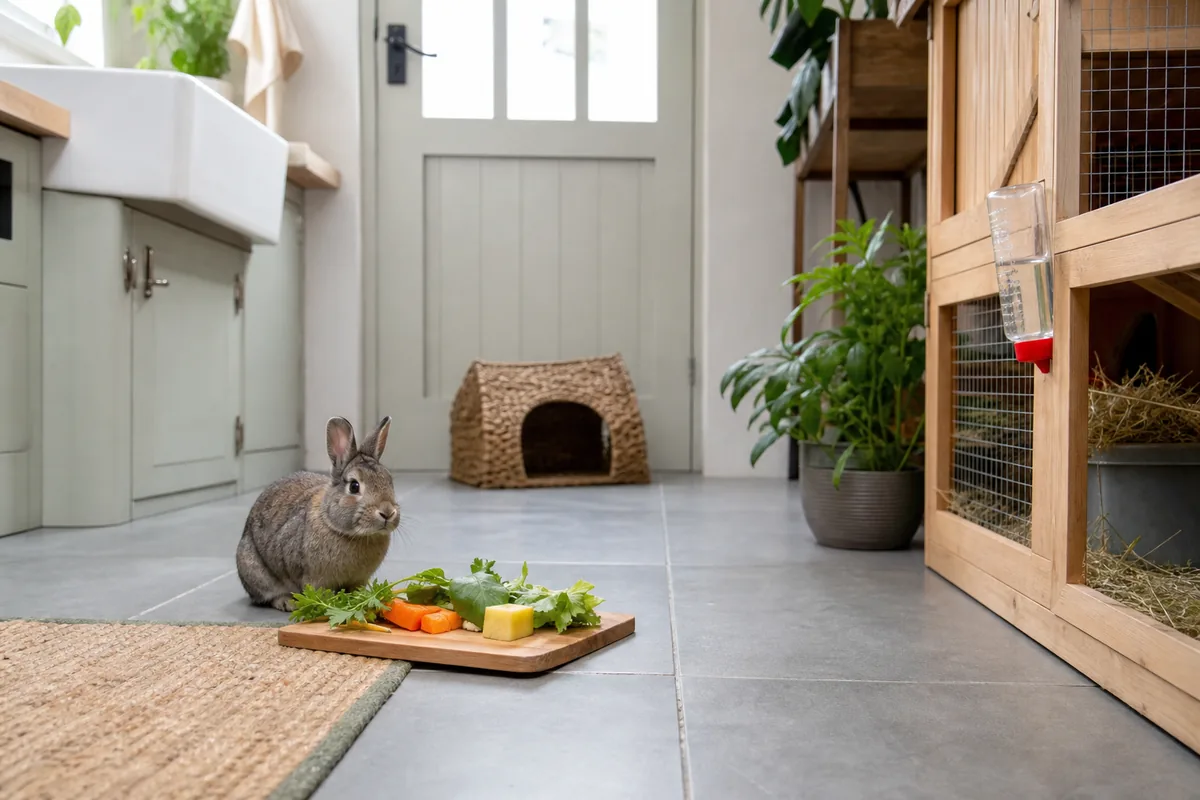
Plain, high-fiber rabbit pellets help fill nutritional gaps, but they should stay measured. Too many pellets crowd hay out of the diet and make selective eating more likely.
That problem gets worse when the pellet bag includes seeds, dried fruit, corn pieces, or colorful extras. Rabbits pick the sweet parts first and leave the useful ones behind.
Adult rabbits usually do best on a simple pellet fed in a controlled daily amount. Young growing rabbits and some underweight adults may need more, but the default adult plan is still hay first.
If you are comparing small pet care workload, this is one reason rabbits sit higher on the effort scale in our rabbit comparison. Their feeding routine asks for more discipline than people expect.
- Choose: plain timothy-based pellets with no seeds, nuts, or dried fruit
- Feed by measure: adjust amount to body weight and body condition, not appetite alone
- Do not use as the base: pellets cannot replace the fiber function of hay
- Recheck the plan: if your rabbit ignores hay after pellets, the pellet portion is probably too large
Foods Rabbits Should Never Eat
Some foods are not merely poor choices. They are unsafe enough that the answer should stay a flat no.
Chocolate, avocado, onion, garlic, houseplant trimmings, alcohol, heavily salted snacks, and processed sweets do not belong anywhere near a rabbit. The same goes for green parts of tomato plants.
The fruit may be fine in a tiny portion, but the leaves and stems are not.
We also keep bread, crackers, cereal, and sugary bakery scraps out of the routine even when they are not classically toxic. They move the diet away from fiber and toward the exact starch-heavy pattern that rabbits handle poorly.
That feeding discipline is one reason rabbits are not the best match for every casual family setup. We make that point in our roundups on small pets for kids and low-maintenance small pets.
Age And Health Change What A Rabbit Can Eat
Baby rabbits do not follow the same produce rules as adults. Very young rabbits need a much simpler plan centered on hay and age-appropriate pellets while the gut matures.
Rapidly adding watery fruit or mixed vegetables too early creates avoidable instability. Older rabbits, overweight rabbits, and rabbits with urinary or dental problems also need tighter food choices than a healthy young adult.
Health history matters as much as the ingredient list. A rabbit with bladder sludge should not eat high-oxalate greens freely.
A rabbit prone to soft stools may do badly on watery fruit that another rabbit tolerates fine. If your rabbit is sensitive, keep the diet boring in the best possible way: more hay, simpler greens, fewer experiments.
What A Practical Daily Rabbit Feeding Plan Looks Like
A strong daily feeding plan looks repetitive on purpose. Unlimited grass hay stays available at all times.
Fresh water stays clean and easy to reach. A mixed greens bowl comes once or twice daily depending on your routine.
Pellets stay measured. Fruit stays occasional.
That pattern gives you the safest baseline. It also makes appetite changes easier to notice.
If you want a quick self-check, ask whether the bowl still makes sense without the treat item. If the answer is no, the treat has started driving the diet.
Bring the plan back to hay and greens first, then let extras earn their place in very small portions.
Sources and references
- Nutrition of RabbitsMerck Veterinary Manual, 2022
- Suggested Vegetables and Fruits for a Rabbit DietHouse Rabbit Society, 2021
- Feeding and Digestive Disorders in Rabbitsof Exotic Pet Medicine, Vol. 22, 2013