Most small pets sold as "great for kids" are actually terrible for kids. Hamsters bite when disturbed.
Mice are too fast to hold safely. Gerbils are escape artists.
The animals that actually work for children share three traits: active during the day, tolerant of clumsy handling, and resilient enough to absorb beginner mistakes.
We've ranked the five best options based on what matters for families: handleability, activity schedule, bite risk, space needs, and realistic cost. Every animal in this list has been kept alongside children successfully: the rankings reflect where problems actually arise in small mammal care.
| Pet | Active Hours | Bite Risk | Min. Age (Kids) | Lifespan | Monthly Cost |
|---|---|---|---|---|---|
| Guinea Pig | Daytime | Very Low | 5+ | 4-7 yrs | $40-$80 (pair) |
| Fancy Rat | Dawn/dusk + flexible | Low (tamed) | 6+ | 2-3 yrs | $25-$50 (pair) |
| Rabbit | Dawn/dusk | Low (scratch risk) | 8+ | 8-12 yrs | $60-$120 |
| Gerbil | Sporadic, day + night | Medium | 8+ | 3-5 yrs | $15-$30 (pair) |
| Syrian Hamster | Nocturnal | High (when disturbed) | 10+ | 2-3 yrs | $20-$40 |
1. Guinea Pig: Best Overall for Kids
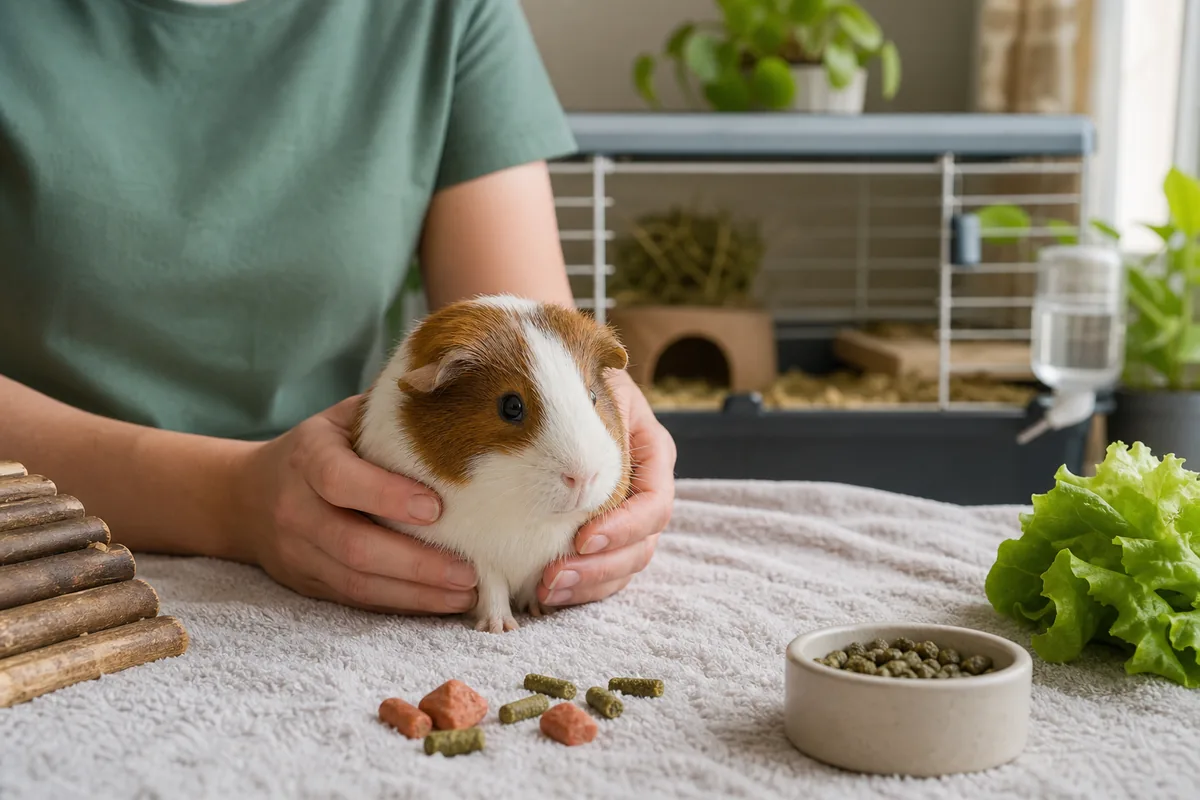
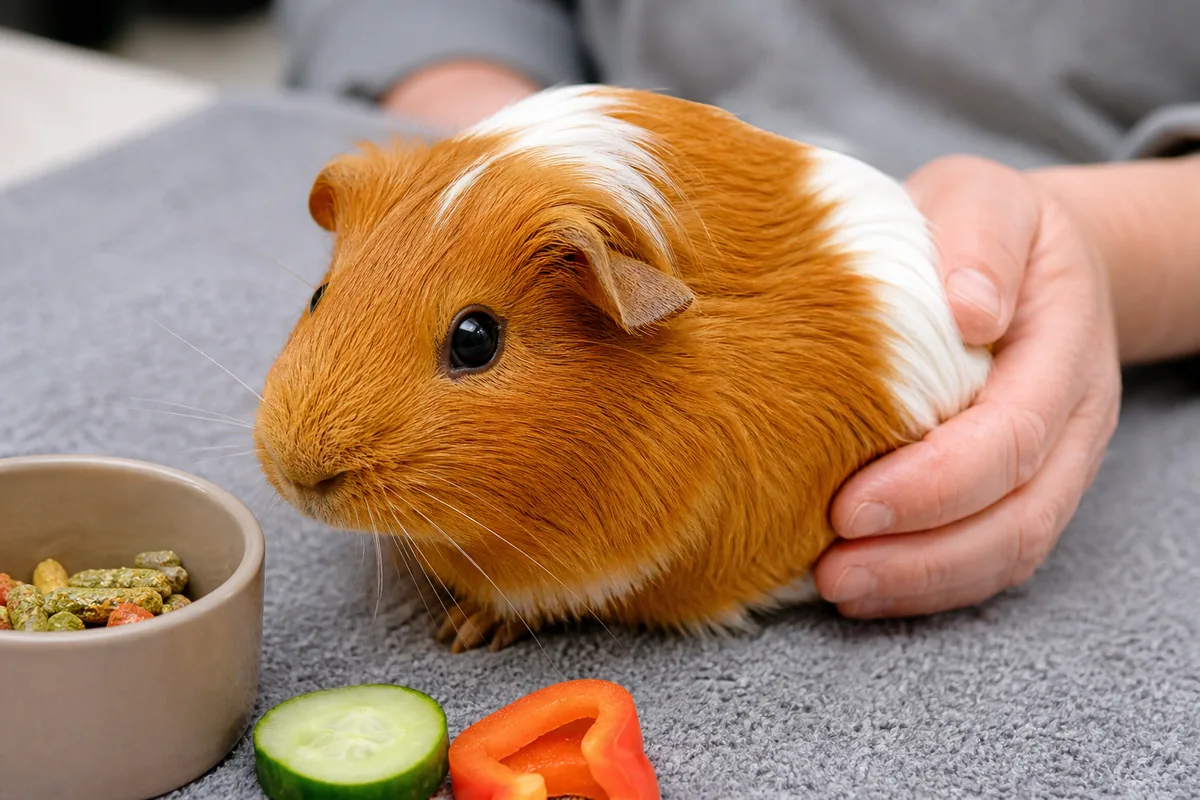
For most families, a guinea pig care setup is the most forgiving starting point. They're active during the day, vocal enough to communicate (wheeks and purrs are easy to read), and their size makes them truly holdable by a child without the animal being at risk of injury from being dropped.
Their bite risk is close to zero in normal handling. Guinea pigs have molars at the back and incisors at the front; they rarely bite unless in pain, and even then tend to nip rather than puncture.
A child who picks one up incorrectly gets a warning nip at worst.
Pros
- Daytime active: kids see them during waking hours
- Near-zero bite risk with normal handling
- Vocal and responsive, kids learn to read their signals
- Size means they're harder to accidentally injure
Cons
- Need a same-sex pair: two animals minimum
- Larger enclosure footprint (7.5 sq ft for 2)
- Daily fresh vegetables required
- Exotic vet for dental issues
- Best age to introduce: 5 years and up with adult supervision
- Minimum setup: C&C grid enclosure, Timothy hay, water bottle, hideouts
- Key teaching opportunity: Kids learn to read animal body language through wheeks and teeth-chattering
- Lifespan benefit: 4-7 years means the pet grows alongside younger children
2. Fancy Rat: Best Value, High Intelligence
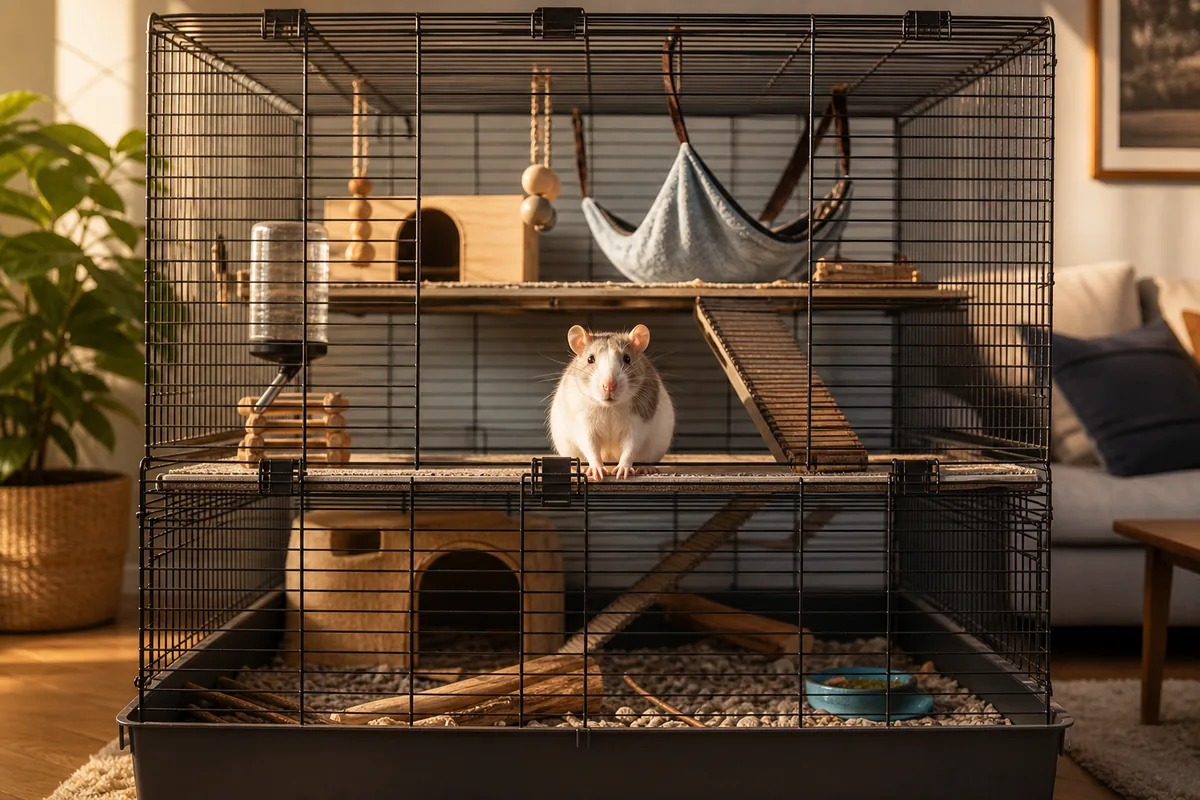
Families open to rats should read our fancy rat care guide. They're intelligent enough to learn their names, come when called, and run simple mazes.
Their curiosity is genuine: they actively seek out human interaction once bonded, which makes playtime feel reciprocal rather than one-sided.
Tamed fancy rats have a very low bite risk. Untamed rats, or rats handled roughly, will bite to defend themselves.
The taming process takes 1-2 weeks of consistent daily handling starting young.
Pros
- High intelligence: can learn tricks and names
- Flexible activity hours overlap with human schedule
- Lower cost than guinea pigs
- Come in many coat and color varieties
Cons
- Short 2-3 year lifespan causes grief for younger children
- Prone to respiratory infections and tumors
- Need a same-sex pair minimum
- Require daily out-of-cage time in a rat-proofed space
- Best age to introduce: 6 years and up
- Intelligence level: Can learn 5-10 simple commands with clicker training
- Cage minimum: 2×2×3 ft (Martin's or Critter Nation style)
- Lifespan note: 2-3 years means children will likely experience the death of the pet
3. Rabbit: Best for Older Kids
A rabbit care setup suits children aged 8 and up who understand that the animal needs to come to them rather than being constantly chased and grabbed. The main handling risk with rabbits is not biting: it's kicking.
A startled rabbit can kick hard enough to break its own back if held incorrectly, and the scratch from strong hind legs is a common injury.
Rabbits that are handled regularly from a young age become very tolerant.
The 8-12 year lifespan means a rabbit purchased for a 10-year-old may still be alive when that child goes to college.
Families split between the two herbivores should read the rabbit vs guinea pig comparison before deciding.
Pros
- 8-12 year lifespan: longest commitment
- Highly trainable, litter box training possible
- Large enough to be truly interactive
- Can be litter trained and allowed free-roam time
Cons
- Kicking/scratch risk with improper handling
- Not suitable for children under 8
- Larger space and higher cost than other small pets
- Spay/neuter strongly recommended: adds upfront cost
4. Gerbil: Good for Watching, Hard to Handle
The gerbil care guide fits children who enjoy watching animal behavior rather than children who want a pet to hold and carry around. Gerbils are fast, curious, and entertaining to watch, but their speed and agility mean they slip through hands easily, and a dropped gerbil from height is at real risk of injury.
Gerbil pairs are mandatory: a lone gerbil shows stress behaviors and shortened lifespan. Same-sex pairs from the same litter work best.
Pros
- Entertaining to observe in a well-furnished enclosure
- Lower cost than guinea pigs or rabbits
- Active during parts of the day
- Less odor than rats or hamsters
Cons
- Too fast for reliable handling by young children
- Bite when stressed or mishandled
- Escape-prone during handling
- Not great for kids who want a hold-and-cuddle experience
5. Syrian Hamster: Last Choice for Kids
Syrian hamster care appears on every "best small pets for kids" list and consistently disappoints. They're nocturnal: a child trying to play with their hamster after school finds it asleep.
Woken hamsters bite as a reflex, and hamster bites from an untamed or startled animal can break skin.
The 2-3 year lifespan and high tumor rate in later life mean this is often a pet that ends in a sad vet visit within a few years. Adults who supervise consistently can make hamster keeping work for a child, but there are better options for most families.
Pros
- Inexpensive setup and monthly cost
- Can be tamed with patient, adult-guided handling
- Compact enclosure fits most bedrooms
- Independent: doesn't need daily handling
Cons
- Nocturnal: active when most kids are asleep
- Bites readily when startled or woken
- Short lifespan with health problems at the end
- Taming requires adult-supervised patience most children don't have
What Age Is Right for Each Pet?
Age matters more than the child's stated enthusiasm. A six-year-old who wants a hamster will wake it up, get bitten, and lose interest within a month.
The same child with a guinea pig has a much better experience.
- Age 5+: Guinea pig (with adult supervision during handling)
- Age 6+: Fancy rat (taming phase requires adult involvement)
- Age 8+: Gerbil (fast enough to require careful adult-guided handling)
- Age 8+: Rabbit (requires understanding of proper support and no chasing)
- Age 10+: Hamster (nocturnal schedule and bite risk need mature understanding)
For families who want even less daily time commitment, our best low-maintenance small pets guide ranks the same species by daily time requirements rather than child-friendliness, with different conclusions about which animals come out on top.
Some families are tempted by species outside the usual shortlist.
Chinchilla care requires temperature control and suits older children only.
Hedgehog care is nocturnal and prickly, which makes it a poor fit for young children.
If your household wants something more interactive than any pet on this list, read the ferret care guide next. Ferrets are engaging, but they demand a fully ferret-proofed room and far more daily time than the calmer beginner options above.
Sources and references
- Human-animal interaction and developmental outcomes in childrenAnthrozoös, Vol. 30, Issue 3, 2017
- Behavior and handling of small companion mammalsMerck Veterinary Manual
- Guinea pig social behavior and welfare requirementsApplied Animal Behaviour Science, Vol. 175, 2016