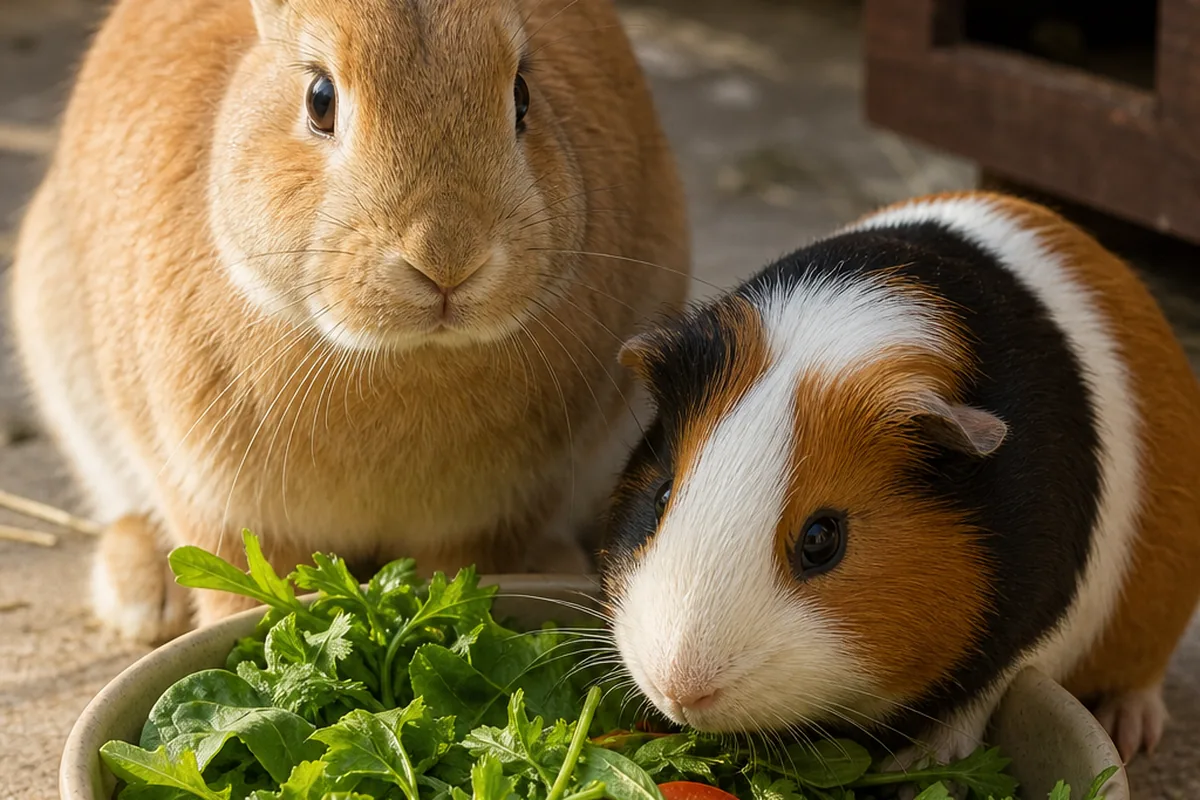
Rabbits and guinea pigs are frequently compared because they share a herbivore diet, social natures, and a similar size range. In practice, their care requirements diverge significantly enough that the right choice depends heavily on your space, schedule, and experience level.
We've kept both species and tracked where the real differences show up in daily small mammal care. The comparison below covers every factor that changes your day-to-day routine and long-term commitment.
If you're making this choice for a family rather than for yourself, our best small pets for kids ranking answers a slightly different question centered on handling and age fit.
| Factor | Guinea Pig | Rabbit |
|---|---|---|
| Lifespan | 4-7 years | 8-12 years |
| Adult weight | 1.5-2.5 lbs | 2-12 lbs (breed-dependent) |
| Min. enclosure | 7.5 sq ft (pair) | 12 sq ft + exercise run |
| Social needs | Pair required | Pair recommended; bond is complex |
| Activity hours | Daytime | Dawn and dusk (crepuscular) |
| Spay/neuter need | Optional | Strongly recommended |
| Litter trainable | Partially | Yes, reliably |
| GI emergency risk | Low, Moderate | High (GI stasis) |
| Monthly cost (pair) | $40-$80 | $60-$120 |
| Noise level | Moderate (wheeks) | Low (mostly silent) |
Guinea Pig
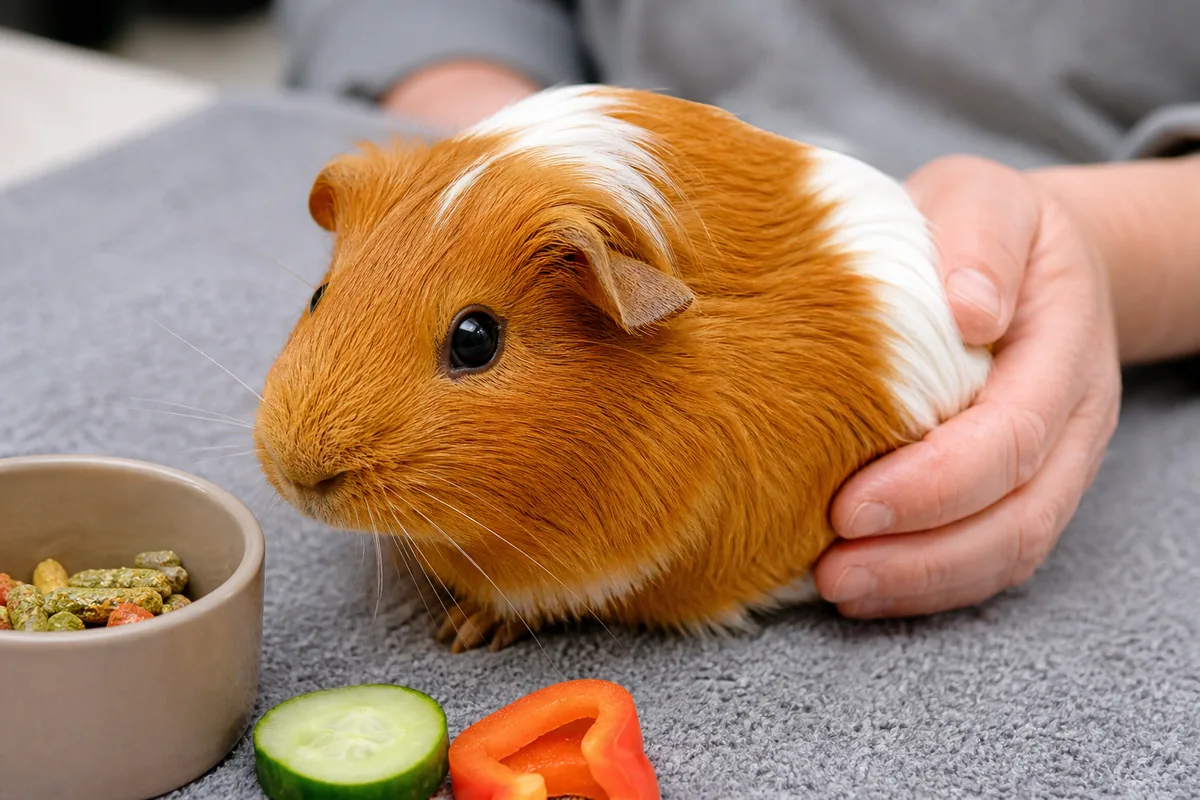
For most first-time keepers, a guinea pig care setup is the more accessible entry point. Their enclosure requirement is manageable (7.5 sq ft for a pair in a C&C grid setup), their diet is simple to learn, and their daytime activity schedule overlaps naturally with most human routines.
They're vocal communicators. Wheeks, purrs, rumblestrutting, and teeth-chattering each signal a specific state that keepers learn to read quickly.
That feedback loop makes guinea pigs feel truly responsive in a way that quieter animals don't.
Pros
- Daytime active: matches most human schedules
- No spay/neuter required for same-sex pairs
- Vocal and communicative: body language is easy to read
- Lower entry cost and space footprint
Cons
- Pair required: two animals minimum
- Daily fresh vegetables non-negotiable
- Dental malocclusion common in older pigs
- Shorter 4-7 year lifespan than rabbits
- Best enclosure: C&C grid cage, minimum 2×4 grids (7.5 sq ft) for a pair
- Diet foundation: Unlimited Timothy hay plus daily leafy greens and a vitamin C source
- Vitamin C requirement: 10-30mg daily; guinea pigs cannot synthesize their own
- Dental risk: Teeth grow continuously; malocclusion requires exotic vet intervention
Rabbit
A rabbit care routine is the longer-term commitment. The 8-12 year lifespan of a rabbit means a pet purchased today will likely still be alive a decade from now.
That's a meaningful difference from a guinea pig's 4-7 year average, both emotionally and financially.
Their higher independence compared to guinea pigs can be a feature: a rabbit that has been bonded, spayed or neutered, and given free-roam time in a rabbit-proofed room often requires less hands-on daily management than a pair of guinea pigs. The higher upfront care investment pays off in a more self-sufficient adult animal.
Pros
- 8-12 year lifespan: longest bond of any small mammal
- Litter-trainable, can free-roam in rabbit-proofed space
- Quiet: no loud vocalizations
- Large enough to be truly substantial as a companion
Cons
- GI stasis is a life-threatening emergency requiring immediate vet care
- Spay/neuter strongly recommended: adds upfront cost
- Bonding two rabbits requires a careful, weeks-long process
- More space required than guinea pigs
- Minimum space: 12 sq ft enclosure plus daily access to a larger exercise area
- GI stasis risk: A rabbit that stops eating for 12+ hours needs emergency veterinary care
- Bonding process: Introducing two rabbits takes 2-6 weeks of supervised neutral-space sessions
- Spay/neuter benefit: Reduces uterine cancer risk in females (up to 80% in unspayed does over 4 years) and territorial behavior in males
Diet: More Overlap Than Difference
Both species are herbivores with hay as the dietary foundation. Timothy hay makes up 80% of a guinea pig's diet and 70-80% of a rabbit's diet.
The main differences are in supplementation.
Guinea pigs require external vitamin C because they lack the enzyme to synthesize it. Rabbits produce their own vitamin C and have no supplementation requirement.
Rabbits also eat cecotropes (soft droppings they produce at night) as a nutritional source: this is normal and should not be discouraged.
- Hay (both): Timothy hay, unlimited daily: the single most important diet component
- Pellets (guinea pig): Vitamin C-fortified pellets, ⅛ cup per pig per day
- Pellets (rabbit): Plain pellets, ¼ cup per 6 lbs body weight per day (adult)
- Fresh greens (both): Daily leafy greens; avoid high-oxalate options for both species
- Fruit (both): Occasional treat only; sugar content requires limiting frequency
Bananas are a fruit both species enjoy in small amounts. Our guide to bananas for guinea pigs explains the once-a-week maximum that applies at the guinea pig's body weight.
Health and Vet Considerations
Both species require an exotic vet rather than a standard dog-and-cat practice. Most general veterinarians lack the training and equipment for small mammal dentistry, GI assessment, or the diagnostic approach needed for either species.
The most serious emergency for rabbits is GI stasis: a condition where gut motility stops, gas accumulates, and the animal can die within 12-24 hours without intervention. GI stasis has no equivalent in guinea pigs.
A rabbit that stops eating, stops producing droppings, or shows a hunched posture needs immediate vet attention, not a wait-and-see approach.
Guinea pig health concerns center on dental malocclusion (teeth that overgrow misaligned), urinary tract issues, and vitamin C deficiency. None of these are typically emergencies in the same acute sense as GI stasis, but all require exotic vet access for proper management.
If you know you want something smaller and shorter-lived than either herbivore, compare the hamster care guide with the gerbil care guide before leaving this category altogether.
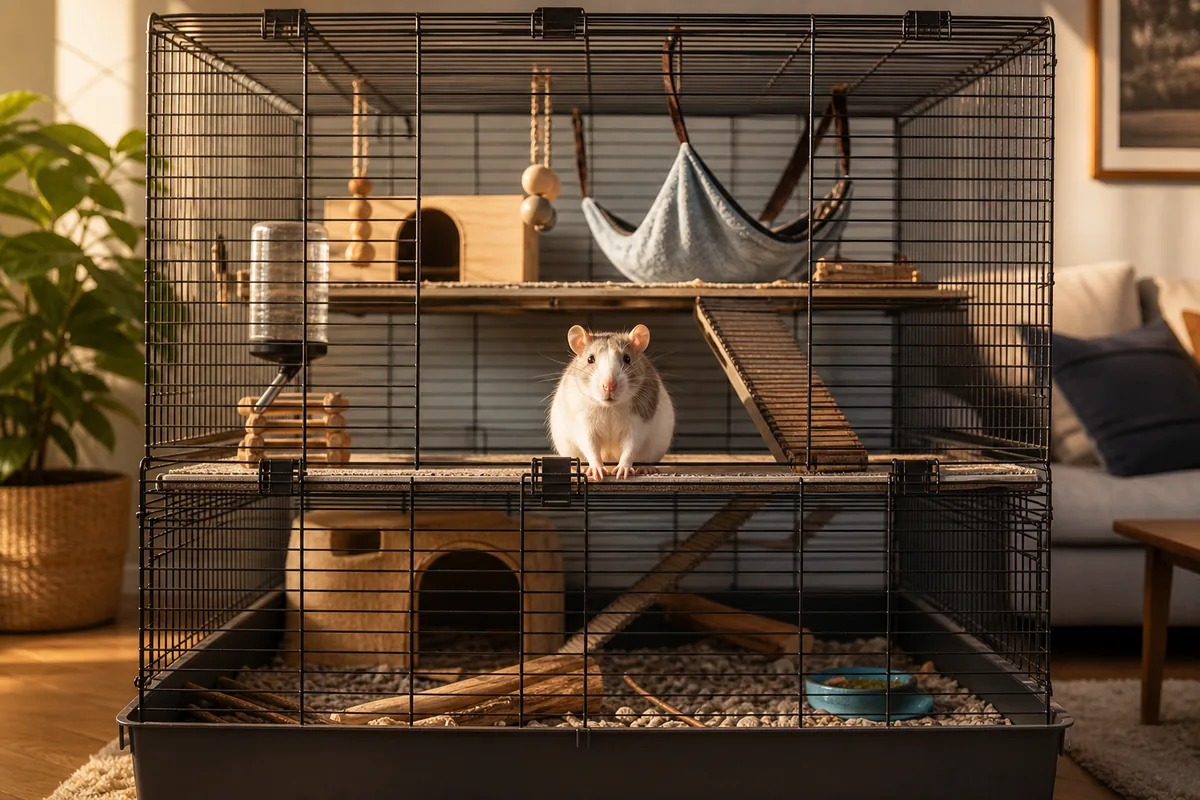
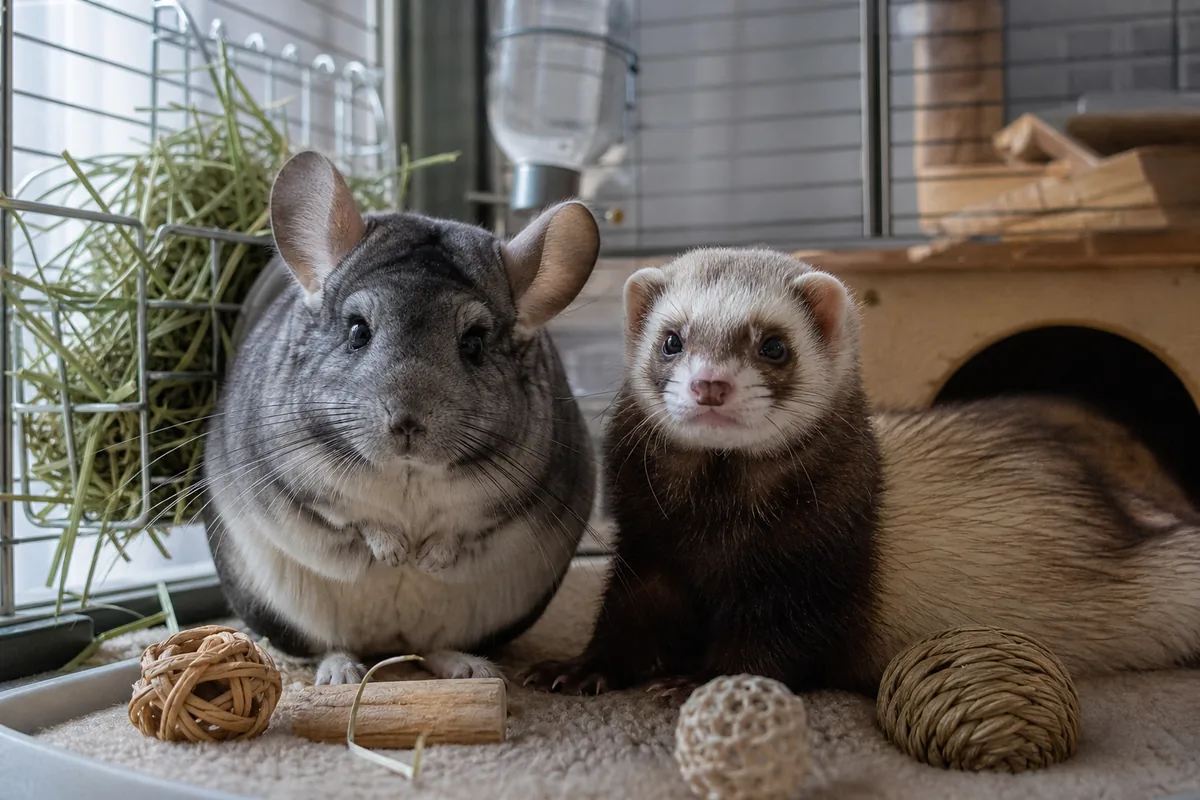
If your priority is more interaction or a different lifespan tradeoff, chinchilla care and pet rat care are the two better next reads.
Sources and references
- Gastrointestinal stasis in rabbits: pathophysiology and managementVeterinary Clinics of North America: Exotic Animal Practice, 2021
- Nutritional requirements and common diseases of guinea pigsMerck Veterinary Manual
- Rabbit husbandry, health, and welfareMerck Veterinary Manual