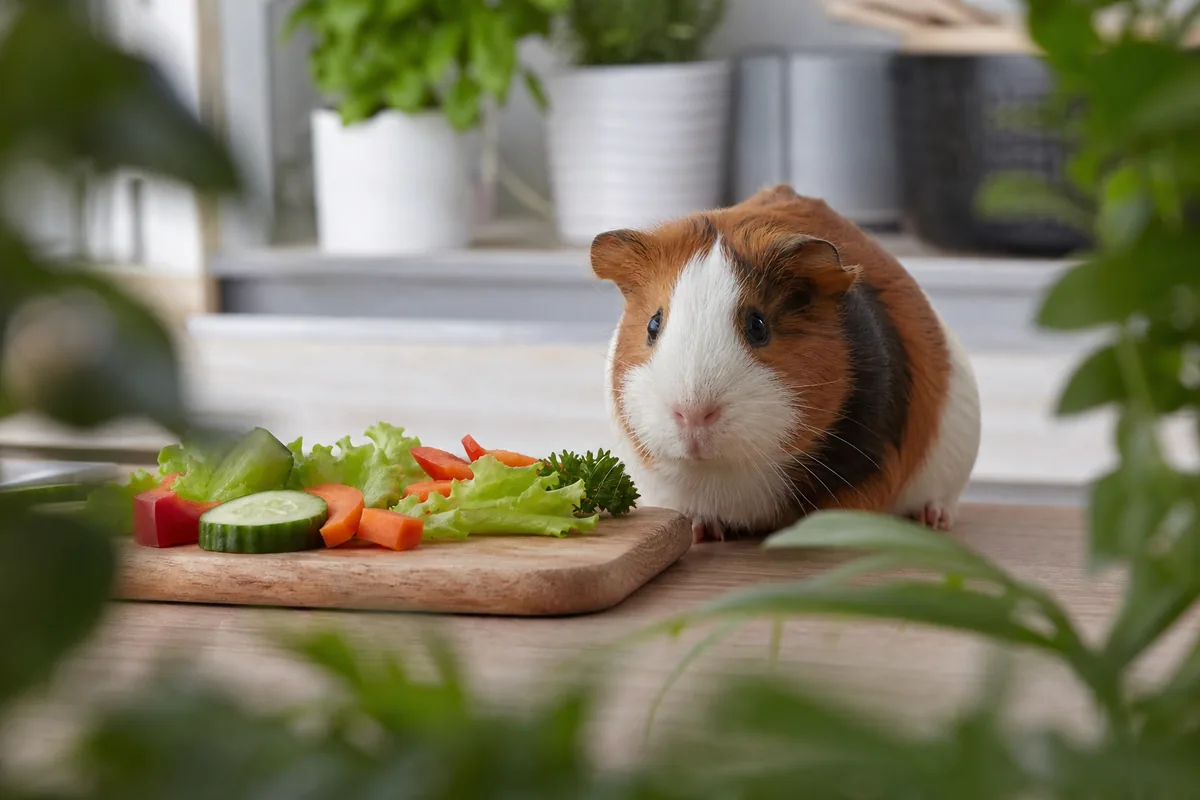
Guinea pig care starts with one fact most new owners miss: these animals cannot produce their own vitamin C. Unlike most small mammals, guinea pigs lack the enzyme L-gulonolactone oxidase, which means dietary vitamin C is not optional.
Deficiency causes scurvy within weeks. The guinea pig stands apart for its strict nutritional dependency and its truly social nature.
Guinea pigs are herd animals that experience chronic stress when kept alone. A lone guinea pig is not a content guinea pig.
If you are deciding between this species and a rabbit, our rabbit vs guinea pig comparison covers lifespan, space needs, and GI stasis risk side by side.
Plan for a minimum of two, and house them in a space large enough for both to move freely without competition.
Key facts
- Lifespan
- 4-7 years
- Body Length
- 8-12 inches
- Room Temp
- 65-75°F
- Activity
- Diurnal
Guinea Pig Housing: 7.5 Square Feet Minimum for Two Pigs
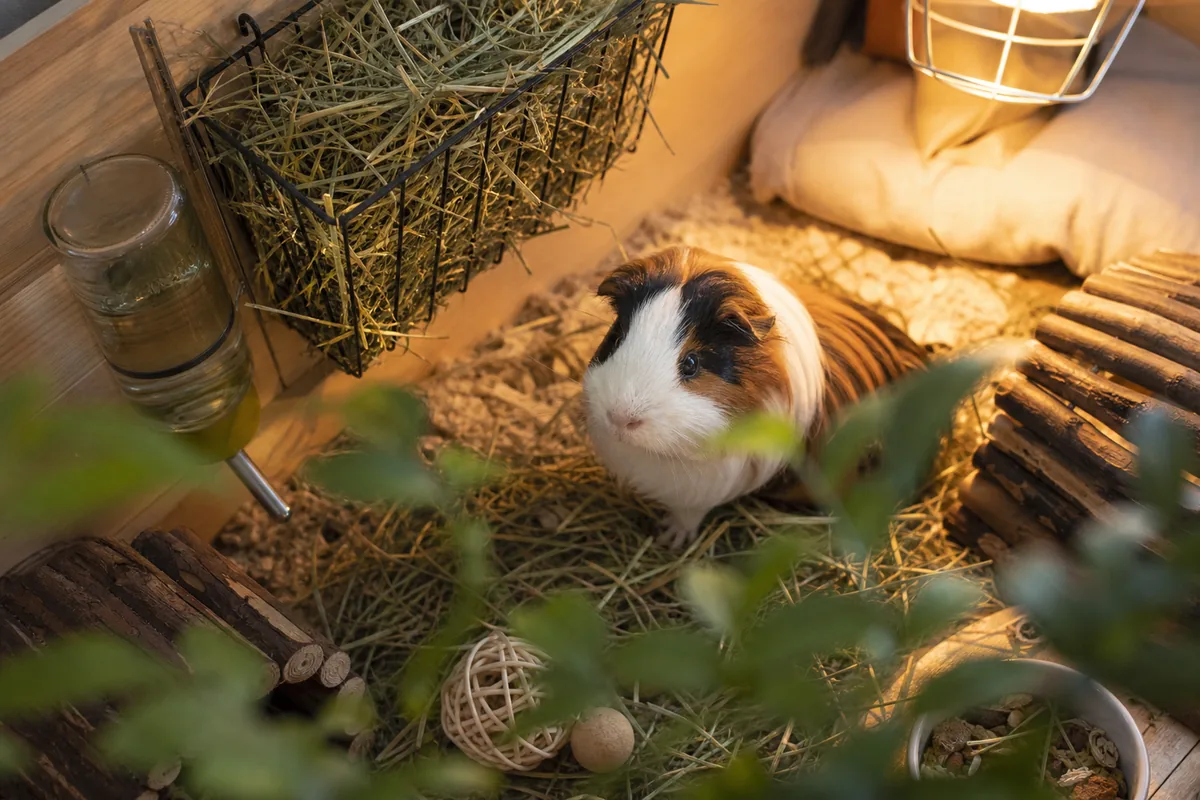
The minimum enclosure size for a pair of guinea pigs is 7.5 square feet of floor space. Three pigs need 10.5 square feet, and four need 13 square feet.
Most pet store cages are undersized by these standards. C&C cages (coroplast and wire grid panels) are the most popular solution because they are customizable and inexpensive to build.
Guinea pigs are ground dwellers. Height is irrelevant.
Ramps and upper levels do not count toward meaningful floor space because most guinea pigs avoid them. A single-level, wide enclosure is always preferable.
Bedding options split keepers into two camps. Fleece liners require washing every 3-5 days but produce less airborne dust.
For families choosing between guinea pigs and other small pets, our best small pets for kids guide ranks each species by bite risk, activity hours, and minimum age.
Paper-based bedding like Carefresh absorbs well and requires full changes every 5-7 days. Both work.
Avoid cedar and pine shavings, which cause respiratory problems in guinea pigs.
Diet: Unlimited Hay, Daily Vitamin C, Limited Pellets
Timothy hay must be available at all times. Guinea pigs need to consume their body weight in hay roughly every two days to maintain proper gut motility and wear their continuously growing teeth.
A guinea pig that runs out of hay is at risk for GI stasis within hours.
Fresh vegetables provide the daily vitamin C dose. Bell peppers are the most efficient source at 95-341 mg of vitamin C per 100g, depending on color.
Red bell pepper is highest. Offer approximately one-eighth of a bell pepper per pig per day, or supplement with 25-50 mg of vitamin C dissolved in water daily.
Watermelon is a popular warm-weather treat. Our watermelon serving guide covers the 1-inch cube portion and frequency limits.
Apples are another common offering. Our apple prep guide explains why seeds must be removed every time before serving.
- Timothy hay: unlimited, the foundation of every meal, promotes gut health and tooth wear
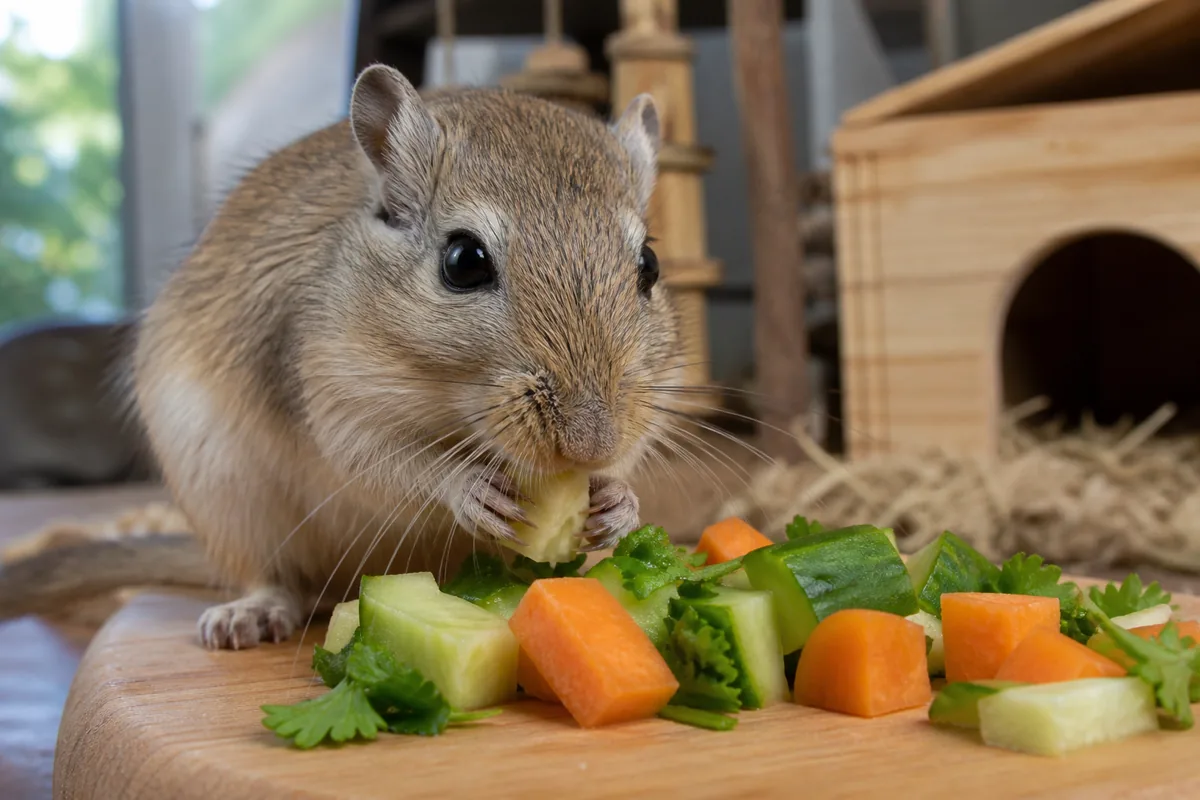
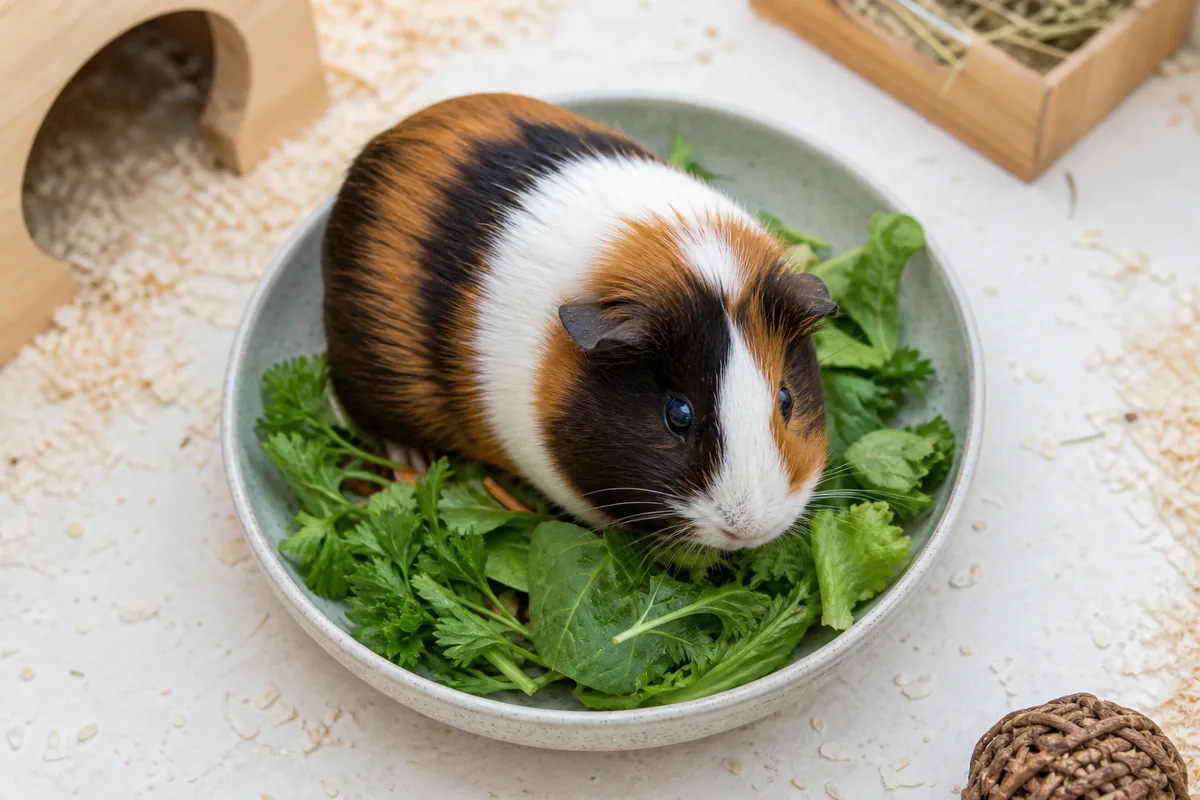
- Fresh vegetables: 1 cup per pig daily, rotate bell pepper, leafy greens, and herbs
- Guinea pig pellets: ⅛ cup per pig daily, plain pellets only, no seeds or colored pieces
- Vitamin C: 25-50 mg per pig daily via fresh food or water-soluble drops
- Water: fresh daily, check sipper ball daily for blockage
Iceberg lettuce and foods high in oxalic acid like spinach and beet greens should stay occasional. Spinach is not toxic, but high oxalate intake over time contributes to bladder sludge and stones.
Rotate leafy greens and do not feed spinach more than twice weekly.
Health: Scurvy, URI, and Bladder Sludge Are the Main Risks
Scurvy from vitamin C deficiency progresses over 2-4 weeks. Early signs include rough coat, reluctance to move, and vocalizing when touched around the joints.
Later stages involve bleeding gums and tooth loss. The fix is simple: consistent daily vitamin C in adequate doses.
Upper respiratory infections (URI) are the second most common health problem. Symptoms include sneezing, nasal discharge, labored breathing, and lethargy.
URI in guinea pigs can turn fatal within days without antibiotics. Any pig showing respiratory symptoms needs veterinary care within 24 hours.
- Scurvy: joint pain, rough coat, reluctance to move, caused by vitamin C deficiency
- URI: sneezing, discharge, labored breathing, requires antibiotics within 24-48 hours
- Bladder sludge: calcium deposits from excess calcium in diet, causes straining to urinate
- Bumblefoot: inflamed footpads from wire flooring or wet bedding, change to solid floor surface
- Malocclusion: overgrown teeth or misaligned molars, causes drooling and weight loss
Bladder sludge management means limiting high-calcium vegetables. Kale, spinach, and parsley are all high in calcium and should stay occasional rather than daily.
Our spinach oxalate guide explains the accumulation risk and how to build a safe weekly green rotation around it.
Celery is a hydrating low-oxalate option many keepers use. Our celery prep guide covers the string-chopping step that makes it safe.
Timothy hay-based diets are lower in calcium than alfalfa, which is why timothy is the recommended adult hay.
Handling: Confident, Two-Handed Grip Every Time
Guinea pigs are prey animals and will freeze or bolt when frightened. Support the full body with two hands every time you pick one up.
One hand under the chest, one under the hindquarters. Never dangle or grip by the midsection, as that stresses the spine.
Most guinea pigs become handleable within 2-4 weeks of consistent gentle contact. They signal comfort through purring (rumblestrutting) and relaxed muscle tone.
Teeth chattering and raised fur are warning signs to put the animal down and try again later.
Blueberries are a treat many pigs love. Our blueberry serving guide covers the 2-3 berry limit and why dried berries are off the table.
Tomatoes are another frequent offer. Our tomato safety guide explains which parts of the plant are toxic and must never be served.
Pros
- Diurnal and active during the day
- Social and vocal, communicates clearly
- Long 4-7 year lifespan for bonding
- Low bite risk with proper handling
Cons
- Requires a pair, doubles the cost
- Daily fresh food and vitamin C non-negotiable
- Cannot be kept with rabbits safely
- Regular cage cleaning is time-intensive
Grooming: Breed-Dependent, Weekly to Daily
Short-haired breeds like the American and Teddy need brushing once a week and nail trims every 4-6 weeks. Long-haired breeds like the Peruvian and Silkie require daily brushing and benefit from monthly trims to keep fur from dragging and collecting waste.
Grapes are often asked about as a treat option. Our grape portioning guide covers serving sizes for this higher-sugar fruit.
Bathing is necessary only when a pig is soiled or has mites. Use a shallow basin with warm water and guinea pig-safe shampoo.
Dry thoroughly with a towel and keep the pig in a warm room until completely dry. Wet guinea pigs chill quickly and are vulnerable to respiratory infection.
- Brushing: weekly for short-haired breeds, daily for long-haired breeds
- Nail trims: every 4-6 weeks, use small animal nail clippers, avoid the quick
- Grease gland: the spot above the tail accumulates a waxy buildup, clean monthly with coconut oil
- Ear cleaning: check monthly, use a cotton ball with diluted ear cleaner if debris is visible
Breeding: Not for Casual Keepers
Female guinea pigs (sows) must be bred before 7 months of age if they are ever to be bred at all. After 7 months, the pubic symphysis fuses permanently and a first-time pregnancy becomes life-threatening.
Bananas are popular with guinea pigs. Our banana serving guide covers safe portions for this high-sugar fruit.
Strawberries are another treat keepers rotate in. Our strawberry frequency guide covers limits and the vitamin C contribution per serving.
A fused pelvis is the leading cause of dystocia fatality in guinea pigs.
Gestation lasts 59-72 days and produces 1-4 pups. Pups are born fully formed with fur, open eyes, and functional teeth.
They can eat solid food within hours but should nurse for at least 3 weeks. Males must be separated from the mother by 3 weeks to prevent impregnating her.
Oranges are a vitamin C-rich treat some keepers offer. Our orange acidity guide covers how much citrus is safe per serving.
Rabbit treat rules overlap here. Our carrot sugar breakdown shows how root vegetable treats work across small mammal species.
Bonding Two Guinea Pigs: Introduction Protocol
Introduce guinea pigs on neutral territory, not inside the existing enclosure. A bathtub lined with fleece works well. Place both pigs at opposite ends and allow them to approach each other at their own pace. Normal introduction behavior includes sniffing, rumblestrutting, and brief chasing. Abnormal behavior requiring separation includes drawing blood, sustained biting, or one pig being pinned for more than 10 seconds. Once the neutral introduction goes smoothly over 2-3 sessions, clean the enclosure fully and rearrange furniture before moving both pigs in together. A clean-smelling, rearranged space reduces territorial aggression from the established pig.
Sources and references
- Nutrition and behavior of guinea pigsHoefer, H.L., Veterinary Clinics of North America: Exotic Animal Practice, 2004
- Guinea pig care guideThe Humane Society of the United States, 2023
- Common diseases of guinea pigsMerck Veterinary Manual, 2023