Low-maintenance means different things to different keepers. For this list, it means: minimal daily time commitment, forgiving of occasional missed routines, compact enough for small spaces, and not requiring specialist vet care on a regular basis.
We ranked five small mammals on those criteria for small mammal care. No small pet is zero-maintenance: every animal needs food, water, and enclosure cleaning.
The differences are in how much time, space, and daily attention each species actually demands.
| Pet | Daily Time (min) | Enclosure Cleaning | Social Needs | Specialist Vet Need | Monthly Cost |
|---|---|---|---|---|---|
| Fancy Rat | 20-30 min | Full clean weekly | Pair required | Moderate | $25-$50 |
| Gerbil | 10-15 min | Full clean every 3-4 wks | Pair required | Low | $15-$30 |
| Syrian Hamster | 10-15 min | Full clean every 2-3 wks | Solitary | Low, Moderate | $20-$40 |
| Guinea Pig | 30-45 min | Spot daily, full weekly | Pair required | Moderate, High | $40-$80 |
| Rabbit | 30-60 min | Litter box daily, full weekly | Pair recommended | High | $60-$120 |
1. Fancy Rat: Most Rewarding Low-Maintenance Pet
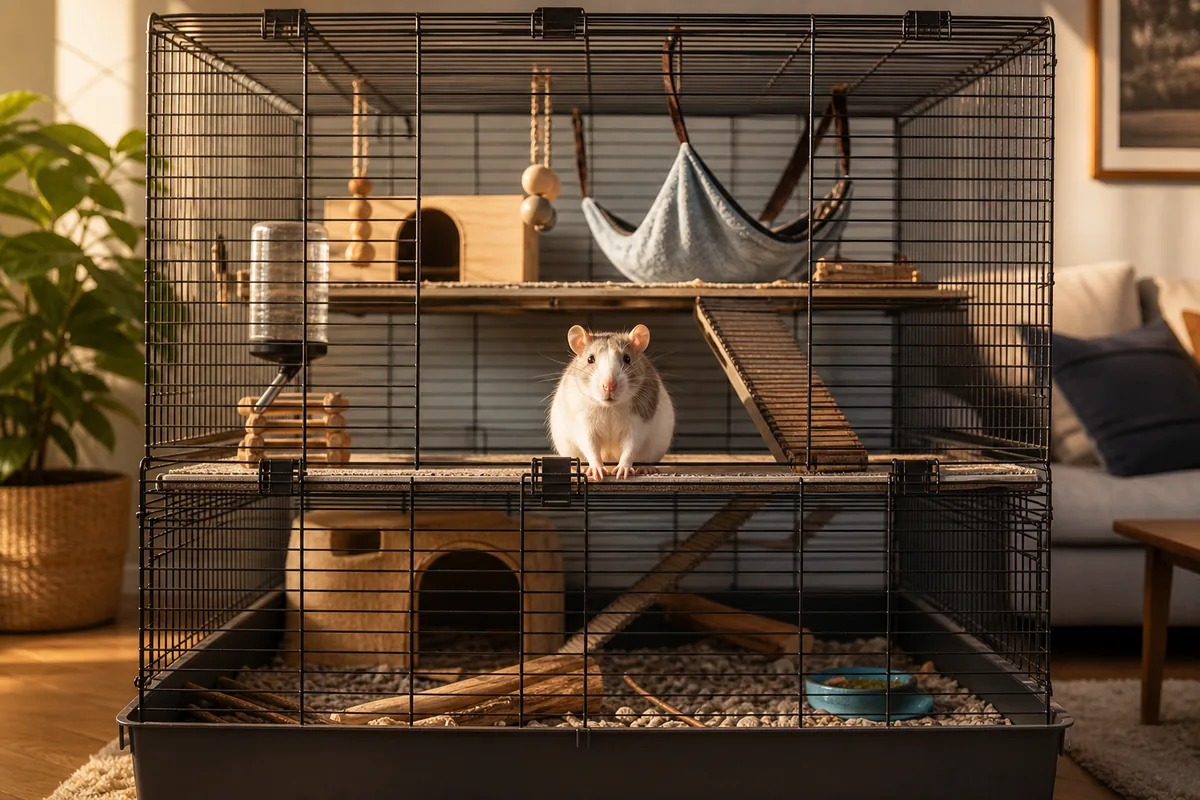
Pet rat care sits at the intersection of low daily time and high interaction quality. Their enclosure needs a full clean once a week, daily feeding takes about five minutes, and their out-of-cage time is flexible enough to fit around a busy schedule.
They adapt to their keeper's routine rather than demanding a fixed schedule. A rat kept by someone who works late will adjust activity patterns to match.
That flexibility is rare in small pets.
Pros
- Flexible activity schedule adapts to keeper's hours
- Weekly full clean: less frequent than guinea pigs
- Intelligent enough to self-entertain with enrichment
- Lower food cost than guinea pigs
Cons
- Require out-of-cage time daily (30 min minimum)
- Prone to respiratory infections: vet visits add up
- Short 2-3 year lifespan
- Cage odor increases quickly without weekly cleaning
- Daily time required: 20-30 minutes including feeding and out-of-cage play
- Enclosure size: 2×2×3 ft multi-level cage for a pair
- Diet: Rat block pellets plus small daily portion of fresh vegetables
- Key risk: Respiratory mycoplasmosis is endemic in rats: early treatment is essential
2. Gerbil: Lowest Daily Time Commitment
Gerbil care has the lowest-maintenance score on this list by pure time math. Their deep substrate burrow setup requires a full clean only every 3-4 weeks.
Their diet is simple: a gerbil seed mix with occasional fresh food. Daily care is under 15 minutes.
The trade-off is interaction. Gerbils are faster and less handleable than rats or guinea pigs.
They're better suited to keepers who enjoy watching animal behavior than to keepers who want a pet that sits in their lap.
Pros
- Enclosure clean every 3-4 weeks (deep substrate method)
- Minimal odor compared to other small mammals
- Low food cost: seed mix is inexpensive
- Naturally curious and entertaining to observe
Cons
- Hard to handle: too fast for casual holding
- Biting risk higher than rats or guinea pigs
- Less interactive than rats or guinea pigs
- Pair required; introducing new gerbils to adults is difficult
- Daily time required: 10-15 minutes for feeding and water check
- Enclosure: 40-gallon tank with 6-8 inches of substrate for burrowing
- Cleaning schedule: Spot-check weekly, full clean every 3-4 weeks
- Best fit: Keepers who want low daily time and enjoy observational interaction
3. Syrian Hamster: Low Maintenance but Limited Interaction
Hamster care has a truly simple routine. Feed once daily, check water, spot-clean the enclosure every few days, and do a full clean every 2-3 weeks.
Daily hands-on time is minimal if you're not focused on taming or interaction.
The low-maintenance score comes with a catch: the nocturnal schedule means you're not interacting with your hamster during most of your waking hours. A hamster can go days without meaningful human contact and show no ill effects, which is either a feature or a problem depending on why you got a pet.
Pros
- Solitary: no second animal needed
- Enclosure full clean every 2-3 weeks
- Quiet during the day (wheel noise is nighttime only)
- Independent: tolerates a missed day of interaction
Cons
- Nocturnal: rarely seen during normal waking hours
- Bites when woken or startled
- Tumor-prone: vet costs increase in year 2-3
- Short lifespan means grief within 3 years
4. Guinea Pig: Higher Maintenance but Most Rewarding
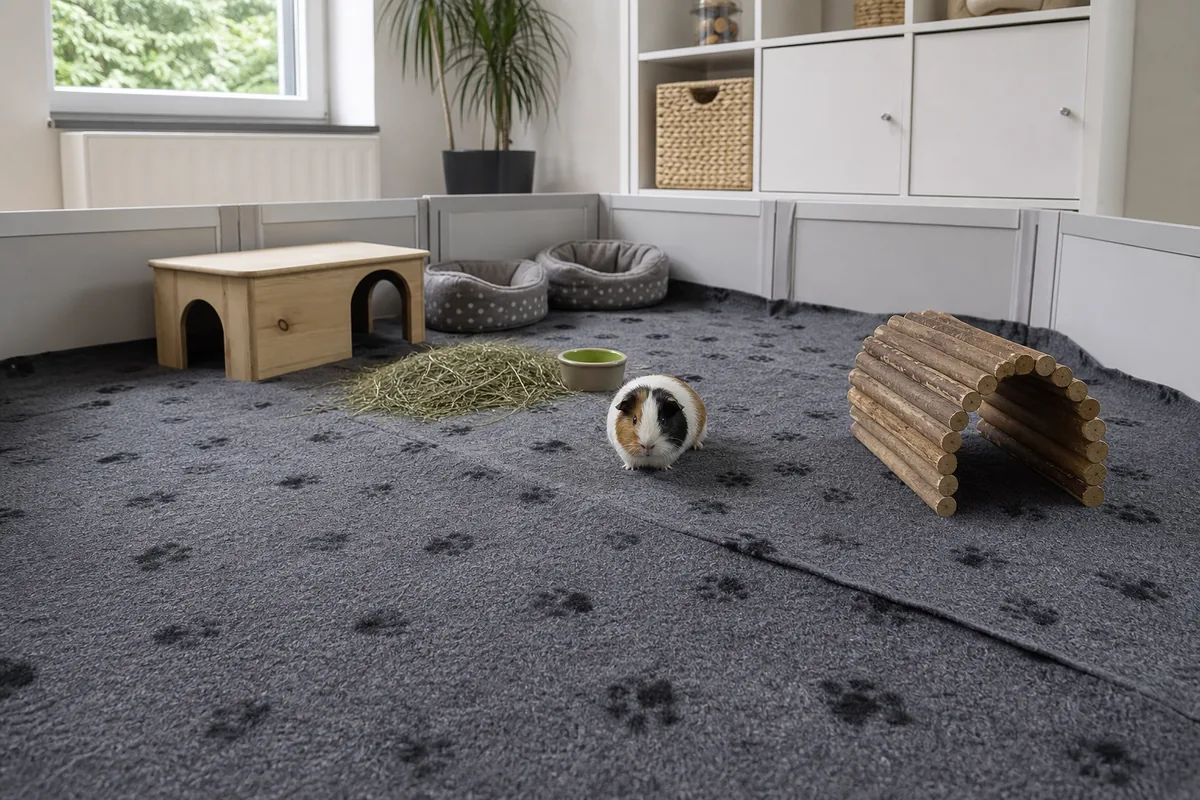
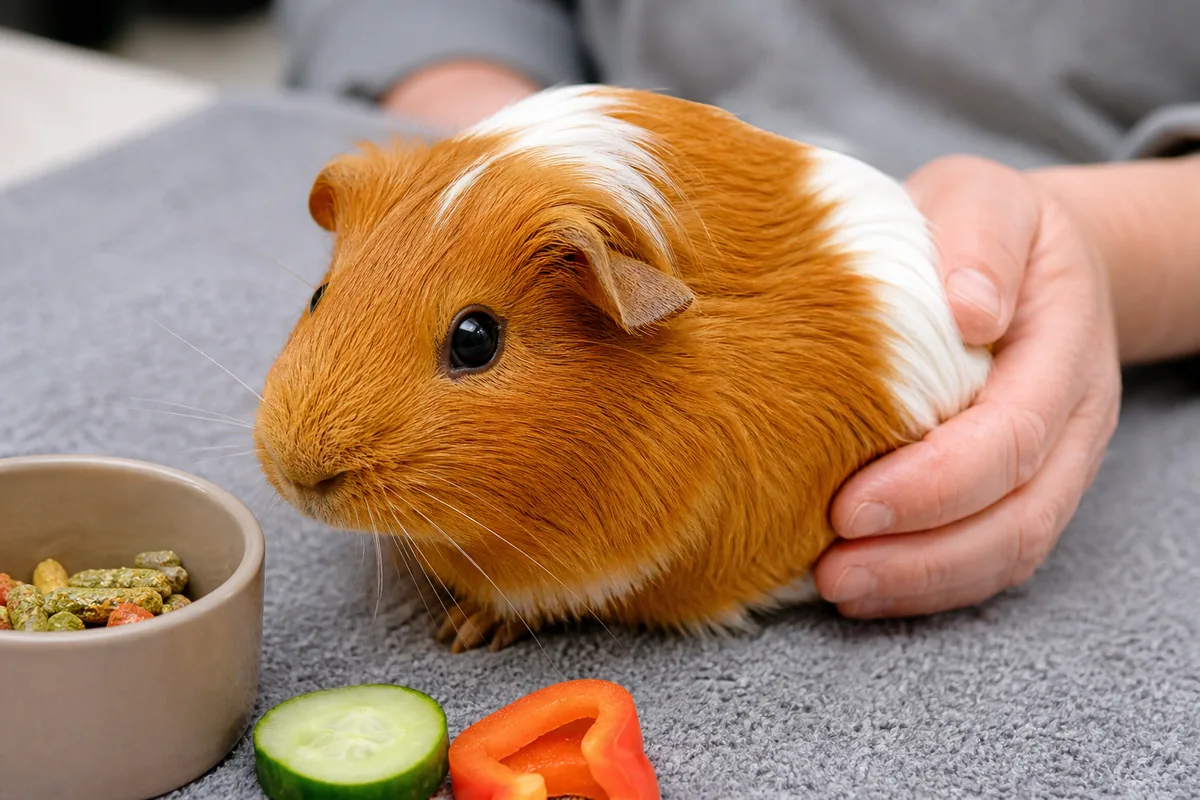
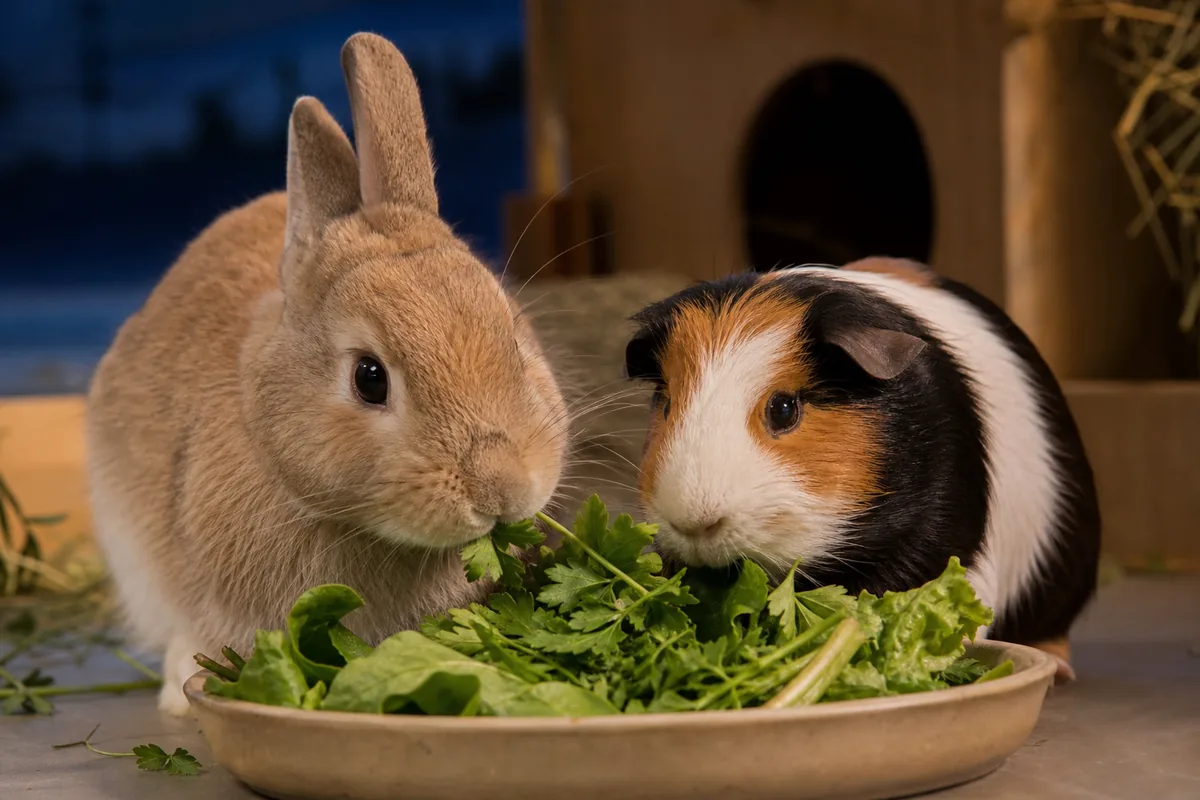
Guinea pig care requires more daily time than the top three: fresh vegetables every day, spot-cleaning the enclosure every day, and at least one hour of floor time. For keepers who can commit to that routine, the payoff is the most interactive, social, and responsive small pet on this list.
The enclosure cleaning demand is real. Guinea pigs are high-output animals.
Fleece bedding setups require spot-cleaning daily and full washes twice per week. Loose bedding setups need full replacement weekly.
Pros
- Most interactive and social of all small mammals
- Daytime active: fits naturally into daily routine
- Rarely bites; easy to handle
- Wheeks and other vocalizations make them engaging
Cons
- Daily fresh vegetables required: no skipping
- Spot-cleaning enclosure daily
- Pair required: higher cost and space
- Dental issues common in older pigs: exotic vet needed
5. Rabbit: Highest Commitment on This List
Rabbit care is wonderful but the least low-maintenance animal on this list. Daily litter box cleaning is non-negotiable.
Diet requires fresh hay restocked daily, plus fresh leafy greens. Rabbits need at least 3-4 hours of out-of-enclosure time in a rabbit-proofed space.
The 8-12 year lifespan and regular need for exotic vet care (including spay/neuter, dental checks, and GI stasis treatment) mean both a long commitment and higher lifetime costs than any other animal here.
Pros
- Litter-trainable: can free-roam in rabbit-proofed room
- 8-12 year lifespan for a long bond
- Highly interactive when trust is established
- Can learn their name and simple commands
Cons
- Daily litter cleaning required
- 3-4 hours minimum out-of-enclosure time daily
- Spay/neuter required for health and behavior
- GI stasis is a life-threatening emergency requiring immediate vet care
The Real Question: Low Maintenance vs. Low Interaction
The lowest-maintenance pets on this list are also the least interactive. Gerbils and hamsters need little daily time because they tolerate limited human contact without stress.
Guinea pigs and rabbits need more time because they're social animals that deteriorate without regular interaction.
Before choosing based on time commitment, decide which matters more: minimizing daily tasks, or having a pet that actively responds to you. Those priorities point to different animals.
For families where children are the primary reason for getting a pet, our best small pets for kids guide applies a different ranking lens: bite risk, activity schedule, and age-appropriate handling rather than daily time commitment.
The silo also covers less common options.
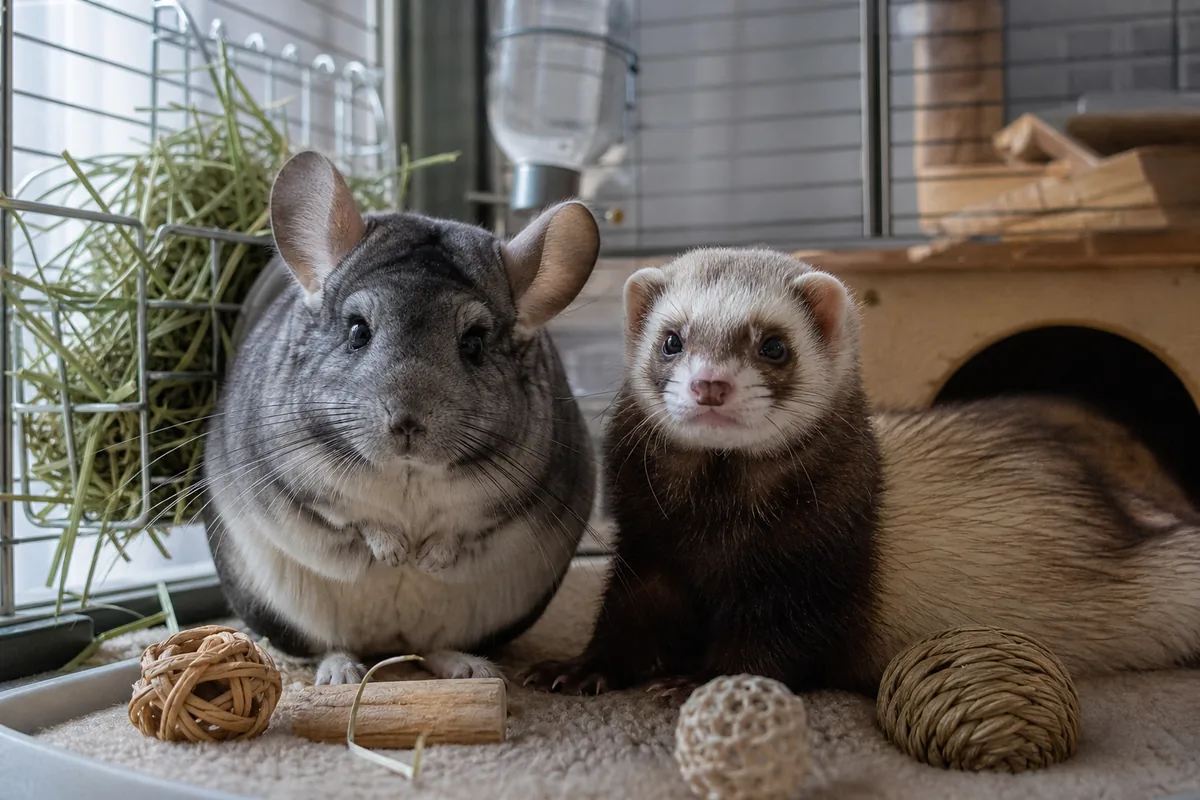
Chinchilla care has low daily time but a hard temperature ceiling that disqualifies many living situations.
Hedgehog care is similarly low-interaction and nocturnal, ranking near hamsters on the low-maintenance scale.
Ferret care is the highest-maintenance option on the silo and belongs at the bottom of this list.
A pet mouse rivals gerbils for minimal daily care time but is harder to handle and more prone to escaping.
Sugar glider care is highly demanding and not appropriate for anyone prioritizing low maintenance.
Sources and references
- Time budgets and welfare indicators in small companion mammalsApplied Animal Behaviour Science, 2019
- Husbandry guidelines for common small mammalsMerck Veterinary Manual
- Gerbil behavior and environmental enrichment requirementsof Applied Animal Welfare Science, 2015