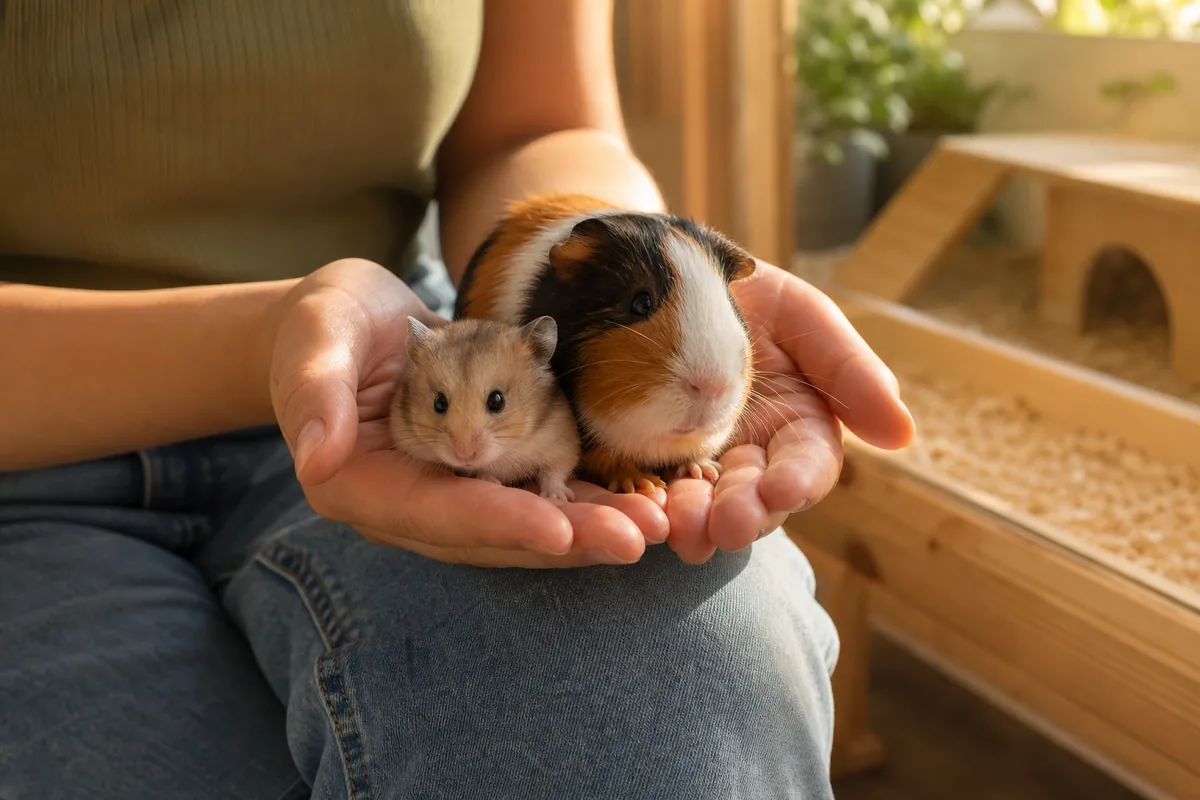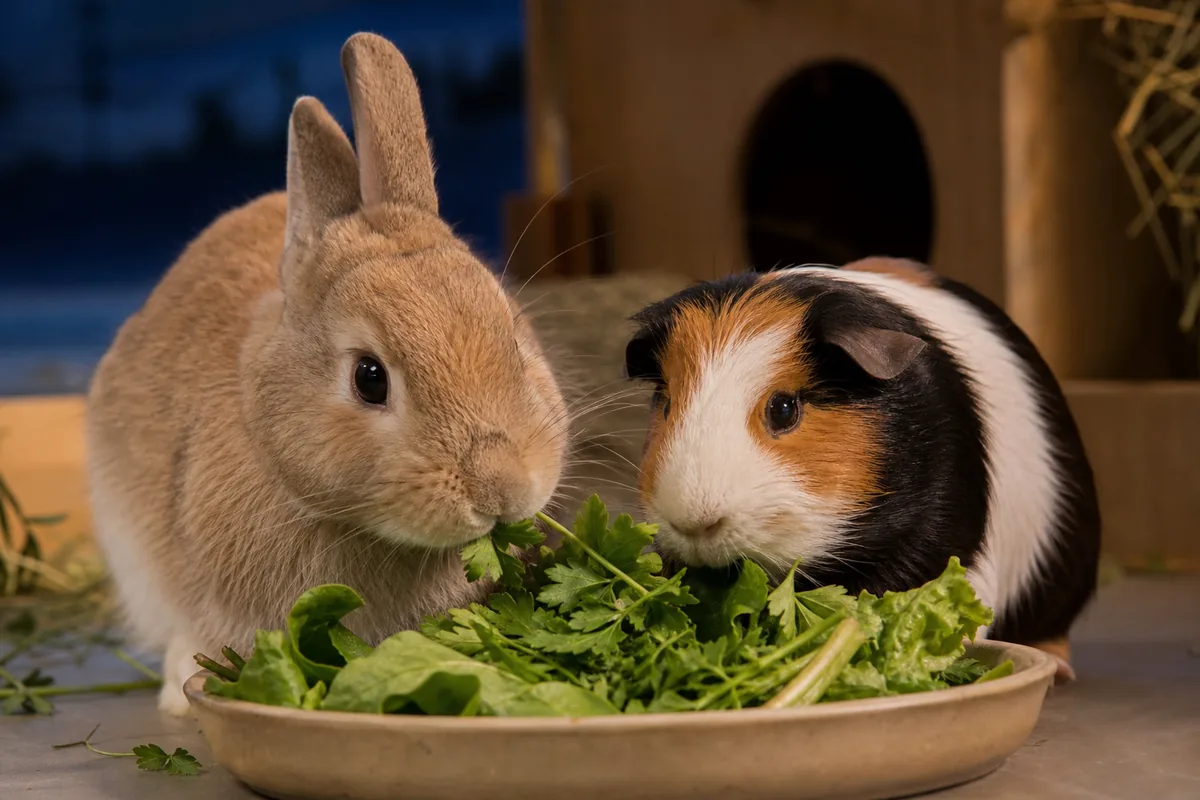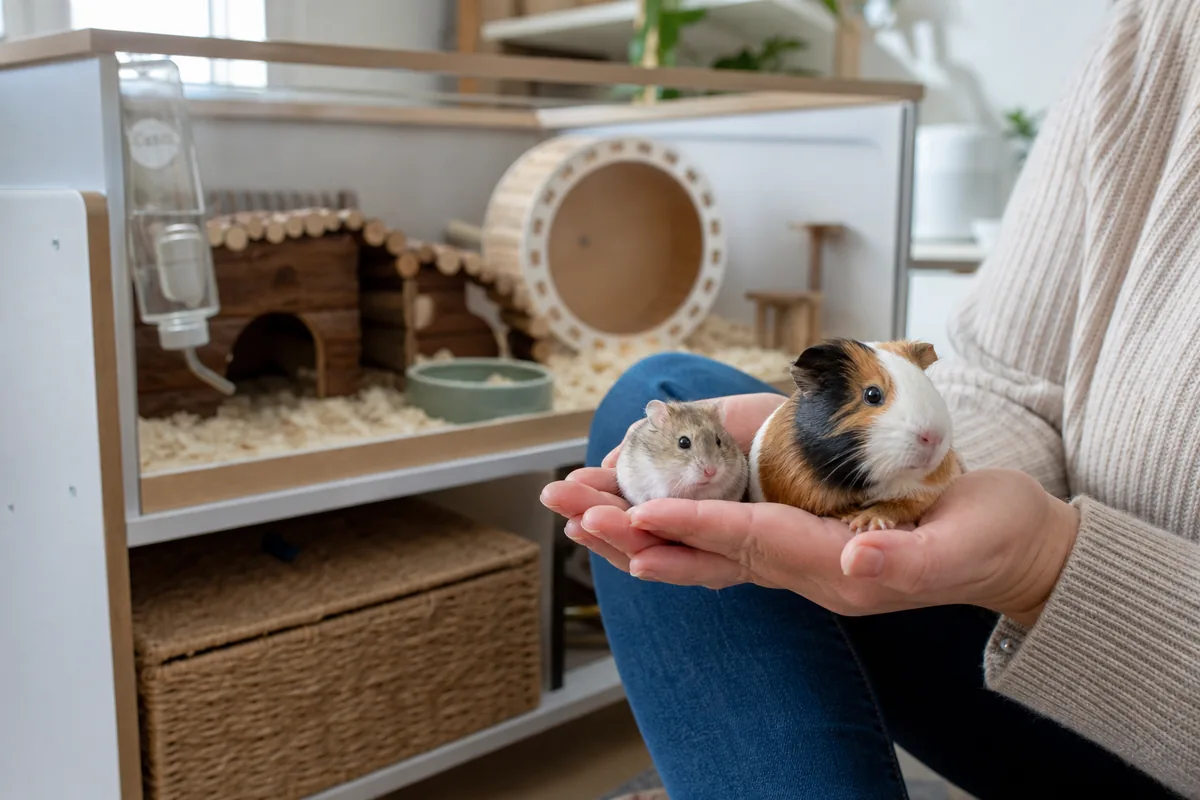
Both animals are manageable for most households, but they have almost nothing in common beyond small size. Choosing the wrong one for your lifestyle means a pet you rarely interact with or one that doesn't thrive in your setup.
We keep both and have run through the real-world differences that matter: activity hours, handling tolerance, space needs, social requirements, and long-term cost. The comparison below covers everything you need to make the right call for small mammal care.
| Factor | Syrian Hamster | Guinea Pig |
|---|---|---|
| Activity hours | Nocturnal (active 8pm, 4am) | Diurnal (active daytime) |
| Social needs | Solitary (must live alone) | Social (need at least 2) |
| Minimum space | 40×20 inch enclosure | 7.5 sq ft (2 pigs) |
| Lifespan | 2-3 years | 4-7 years |
| Handling tolerance | Variable; tames with patience | Generally tolerant; rarely bites |
| Noise | Wheel running at night | Wheeks and purring in daytime |
| Startup cost | $100-$200 | $200-$400 for pair |
| Monthly upkeep | $20-$40 | $40-$80 for pair |
| Vet complexity | Short lifespan; tumors common | Dental and GI issues common |
Syrian Hamster
The Syrian hamster is the classic solo small pet. It's inexpensive to set up, manageable in a bedroom or small apartment, and largely self-sufficient once the enclosure is properly furnished.
The catch is its schedule. Syrians are truly nocturnal, most active between 8pm and 4am.
If you work standard hours, you'll interact with your hamster for a short window in the evening. Daytime attempts to handle a sleeping hamster often result in grumpy biting.
Pros
- Inexpensive startup cost
- Solitary: no second animal needed
- Manageable enclosure size
- Quiet during the day
Cons
- Nocturnal schedule limits daytime interaction
- Bites when startled or woken
- Short 2-3 year lifespan
- Tumor-prone in later life
Taming a Syrian hamster takes consistent, patient work over 2-4 weeks. Once tamed, most Syrians tolerate handling well and rarely bite unprovoked.
The taming investment is higher than with guinea pigs.
- Roborovski hamsters: Faster and harder to handle; better as a watch pet than a hold pet
- Dwarf hamsters: Can sometimes be kept in same-sex pairs; still mostly nocturnal
- Syrian hamsters: Must be solitary; same-sex or opposite-sex cohabitation leads to fighting
Guinea Pig
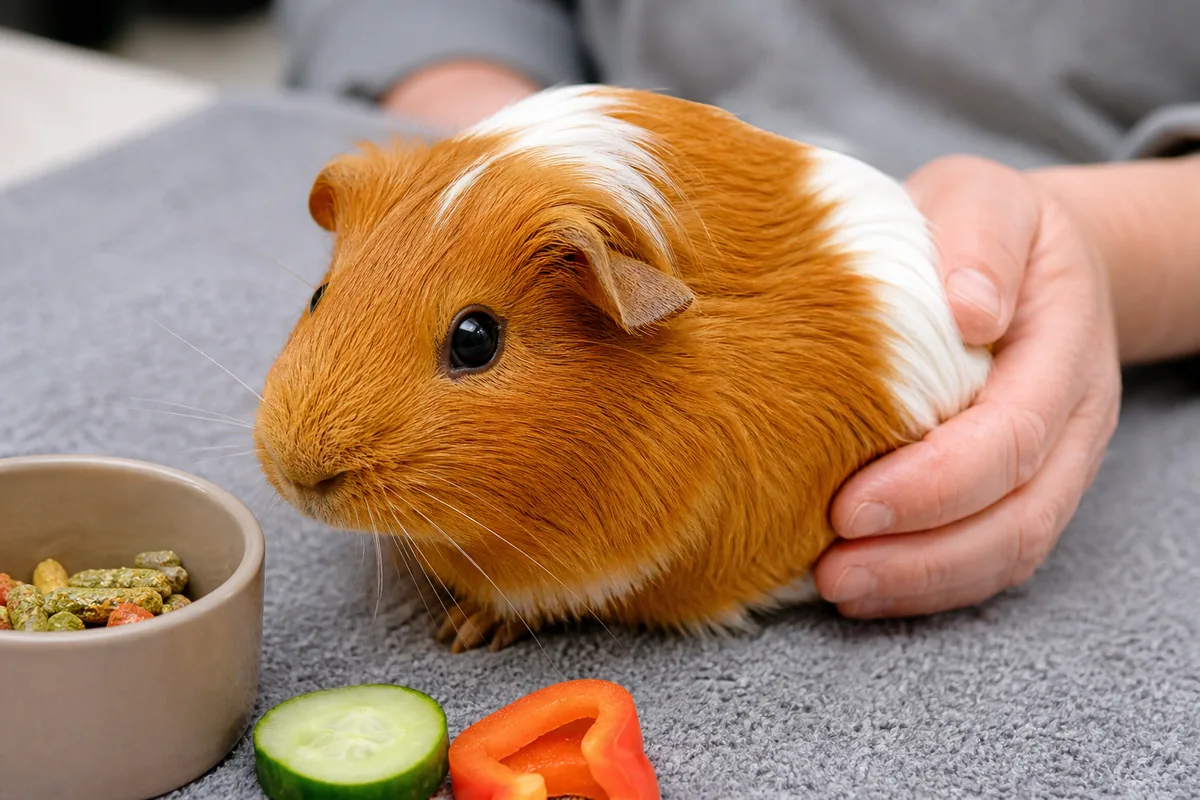
Guinea pig care is more demanding in terms of space and social requirements, but the investment pays off with more interactive, predictable behavior. They're active during the day, vocal, and truly interested in their keepers once trust is established.
The minimum is always a pair. A single guinea pig kept alone shows stress behaviors within weeks: repetitive movement, reduced appetite, and increased aggression.
Two pigs of the same sex (or a neutered male with a female) is the standard starting configuration.
Pros
- Daytime active: matches human schedule
- Rarely bites; more naturally handleable
- 4-7 year lifespan means longer bond
- Communicative: wheeks, purrs, chutting are easy to read
Cons
- Need a pair: minimum two animals
- Larger space requirement (7.5 sq ft minimum)
- Higher monthly feed and bedding cost
- Teeth and GI problems require exotic vet access
Guinea pigs wheeking (a high-pitched call) when they hear the refrigerator open is a well-documented behavior that keepers either find charming or loud. Their vocalization makes them more interactive than hamsters but also noisier during the day.
- Space: A 7.5 sq ft C&C grid enclosure for two pigs fits in most rooms
- Hay consumption: 80% of diet is Timothy hay, which means daily restocking
- Floor time: Minimum 1 hour of supervised out-of-cage time daily for exercise
- Vet care: Dental malocclusion is common in older pigs and requires specialist care
Which Small Pet Fits Your Schedule?
The activity schedule is the single most important factor for most keepers. If you're home during the day and want regular interaction, a guinea pig fits naturally into your routine.
If your active hours are evening and late night, a hamster's schedule aligns with yours better.
Students and people who work from home consistently report more satisfaction with guinea pigs. Nine-to-five workers who are rarely home until evening often find hamsters more practical because the overlap between their schedule and the hamster's activity window is actually usable.
Cost Comparison: Setup and Monthly Upkeep
A hamster setup runs $100-$200 for a quality 40×20 inch enclosure plus wheel, hideouts, and bedding. Monthly costs average $20-$40 for bedding, food, and occasional enrichment items.
Guinea pigs for a pair run $200-$400 for a C&C enclosure, fleece liners, hay, and pellets. Monthly upkeep averages $40-$80 for two animals, driven largely by hay consumption, fresh vegetables, and bedding.
Detailed Cost Breakdown
Hamster enclosure (40×20 in): $80-$150 one-time Hamster wheel (silent spinner): $25-$40 one-time Hamster monthly (bedding + food): $20-$35/month Guinea pig C&C grid (2 pigs): $60-$120 for grids + coroplast Guinea pig monthly (hay for 2): $20-$30/month Guinea pig monthly (pellets + veg for 2): $20-$40/month Exotic vet visit (either species): $60-$150 per visit
Beyond these two species, the small-mammals silo covers many other options.
A rabbit lives 8-12 years and is the longest commitment in the hobby.
A gerbil pair is among the most affordable setups you'll find.
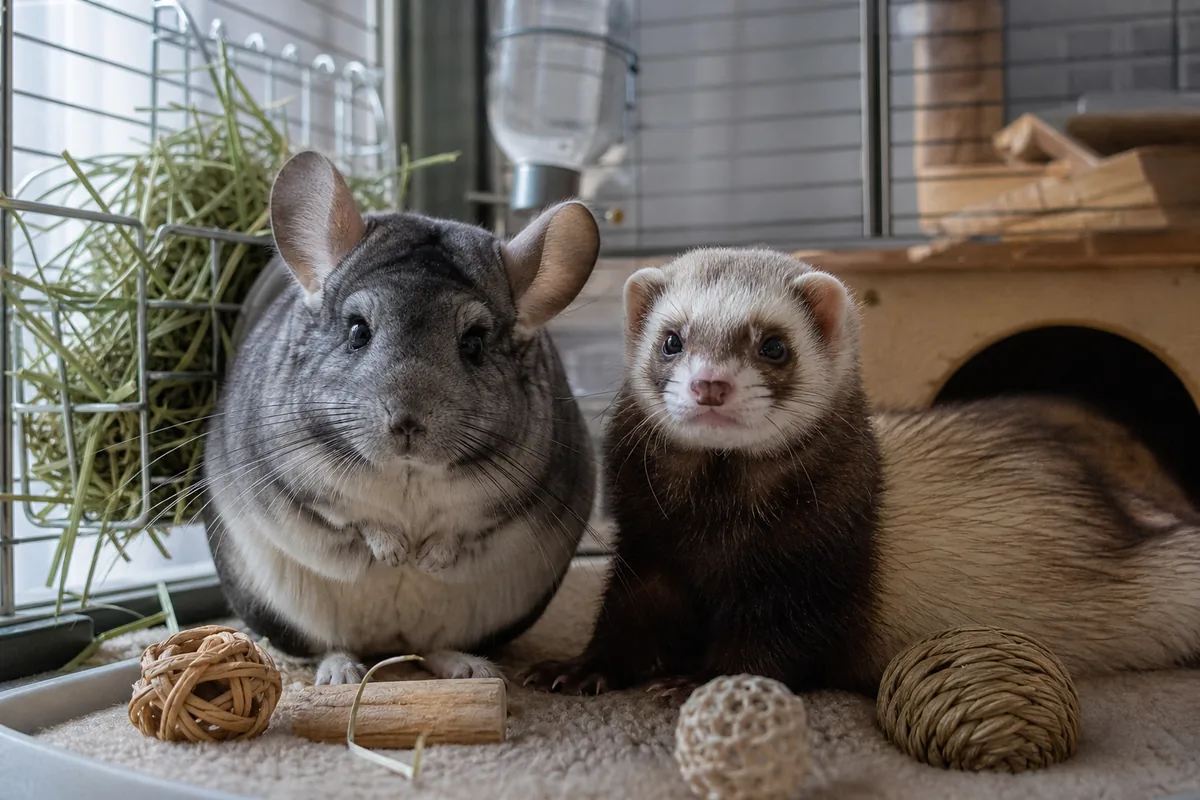
Chinchilla care demands strict temperature control but rewards with a 10-15 year lifespan.
A hedgehog is solitary and nocturnal like a hamster but requires more specialized handling.
Ferret care is the highest-maintenance option on this list, with daily free-roam time and significant health costs.
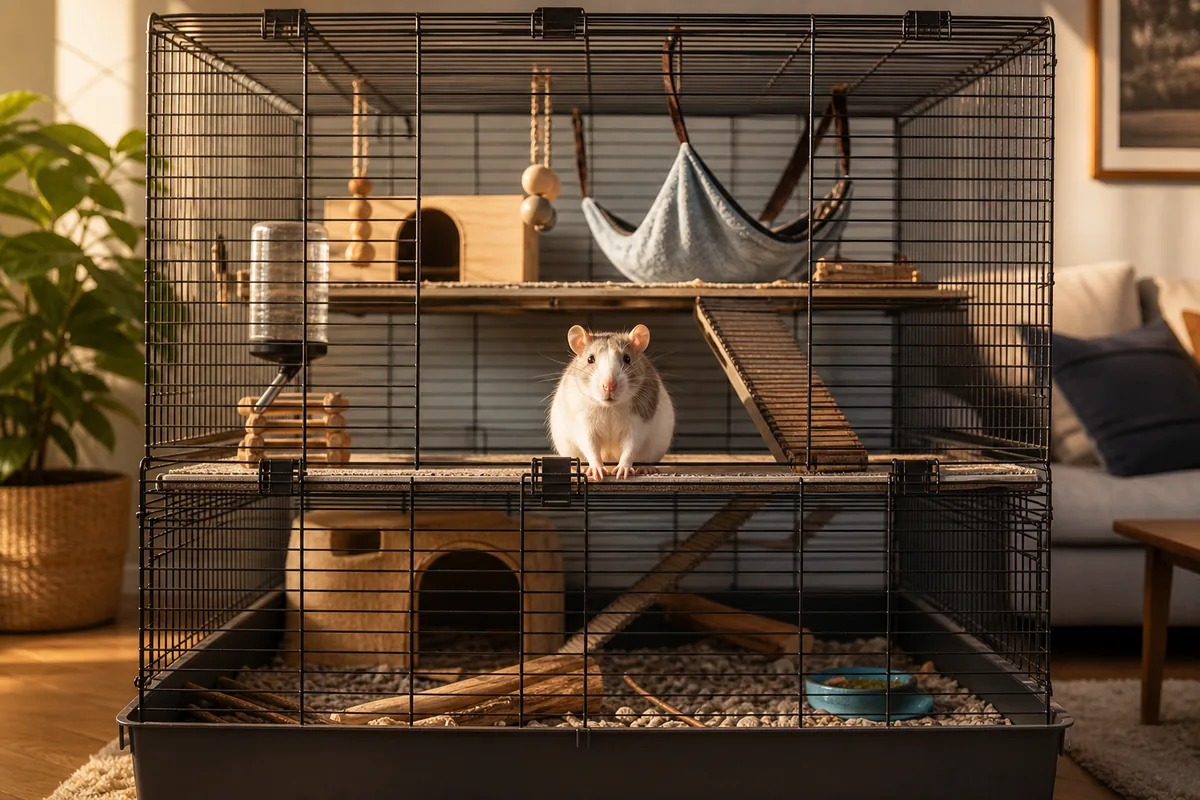
Pet rat care offers more intelligence and interaction than hamsters at a similar price point.
A pet mouse is the most affordable small pet to keep but the hardest to handle.
Sugar glider care is strictly for experienced exotic pet keepers with the time and resources their social needs require.
On the feeding side, both guinea pigs and hamsters eat fruit in small amounts. Our bananas for guinea pigs guide covers how that high-sugar fruit fits once a week into the guinea pig rotation.
Sources and references
- Social behavior and housing requirements in guinea pigsApplied Animal Behaviour Science, Vol. 175, 2016
- Hamster biology, behavior and husbandryMerck Veterinary Manual
- Guinea pig care and husbandry guidelinesMerck Veterinary Manual