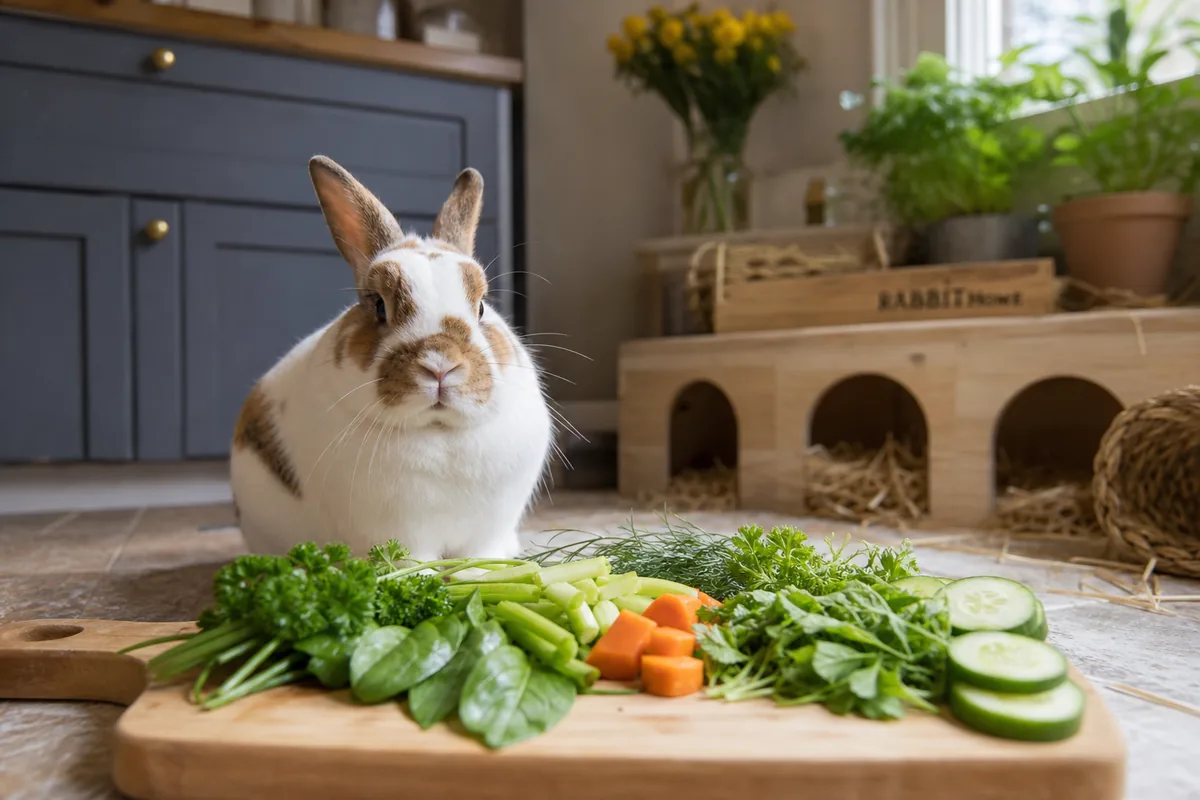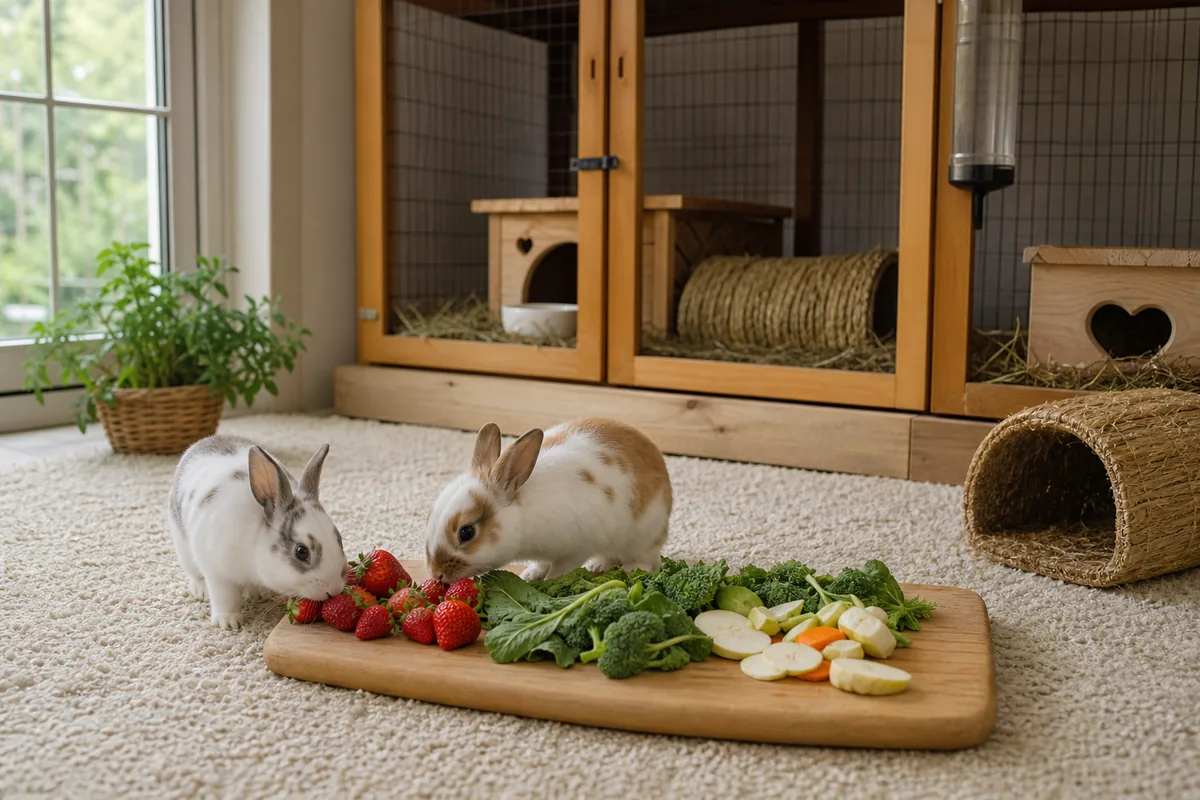
Strawberries work well as a rabbit treat because they're low enough in sugar to offer without the same anxiety as banana or grapes. Most rabbits enjoy them, and the soft texture makes them easy to eat even for older animals with dental sensitivity.
That said, small mammal feeding still requires restraint with any fruit. Strawberries are a treat, not a dietary staple, and overfeeding any sugary food disrupts the gut balance rabbits depend on.
Strawberries for Rabbits
- Ripe strawberry fleshSafe
- strawberry leavesSafe
- stemSafe
- None. all parts are non-toxic to rabbitsUnsafe
Prep: Wash thoroughly under running water, remove the green hull only if very wilted, slice larger berries in half to confirm ripeness and avoid mold inside, serve at room temperature Freq: 2-3 times per week Amount: 1-2 medium berries (approx. 20-30g) per serving for a medium rabbit
Strawberry Nutrition: Lower Sugar Than Most Fruits
Strawberries contain 4.9g of sugar per 100g, placing them at the safer end of the fruit spectrum for rabbits. They're also 91% water, which means a 20g serving delivers less than 1g of sugar while providing hydration.
Carrots come in at 4.7g of sugar per 100g, almost identical to strawberries, which our guide on carrot treat frequency for rabbits compares in the context of treat rotation.
Our complete rabbit care guide covers how to build a varied diet around hay, pellets, and occasional treats like strawberries.
The fiber content is modest at 2g per 100g, similar to carrot.
The vitamin C content in strawberries (58.8mg per 100g) is significant, though rabbits synthesize their own vitamin C and don't require dietary sources the way guinea pigs do. The manganese and folate are useful micronutrients at any serving size.
- Sugar per 100g: 4.9g. lower than carrots (4.7g is close, grapes are 16g)
- Water content: 91%. high hydration value per gram
- Vitamin C per 100g: 58.8mg. not required by rabbits but not harmful
- Fiber per 100g: 2g. similar to carrot root
- Manganese per 100g: 0.4mg. supports bone health and metabolism
Which Parts of the Strawberry Are Safe?
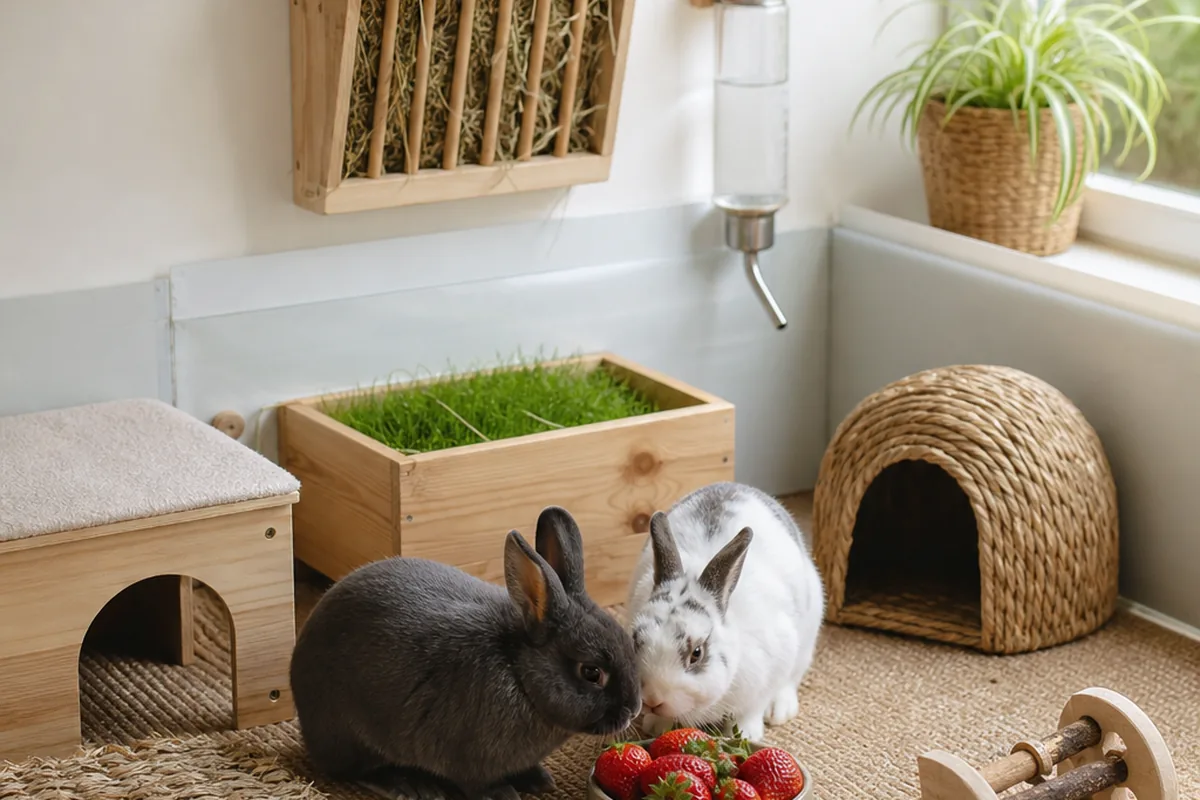
Every part of the strawberry plant is safe for rabbits: the fruit, the leaves, and the stem. There are no toxic compounds in any section of the plant, unlike tomatoes where the green parts contain alkaloids.
Grapes sit at 16g of sugar per 100g and carry additional questions around toxicity in other species, which our piece on grapes and rabbits addresses directly.
Banana has more than double the sugar of strawberries at 12g per 100g, a gap our article on banana portion limits for rabbits puts in practical terms.
The one thing to check before serving is ripeness and freshness. Overripe berries with mold or soft spots should be discarded.
The fermented sugars in a rotting strawberry can cause gas and digestive upset more reliably than a fresh berry would.
| Part | Safe? | Sugar Level | Notes |
|---|---|---|---|
| Ripe fruit | Yes. treat | Low-moderate (4.9g/100g) | 1-2 berries per session |
| Leaves | Yes | Very low | Can offer with leafy green rotation |
| Stem / hull | Yes | Very low | No need to remove |
| Overripe / moldy fruit | No | Variable | Discard. fermented sugars cause bloating |
How to Prepare and Serve Strawberries
Preparation is minimal but specific. Always wash strawberries thoroughly since conventionally grown berries regularly appear on pesticide residue monitoring lists.
Pairing strawberry treat days with romaine as the daily green works well, and our guide on safe daily lettuce varieties for rabbits explains which options are best for everyday feeding.
Apple flesh offers useful pectin fiber alongside its 10g of sugar per 100g, which our guide on apple treats for rabbits covers along with the non-negotiable seed removal step.
Cold running water for 30 seconds removes most surface residue.
Serve at room temperature rather than straight from the refrigerator. Cold food can shock a rabbit's sensitive digestive tract and contribute to soft cecotropes.
How Much Per Rabbit?
Two medium strawberries weigh about 25-30g and deliver roughly 1.5g of sugar. For a healthy adult rabbit this is well within a safe treat amount, provided no other sugary foods are offered the same day.
Spinach earns a caution rating due to high oxalates rather than sugar, which our piece on spinach rotation limits for rabbits covers with specific frequency guidance.
Celery at just 1.3g of sugar per 100g makes an excellent low-sugar contrast to fruit treats, as our guide on celery preparation for rabbits covers along with the essential string-cutting step.
Scale down for smaller breeds. A Lionhead or Mini Rex should get one small berry per session, not two medium ones.
- Dwarf breeds (under 2kg): one small strawberry (about 10g), 2x per week
- Medium breeds (2-4kg): one to two medium berries (20-30g), 2-3x per week
- Large breeds (4kg+): two to three medium berries (30-40g), 2-3x per week
Signs Your Rabbit Had Too Much
Strawberries are forgiving compared to higher-sugar fruits, but overfeeding still causes problems. The first sign is usually a change in cecotrope consistency. they become paste-like rather than firm grape clusters.
Watermelon flesh has 6g of sugar per 100g but nearly zero fiber, and our article on watermelon rind versus flesh for rabbits explains why the rind is the smarter portion choice.
Hamsters face even stricter fruit limits than rabbits, especially dwarf breeds prone to diabetes, as our guide on strawberry portions for hamsters details.
Tomatoes are another treat with a toxicity concern in their green parts, which our guide on ripe tomatoes for rabbits covers with a clear safe-versus-toxic breakdown.
If a rabbit gets into a bowl of strawberries and eats a large amount at once, watch closely for 24 hours. Gut sounds should be present (you can hear normal gurgling by placing an ear near the flank).
Silence suggests gas accumulation or stasis developing.
- Pasty cecotropes: soft, smelly droppings left uneaten on hutch floor
- Reduced fecal output: fewer or smaller droppings than usual
- Bloated abdomen: firm, drum-like belly when gently pressed
- Not eating hay: skipping fiber after filling up on fruit
Sources and references
- Appropriate Diet for Pet RabbitsBritish Rabbit Council Veterinary Advisory Committee, 2020
- Hindgut Fermentation and Dietary Carbohydrates in Lagomorphsof Animal Physiology and Animal Nutrition, Vol. 95, 2011
- Rabbit Nutrition and Nutritional HealingHouse Rabbit Society, 2019