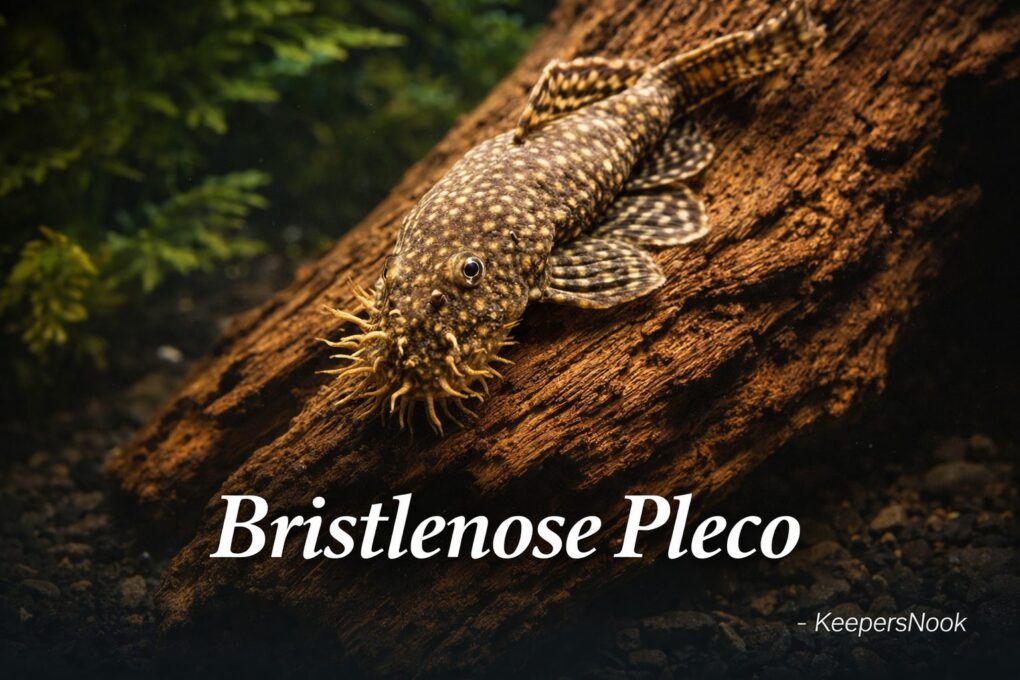
Bristlenose Pleco vs. Common Pleco: One Grows to 24 Inches, the Other Stops at 5
Every pet store sells the common Pleco as a tank cleaner. It arrives at two inches, looks harmless, and then spends the next three years reaching 18-24 inches while producing more waste than it removes.
Remember it later
Planning to try this recipe soon? Save it for a quick find later!
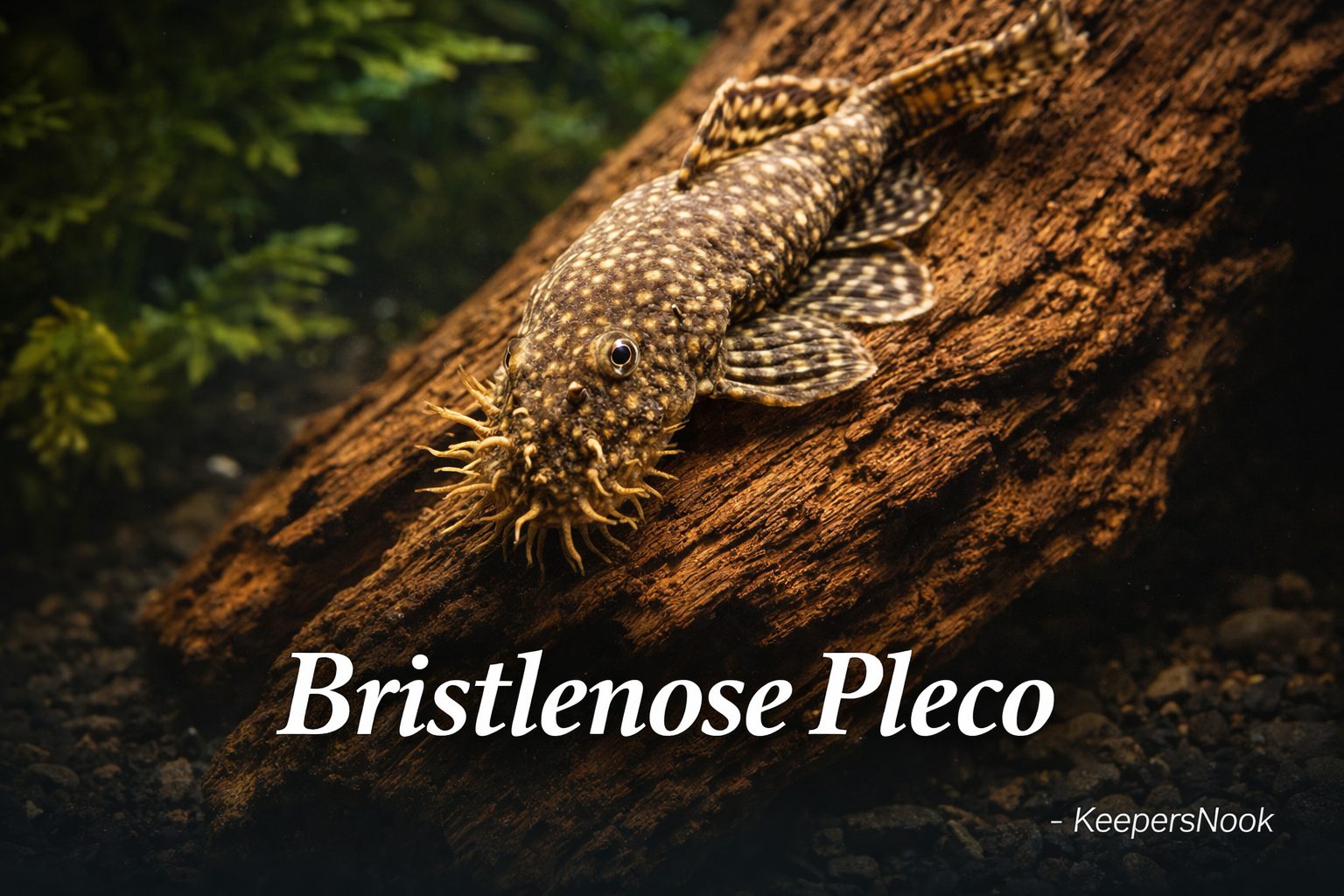
The Bristlenose Pleco does the same algae work and stays under 5 inches for its entire life. That size difference is the whole story.
Bristlenoses belong to the genus Ancistrus, native to South American rivers including the Amazon and its tributaries. They evolved in fast-flowing, oxygen-rich water with plenty of submerged wood.
That origin shapes every care requirement they have.
The short body, wide mouth, and armor plating make them purpose-built for rasping algae off hard surfaces. The bristle tentacles on the male's snout are the most distinctive feature in the hobby and the easiest way to sex the fish once they reach maturity.
Those temperature brackets matter. The wide tolerance (60-80°F) makes Bristlenoses adaptable, but the sweet spot is 73-81°F.
Below 68°F they enter cold stress. Above 82°F their metabolism spikes and oxygen demand outpaces most tank setups.
The 10-year lifespan figure is realistic with good maintenance. Most keepers underestimate the commitment they are making at the fish store.
Bristlenose Pleco Tank Setup: 20 Gallons, Long Footprint, Always Driftwood
A 20-gallon tank with a long footprint is the correct minimum. Bristlenoses are active foragers at night, moving across the substrate and up vertical surfaces, and they need floor space to work.
A 20-gallon tall tank is a worse choice than a 20-gallon long. Floor footprint matters more than water column height for a fish that lives on surfaces.
Driftwood is a dietary requirement, not decoration. Bristlenose Plecos rasp wood to obtain cellulose and beneficial gut microbes that support their digestive system.
A tank without driftwood is an incomplete setup. Malaysian driftwood and Mopani driftwood are both widely available and accepted immediately by the fish.
New driftwood releases tannins that temporarily soften and acidify the water. This is fine for Bristlenoses and any acid-tolerant tank mates, but worth monitoring if you are keeping fish at the upper edge of their pH tolerance.
Multiple Bristlenoses in the same tank are possible with one firm rule: two adult males in a 20-gallon will fight over cave territory. One male and one or two females is the most stable combination.
A 40-gallon tank with multiple cave sites can support two males without serious conflict.
If you are also considering smaller tank options, the Bristlenose Pleco is not a good fit for 10 gallons. The footprint is too limited and the bioload too high for sustainable water quality in that volume.
Water Parameters for Bristlenose Plecos: Adaptable but Not Bulletproof
Bristlenose Plecos tolerate a wider range than most community fish. Their South American river origins span water types from soft and acidic to moderately hard and neutral, so they have built-in flexibility.
That flexibility does not mean they are indestructible. Ammonia and nitrite must be zero.
Nitrates above 40 ppm cause chronic stress that shortens lifespan and suppresses immune function.
| Parameter | Ideal Range | Tolerable Range |
|---|---|---|
| Temperature | 74-78°F | 60-80°F |
| pH | 6.5-7.0 | 6.5-7.5 |
| Ammonia | 0 ppm | 0 ppm only |
| Nitrite | 0 ppm | 0 ppm only |
| Nitrate | <20 ppm | <40 ppm |
| Hardness (GH) | 6-12 dGH | 3-20 dGH |
Oxygenation at the substrate level matters more than most keepers realize. Bristlenoses breathe through gills and spend most of their time at the bottom, where dissolved oxygen is lowest.
A powerhead or wavemaker in tanks over 30 gallons improves conditions at the substrate level where they forage.
Diet: Bristlenose Plecos Eat Algae, But You Still Have to Feed Them
Bristlenose Plecos are primarily herbivores with some omnivorous behavior. They rasp soft algae from glass, rocks, driftwood, and plant leaves at night, and they are genuinely effective at it.
They do not eat everything. Spot algae, diatoms, and green film disappear quickly.
Black beard algae is largely ignored. The most common mistake is assuming the pleco eliminates your algae problem without supplemental feeding.
In a clean, well-maintained tank, natural algae is not enough to sustain them. They will slowly lose condition and develop a pinched, hollowed look behind the pectoral fins if you rely on algae alone.
Bristlenose Pleco Tank Mates: Compatible With Nearly Every Community Fish
The Bristlenose Pleco is one of the most universally compatible community fish in the hobby. It is non-aggressive toward other species, spends most of its time on surfaces rather than open water, and does not compete with mid or top-water fish for food or territory.
The only meaningful compatibility constraint is other bottom-dwellers competing for the same cave spaces, and other male Bristlenoses competing for territory in smaller tanks.
Bottom-dwelling catfish like Corydoras coexist well because the two species occupy different micro-habitats. Corydoras school in open substrate areas while Bristlenoses adhere to vertical and angled surfaces.
A trio of Corydoras and a single Bristlenose is one of the most effective bottom-level cleaning combinations in the hobby.
For peaceful betta companions, the Bristlenose Pleco is the most frequently recommended tankmate. Bettas ignore them entirely.
Bristlenoses ignore Bettas. Parameter overlap is strong and the size requirement (20+ gallon tank for the Betta) aligns with the Pleco's minimum.
Schooling mid-water fish pair well with this setup. Neon tetras occupy a completely different zone in the water column and are a natural community pairing.
Their pH and temperature requirements overlap cleanly.
- Angelfish: compatible in 55+ gallon tanks. Keeping angelfish with a Bristlenose works because the Pleco stays on surfaces while Angels patrol mid-water
- Platies: excellent pairing. Adding platies to a Bristlenose tank adds movement and color at mid-level with no competition
- Cherry Barbs: compatible schooling fish. Cherry barb schools at mid-level and ignores the Pleco entirely
- Guppies and small livebearers: peaceful, no overlap in territory or diet
- Other Corydoras species: ideal bottom-level companions as noted above
For community tanks that already include goldfish, review compatible goldfish companions instead. Bristlenose Plecos cannot tolerate the cold temperatures goldfish require.
They do not belong in the same tank.
Bristlenose Pleco Health and Common Diseases
Bristlenose Plecos are hardy relative to most ornamental fish. Their main health risks come from water quality failures, physical injury from aggressive tank mates, and the chronic underfeeding we mentioned earlier.
Ich is harder to spot on Bristlenoses than on most fish. Their armor plating and dark coloration mask the white spots until the infection is advanced.
Check the fins and the soft belly skin first. Ich appears there earlier than on the armored flanks.
Standard temperature-increase treatment works. Use medications labeled safe for scaleless fish at reduced dose.
Fin rot is caused by bacterial infection following water quality decline. Ragged fin margins or discoloration along the tail fins are the first signs.
Fix the water first.elevated nitrates or ammonia spikes are almost always the root cause. Then treat with antibacterial medication if the rot is progressing.
- Anchor worm and fish lice: visible external parasites on the soft belly skin. Remove manually with tweezers, then treat with fenbendazole-based antiparasitic
- Bloat and internal parasites: distended abdomen plus loss of appetite and clamped fins. Treat with metronidazole-based medication
- Hollow belly syndrome: chronic underfeeding. the belly appears concave or pinched behind the pectoral fins. Increase algae wafer frequency and add vegetable supplements daily until body condition recovers
Bristlenose Pleco Breeding: Cave Spawners That Breed Without Much Help
Bristlenose Plecos are among the easiest Plecos to breed in captivity. A compatible male and female in a well-maintained tank with appropriate cave structures will often breed without any deliberate effort from the keeper.
The male selects and cleans a cave, then courts the female inside. She deposits 50-200 adhesive eggs directly onto the cave ceiling or walls. After fertilization she leaves entirely. The male takes over all parental duties.
He fans the eggs with his fins to oxygenate them, removes unfertilized eggs, and guards the cave with real aggression for the 5-7 days until they hatch. He continues guarding the fry for another 2-3 days while they absorb their yolk sacs. Do not disturb the cave during this period.
Free-swimming fry begin rasping algae and biofilm immediately. They also accept crushed algae wafers and blanched zucchini from their first days. Fry survival is high when algae is abundant and the tank is not heavily stocked with fish that predate small fry.
Breeding triggers:
- A 2-3°F increase in water temperature over baseline
- A partial water change with slightly cooler water to simulate the rainy season stimulus
- Generous feeding in the 2-3 weeks before the attempt, including extra protein
- Multiple cave options so the male has real choices and feels secure
Males are distinguished by prominent bristle tentacles across the snout and forehead, visible by 3-4 months of age and growing larger with maturity. Females may have small bristles around the mouth edge only. The male's bristles are the reliable sexing feature.
Under optimal conditions, Bristlenose Plecos breed every 4-6 weeks. In a community tank, some fry are eaten by other fish. In a dedicated breeding setup with the parents removed after spawning, survival rates are very high.
Bristlenose Pleco Lifespan: 5-10 Years Requires Consistent Care
Bristlenose Plecos live 5-10 years in captivity with proper maintenance. That is a meaningful commitment, and it is worth understanding before the purchase.
The most common cause of early death is starvation through neglect. Keepers assume the Pleco eats algae and needs no supplemental feeding.
In a clean, well-maintained tank, algae is not sufficient to sustain them long-term.
A healthy Bristlenose has a slightly rounded belly when viewed from above. A concave or pinched appearance behind the pectoral fins is a sign of chronic underfeeding and it is reversible if caught early.
They are nocturnal by default but become more active during daylight hours once they feel secure in a tank with ample hiding spots. A Bristlenose that hides all day and never appears is usually lacking cover or being stressed by aggressive tank mates.
Add a second cave or more driftwood before assuming there is a health problem.
- Year 1-2: growth phase. juveniles grow quickly and are most vulnerable to water quality issues
- Year 2-4: peak activity. sexually mature, most active foraging, breeding behavior begins
- Year 5-10: adult maintenance phase. healthy adults in stable water are remarkably low-maintenance
- Feeding logs: keeping a basic record of wafer frequency catches the slow drift toward underfeeding before it becomes a problem
For keepers managing betta feeding schedules in the same tank, the Bristlenose's after-lights feeding routine is easy to integrate into a single nightly schedule. The Betta eats at the surface during the day, the Pleco eats at the bottom after dark.