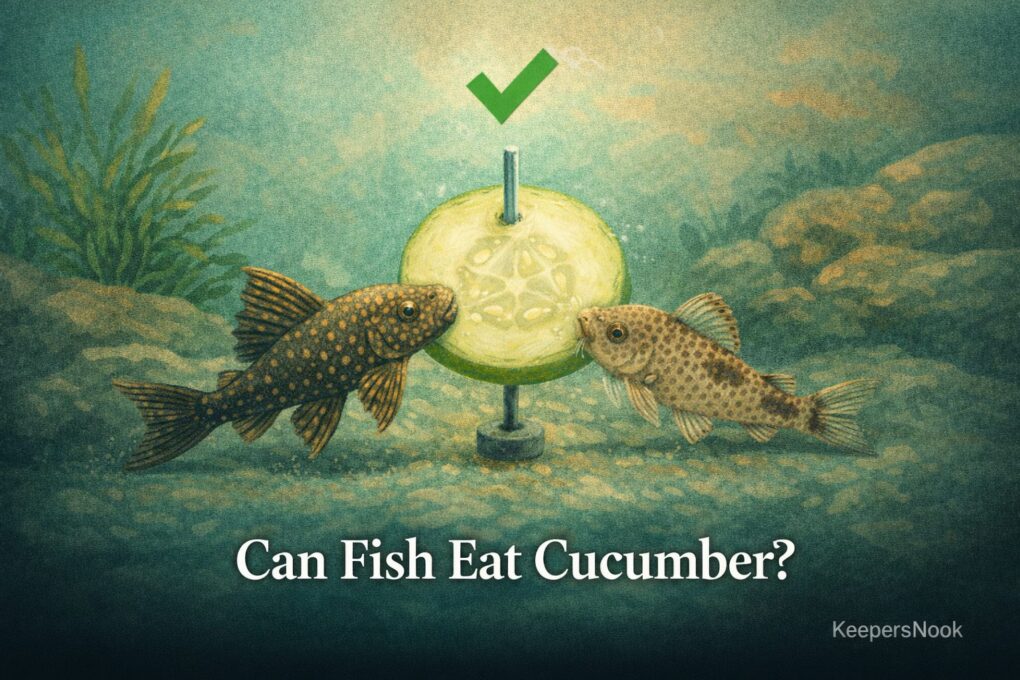
Which Fish Eat Cucumber? 6 Species That Actually Benefit
Cucumber is not a universal fish food. Most carnivorous species ignore it entirely, and that is the correct outcome.
Remember it later
Planning to try this recipe soon? Save it for a quick find later!
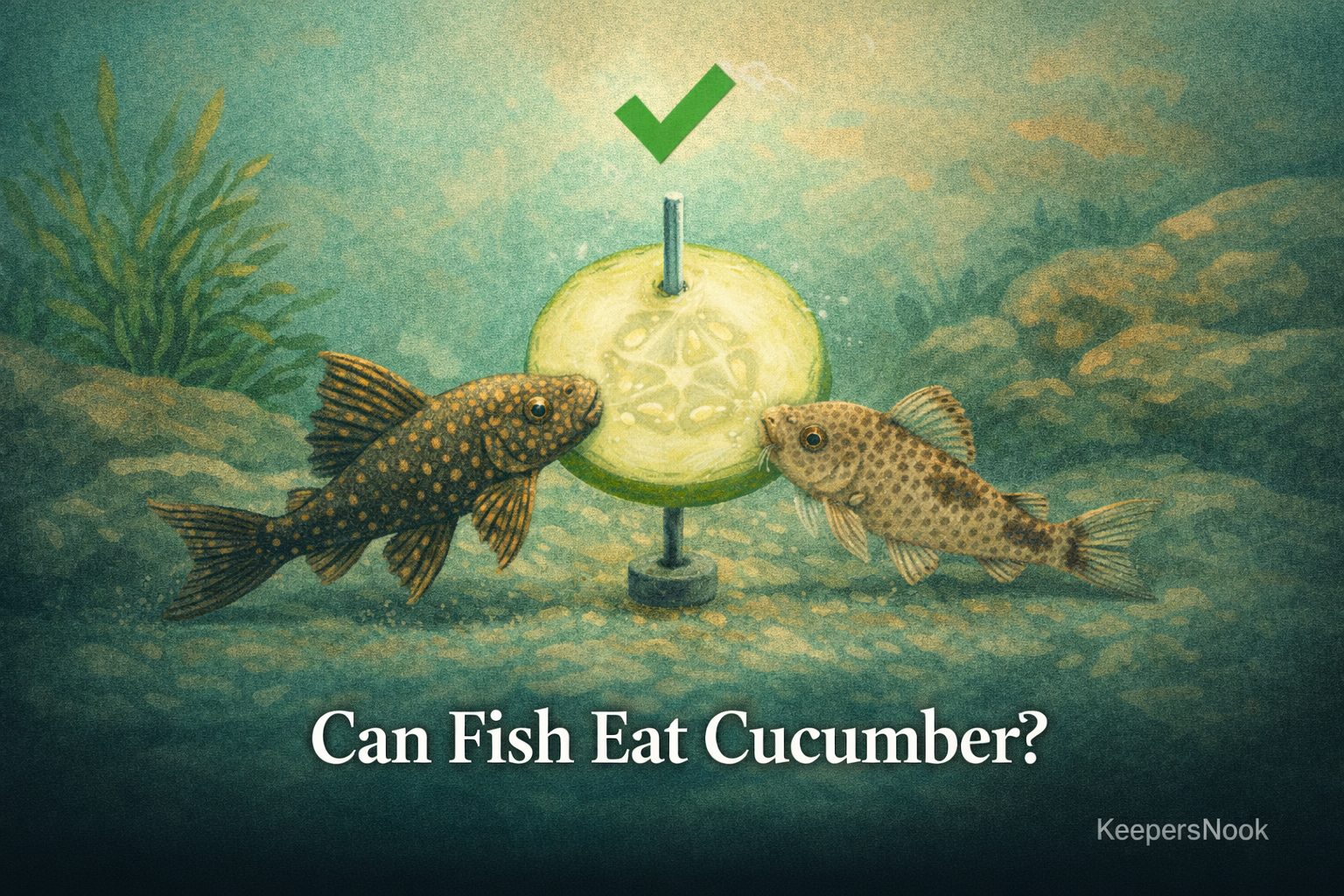
The fish that genuinely benefit from it share one trait: a digestive system built to process plant cellulose.
Bristlenose plecos are the most enthusiastic cucumber consumers in the freshwater hobby. a bristlenose pleco clear a blanched cucumber slice in under two hours when the tank algae supply runs low.
Their oral rasping structure is designed for soft plant material exactly like this.
Otocinclus are small algae grazers that supplement well with cucumber during periods when tank algae is insufficient. A single otocinclus will graze a slice steadily for several hours without degrading water quality.
- Bristlenose pleco: Primary beneficiary; rasps cucumber enthusiastically at any time
- Common pleco: Same feeding behavior as bristlenose; needs more volume due to larger body size
- Otocinclus: Grazes soft blanched cucumber when tank algae supply is low
- Mystery snails: Will work a blanched slice for hours; no water quality risk in reasonable quantity
- Nerite snails: Strong grazers; cucumber supplements their algae diet effectively
- Goldfish: Accept cucumber readily as part of their naturally plant-heavy diet
Cold-water goldfish eat cucumber readily. It adds plant-based variety to a species that evolved browsing aquatic vegetation.
Offer it as an occasional treat and rotate with other vegetables.
Bottom-foraging corydoras may investigate and nibble cucumber overnight, but they are not primary consumers. Do not rely on cucumber as a meaningful food source for corys: they need sinking protein-based wafers as their staple.
How to Blanch Cucumber for Fish: Step-by-Step Process
Blanching takes under two minutes total. The goal is to soften the flesh enough for small fish and shrimp to rasp through it without cooking out the trace nutrients that make the vegetable useful.
Raw cucumber works for larger fish like plecos and goldfish. Blanching becomes important in tanks with small species, shrimp, or snails that cannot break through firm raw flesh.
Cucumber Prep Checklist Before Every Feeding
Run through this before each session. The two most common mistakes are skipping the peel and adding warm cucumber.
Both cause problems that are easy to avoid.
Organic cucumber removes the pesticide concern almost entirely, but peeling is still best practice regardless of source. The skin serves no nutritional purpose for the fish and only adds risk.
Cucumber Nutrition for Fish: What the Numbers Show
Cucumber is not a nutritionally dense food. Its value is supplementary: fiber, trace vitamins, and hydration complement a varied diet without adding calories or protein that could displace higher-value staple foods.
| Nutrient | Per 100g Raw Cucumber (peeled) | Relevance to Fish |
|---|---|---|
| Water | 96.7g | High moisture; not relevant for aquatic species |
| Protein | 0.59g | Negligible; not a protein source |
| Dietary Fiber | 0.5g | Supports digestion in herbivores |
| Vitamin C | 2.8mg | Minor antioxidant benefit; partially lost during blanching |
| Vitamin K | 7.2mcg | Supports bone development in long-lived species |
| Potassium | 136mg | Trace electrolyte; minimal absorption through gut |
| Magnesium | 11mg | Enzyme cofactor; present in useful quantity for herbivores |
Compare this to a high-quality algae wafer, which delivers concentrated protein, vitamins, spirulina, and stabilized minerals in a formulation matched to herbivore needs. Cucumber supplements; it does not replace formulated foods.
Balanced feeding choices for any species always center on a quality staple food first.
How Long to Leave Cucumber in a Fish Tank: Timing by Tank Size
Cucumber breaks down faster after blanching. Decomposing vegetable matter spikes ammonia through the same bacterial process that handles any organic waste, but vegetable decomposition moves faster than most keepers expect.
- Tanks over 20 gallons: Remove cucumber within 24 hours; active feeders often strip it in 4-6 hours
- Tanks 10-20 gallons: Remove within 12-18 hours; more conservative on water volume
- Tanks under 10 gallons: Remove within 8-12 hours; small water volume amplifies any ammonia from decomposition
- Nano tanks (5 gallons and under): Feed a half-slice and remove after 6 hours maximum
For 5-gallon tank setups and 10-gallon stocking configurations, the smaller water volume makes cucumber timing more important than in larger systems. When in doubt, remove it early rather than late.
If water cloudiness appears after a cucumber feeding, the slice decomposed faster than the filtration could handle. Do a 25-30% water change immediately and reduce serving size or time in the tank for the next feeding.
Zucchini (courgette): The most popular alternative to cucumber. Softer after blanching, very high acceptance rate from plecos, otocinclus, and most livebearers.
Prepare identically to cucumber.
Zucchini has a slightly higher protein content than cucumber (0.9g per 100g) and holds together better in the water column after blanching.
Romaine lettuce: Blanch briefly for 10-15 seconds or clip raw to a veggie clip. Goldfish and livebearers accept it readily.
Remove within 8-12 hours as lettuce deteriorates faster than firmer vegetables.
Blanched spinach: Higher nutrient density than cucumber. Contains useful iron and vitamins for herbivores.
Use sparingly: oxalic acid content may inhibit calcium absorption with very frequent feeding.
Shelled peas (blanched, skinless): A classic remedy for mild swim bladder and constipation issues in betta fish and goldfish. Blanch, remove the outer skin, and feed the soft inner flesh in small quantities.
Always avoid: Onion, garlic, leeks, avocado, rhubarb, and any vegetable with added salt, oil, or seasoning. Do not offer canned vegetables of any kind.
Can Fish Eat Cucumber Raw? When to Skip the Blanching Step
Raw cucumber is safe. Blanching is a convenience adjustment, not a safety requirement.
The question is whether the fish in your tank can rasp through the firm raw flesh.
- Large plecos (6 inches or over): Can rasp through raw cucumber without difficulty; blanching optional
- Small plecos (under 4 inches): Benefit significantly from blanching; raw flesh can be too firm to rasp effectively
- Otocinclus: Strongly prefer blanched; raw cucumber is too firm for their small mouths
- Snails: Can work through raw cucumber but blanched is easier and keeps them active at the slice longer
- Goldfish: Handle raw cucumber at any size; blanching not required but reduces how long the slice lasts before breaking up
- Shrimp (cherry, amano): Prefer blanched; raw is accessible but they feed more actively on softened flesh
For tanks that mix small guppies with need safer vegetable options, blanching covers all species simultaneously. It costs 30 seconds and removes the variability.