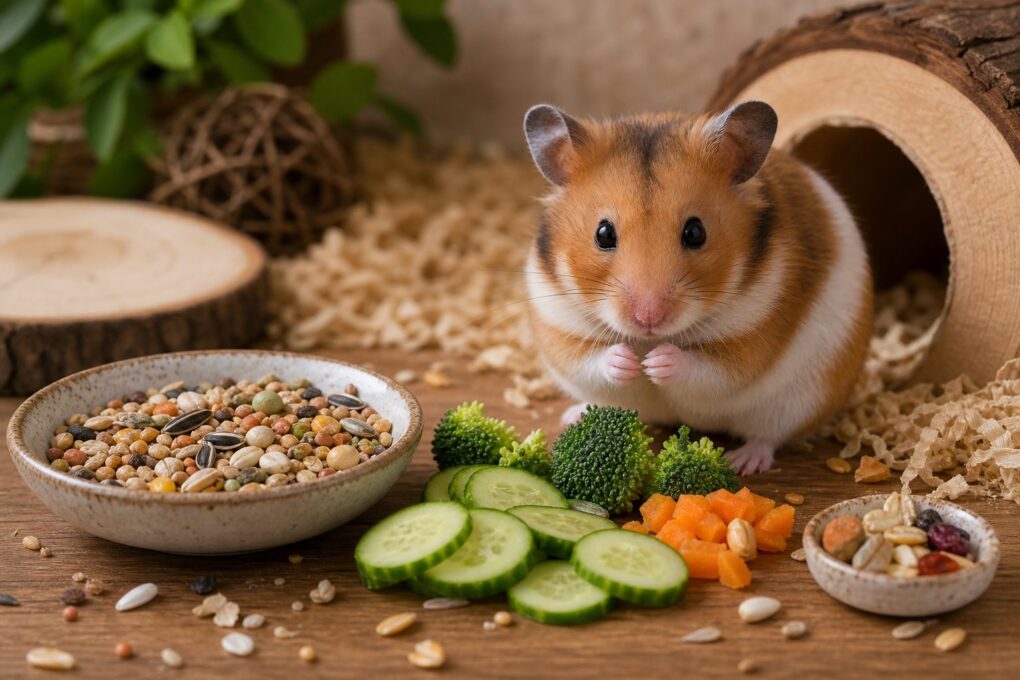
Hamsters need a feeding plan that protects gut motility first. If you need the short version from this small-mammals feeding hub, think pellets as the base, fresh veggies daily, and very small treats.
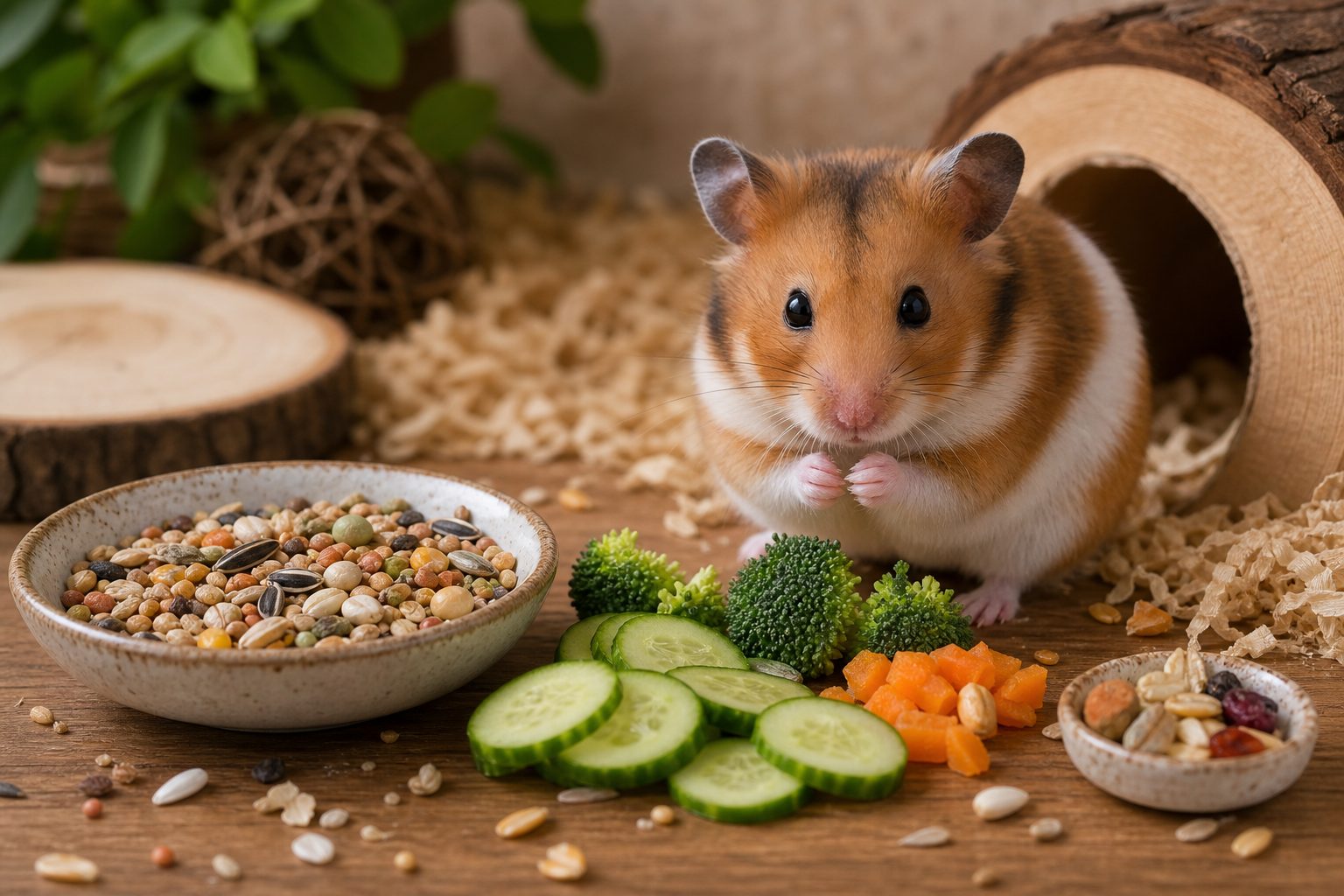
That structure matters because a hamster's digestive tract reacts quickly to sudden changes. The more you replace fiber with sugary seeds or starchy snacks, the more you raise the risk of wet tail, obesity, and dental issues.
Our hamster care guide covers the broader husbandry picture. This page focuses only on what belongs in the food bowl.
What Should Hamsters Eat Every Day?
A balanced pelleted or lab block diet should form the foundation of every hamster's daily intake. This base ensures they receive consistent vitamins and minerals without the risk of selective feeding.
Remember it later
Planning to try this recipe soon? Save it for a quick find later!
Loose seed mixes often allow hamsters to pick out their favorite high-fat seeds while leaving behind the healthier components. That behavior can lead to nutritional imbalances over time.
Fresh water must be available at all times in a clean bottle or heavy bowl. Dehydration happens quickly in small rodents and can become life-threatening within hours.
We judge a good hamster diet by steady weight, bright eyes, and clean fur, not by how much the animal hoards in its cheeks.
- Best daily base: high-quality pelleted hamster food or lab blocks
- What the base does: provides complete nutrition and prevents selective eating
- What to avoid as the base: multi-seed mixes with large sunflower seeds
- Water note: change water daily and clean the bottle nozzle weekly
Why Should A Balanced Hamster Food Come First?
Pelleted diets are formulated to meet the specific metabolic needs of rodents like hamsters, mice, and rats. These formulas prevent the health issues often seen in pets fed only seeds.
Selective feeding is a major problem with seed mixes. Hamsters will dig through the bowl to find sunflower seeds or nuts while ignoring the nutritious pellets underneath.
This behavior leads to excessive weight gain and fatty liver disease. It also causes vitamin deficiencies that weaken the immune system.
Lab blocks offer an even stricter guarantee of nutritional balance because they cannot be separated by the animal. They are often recommended for breeding colonies or sensitive individuals.
If you compare this to a guinea pig, both species benefit from a complete base diet. Guinea pigs need added vitamin C, while hamsters can synthesize their own.
Which Fresh Foods Work Best For Hamsters?
Daily vegetables give hamsters moisture, variety, and essential fiber without pushing sugar too high. Carrots, broccoli, cucumber, and zucchini fit well into a normal rotation.
The key is washing all produce thoroughly to remove pesticide residue. Even small amounts of chemicals can be toxic to such tiny bodies.
Some vegetables need tighter limits because the mineral or oxalate load climbs too fast with frequent use. Our guide on spinach for rabbits highlights similar concerns for other small mammals, though hamsters have different tolerances.
Frozen vegetables must be thawed completely before serving. Cold food can shock the digestive system and cause diarrhea.
| Group | Examples | How Often |
|---|---|---|
| Daily staples | Carrot, broccoli florets, cucumber, zucchini | Daily in small pieces |
| Rotation greens | Kale, cabbage, spinach | Once or twice per week |
| Herb add-ins | Parsley, cilantro, basil | Small daily or rotating portions |
| Avoid entirely | Onion, garlic, potato leaves, moldy produce | Never |
For adult hamsters, a mixed vegetable bowl usually works better than a single large serving of one leaf. That variety also makes it easier to avoid overusing caution foods.
If you want a cleaner comparison point, look at a safe daily vegetable beside a high-water treat like watermelon for rabbits. The water content may look refreshing, but the fiber profile is nowhere near as useful for hamsters.
How Much Fruit And Protein Should Hamsters Get?
Fruit and richer treats stay small because of sugar. A tiny piece of apple or berry once or twice a week is sufficient for most adult hamsters.
Protein extras like mealworms or a little cooked egg support muscle maintenance and breeding health. These should be offered occasionally rather than daily.
Wild hamsters eat insects in nature, so protein is a natural part of their diet. However, domestic pets rarely need the extra calories unless they are pregnant or underweight.
We judge proper treat usage by the absence of diarrhea and steady energy levels. If your hamster becomes lethargic after treats, reduce the frequency immediately.
- Best protein source: live or dried mealworms, small bits of cooked egg
- What protein does: supports muscle health and natural foraging behavior
- What to avoid as protein: raw meat, dairy products, and fatty human meats
- Fruit note: remove seeds and cores before offering any fruit pieces
Which Foods Are Unsafe For Hamsters?
Sticky junk food, heavily salted snacks, and chocolate are strictly off-limits for hamsters. These items cause rapid health declines and can be fatal.
Caffeine and alcohol disrupt the nervous system and heart rate in ways that small bodies cannot handle. Even tiny amounts of these substances are dangerous.
Onion and garlic damage red blood cells and can lead to anemia. They should never appear in any form, whether raw, cooked, or powdered.
Moldy food contains toxins that cause liver failure. Always inspect stored grains and fresh produce for signs of spoilage before serving.
Our hamster vs guinea pig comparison notes that while both are small pets, their toxic food lists have significant differences. Hamsters are more sensitive to certain plant compounds than larger rodents.
How Do Species And Size Change A Hamster Diet?
Dwarf hamsters often require slightly less fat and sugar than Syrian hamsters due to higher diabetes risks. Their smaller size means portion control is even more critical.
Syrian hamsters can handle slightly larger portions of fresh food but still need a strict pellet base. They are solitary and do not share bowls, which helps prevent competition.
Roborovski hamsters have very high metabolisms and may need more frequent feeding sessions. Their tiny mouths make large seeds difficult to eat, favoring smaller pellets.
If you keep multiple species, separate their feeding areas completely. Aggression over food is common in mixed-species setups involving rat groups or mouse colonies.
What Does A Practical Daily Feeding Routine Look Like?
A practical routine starts with refreshing the water and checking the pellet bowl. Remove any uneaten fresh food from the previous day to prevent spoilage.
Add a small portion of fresh vegetables in the evening when hamsters are most active. This timing encourages natural foraging behavior during their peak hours.
Treats like mealworms or fruit pieces should be given sparingly and only after the main diet is established. Use them as training rewards or enrichment tools.
Clean the food bowl weekly with hot water to prevent bacterial buildup. Avoid harsh chemicals that can leave residues harmful to small pets.
A steady routine matters more than fancy extras. Keep the base diet consistent, add only small fresh portions, and watch droppings and appetite whenever you test a new food.