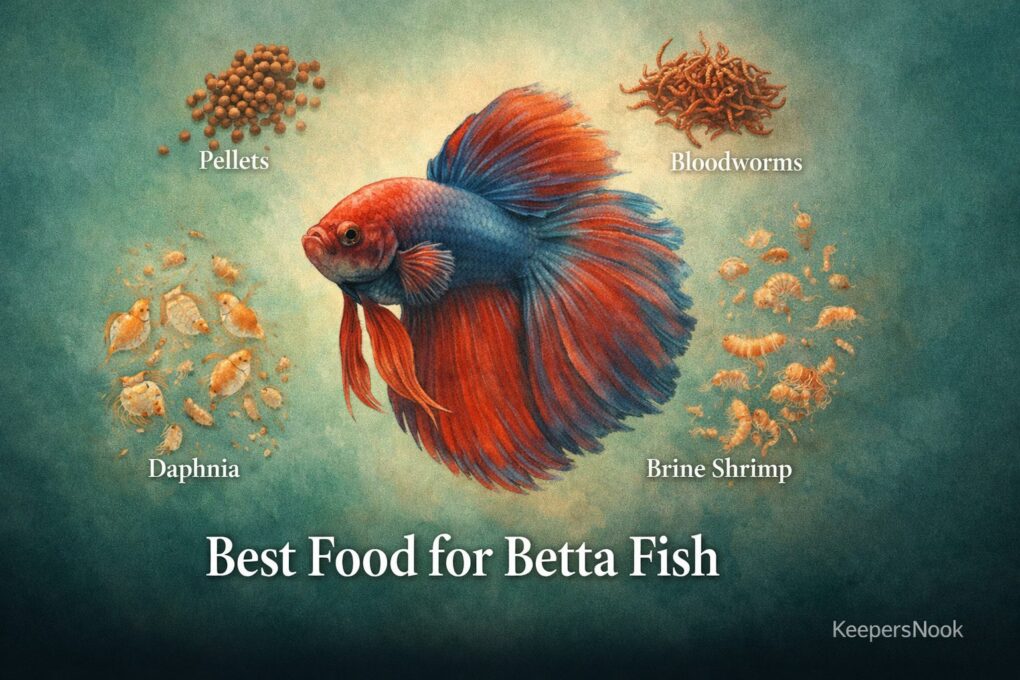
Betta fish are carnivores. Their digestive system is built for high-protein, low-carbohydrate meals, and the wrong food causes bloat, fin rot, and early death.
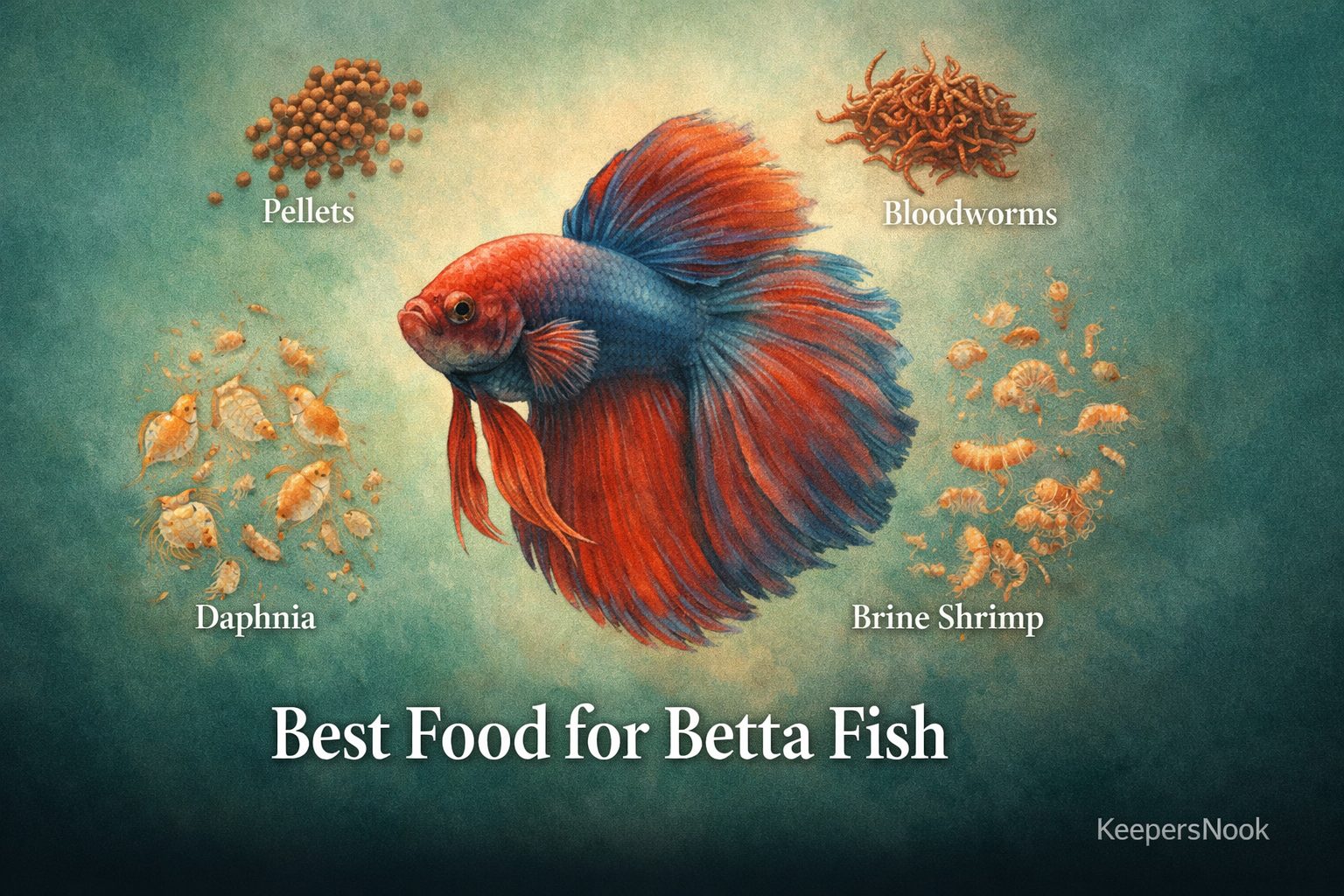
Our aquarium feeding guides cover every species, but betta food deserves its own breakdown because the market is full of poor-quality pellets that list wheat and cornmeal as the first ingredient.
The short version: feed a quality pellet as the daily base, add frozen bloodworms or daphnia 3-4 times per week, and use live food as an occasional treat.
Best Betta Food Pellets: 4 Brands Ranked by Protein Content
Pellets are the right daily staple for betta care because they are portion-controlled and nutritionally consistent. The critical number is crude protein: anything below 38% is too low for a strict carnivore.
Remember it later
Planning to try this recipe soon? Save it for a quick find later!
1. Northfin Betta Bits: 45% Protein
- Protein: 45% crude protein, krill meal as first ingredient
- Pellet size: 1mm (true betta-sized, no breaking required)
- Key ingredients: Whole krill, sardine meal, herring meal, spirulina
- No fillers: Zero wheat, corn, or artificial colour
- Sinking rate: Slow sink, easy for surface feeders to intercept
Northfin is the only pellet brand we recommend without qualification. The ingredient panel reads like a diet a betta would encounter in the wild.
Bettas show better colouration within 3-4 weeks on this food.
2. Hikari Betta Bio-Gold: 38% Protein
- Protein: 38% crude protein, fish meal as first ingredient
- Pellet size: 1.5mm (slightly large for small bettas, break in half)
- Key ingredients: Fish meal, shrimp meal, dried krill, vitamin C, E
- Probiotic: Contains live bio-active enzymes for digestion
- Price: Roughly half the cost of Northfin per gram
Hikari Bio-Gold is the best budget pellet for new keepers. The 38% protein meets the minimum threshold, and the probiotic formula reduces bloat compared to generic store-brand pellets.
3. Fluval Bug Bites Betta Formula: 40% Protein
- Protein: 40% crude protein, black soldier fly larvae as first ingredient
- Pellet size: 0.5-1.0mm granules (excellent for small bettas)
- Key ingredients: Black soldier fly larvae, salmon, whole herring
- Texture: Soft granule, bettas rarely reject it
- Drawback: Green pea filler not ideal for strict carnivore diet
4. New Life Spectrum Betta Formula: 36% Protein
- Protein: 36% crude protein, whole Antarctic krill as first ingredient
- Pellet size: 1mm
- Key ingredients: Whole krill, herring, squid, garlic
- Colour boost: Natural pigments from algae and krill
- Drawback: Slightly below our 38% minimum threshold
Frozen Betta Food Options: 3 Types That Hit 50%+ Protein
Frozen food is the highest-quality supplement you can add to a betta's feeding routine. The freezing process kills most parasites while preserving the nutritional profile of live food.
Feed frozen food 3-4 times per week alongside your daily pellet.
Always thaw frozen food in a small cup of tank water before feeding. Never drop a frozen cube directly into the tank.
- Frozen bloodworms: 60-65% protein, bettas eat them immediately, feed 2-3 worms per session maximum
- Frozen daphnia: 50% protein, natural laxative effect that clears mild constipation, ideal as a weekly reset meal
- Frozen mysis shrimp: 57% protein, larger than bloodworms so feed only 1-2 pieces, excellent for dull colouration
- Frozen brine shrimp: 48% protein, high moisture content makes them a good hydration supplement
Live Food for Betta Fish: 2 Options Worth the Effort
Live food triggers a betta's hunting instinct and provides the highest bioavailability of any food type. The drawback is risk.
Live food from unknown sources can introduce parasites and bacterial infections directly into your tank.
Consider live food a monthly enrichment activity. Bettas kept with compatible tank mates benefit especially because the hunting activity reduces territorial aggression.
- Live daphnia: Low disease risk, easy to culture at home in a bucket with green water
- Live blackworms: High protein, bettas go wild for them, source only from trusted shops
- Live mosquito larvae: Free if you collect from standing water in summer, highly nutritious
- Live brine shrimp: Hatch from eggs at home with a basic hatchery kit
Betta Food Comparison Table: All Types Side by Side
Use this table to choose the right food for your feeding rotation. Protein percentage is the single most important column.
| Food Type | Protein % | Best For | Frequency | Risk Level |
|---|---|---|---|---|
| Northfin Betta Bits | 45% | Daily staple, all bettas | Daily, 2-3 pellets | None |
| Hikari Bio-Gold | 38% | Budget daily staple | Daily, 2-3 pellets | None |
| Fluval Bug Bites | 40% | Small or young bettas | Daily or alternate | None |
| Frozen bloodworms | 62% | Weekly protein boost | 2-3x per week | Low |
| Frozen daphnia | 50% | Digestive reset | 1x per week | Low |
| Frozen mysis shrimp | 57% | Colour enhancement | 1-2x per week | Low |
| Live daphnia | 50% | Enrichment | 1-2x per month | Low |
| Live blackworms | 65% | Enrichment treat | 1x per month | Medium |
Betta Feeding Schedule: How Often and How Much Per Day
Most betta deaths attributed to "mysterious illness" are actually overfeeding deaths. A betta's stomach is roughly the size of its eye.
Two to three pellets per feeding session is the correct portion.
New keepers almost always feed too much in the first week. If you see uneaten food on the substrate after 2 minutes, remove it immediately and reduce the next portion.
Uneaten food degrades into ammonia, which harms every tank inhabitant including any corydoras on the substrate.
Overfeeding Signs in Betta Fish: 5 Symptoms to Watch For
Overfeeding is the most common keeper mistake, and the symptoms appear gradually over weeks. Catching it early gives you time to correct before organ damage occurs.
- Bloated abdomen: The body looks rounded or pinecone-shaped viewed from above
- Reduced activity: A betta that normally patrols the tank now rests on the substrate or hides
- Food refusal: Spitting out pellets after accepting them signals a full or nauseous fish
- White, stringy waste: Healthy betta waste is dark and short. White stringy waste indicates constipation
- Cloudy water: Excess food decays and causes bacterial bloom even with a working filter
Bettas in community tanks with neon tetras or dwarf gouramis need target feeding to ensure the betta gets the right portion without competition.
Foods to Never Feed a Betta Fish
- Bread: Contains yeast, gluten, and salt that cause severe bloat. Read why in our guide on fish can eat bread.
- Goldfish or tropical flakes: Protein content too low, carbohydrate content too high for bettas
- Cucumber or vegetables: Bettas are strict carnivores. Vegetables pass undigested. See our cucumber guide for species that can eat them.
- Beef heart: Too high in saturated fat, causes fatty liver disease over time
- Live tubifex worms from pet stores: Carry Camallanus worms and bacterial infections
- Crackers, chips, or any human snack: Salt content alone is lethal at small concentrations
For bettas sharing space with bottom feeders, betta and corydoras compatibility works well because corydoras eat what reaches the substrate. Target-feed your betta at the surface and let the corydoras handle sinking pellets.
For tank sizing, our 5-gallon stocking guide covers what fits.