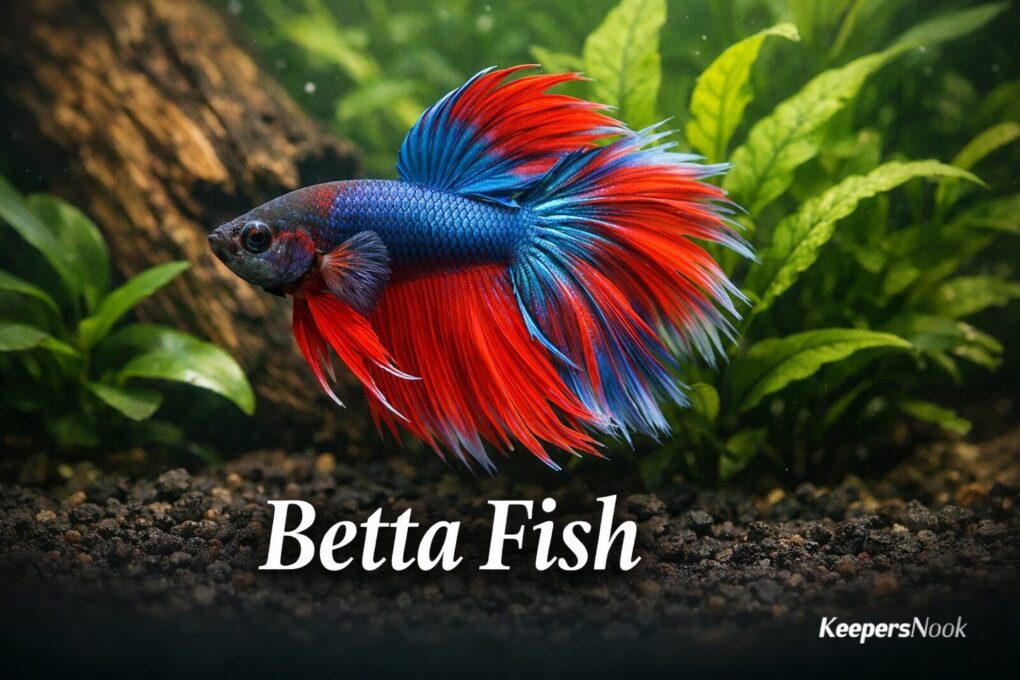
Betta fish are the most widely kept tropical fish in the hobby, and the most commonly mistreated. Walk into any big-box pet store and you'll find them in tiny plastic cups under fluorescent lights. Those cups are shipping containers, not homes. The fish you buy has likely spent its first year in a breeding facility in Thailand or Singapore before arriving on that shelf.
We have kept bettas for years and they are a genuinely rewarding fish when housed correctly. This guide covers every aspect of tropical fishkeeping as it applies to bettas: tank setup, water chemistry, diet, compatible species, disease treatment, and breeding. Read it once before you buy.
Wild Betta Habitat: 2 Biomes, 1 Misconception
Betta splendens are native to the Mekong and Chao Phraya river basins across Thailand, Cambodia, and Vietnam. Their natural habitats are shallow, slow-moving, and heavily vegetated: rice paddies, roadside ditches, floodplain pools, and backwater oxbows.
Remember it later
Planning to try this recipe soon? Save it for a quick find later!
These waters share four consistent traits. They are warm year-round (77-84°F), soft to moderately hard, slightly acidic to neutral in pH, and stained with tannins from decomposing plant matter. Current is minimal or absent. Wild bettas spend most of their time in dense vegetation near the surface, hunting mosquito larvae and small invertebrates.
The "bettas live in puddles" myth comes from a real but misread observation. During the dry season, pools shrink and bettas are temporarily isolated. They survive because they can breathe atmospheric air through their labyrinth organ, a specialized structure above the gills that functions like a primitive lung. Survival in a shrinking pool is not the same as a healthy habitat. The moment rains return, wild bettas move on.
That single biological fact drives their tank requirements more than anything else. They need surface access for air, low current, warm stable temperatures, and cover.
Betta Tail Types: 7 Forms and What They Mean for Care
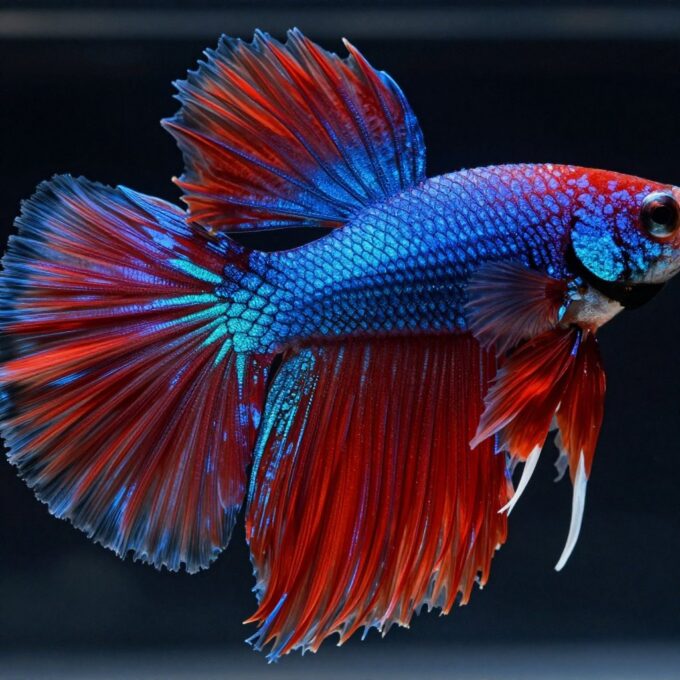
Selective breeding has produced dozens of betta varieties, but tail form is the most visible difference between them. Tail type affects more than appearance. It directly impacts how easily a betta can swim and how prone it is to fin-related problems.
| Tail Type | Description | Care Note |
|---|---|---|
| Veil tail | Long, drooping single tail. Most common in pet stores. | Lowest maintenance; no special flow requirements. |
| Halfmoon | 180° fan spread when flared. Popular show variety. | Heavy fins increase swim bladder stress. Minimal current essential. |
| Double tail | Tail split into two lobes. Shorter body with larger dorsal. | Prone to swim bladder disorder. Keep water shallow. |
| Crowntail | Spiky, web-reduced rays extending beyond fin membrane. | Sharp decor causes tearing. Keep tank smooth. |
| Plakat | Short-finned, close to the wild-type form. | Strongest swimmers. Most active. Best for community tanks. |
| Delta / Super Delta | Wide spread but less than 180°. Mid-range between veil and halfmoon. | Moderate current sensitivity. |
| Rosetail / Feathertail | Extreme ruffled halfmoon. Heavy branching on rays. | High fin rot risk. Not recommended for beginners. |
For beginners, a veil tail or plakat is the practical choice. Their fins are manageable, they swim easily, and they are less sensitive to minor husbandry errors.
Betta Tank Setup: Minimum 5 Gallons, No Exceptions
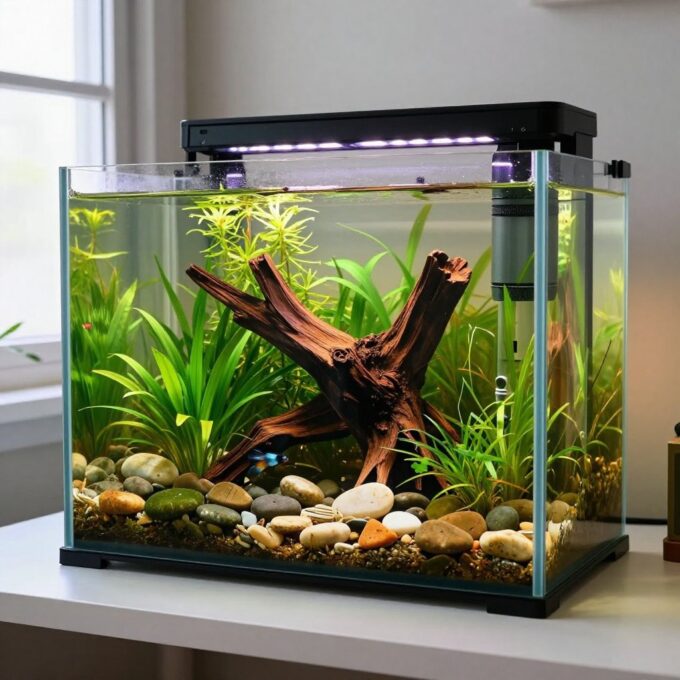
The most common betta mistake is housing them in containers too small to maintain stable water chemistry. A 5-gallon tank holds roughly 19 liters of water. That volume dilutes ammonia, nitrite, and nitrate slowly enough that weekly water changes keep levels safe. A 1-gallon bowl does not.
Tank size is not optional. A betta in 2 gallons or less will experience ammonia spikes between water changes that cause cumulative gill damage over months. The fish looks fine until it suddenly doesn't.
Our recommended equipment list for a first betta setup:
- Tank: 5-10 gallon aquarium. 10 gallons gives more stable parameters and room for a small cleanup crew.
- Heater: Adjustable submersible heater rated for your tank size. Stick to brands with thermostats (Eheim, Fluval, Aqueon Pro). Aim for 78°F.
- Filter: Sponge filter powered by an air pump, or a hang-on-back with adjustable flow. Bettas are weakened by strong current.
- Thermometer: Stick-on thermometers lie. Use a digital probe thermometer to verify heater accuracy.
- Substrate: Fine sand or smooth gravel. Coarse gravel traps uneaten food and decomposes into ammonia pockets.
- Plants: Live plants are preferred: java fern, anubias, and hornwort require no special lighting and buffer nitrates. Silk artificial plants are an acceptable alternative. Hard plastic tears fins.
- Lid: Non-negotiable. Bettas jump. A gap of 2 inches is enough for a betta to launch itself onto a desk.
See our detailed betta tank setup guide for equipment specifications, cycling timelines, and substrate recommendations with product links.
Betta Water Parameters: 6 Numbers That Keep Fish Alive
Stable water chemistry matters more than hitting a specific target number. A betta living at a consistent pH of 7.4 is healthier than one whose tank swings between 6.8 and 7.5 every week. The ranges below are the outer limits of what bettas tolerate well, not targets to optimize.
- Temperature: 76-82°F. The optimal is 78°F. Below 74°F bettas become lethargic, stop eating, and become vulnerable to infection. Above 84°F, dissolved oxygen drops and metabolism accelerates to a damaging level.
- pH: 6.5-7.5. Most municipal tap water falls in this range without treatment. Do not use pH-adjusting chemicals to chase a specific number. The chemical stress is worse than a slightly off reading.
- Ammonia: 0 ppm at all times. Detectable ammonia means the tank is not cycled or is being overstocked. This is the primary killer of pet bettas.
- Nitrite: 0 ppm. Nitrite binds to hemoglobin and reduces oxygen delivery. Even low levels are acutely toxic over days.
- Nitrate: Under 20 ppm. Weekly 25% water changes in a planted tank keep this in range without intervention.
- GH (General Hardness): 3-12 dGH. Bettas are tolerant of a wide hardness range. Extremely soft or extremely hard water can stress them over months.
Betta Fish Diet: 4 Feeding Rules That Prevent Most Health Issues
Bettas are carnivorous surface feeders. Their upturned mouths, short digestive tracts, and high-protein nutritional requirements all point to the same conclusion: they need animal protein, and they need it fed in small amounts.
The number one dietary mistake is overfeeding. A betta's stomach is approximately the size of its eyeball. Two or three small pellets twice daily is the correct amount. More food than that sits in the tank, decomposes, and spikes ammonia between water changes.
For the best staple food options and product comparisons, our the best betta food covers protein percentages, pellet size, and which freeze-dried foods to avoid.
- Staple pellets: High-protein betta pellets (40%+ crude protein). Feed 2-3 pellets twice daily, morning and evening.
- Frozen treats: Bloodworms, brine shrimp, and Daphnia 2-3 times per week. Frozen is preferable to freeze-dried because it retains moisture.
- Fasting: Skip one full day per week. This prevents constipation and gives the digestive system a reset.
- Rehydrate freeze-dried foods: Soak freeze-dried bloodworms or brine shrimp in tank water for 60 seconds before feeding. Dry foods expand in the stomach and cause swim bladder pressure.
Betta Tank Mates: Which Fish Survive 6 Months in the Same Tank
The compatibility question for bettas is not simply "will they fight?" It's "will this pairing stay stable long-term?" Many combinations work for weeks before the betta's stress response to a persistent visual stimulus triggers aggression.
Male bettas cannot share a tank with another male betta. This is not temperament variation. Male-on-male aggression in bettas is a fixed species behavior. Two males in the same tank will fight until one dies or collapses from exhaustion and injury.
Female sororities (5+ females in a 20+ gallon heavily planted tank) are possible but unstable. Hierarchies shift, weaker females get pinned, and a sorority that works for 3 months can collapse in a week. We don't recommend them as a first betta setup.
For peaceful community pairings, the most consistently successful options are bottom-dwellers and fast-moving schoolers that don't visually compete with the betta:
- Corydoras catfish: Bottom-tier dwellers with armored bodies. They clean up missed food, ignore the betta, and the betta ignores them. See the full corydoras care guide for species and sizing. Results from this pairing are consistently positive across keeper reports.
- Nerite snails: Excellent algae grazers. Their shells protect them from betta curiosity. Some bettas peck at their antennae, but snails retract and the betta moves on.
- Ember tetras: Small, unobtrusive, and fast. Their orange color is muted enough that most bettas don't target them.
- Kuhli loaches: Nocturnal burrowers. They spend most of their time hidden, which eliminates the visual trigger for betta aggression.
Species to avoid with bettas:
- Guppies: Their flowing colorful fins mimic rival betta males. Most bettas attack guppies on sight. Read our full breakdown on can live with guppies before attempting this pairing. The guppy profile at our guppy care page covers why their fins make them high-risk tank mates.
- Tiger barbs: Aggressive fin-nippers that target betta fins relentlessly.
- Dwarf gouramis: Both are labyrinth fish with territorial instincts. They compete for the same surface territory.
- Cichlids of any species: Too aggressive and often too large.
For species-by-species pairing data, our betta tank mate guide covers 20+ species with success rates. The neon tetra compatibility guide is one of the most read pages on the site, and the neon tetra care profile explains why their water parameter overlap with bettas makes them a workable pairing when done correctly.
Corydoras are the single most reliable companion for a community betta tank. See the full and corydoras compatibility breakdown for tank size minimums and the conditions that make it work. If you're working with a smaller tank, our 5-gallon tank stocking guide covers which species combinations are viable at that volume, including a betta-only setup and a betta-plus-snails option.
Cherry barbs are another underrated option. They're fast, they school, and their coloration is distinct enough from a betta's that most males don't react to them. The full profile at cherry barb care page shows they thrive at the same temperature range as bettas.
Common Betta Diseases: 4 Conditions Every Keeper Sees
Most betta health problems trace back to water quality, temperature instability, or stress from inadequate space. Before reaching for medication, test the water and address the environment. A clean, stable tank resolves most early-stage disease on its own.
Fin rot is the most common betta disease. Fins appear ragged at the edges, with dark or white discoloration where the tissue is dying. The cause is bacterial: Aeromonas or Pseudomonas species colonize stressed tissue. Mild fin rot clears with daily 25% water changes over a week. Severe cases where the rot reaches the body need antibiotic treatment (API Fin & Body Cure or Kanaplex).
Ich (Ichthyophthirius multifiliis) presents as small white dots on the body and fins that look like grains of salt. The parasite is temperature-sensitive. Raise the tank to 82°F at a rate of 1°F per hour and maintain it for 7-10 days. Add aquarium salt at 1 teaspoon per gallon. Ich is almost always triggered by a sudden temperature drop: a cold water change or a heater malfunction.
Swim bladder disorder causes the betta to float sideways, sink to the bottom, or swim with an erratic cork-screw motion. The most common cause is overfeeding or constipation. Fast the fish for 2-3 days, then offer a single blanched, deshelled green pea (the flesh only). If normal positioning returns, resume feeding smaller portions. Persistent cases may indicate bacterial infection and need antibiotic treatment.
Velvet (Oodinium pilularis) appears as a fine gold or rust-colored dust over the body, most visible under a flashlight held at a low angle. It is harder to spot than ich. Treatment: raise temperature, darken the tank completely with a towel or black plastic (the parasite is photosynthetic and light-dependent), and dose with a copper-based medication. Act fast. Velvet moves quickly.
Betta Breeding: 4 Stages from Conditioning to Free-Swimming Fry
Breeding bettas is straightforward to initiate but labor-intensive to raise successfully. A male in good health will build a bubble nest spontaneously at the water surface, often anchored to a floating plant or the underside of a leaf. A bubble nest without a female present is normal behavior. It signals health, not readiness to breed.
To condition a breeding pair, feed both the male and female live or frozen foods for 10-14 days. The female is ready to spawn when she develops visible vertical striping (breeding bars) on her sides and you can see a white ovipositor dot behind her ventral fins.
Breeding tank setup: Use a 10-gallon tank with water depth of no more than 6 inches. Shallow water makes it easier for the male to retrieve sinking eggs. No substrate. A floating plant (Indian frogbit or a small styrofoam cup) gives the male an anchor for the nest. A sponge filter only, no current.
Introduction sequence: Place the female in a clear container (a large deli cup or breeder box) inside the male's tank. They can see each other but cannot make contact. The male will flare and display. The female will either show breeding bars (willing) or pale and try to hide (not ready: wait and try again in a week). If she shows bars, release her after 24-48 hours.
Spawning: The male wraps his body around the female in an embrace. She releases eggs, he fertilizes them in the water column, and then both collect the sinking eggs in their mouths and place them in the bubble nest. This repeats over 1-3 hours. The female may eat eggs during this time. This is normal. After spawning is complete, remove the female immediately. The male guards the nest aggressively.
Raising fry: Eggs hatch in 24-48 hours depending on temperature. The male will retrieve any fry that fall from the nest for the first 2-3 days. Remove the male once the fry are free-swimming (tails pointing down and they're not being retrieved anymore). Feed infusoria or commercial fry food for the first week. Introduce baby brine shrimp at week 2. Start separating males at 8-10 weeks as aggression begins. A single spawn produces 50-300 fry. Have a rehoming plan before you start.
Betta Fish Lifespan: What 3-5 Years Actually Requires
A betta in a heated, filtered 5+ gallon tank with weekly water changes and proper feeding will live 3-5 years. Most pet store bettas are already 6-12 months old at purchase, which means a realistic keeper lifespan is 2-4 years in most cases.
The gap between a 6-month lifespan (bowl, room temperature) and a 4-year lifespan (proper setup) is entirely husbandry. The genetics of common pet store bettas are robust. What kills them is ammonia exposure, temperature stress, and inappropriate diet. All are preventable.
Signs of a healthy betta: active swimming at multiple tank levels, regular feeding response, bright and consistent coloration, intact fins without fraying, gill plates flat against the body at rest.
Signs of a stressed or sick betta: clamped fins (held tight to the body), faded or washed-out color, prolonged bottom-sitting, loss of appetite for more than 2 days, labored breathing at the surface (beyond normal air-gulping).