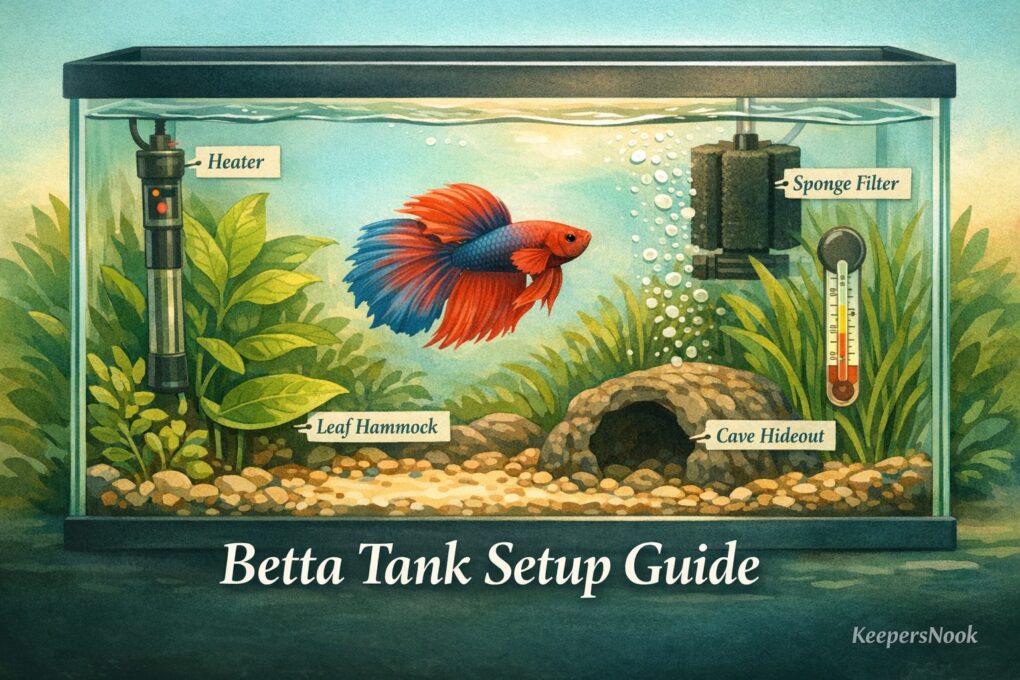
A betta fish can thrive for 4-5 years in a properly built tank or die within months in the wrong one. The equipment list is short.
The process is not complicated. But skipping even one step here, especially cycling, is the single most common reason bettas die young.
Good aquarium husbandry starts before the fish arrives. This guide covers every phase: what to buy, how to set it up, how to cycle it, and what to do the day your betta comes home.
Betta Tank Size: Why 5 Gallons Is the Hard Minimum
Small tanks kill bettas through water chemistry, not size. A 1-gallon bowl holds so little water that a single meal's worth of waste spikes ammonia to lethal levels within hours.
Remember it later
Planning to try this recipe soon? Save it for a quick find later!
There is no filter small enough to keep up.
A 5-gallon tank gives the nitrogen cycle enough water volume to buffer ammonia swings between water changes. A 10-gallon gives even more margin and opens the door to compatible tank mates later.
- 5 gallons: minimum for a single betta, solo setup only
- 10 gallons: recommended for beginners, allows one or two bottom-dwelling companions
- 20 gallons: best option if you want a community tank with corydoras or neon tetras
Tank weight matters too. Water is 8.3 lbs per gallon.
A full 10-gallon tank with substrate, decor, and equipment weighs over 100 lbs. Place it on a dedicated aquarium stand or reinforced furniture, never on a shelf not rated for that load.
Avoid tall, narrow tanks. Bettas are labyrinth fish: they breathe air from the surface.
A tall tank with a small surface area forces them to swim farther between breaths. Wide, shallow tanks are the better shape.
Betta Tank Equipment: 8 Items You Actually Need
The equipment list for a betta tank is short compared to most freshwater setups. Every item below serves a specific function.
None of them are optional.
Live plants are not required, but they improve water quality by absorbing nitrates and give the betta places to rest near the surface. Java fern and anubias are the easiest options: they attach to hardscape, require no special substrate, and survive low light.
Betta Tank Cost Breakdown: What to Budget in 2025
The fish is the cheapest part of this setup. Most bettas sell for $5-15 at a pet store.
The equipment costs 5-10 times that. Budget for the tank first, then buy the fish once cycling is complete.
| Item | Budget Option | Mid-Range Option | Estimated Cost |
|---|---|---|---|
| Tank (10 gal kit) | Aqueon Starter Kit | Fluval Spec V (5 gal) | $30-85 |
| Heater | Tetra HT10 | Aqueon Pro 50W | $15-35 |
| Filter | Aquatop sponge filter | AquaClear 20 | $10-35 |
| Thermometer | Stick-on strip | Marina digital | $3-12 |
| Water conditioner | Aqueon conditioner | Seachem Prime | $7-15 |
| Test kit | API 5-in-1 strips | API Master Test Kit | $9-35 |
| Substrate | Natural gravel | CaribSea Super Natural | $8-20 |
| Plants + decor | Plastic plant, cave | Live java fern, driftwood | $10-40 |
| Total | $62-157 |
Liquid test kits like the API Master Test Kit are worth the extra cost over test strips. Strips give rough readings that can miss dangerous spikes.
Liquid tests are accurate enough to catch problems before they kill fish.
Step-by-Step Betta Tank Setup: 8 Steps in Order
Do these steps in sequence. The order matters: substrate goes in before water, equipment gets placed before filling, everything runs before any fish arrives.
Always submerge the heater fully, then plug it in.
Cycling a Betta Tank: the 4-6 Week Process That Determines Everything
The nitrogen cycle is what separates a tank that keeps fish alive from one that kills them. Beneficial bacteria in your filter and substrate convert ammonia (fish waste, lethal at any measurable level) into nitrite (also lethal) and then into nitrate (safe below 40 ppm, removed by water changes).
A brand-new tank has no bacteria. If you add a betta now, ammonia from the fish's waste will spike within 24-48 hours.
The fish will show stress, stop eating, and start losing fins. Without daily water changes, it dies.
This is called new tank syndrome and it is entirely preventable.
- Fishless cycling: dose pure ammonia drops to 2 ppm in the empty tank, test daily, wait for bacteria to establish
- Seeded cycling: add a used filter sponge or a handful of substrate from an established tank to introduce existing bacteria colonies, cuts weeks off the timeline
- Bottled bacteria products: products like Tetra SafeStart or Fritz Turbo Start accelerate colonization but rarely eliminate the wait entirely; still test daily
The cycle is complete when: you dose ammonia to 2 ppm, and within 24 hours both ammonia and nitrite read 0 ppm on a liquid test, with nitrate present at 20+ ppm. At that point, do a 50% water change to bring nitrate down, and your tank is ready for fish.
Keep a log during the cycle. Test at the same time each day.
Record all four values: ammonia, nitrite, nitrate, and pH.
- Week 1-2: ammonia rises, nitrite stays at 0. Dose ammonia to 2 ppm if it drops below 1 ppm. Bacteria are colonizing.
- Week 2-3: nitrite begins to climb as the first bacterial colony converts ammonia. Ammonia may drop faster. Both ammonia and nitrite may be detectable at the same time.
- Week 3-5: nitrite spikes, then starts dropping as the second bacterial colony establishes. Nitrate appears for the first time. This is the longest phase.
- Week 4-6: both ammonia and nitrite consistently read 0 within 24 hours of dosing. Nitrate climbs steadily. Cycle is complete: do a 50% water change, then add the fish.
If the cycle stalls, check that the temperature is 78°F or above (bacteria grow slowly below 70°F) and that you are not adding water conditioner that neutralizes ammonia, since some conditioners like Seachem Prime detoxify ammonia temporarily and can produce false-low readings on standard tests.
Water Parameters Every Betta Tank Must Hit
Bettas come from slow-moving, warm water in Southeast Asia. They are more tolerant of water chemistry variations than most tropical fish, but they still have a range outside of which they decline steadily.
- Temperature: 78-82°F (26-28°C): below 75°F suppresses the immune system; above 84°F stresses the fish and depletes oxygen
- pH: 6.5-7.5: moderately soft to neutral water; most municipal tap water falls in this range without adjustment
- Ammonia: 0 ppm at all times: any detectable ammonia in a cycled tank means something is wrong (dead plant, dead fish, overfed)
- Nitrite: 0 ppm at all times: nitrite binds to hemoglobin and prevents the fish from carrying oxygen
- Nitrate: below 40 ppm: managed by weekly water changes of 25-30%
Test the water once a week in an established tank. Test every other day during the first month after adding the fish, since new tanks can have minor instability even after a full cycle.
Adding Your Betta: Acclimation and the First 48 Hours
Once the cycle is confirmed (0 ammonia, 0 nitrite, nitrate present), the tank is ready. The acclimation process adjusts the fish gradually to your water's specific temperature, pH, and hardness.
Skipping it causes osmotic shock.
Float the sealed bag or cup in the tank water for 15 minutes. Then add a quarter cup of tank water to the bag every 5 minutes for 20-30 minutes.
Net the betta into the tank and discard the bag water: store water can carry pathogens.
- Day one: do not feed; let the fish explore and acclimate without the added stress of food competition
- Day two: offer 2-3 quality betta pellets; if the fish ignores them, remove uneaten food after 2 minutes and try again the next day
- Days three to seven: feed small amounts twice daily, test water every other day, perform a 10% water change on day five
It is normal for a new betta to hide, sit near the bottom, or display pale coloration for the first 24-48 hours. This is a stress response, not illness.
Color and activity return once the fish establishes its territory and recognizes feeding time.
Tank Mate Options for 10+ Gallon Betta Tanks
A solo betta in a 5-gallon tank needs no companions. A 10-gallon tank opens limited options.
Compatibility depends on the individual betta's temperament as much as the species chosen.
The safest tank mates are bottom dwellers and invertebrates that the betta ignores after a brief inspection. See our full 5-gallon stocking guide for options specific to smaller tanks.
- Corydoras catfish: bottom dwellers with armored scales; stay out of betta territory and are nearly always ignored after the first two days
- Neon tetras: fast-moving schoolers that occupy the middle column; keep in groups of 6+ so they school tightly and present a unified appearance that reduces betta attention
- Cherry barbs: peaceful, non-nippy, tolerate similar water parameters; males are red but not fin-like in shape, reducing aggression triggers
- Bristlenose plecos: algae-eating bottom dwellers that reach 4-5 inches; need a 20-gallon minimum but are completely passive toward bettas
Never add fish to a community betta tank without a backup plan. Have a spare tank or a divider ready before introducing any new species.
Some bettas tolerate no tank mates at all regardless of species. Knowing this risk before the fish are in the water prevents avoidable losses.
If you notice aggression within the first hour of introduction, separate the fish immediately. Do not wait to see if the betta "calms down." Fin damage happens faster than most keepers expect.
Learn more about safe pairings in our neon tetra compatibility guide and our notes on can and cannot eat when sharing a tank with other species.