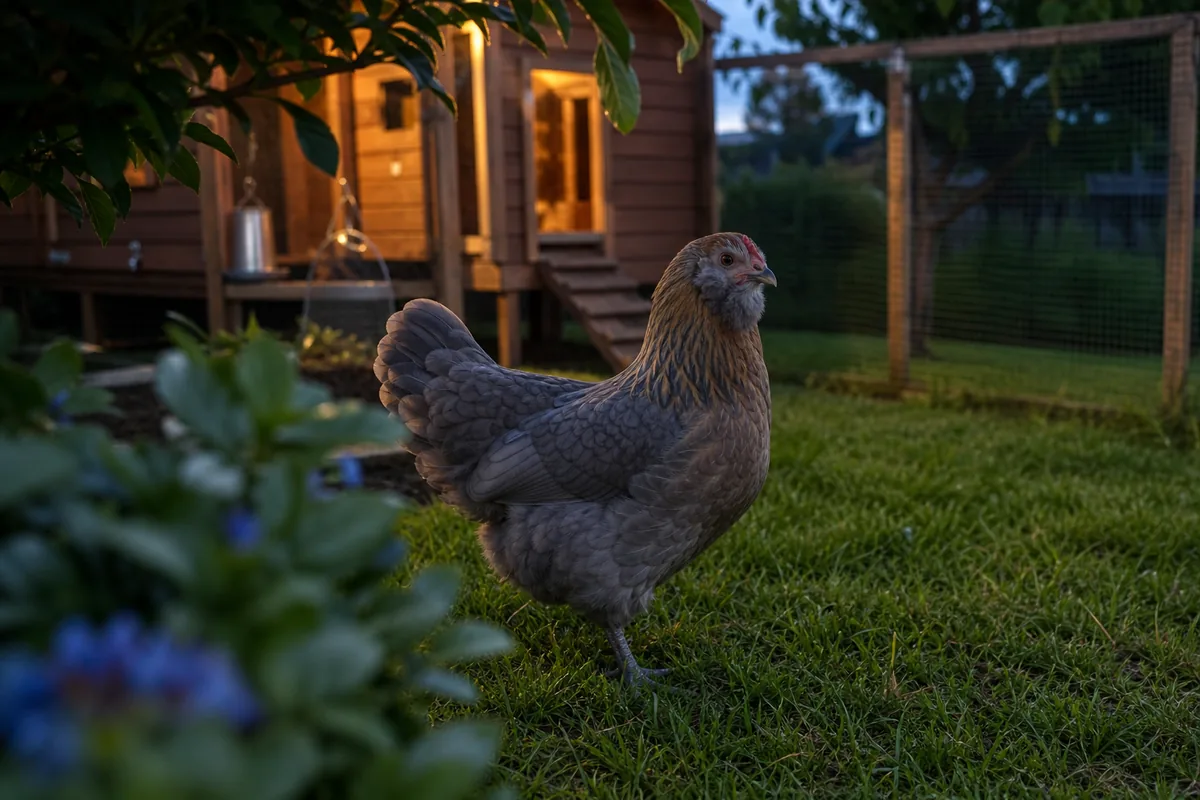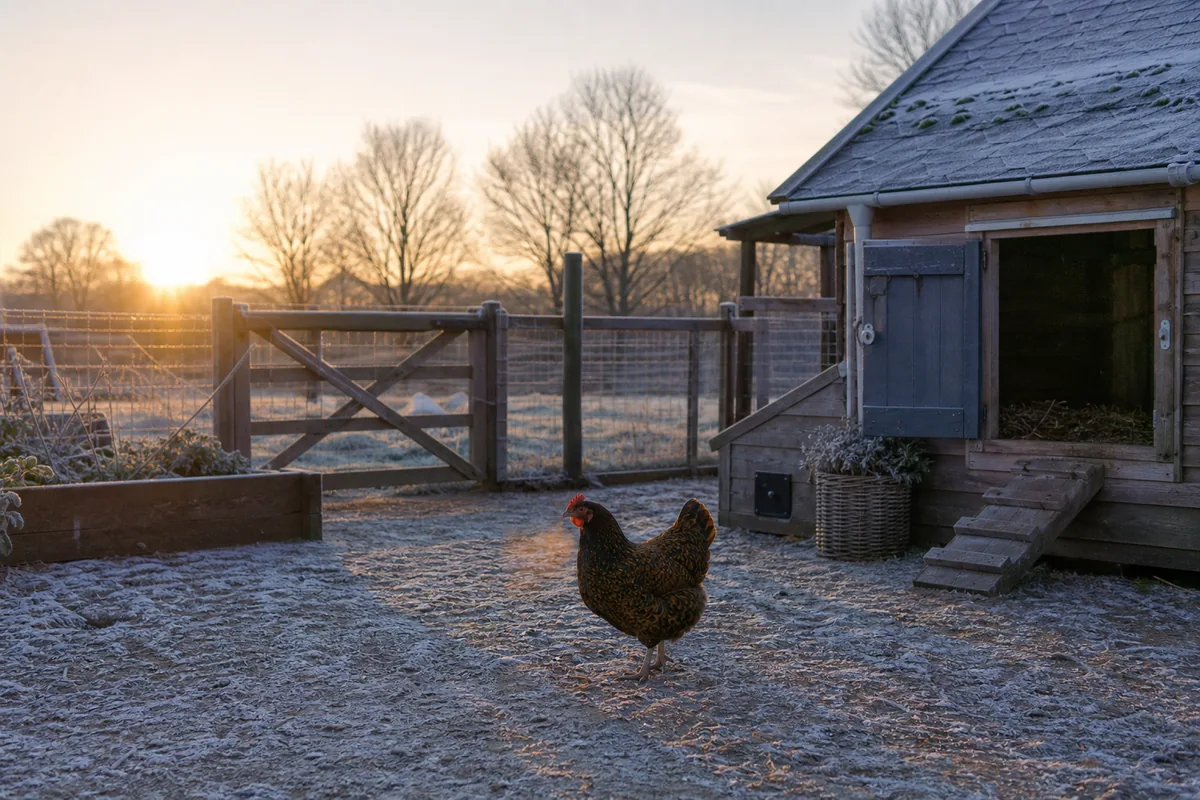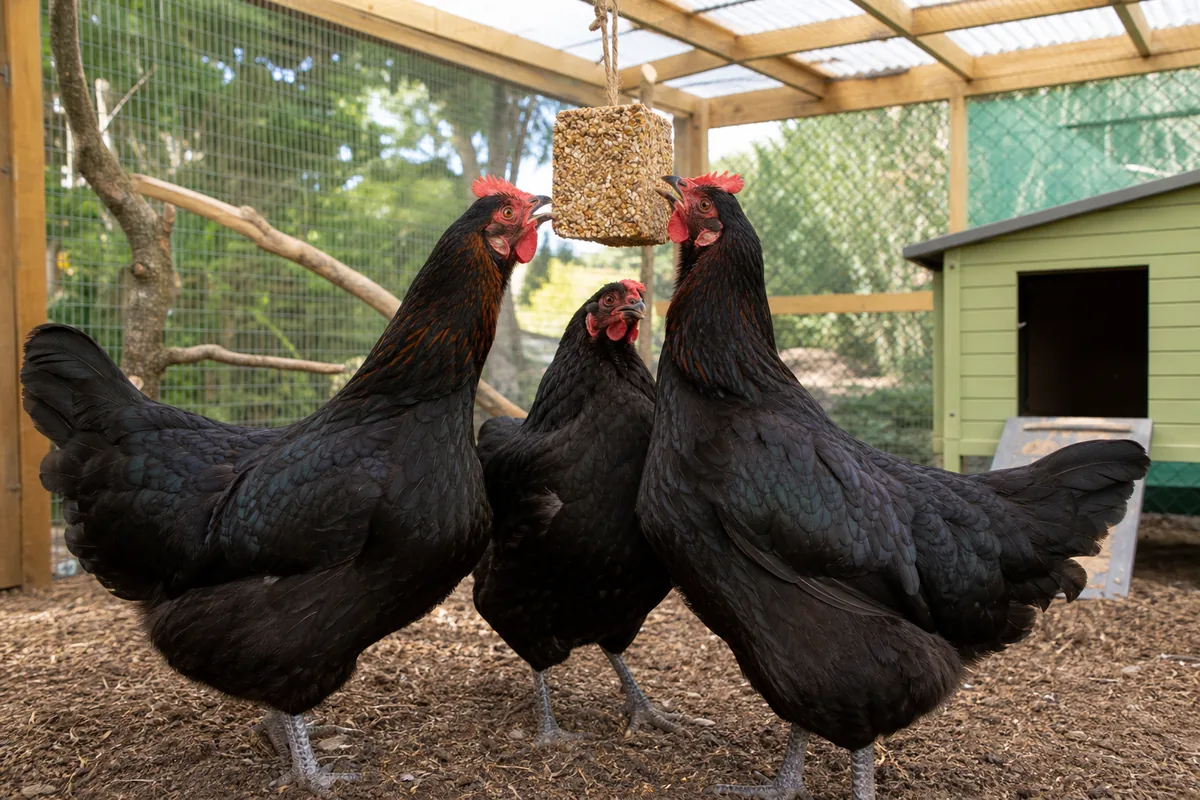
If you've ever seen a basket of eggs with a few shells so dark they look like polished mahogany, those were almost certainly Marans. No other breed on the specialty egg breeds list can match that depth of color straight from the nest box.
Ian Fleming knew this. He specified Marans eggs for James Bond's breakfast in his novels, a detail that says as much about the breed's prestige as any poultry judge's ribbon.
Key facts
- Annual Eggs
- 150-200
- Hen Weight
- 7 lb
- Rooster Weight
- 8 lb
- Lay Age
- 5.5-6 months
- Egg Color
- Dark chocolate brown
Marans Egg Color: The Chocolate Brown Standard
The Marans egg color scale runs from 1 to 9. A score of 1 is white; a score of 9 is nearly black-brown.
Serious Marans breeders use this standardized chart to evaluate their flocks and cull hens whose eggs fall below a minimum threshold.
Black Copper Marans, the most popular variety, should reliably produce eggs scoring 4 or above on the scale. Show-quality stock often hits 6 or 7.
A true 9 is rare even from champion birds.
The pigment comes from protoporphyrin IX, a compound deposited during the final stage of shell formation in the oviduct. Unlike the blue-green pigment in Ameraucana or Easter Egger eggs, which penetrates the shell wall, Marans pigment sits on the surface.
This is why the shell interior is lighter than the outside, and why the color fades as individual eggs are produced in a clutch.
For keepers who want a visual contrast in their egg basket, pairing Marans with an Ameraucana creates a striking range from pale blue to near-black brown.
Egg size is medium to large. Shell quality is firm, which helps with shipping and handling.
The rich color has made Marans eggs a premium product at farmers' markets and among egg collectors who prize the chocolate shells.
Varieties: Black Copper vs. Cuckoo
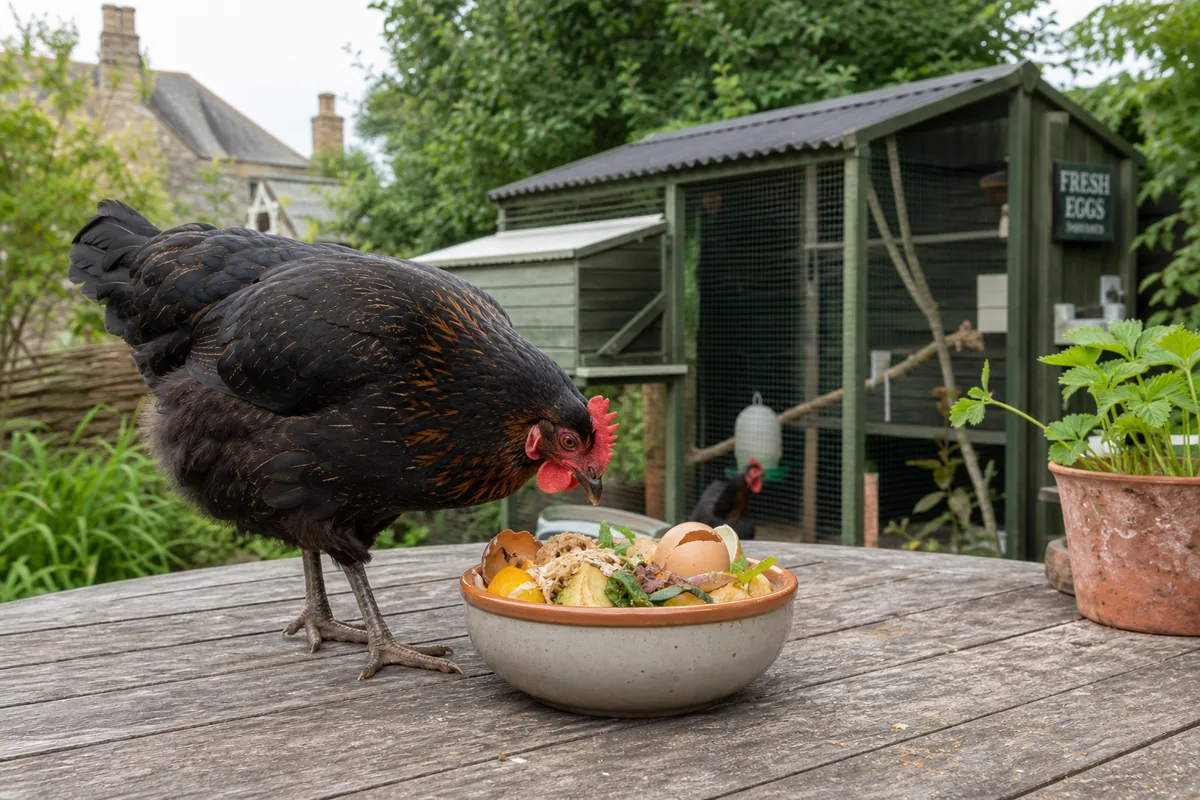
The two most common Marans varieties in the United States are Black Copper and Cuckoo. They differ in appearance, egg color, and availability.
| Variety | Plumage | Egg Color Score | Availability | APA Status |
|---|---|---|---|---|
| Black Copper Marans | Black body, copper hackle and saddle | 4-7 (darkest) | Specialty breeders | Recognized |
| Cuckoo Marans | Barred gray (similar to Barred Rock) | 3-5 (lighter) | More common, hatcheries | Recognized |
| Blue Copper Marans | Blue-gray body, copper hackle | 4-6 | Rare, specialty only | Not recognized |
| Wheaten Marans | Wheaten/golden hen, black rooster | 3-5 | Limited | Not recognized |
| White Marans | White | 3-5 | Very rare | Not recognized |
Cuckoo Marans are more widely available through commercial hatcheries, which makes them accessible to most keepers. The trade-off is egg color: hatchery Cuckoo Marans often score in the 3-4 range rather than the deep 5-7 a quality Black Copper hen delivers.
Keepers choosing between Marans and other dark-egg Dutch breeds often compare them to the Barnevelder, which lays a medium-dark brown egg at a higher annual count but without the depth of color that serious Marans breeders select for.
If egg color is your primary reason for keeping Marans, source Black Copper Marans from a reputable breeder who evaluates hens on the color scale. Hatchery stock of any variety has been selected for production volume and shippability, not shell pigmentation.
French vs. English Marans: Shanks Make the Difference
When the Marans was standardized in France in 1929, the breed description included lightly feathered shanks. When the British imported and developed their own strain, they selected for clean legs instead.
Both types exist in the United States today:
- French Marans have light feathering on the outer shank and toes. This is the original standard and the type recognized in France.
- English Marans have completely clean, unfeathered legs. This is the type more commonly produced by American commercial hatcheries.
- The American Poultry Association recognized both clean-legged and feather-legged varieties when the breed was admitted to the Standard of Perfection in 2011.
Feathered shanks require attention in wet, muddy conditions. Mud and debris can pack into feathered legs and cause irritation or infection if left unmanaged.
Clean-legged birds sidestep this maintenance concern entirely.
Egg color is not consistently different between French and English types. The determining factor is genetics within the individual breeding line, not the shank feathering.
Temperament: Calm but Not a Lap Bird
Marans are generally calm and non-aggressive birds that fit well into mixed flocks. They're not as bold or personable as Orpingtons and, and they're not as flighty as Leghorns.
They occupy a practical middle ground: composed enough to handle, independent enough to entertain themselves.
Hens are quiet and tend to stay near the flock rather than wandering solo. Roosters vary.
Some Black Copper Marans roosters can be assertive, particularly during breeding season, so early handling and socialization from chick age reduces the chance of aggression developing later.
Pros
- Dark chocolate eggs unmatched by any other breed
- Calm, non-aggressive hen temperament
- Dual-purpose: decent table weight at 7 lb
- Active foragers that reduce feed costs on pasture
- Hardy in cold weather
- Quiet hens suitable for suburban setups
Cons
- Lower egg production than dedicated laying breeds (150-200 vs 280-300)
- Egg color fades through the season and in hatchery stock
- Black Copper stock is expensive and harder to source
- Roosters can be assertive if poorly socialized
- Feathered legs (French type) require wet-weather attention
- Slower to mature at 5.5-6 months before first egg
Marans integrate into mixed flocks without issue. They're mid-range in the pecking order and rarely initiate conflict.
For keepers running a mixed flock across egg colors, Marans sit alongside breeds like the a production breed alternative without causing social friction.
Chicks handled from hatch become noticeably more tractable adults. Birds that receive little handling grow into flighty, wary hens that scatter when approached.
The difference in adult temperament between handled and unhandled Marans is significant enough to make daily handling a worthwhile investment in the first four to six weeks.
Egg Production: 150-200 Eggs Per Year
Marans are a dual-purpose breed, not a laying specialist. Annual output of 150-200 eggs is solid for a specialty breed but falls noticeably short of the 250-300 a well-kept Australorp or Plymouth Rock delivers.
The trade-off is intentional. The genetics that produce deep shell pigmentation and a medium-large dual-purpose body are not the same genetics that maximize clutch frequency.
Breeders selecting hard for egg color tend to see production decline, and vice versa. This tension is one reason hatchery Marans often have lighter egg color: those operations prioritized production numbers over color depth.
Production peaks in year one and year two, with a gradual decline through year four or five. Marans do not lay well through winter without supplemental lighting.
A 14-hour light cycle maintains production reasonably through short days.
Compared to egg production rankings across all breeds, Marans sit in the moderate tier. They're not the breed to choose if maximum annual output is your priority.
They are the breed to choose if the eggs in your basket need to be the most visually distinctive on the counter.
First eggs typically arrive at 5.5 to 6 months of age. Some Black Copper hens are slower, reaching 6.5 months before the first lay.
Patience pays off when the first eggs arrive at color score 5 or above.
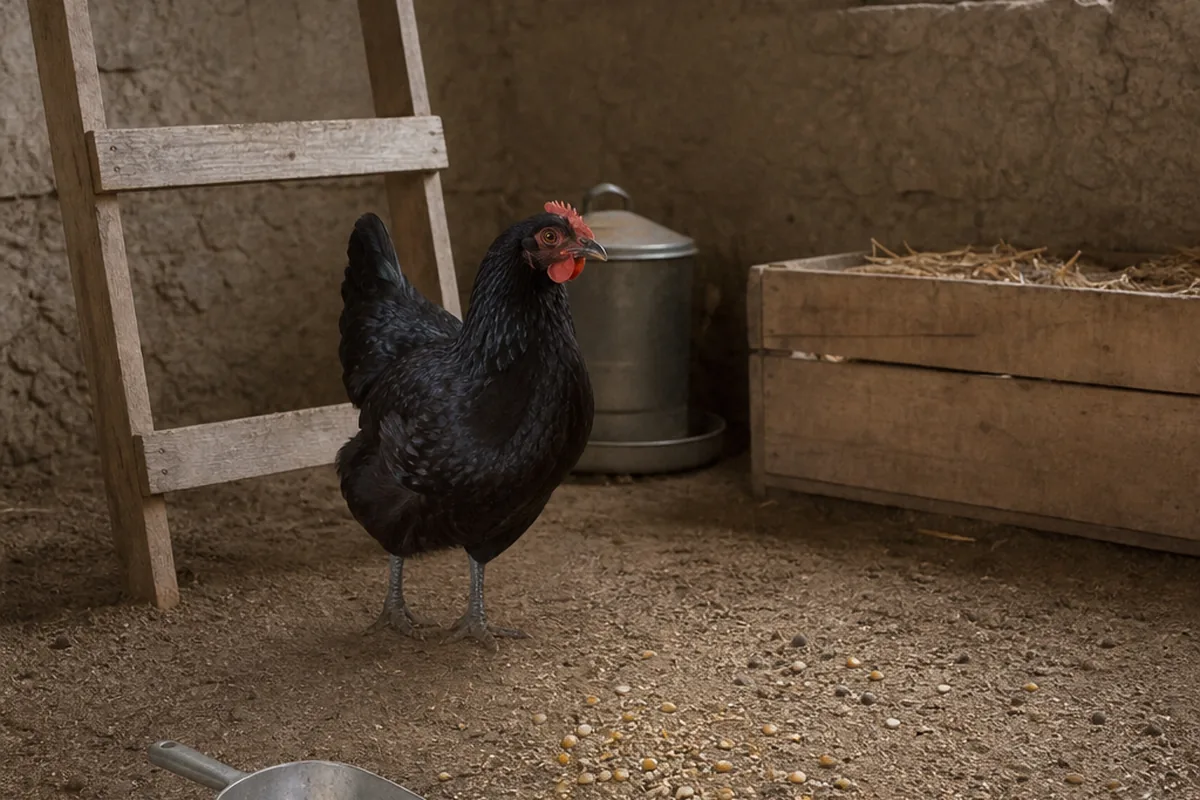
Housing and Foraging Needs
Marans are active foragers that perform best with access to range. A confined hen can produce well, but a hen that ranges daily uses significantly less commercial feed while maintaining the same output.
Their foraging instinct is stronger than many dual-purpose breeds.
For coops and runs, standard dual-purpose sizing applies:
- 4 square feet of indoor coop space per bird minimum
- 10 square feet of outdoor run space per bird
- 12-inch roost width per bird (Marans are medium-large and need room)
- One nest box per 3-4 hens, 12x12 inches minimum
- Roost height 18-24 inches off the ground (not too high for a 7-lb hen)
Feathered-leg French Marans need clean, well-drained runs. Standing mud packed against feathered shanks causes skin irritation and provides a harbor for mites.
Gravel aprons around waterers and feeders reduce the worst mud accumulation points.
For the full coop build process covering roost spacing, nest box ratios, and ventilation placement for dual-purpose breeds, see our coop setup guide.
Marans handle cold well. Their single comb is moderately sized and not particularly prone to frostbite compared to large-combed breeds.
Ventilation without drafts at roost height is the standard cold-weather management for this breed, same as most others.
Marans Feed and Nutrition
Standard layer pellets at 16-18% protein support Marans through their laying season. Free-choice oyster shell on the side maintains shell quality.
Marans shells are naturally firm, but calcium availability still matters for consistent thickness.
Treat allocation should stay at or below 10% of daily intake. Marans are good foragers, so their pasture-sourced nutrition is higher than confined breeds.
Factor that in when calculating supplemental feeding.
- Chick starter (18-20% protein) from hatch through 18 weeks
- Grower feed (16-18% protein) from 6-18 weeks if separate from layers
- Layer pellets (16-18% protein, 3.5-4% calcium) from first egg onward
- Free-choice oyster shell at all times during laying
- Increase protein to 20%+ during annual molt (typically 6-8 weeks in fall)
Marans raised on range and given access to insects will supplement their own protein through foraging. This is one area where their strong foraging instinct translates directly to a feeding cost advantage over more sedentary breeds.
Managing feed access and lighting through the short days of winter requires a specific plan for breeds like Marans that do not lay reliably without supplemental light. Our winter chicken care guide covers lighting schedules, cold-weather feed adjustments, and coop ventilation for sustained winter production.
Health: A Hardy Breed with Few Structural Issues
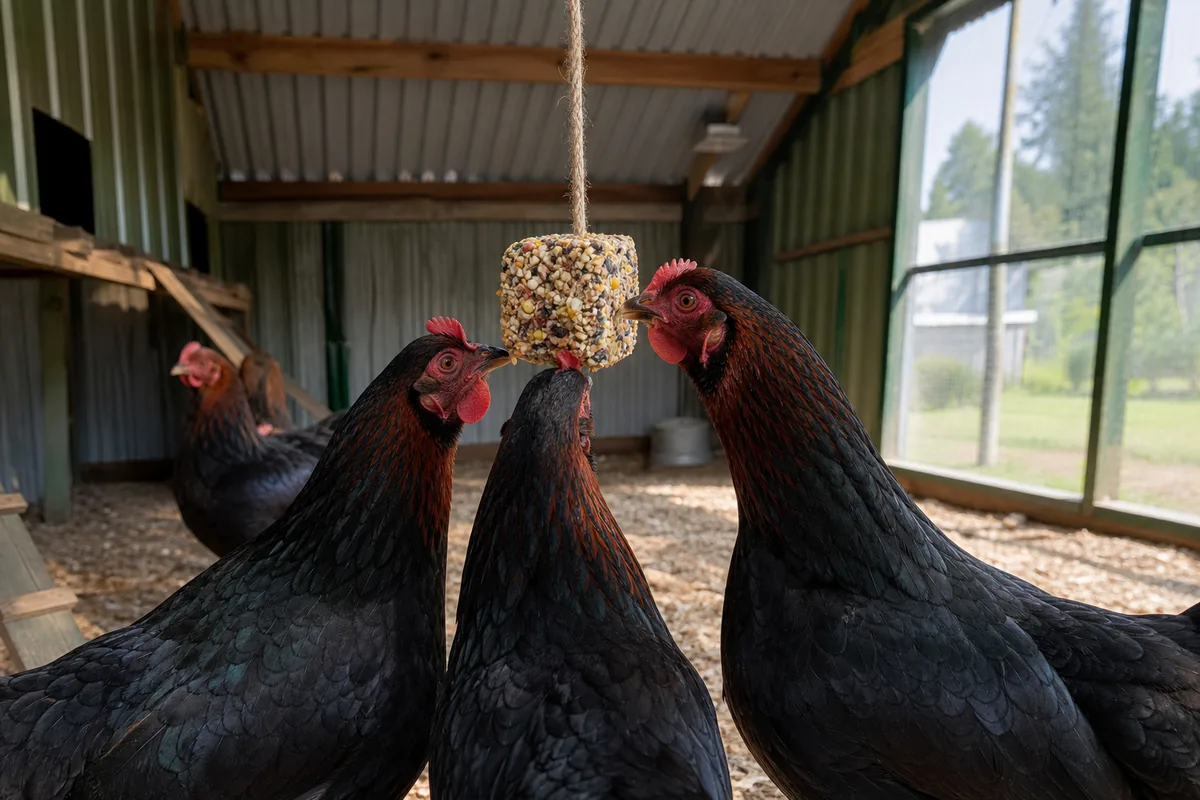
Marans are a robust dual-purpose breed with no documented breed-specific genetic disorders. The gene pool remained diverse through most of the breed's history in France, where selection focused on practical performance rather than extreme show traits.
Expected lifespan is 7-10 years. Most hens remain productive through years one and two, with egg production declining gradually from year three onward.
Primary health concerns are environmental and management-related rather than genetic:
- Feathered legs (French type) are prone to scaly leg mites if not monitored in muddy conditions
- Marek's disease vaccination at hatch is standard and non-negotiable for any flock
- Respiratory infections (Mycoplasma, ILT) spread through new additions. quarantine all incoming birds for 30 days
- External parasites (mites, lice) affect Marans as they do all breeds; check under wings and around the vent monthly
- Bumblefoot risk increases in birds kept on hard, abrasive surfaces without adequate bedding
Dust bathing reduces external parasite loads naturally. A dedicated dust bath area with dry soil, wood ash, and food-grade diatomaceous earth gives birds a daily maintenance tool that costs nothing to maintain.
Marans are not particularly heat-sensitive, but they are not rated as highly heat-tolerant as Mediterranean breeds. In sustained heat above 90°F, shade and cool water access are non-negotiable.
Black Copper Marans, with their dark plumage, absorb more solar radiation than lighter-feathered varieties under direct sun.
Vs. Other Dark Egg Breeds
Marans are not the only dark egg layer. Welsummers and Barnevelders also produce brown eggs with some depth, and the comparison matters when planning a specialty flock.
| Breed | Egg Color Depth | Annual Eggs | Egg Texture | Foraging Ability |
|---|---|---|---|---|
| Black Copper Marans | Darkest (4-7 scale) | 150-200 | Smooth, glossy | Strong |
| Welsummer | Dark with spots (3-5 scale) | 160-180 | Matte, speckled | Very strong |
| Barnevelder | Medium dark (3-4 scale) | 180-200 | Smooth, matte | Moderate |
| Penedesenca | Very dark (4-6 scale) | 120-150 | Smooth | Strong |
The another dark egg breed with speckled shells that some keepers prefer aesthetically. Welsummer eggs average slightly lighter in base color but carry a distinctive speckled pattern that Marans eggs lack.
Marans eggs are smooth and glossy; Welsummer eggs are matte and spotted.
For maximum color depth in a single breed, Black Copper Marans remain the standard. No other commonly available breed produces eggs as reliably dark on the color scale.
Sources and references
- Standard of Perfection for Marans: Breed history, French origins, and APA recognition criteriaAmerican Poultry Association
- Protoporphyrin pigment deposition in poultry eggshells: genetic and environmental factors affecting brown egg color intensityPoultry Science
- Marans breed profile: history, varieties, and production standardsThe Livestock Conservancy