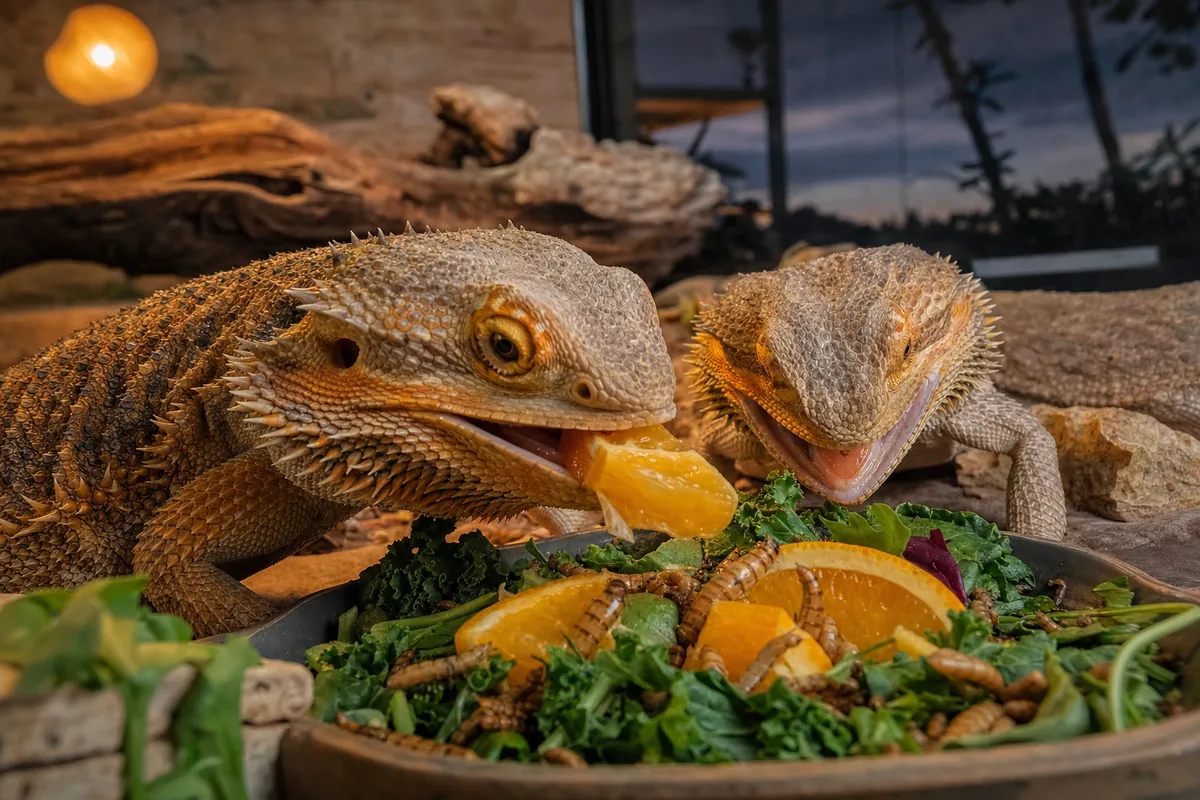
Oranges sit in a grey zone for reptile feeding: not outright toxic, but acidic enough to cause real digestive upset if offered too often. Bearded dragons have a sensitive gut pH, and citrus pushes it in the wrong direction.
The question isn't just safety at a single serving. It's whether the nutritional tradeoffs make oranges worth the risk when so many better fruit options exist.
The full bearded dragon care guide covers the complete treat framework including how acidic fruits fit.
Watermelon is another once-monthly treat with a different risk profile: water overload rather than acid.
Kale and other calcium-rich greens should dominate the diet around any fruit treat day to compensate for the phosphorus surplus in oranges.
Carrots offer a safer vitamin C and beta-carotene option that can be fed twice weekly without acid concerns.
Sweet potato delivers caloric density and vitamin A twice weekly as a genuinely useful food rather than an acid-risk treat.
Oranges for Bearded Dragons
- Flesh only (no seedsSafe
- no pithSafe
- no peel)Safe
- Peel contains essential oilsUnsafe
- seeds are a choking hazardUnsafe
- pith is high in compounds that irritate gut liningUnsafe
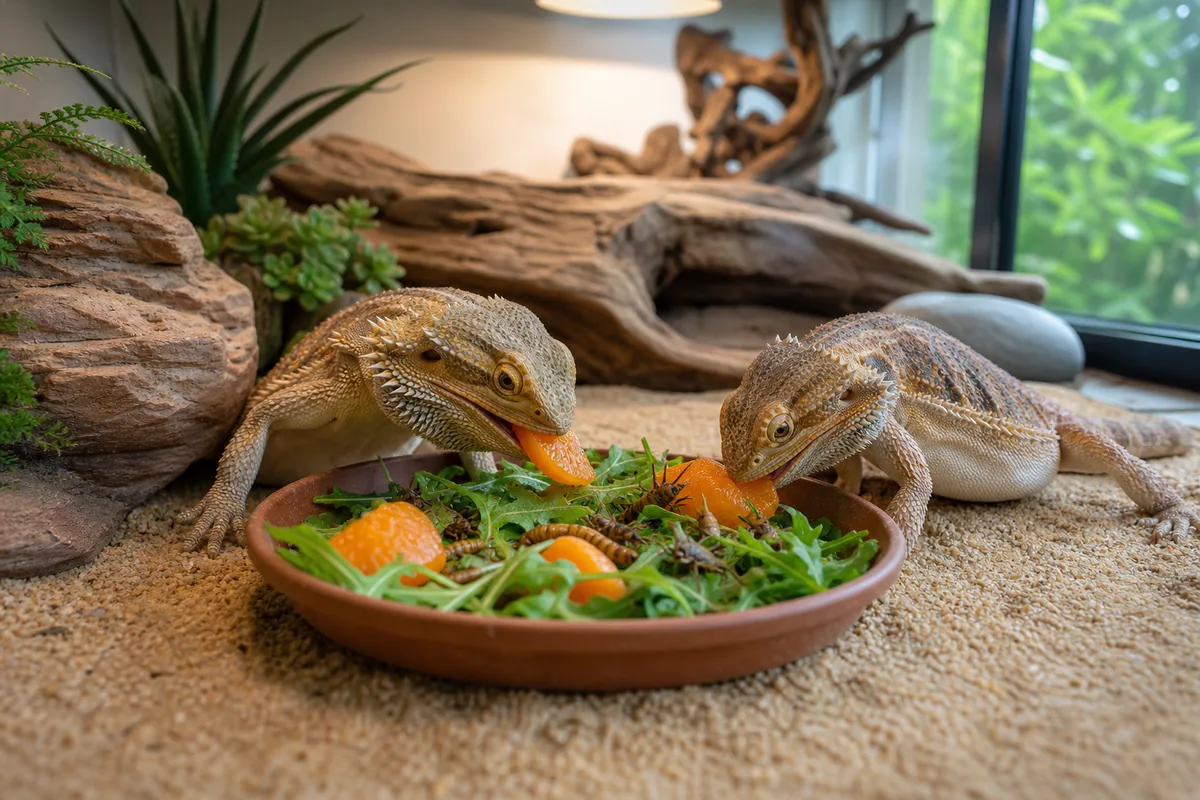
Prep: Peel completely, remove all pith and seeds, cut into small cubes no larger than the space between the dragon's eyes Freq: Once a month maximum; avoid entirely for juveniles under 12 months Amount: 1-2 small cubes per feeding for adults (roughly 10-15g total)
Orange Nutrition: What Bearded Dragons Actually Get
A 100g orange serving delivers 47 calories, 11.7g sugar, and 53.2mg vitamin C. The vitamin C sounds appealing, but bearded dragons synthesize their own vitamin C and don't need dietary supplementation from fruit.
The calcium-to-phosphorus ratio is what matters most for reptile nutrition. Oranges run roughly 0.4:1 Ca:P, which is inverted from the ideal 2:1 ratio bearded dragons need.
Feeding phosphorus-heavy foods regularly depletes calcium from bone.
- Vitamin C: 53.2mg per 100g, not needed in diet since bearded dragons self-synthesize
- Sugar: 11.7g per 100g, high enough to disrupt gut flora with regular feeding
- Citric acid: 0.6-1.5g per 100g depending on ripeness, primary concern for stomach irritation
- Calcium: 40mg per 100g, low relative to phosphorus content
- Water content: 87%, which can cause loose stools if fed in excess
Why Citric Acid Is the Real Problem
Bearded dragons lack the digestive enzymes that mammals use to buffer citric acid efficiently. Even a moderate portion can lower stomach pH enough to cause cramping, gas, and runny stools within 12-24 hours of feeding.
Chronic citric acid exposure also irritates the gut lining over time. Repeated small doses are more damaging than a single larger one, because the tissue doesn't recover fully between feedings.
| Fruit | Citric Acid (g/100g) | Feeding Verdict |
|---|---|---|
| Orange | 0.6-1.5 | Once monthly max |
| Mango | 0.13-0.17 | Bi-weekly treat |
| Blueberry | 0.77-1.51 | Weekly small amount |
| Papaya | 0.05-0.20 | Twice weekly safe |
| Watermelon | 0.05 | Weekly treat |
Preparation: How to Serve Orange Safely
Full peel removal is non-negotiable. Orange peel contains d-limonene and linalool, essential oils that are toxic to reptiles in concentrated form.
Even a small amount of pith left behind adds unnecessary bitterness and acid load.
Juvenile bearded dragons under 12 months should not receive oranges at all. Their digestive systems are still maturing, and the acid load that an adult handles marginally is truly harmful to a young animal.
Signs Your Bearded Dragon Reacted Badly
Most adverse reactions appear within 6-24 hours of feeding. Loose or watery stools are the first sign.
If the stool is bright orange-tinged, that's undigested fruit moving through too quickly.
- Loose stools: most common sign, typically within 12 hours, indicates citric acid irritation
- Mucus in stool: gut lining responding to irritation, stop fruit feeding immediately
- Lethargy: the dragon avoids the basking spot and stays inactive
- Appetite loss: refuses insects or salad the next feeding day
- Mouth gaping: rare, indicates more severe GI distress
Better Fruit Alternatives for Bearded Dragons
Papaya is the closest swap to oranges in terms of sweetness but delivers far less citric acid at 0.05-0.20g per 100g. It also offers bromelain-like enzymes that support digestion rather than hinder it.
Mango offers similar color and sweetness appeal with a better calcium-to-phosphorus ratio and a fraction of the acid. Both fruits can be offered twice weekly in small amounts where oranges max out at once monthly.
Blueberries are a safer antioxidant-rich fruit option, with much lower acidity than oranges and no citrus-related gut irritation risk.
If you're considering apples as another monthly treat alternative, our apples for bearded dragons guide covers seed safety and preparation steps. Cucumbers offer a safe hydration supplement that pairs well with any salad day after an orange treat, with zero acid content to compound gut irritation.
Tomatoes share the acid concern with oranges. Our tomatoes for bearded dragons guide covers why both acidic foods belong in the once-monthly category at most.
Sources and references
- Nutritional and Metabolic Diseases in Reptilesof Exotic Pet Medicine, 2018
- Bearded Dragon Nutrition GuidelinesAssociation of Reptilian and Amphibian Veterinarians, 2020
- Citric Acid Content in Common FruitsUSDA FoodData Central, 2023