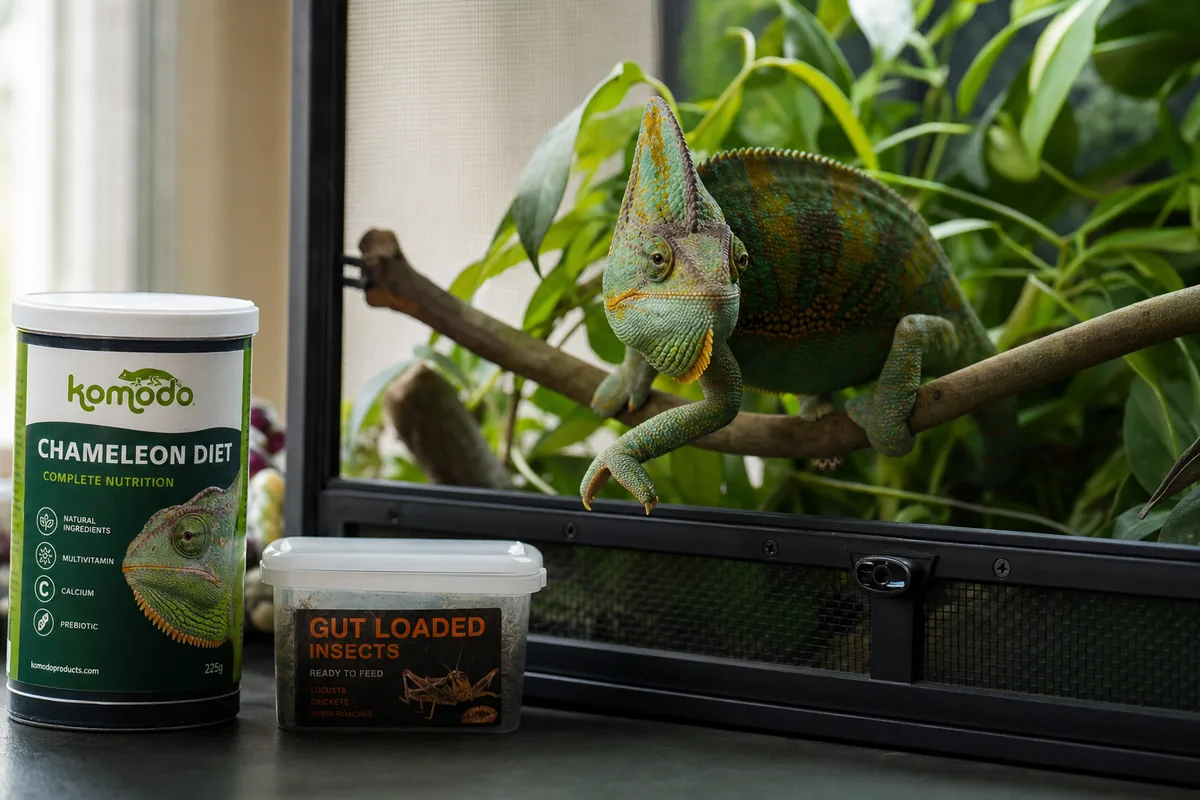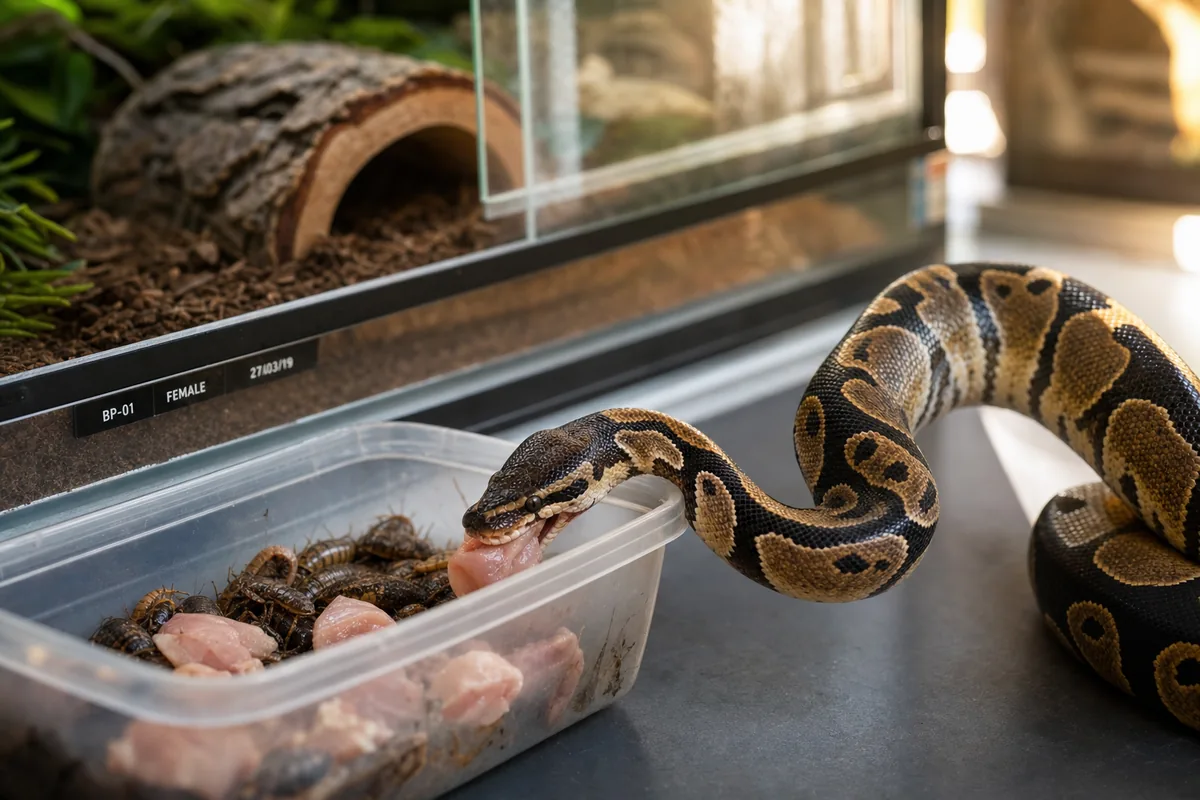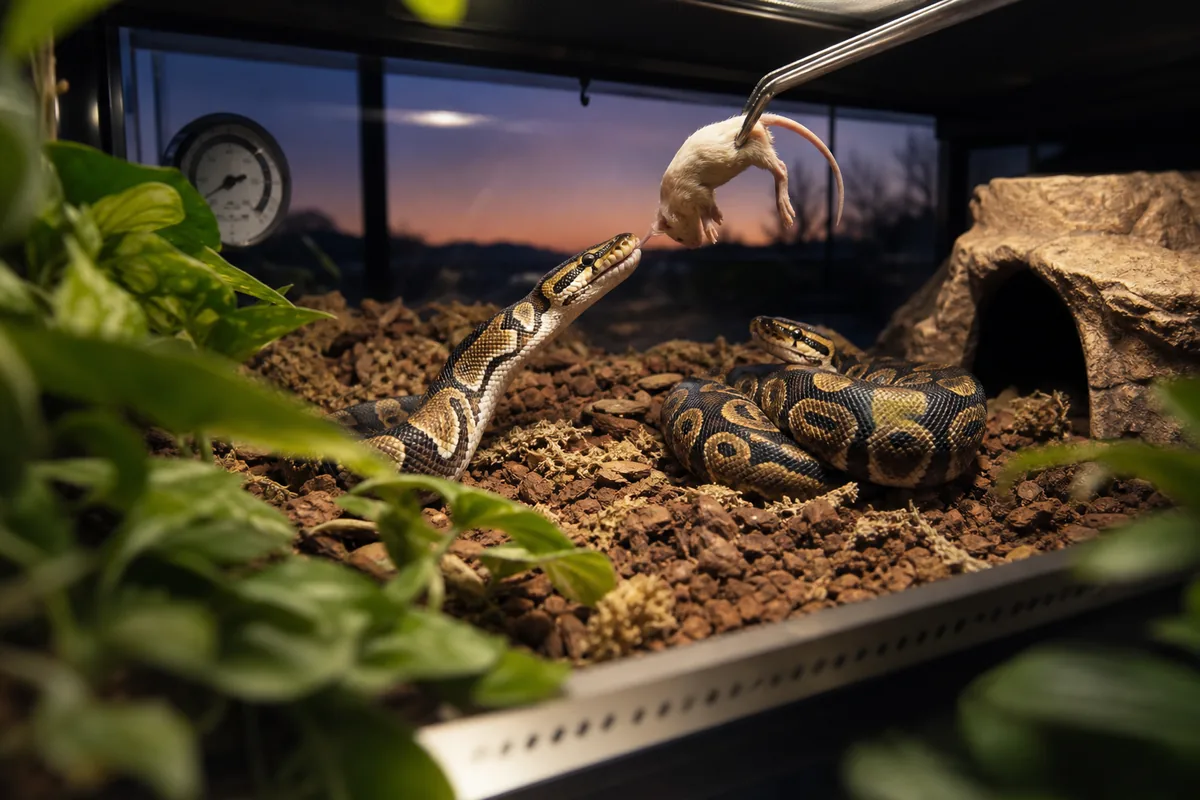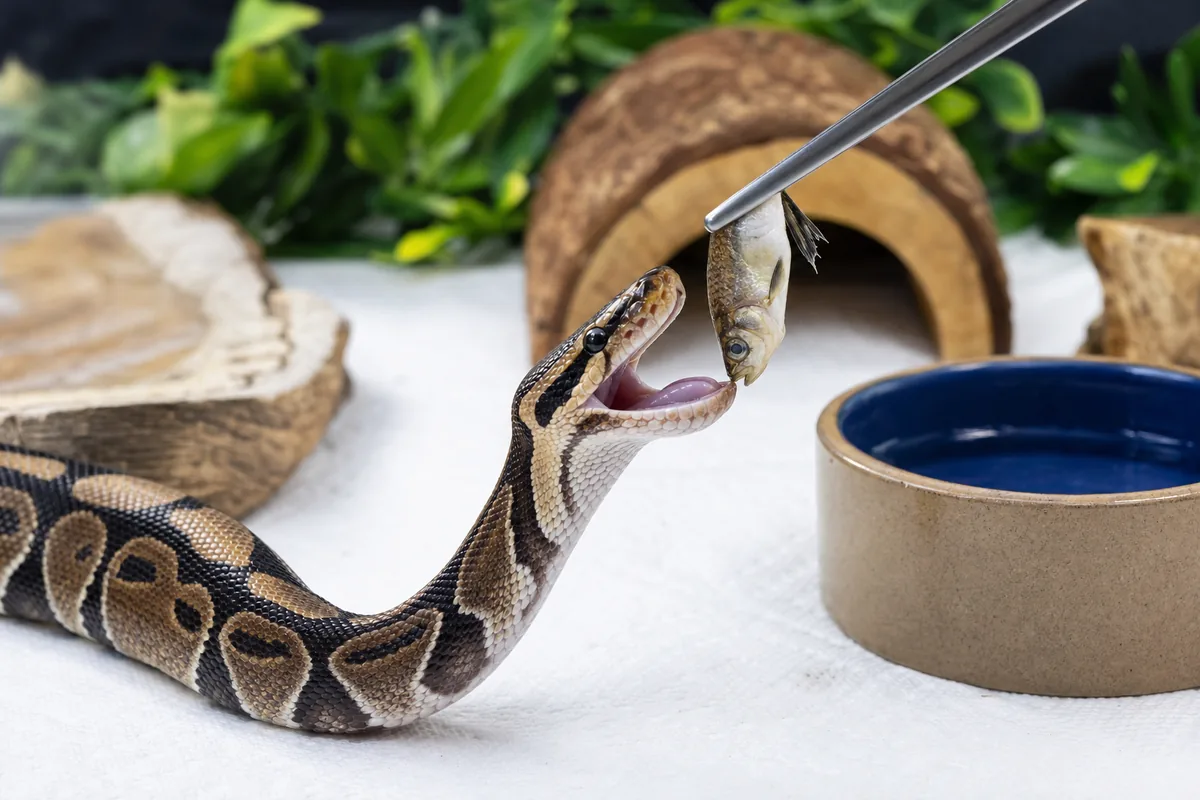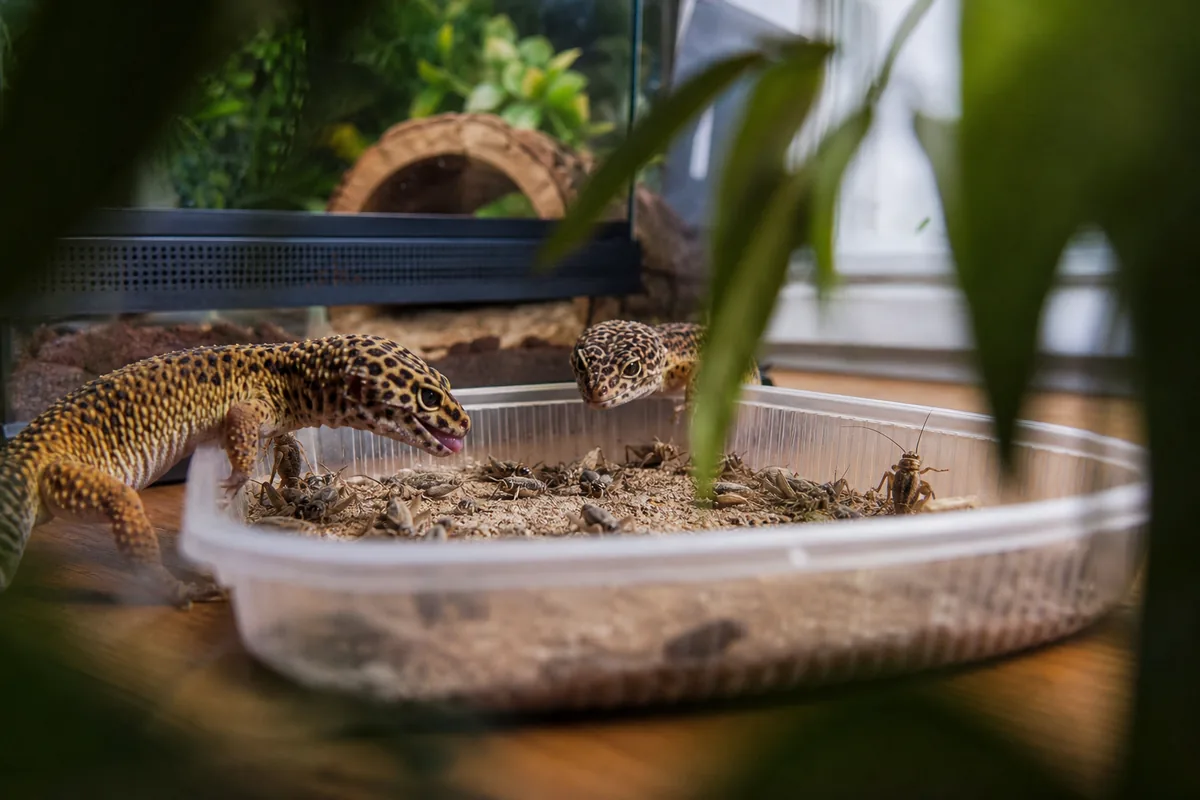
Crickets have been the backbone of leopard gecko feeding in captivity for decades. They're nutritionally well-matched to the gecko's needs, trigger a strong hunting response, and provide behavioral enrichment through movement.
Across reptile care, crickets are the benchmark against which other feeders are measured.
The practical challenge with crickets isn't nutrition: it's management. Escaped crickets, noise at night, and shorter shelf life than mealworms are the tradeoffs keepers accept for the nutritional and behavioral benefits.
Crickets for Leopard Geckos
- Full live cricket (Acheta domesticus or Gryllus bimaculatus)Safe
- pinhead crickets for hatchlings under 6 weeksSafe
- Dead crickets left in enclosure: carry bacterial growth and can bite geckos while they sleepUnsafe
- wild-caught crickets may carry pesticides or parasitesUnsafe
Prep: Gut-load 24-48 hours before feeding; dust with calcium supplement at each feeding; offer in a smooth-sided feeding dish or directly on paper towel substrate Freq: Primary staple feeder; offer every other day for juveniles, every 3-4 days for adults Amount: As many crickets as the gecko eats in 15-20 minutes, typically 5-10 for adults; 3-5 for juveniles
Cricket Nutrition: Why They're the Benchmark Feeder
Live gut-loaded crickets deliver 21.3% protein, 6.0% fat, and 69% moisture. The protein-to-fat ratio is the best of any widely available feeder insect, making crickets the leanest practical option for everyday use.
The Ca:P ratio in ungut-loaded crickets runs at roughly 1:9, which is poor. Gut-loading with calcium-rich greens and dusting before each feeding are both required to bring dietary calcium delivery into an acceptable range.
- Protein: 21.3%, highest among common staple feeders
- Fat: 6.0%, leanest common feeder, supports healthy weight in adults
- Moisture: 69%, contributes to hydration, particularly useful for geckos that drink infrequently
- Chitin: exoskeleton fiber that provides gut motility benefits in appropriate amounts
- Base Ca:P: 1:9 ungut-loaded, improves significantly with 48-hour gut-loading
Mealworms are the most common alternative to crickets, running higher at 12.7% fat versus crickets' 6.0%, which makes rotation between the two valuable.
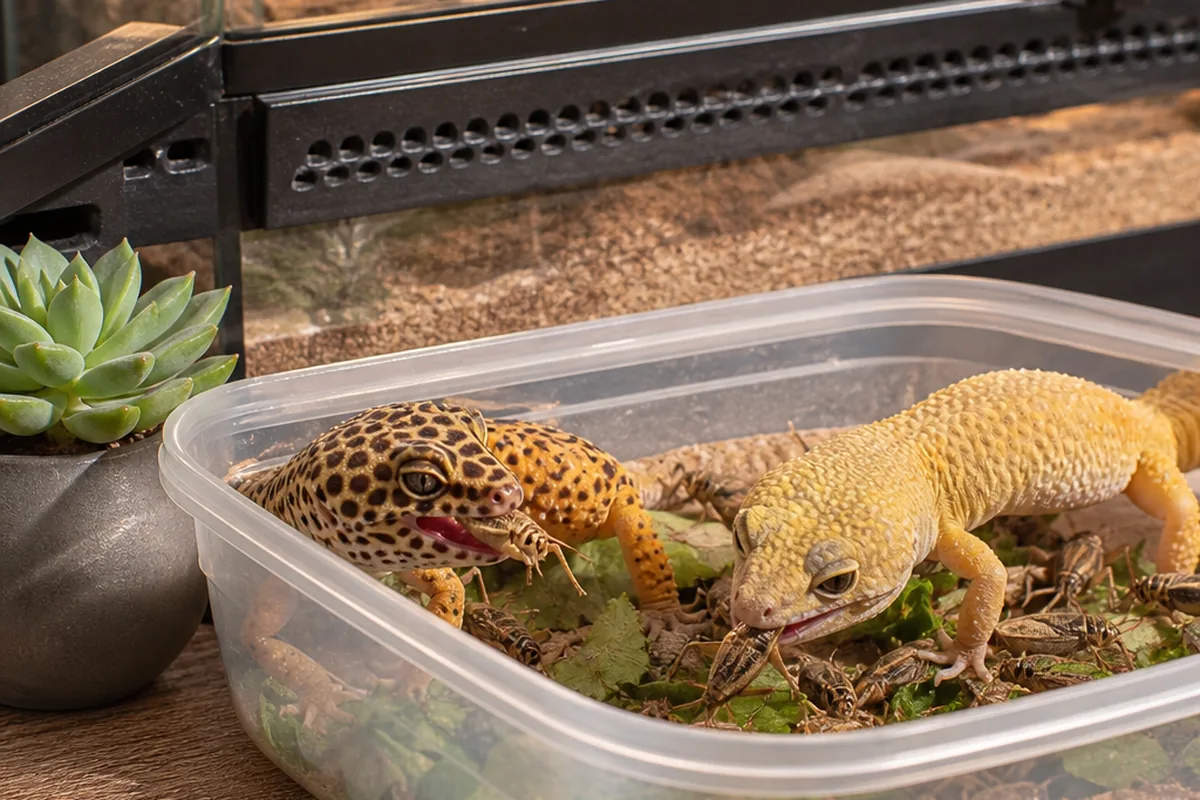
Size: Match to Gecko Size Every Time
The standard cricket sizing rule for all reptiles is that prey should be no wider than the distance between the animal's eyes. For leopard geckos, this is more than a guideline.
Impaction from oversized prey is a documented cause of death, and crickets are more mobile than mealworms, making swallowing oversized ones more likely during an active feeding response.
| Gecko Age | Cricket Size | Cricket Length |
|---|---|---|
| Hatchling (0-4 weeks) | Pinhead (⅛") | 3mm |
| Juvenile (1-3 months) | Small (¼") | 6mm |
| Sub-adult (3-6 months) | Medium (½") | 12mm |
| Adult (6+ months) | Large (¾") or adult | 18-25mm |
Dubia roaches offer a no-escape, no-noise alternative for keepers who find cricket management too demanding, with better Ca:P ratio as an added bonus.
The Escaped Cricket Problem
Escaped crickets don't just create noise. Loose crickets in a reptile enclosure will bite sleeping geckos, particularly targeting the toes, tail, and eyelids.
Cricket bites cause wounds that can become infected in a matter of days in the warm, humid environment of a gecko's enclosure.
The practical solution is a feeding dish. A smooth-sided dish 3-4cm tall prevents cricket escape during the feeding window and makes cleanup of uneaten crickets simple.
After 15-20 minutes, remove the dish entirely.
Paper towel and tile, standard substrate choices in leopard gecko enclosure setups, give escaped crickets far fewer places to hide than loose coconut fiber or sand.
Gut-Loading Crickets Effectively
Crickets gut-load faster than mealworms because their metabolism runs hotter. A 24-hour gut-load with high-quality greens is sufficient to meaningfully change the nutritional content the insectivore gecko receives.
A 48-hour gut-load produces even better results.
Hydration matters in cricket gut-loading. Dry gut-load powder alone causes dehydration-related cricket die-off.
Always include fresh vegetables or a water gel product to maintain cricket hydration through the gut-load period.
Waxworms pair with cricket-based feeding schedules as a monthly high-fat treat, following a once-per-month frequency rule to prevent food fixation.
Wild-Caught Crickets: A Risk Not Worth Taking
Wild-caught crickets from the yard or garden are a consistent source of pesticide exposure and parasite introduction. Even in gardens where no pesticides are used, neighborhood spray drift means crickets can carry organophosphate and pyrethroid residues from surrounding properties.
Parasites are the second concern. Wild crickets carry a range of nematode and protozoan parasites that are not present in captive-bred feeder stock.
Introducing a single infected cricket can establish a parasite load that requires veterinary treatment to resolve.
- Pesticide residue: organophosphates and pyrethroids are acutely toxic to reptiles
- Nematodes: pinworms and other roundworms transmissible from wild cricket gut
- Protozoa: Cryptosporidium and Coccidia species documented in wild field crickets
- Unknown diet: wild crickets may have eaten toxic plants before capture
Superworms are a larger enrichment feeder for adult geckos that complements a cricket-based diet, though their mandibles require care before feeding.
Butterworms add high-calcium treat variety to cricket-based feeding schedules, offering a different fat profile from waxworms.
Sources and references
- Nutritional Value of Feeder Insects Used in the Pet Industryof Nutritional Science, 2014
- Parasite Transmission Risks from Wild-Caught Feeder Insectsof Zoo and Wildlife Medicine, 2016
- Leopard Gecko Captive Care and Feeding GuidelinesAssociation of Reptilian and Amphibian Veterinarians, 2022