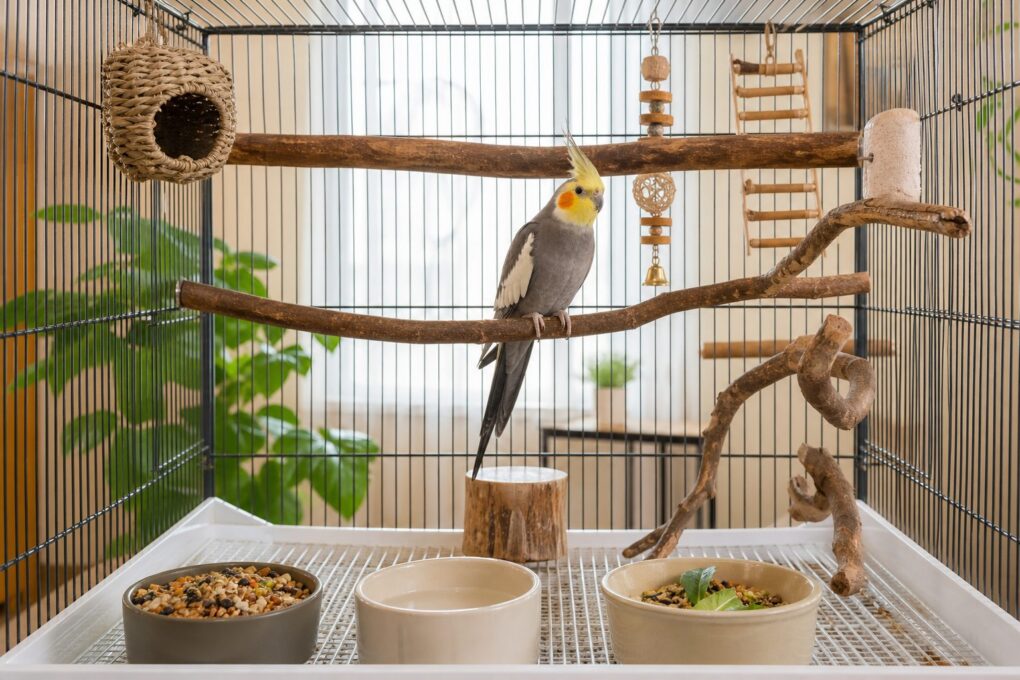
A cockatiel can stay gentle and active for years in the right space. Strong avian housing basics start with cage size, perch layout, food placement, and a room that feels stable rather than chaotic.
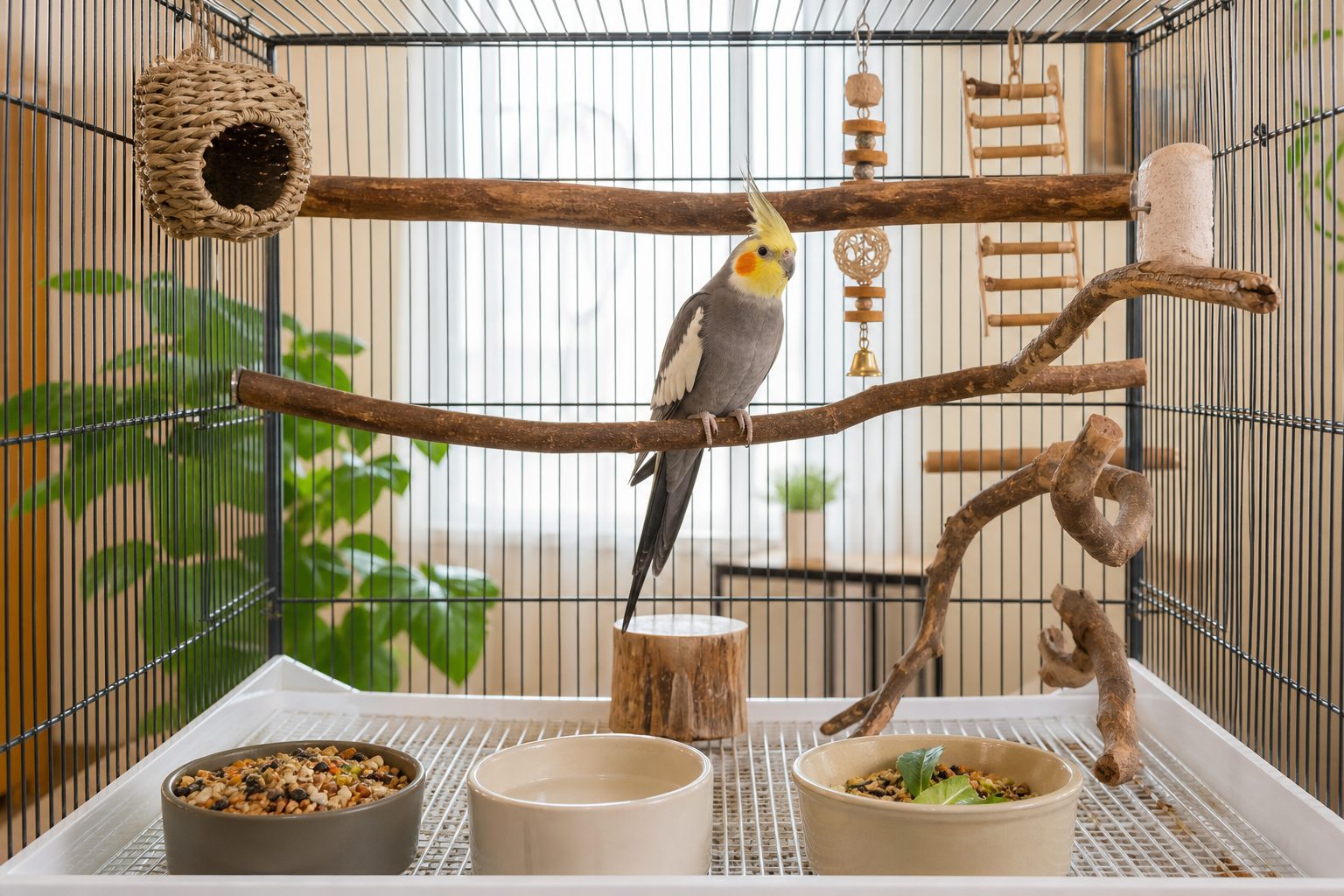
That matters because cockatiels use the cage as a home base, not just a sleeping box. Our main cockatiel guide covers the bird itself.
This page focuses on how to build the cage correctly.
The setup also shapes behavior. A poor cage makes even calm birds louder and more defensive.
A clean roomy layout supports the same practical feeding plan covered in our pet bird diet guide.
Why Does Cage Layout Matter More Than A Starter Kit?
Starter kits often save money by shrinking the cage and padding the box with weak accessories. Cockatiels need real width for wing movement and enough open space between perches to climb without smacking toys and bowls on every turn.
Remember it later
Planning to try this recipe soon? Save it for a quick find later!
Layout matters as much as the outside dimensions. A cage packed wall to wall with perches, mirrors, and ladders can feel smaller than a simpler cage with better open routes.
This is one reason cockatiels stay a stronger beginner choice than many larger parrots. Our beginner bird roundup highlights how their cage needs are practical, but still far more demanding than most first-time buyers expect.
- Best priority: buy the biggest safe cage you can manage before spending on decorative extras
- Open routes: leave enough clear space for climbing and short wing stretches between perches
- Quiet zone: place one perch where the bird can rest without bowls or toys crowding the face
- Daily use: choose a cage that stays easy to clean, rehang toys in, and access for training
How Big Should A Cockatiel Cage Be?
Think of 24 by 24 by 36 inches as a workable floor, not the finish line. A larger cage is easier to furnish safely and gives you more freedom to rotate perches and toys without turning the interior into clutter.
Bar spacing also matters. Keep it narrow enough to avoid head trapping, but wide enough that the bird can climb comfortably.
| Setup Area | Good Baseline | Why It Matters |
|---|---|---|
| Cage size | 24 x 24 x 36 in minimum | Gives room for perch spacing, dishes, and toy rotation |
| Bar spacing | About ½ to ⅝ in | Reduces escape and trapping risk |
| Main perches | 2 to 3 natural diameters | Changes foot pressure and improves grip variety |
| Sleep position | High calm perch | Helps the bird settle and feel secure at night |
If you are comparing cage size expectations across species, a budgie setup can stay somewhat smaller than a cockatiel cage. A conure setup often needs sturdier materials and can test latches harder, even in a similar footprint.
What Perches, Dishes, And Toys Should You Add?
Natural wood perches in mixed diameters work better than a cage full of identical dowels. That variety changes foot pressure and helps prevent one constant grip shape all day.
Food and water stations should sit where droppings do not fall into them from the highest perch. Keep one feeding zone easy to reach and one calm perch away from toy traffic.
Toy choice should stay practical. Cockatiels usually respond well to shredding toys, bells used in moderation, soft wood, and foraging items that do not overwhelm the cage.
- Best perches: natural branches plus one stable resting perch near the top
- Best toys: shredding, chewing, and light foraging toys rotated through the month
- Best dish placement: low enough to stay cleaner and easy for you to refresh daily
- What to avoid: overcrowding the interior until the bird has no clear route to move
If quiet matters in your home, this setup discipline helps there too. A bird that can rest properly usually fits better into homes looking at quieter pet birds instead of constant high-stimulation species.
How Do You Set Up A Cockatiel Cage Step By Step?
Build the cage in a clean order so the bird gets usable zones instead of random accessories. You want a calm upper rest area, a clean feeding zone, and enough open room for safe movement.
Which Setup Mistakes Cause Problems Fast?
The fastest mistakes are undersized cages, all-dowel perch setups, and cluttered interiors that block movement. Birds in cramped layouts often pace, scream more, or sit inactive because the cage never feels comfortable.
Another common mistake is treating the cage as the whole life plan. Cockatiels still need out-of-cage time, attention, and a schedule that matches the home.
If you are comparing a cockatiel with a smaller species, our budgie comparison shows why cage planning changes with body size, noise, and handling style. A larger parrot like an African grey raises that demand even more.
How Do You Clean And Refresh The Cage Without Stress?
Refresh food and water daily, remove obvious messes quickly, and keep a regular deeper cleaning schedule. You do not need to strip every perch and toy at once unless there is a real sanitation problem.
Most cockatiels handle gradual refreshes better than total resets. Change liners, wash bowls, wipe perches as needed, and rotate one toy at a time so the cage still feels familiar.
That slower rhythm also helps you see what the bird actually uses. If one perch stays popular and another always gets ignored, update the layout based on behavior instead of decorating by guesswork.