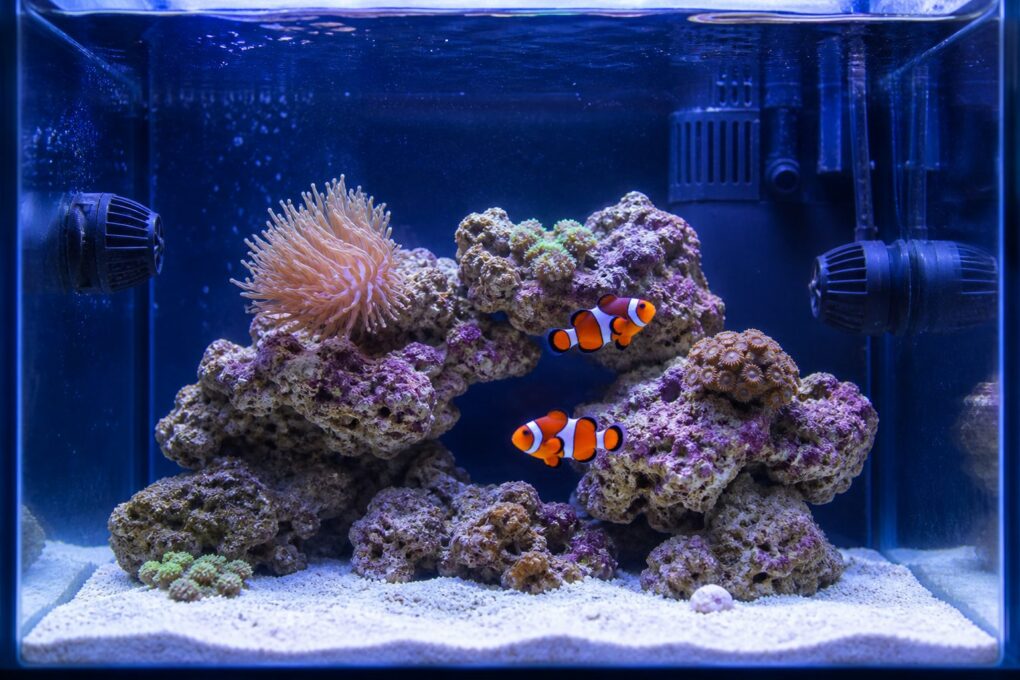
A pair of clownfish can live well in a modest marine system, but only if the basics are stable from day one. Good reef tank planning starts with tank size, filtration, rock layout, and a realistic stocking plan.
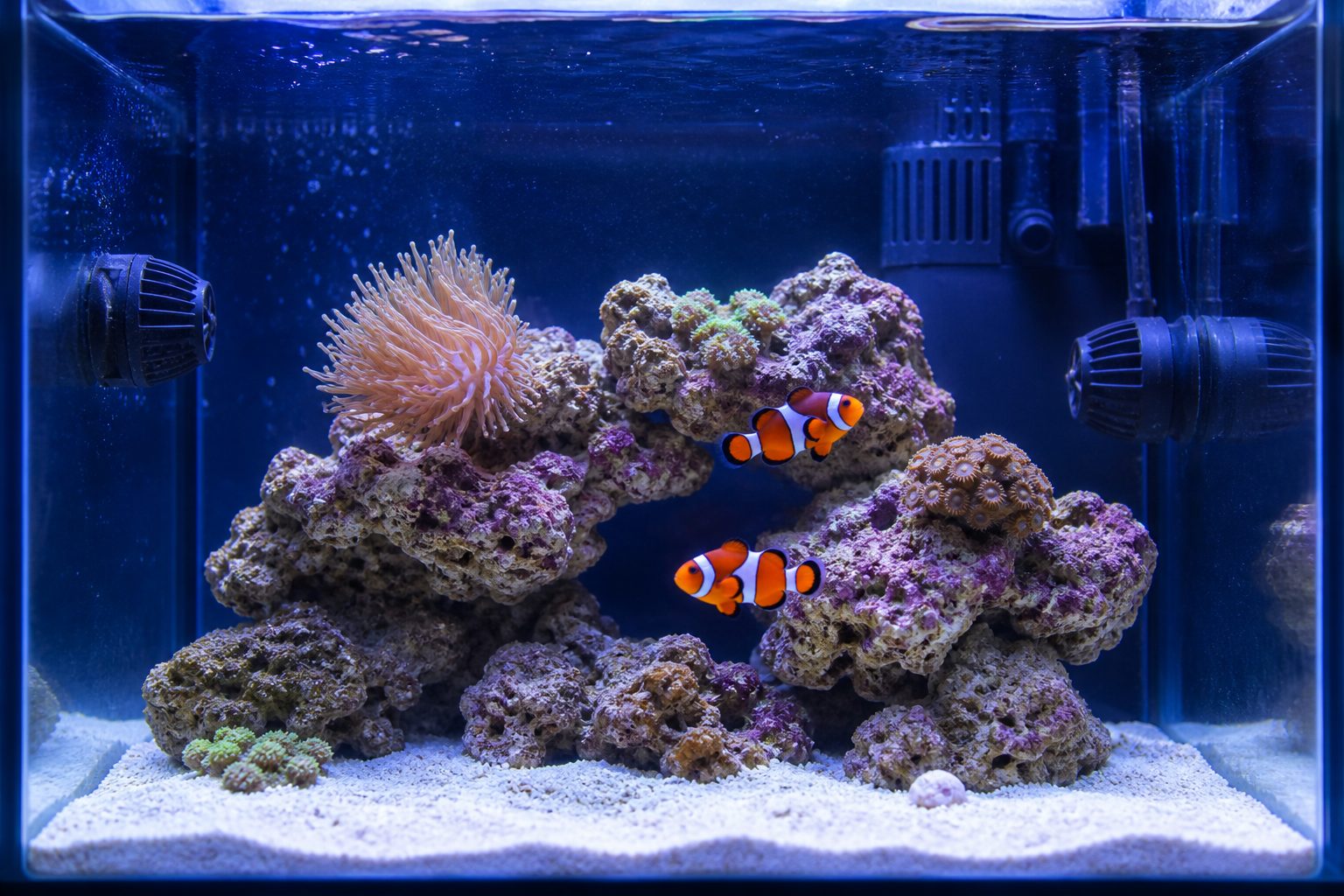
That matters because clownfish are hardy compared with many marine fish, not immune to bad setup. Our main clownfish guide covers the fish itself.
This page focuses on building the tank correctly.
If you want a wider beginner view first, our list of beginner saltwater fish explains why clownfish stay a common entry point. They are still saltwater fish, so stable equipment and patience matter more than personality.
Why Does Tank Size Matter More Than The Fish Label?
Clownfish stay small, but the tank still has to hold filtration, rock, flow, and territory. A cramped system gets harder to stabilize and leaves little room for the fish to settle once you add hiding spaces and cleanup crew.
Remember it later
Planning to try this recipe soon? Save it for a quick find later!
A beginner pair usually fits best in a tank of about 20 to 30 gallons or more, depending on the rest of the plan. Larger tanks give you better stability and more stocking flexibility later.
If you are building a broader marine system, our reef tank setup guide covers the bigger-picture foundation. This clownfish guide keeps the scope tighter around a manageable first pair.
- Better stability: extra water volume gives you more room for minor mistakes and slower chemistry swings
- Better territory: a bonded pair can settle near one host area without dominating the whole tank
- Better growth path: a roomier system leaves space for careful tank mates later if you want them
- Better maintenance: equipment placement and rockwork are easier when the tank is not cramped
What Equipment Do You Actually Need?
You need a cycled saltwater tank, dependable filtration, heater control, flow, lighting that matches your livestock plan, and a refractometer or other reliable salinity check. Skip the idea that clownfish are so tough they can live in a half-finished marine system.
Rockwork matters as much as the equipment list. Clownfish use structure for security, and the system uses that same rock as part of the biological filter.
| Area | Practical Baseline | Why It Matters |
|---|---|---|
| Tank size | 20-30 gallons or more | Improves stability and leaves room for structure |
| Salinity | Stable marine range | Sudden swings stress marine fish fast |
| Rockwork | Enough for cover and territory | Supports security and biological filtration |
| Flow | Moderate, not blasting one corner | Keeps oxygen and waste movement balanced |
If you want the pair to join a community later, plan that now instead of squeezing fish in afterward. Our clownfish tank mate guide shows which species stay easier to manage.
How Should You Build The Rockwork And Territory?
Give the tank at least one clear anchor zone where the pair can claim space. That area may hold coral, rock, or a future host substitute.
It should not force the fish to live in open water with no cover.
Leave swimming lanes around the rock instead of stacking a wall from glass to glass. Clownfish stay more confident when they can duck into cover and still patrol a small visible territory.
If you are planning later companions, think about species that use different zones. Fish such as a firefish goby or royal gramma usually fit more cleanly than another territorial centerpiece fish.
- Keep cover: use rock that creates shelter without sealing off all flow
- Keep lanes: leave swimming space around the front and upper portions of the tank
- Keep territory: let the clownfish pair claim one zone rather than every inch of the tank
- Keep options: build with later maintenance and coral access in mind
An anemone is not required for a beginner clownfish setup. If you do want one later, read our clownfish hosting guide first and wait until the tank is mature enough to support it.
How Do You Set Up A Clownfish Tank Step By Step?
Build the system in a calm sequence and do not rush the biological side. The fish come after the tank proves it can stay stable, not before.
Which Beginner Mistakes Cause Trouble Fast?
The fastest mistakes are undersized tanks, rushed cycling, and overstocking because clownfish look hardy. Hardy fish still suffer when salinity swings, the biofilter is immature, or the tank becomes a territorial traffic jam.
Another mistake is assuming a clownfish pair needs an anemone immediately. That often pushes beginners into adding delicate livestock before the tank is ready to support it well.
How Do You Maintain And Stock The Tank Carefully?
Keep the routine simple: stable salinity, steady feeding, regular testing, and planned water changes. If you add companions later, choose peaceful species that use different zones and do not rush the order.
That slower pace gives the pair time to establish territory without turning the tank aggressive. It also makes it easier to spot whether a new addition changes behavior, appetite, or confidence.
A clownfish setup stays beginner-friendly when you protect the routine from your own impatience. The fish do not need a flashy system.
They need a stable one.