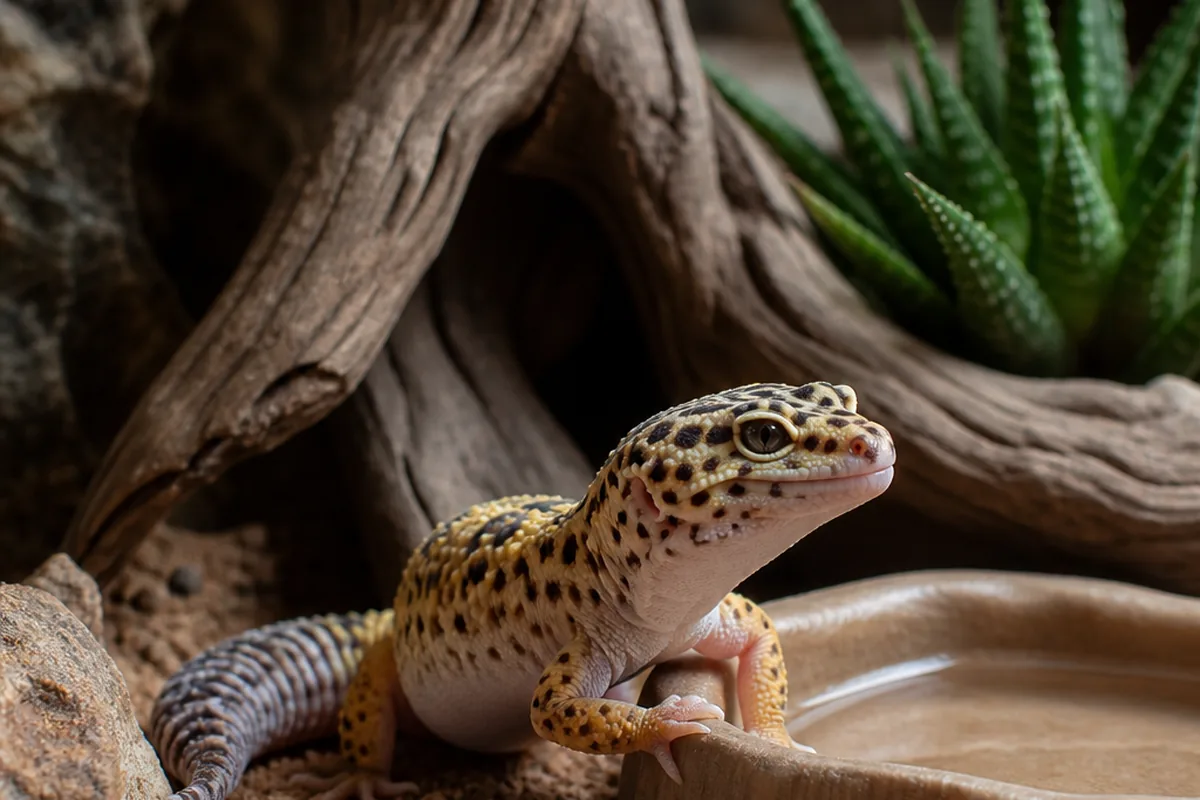
Best Substrate for Leopard Geckos: Safety First, Aesthetics Second
Picking the best substrate for a leopard gecko enclosure means choosing impaction safety above everything else. Loose particle substrates cause fatal digestive blockages when swallowed, and leopard geckos routinely ingest substrate while striking at prey.
Before setting up your leopard gecko enclosure, understand what the animal will eat by accident.
The debate over sand is largely settled among experienced keepers. Even "natural" sands cause impactions in animals kept on incorrect temps, stressed animals, and juveniles.
Stick to solid surfaces until the animal is at least 8 inches long.
| Substrate | Impaction Risk | Humidity Retention | Heat Conduction | Ease of Cleaning | Cost |
|---|---|---|---|---|---|
| Ceramic tile | None | Low | Excellent | Very easy | $0.50-$1/sq ft |
| Paper towel | None | None | Good | Replace daily | Near zero |
| Reptile carpet | Low (nail snag risk) | Low | Good | Machine washable | $10-$20 |
| Excavator clay | None when hardened | Moderate | Good | Spot clean | $15-$25 |
| Bioactive mix (adults) | Low if temp is correct | High | Moderate | Self-cleaning | $30-$60 |
| Fine sand | High | None | Poor | Difficult | $5-$15 |
| Walnut shell | Very high | None | Poor | Difficult | $10-$20 |
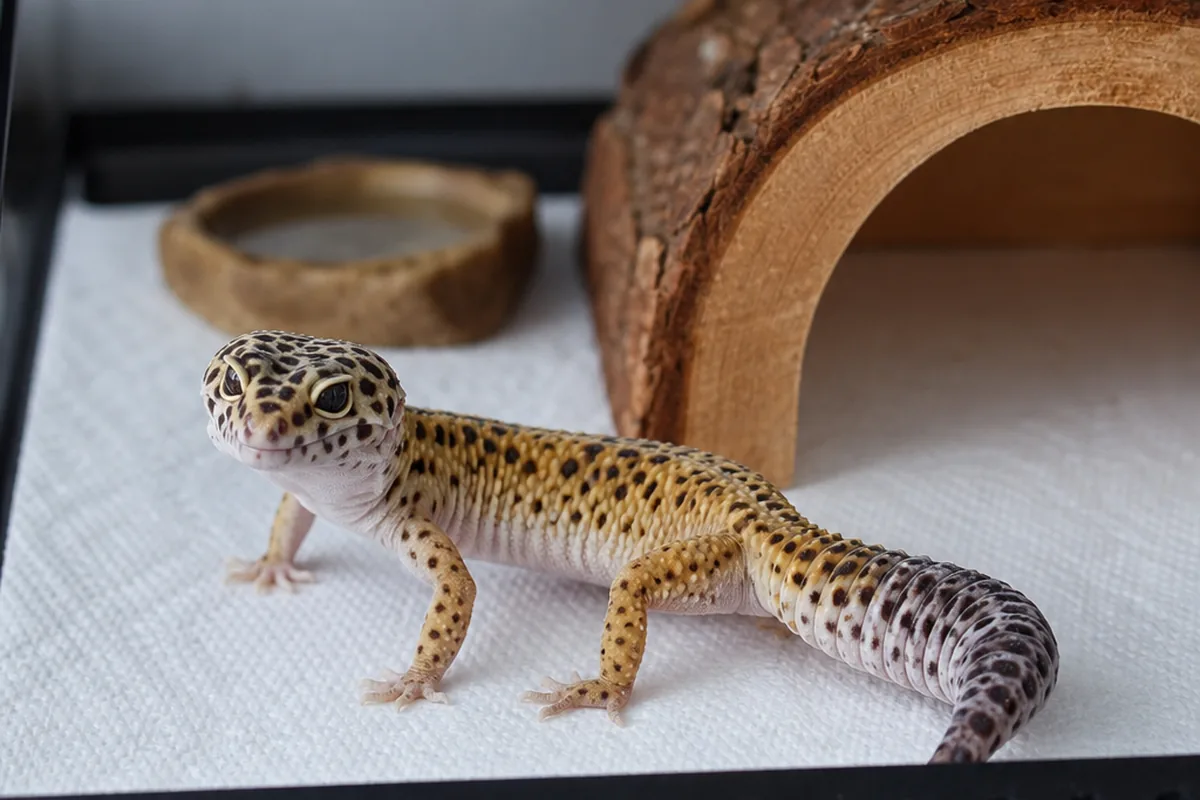
Ceramic Tile: Best Overall Substrate for Leopard Geckos
Ceramic tile is our top substrate pick because it conducts heat from the under-tank heater evenly across the warm side floor.
A warm floor surface of 88-92°F is easier to maintain with tile than with any loose substrate because tile does not act as insulation between the UTH and the animal.
For complete heating setup details, see the full leopard gecko tank setup guide.
Natural slate or terracotta-toned ceramic tiles from any hardware store work perfectly. Cut them to fit at the store for free, or buy pre-cut tiles in 12x12 inch squares.
- Heat conduction: Excellent direct transfer from UTH to animal's belly
- Cleaning: Wipe with diluted F10 or white vinegar, rinse, done in 2 minutes
- Nail wear: Textured tile naturally files nails, reducing trim frequency
- Cost: $0.50-$1 per square foot at any hardware store
- Lifespan: Indefinite with regular cleaning
Pros
- Zero impaction risk
- Excellent UTH heat conduction
- Files nails naturally
- Easy to sanitize
- Indefinite lifespan
- Inexpensive from hardware stores
Cons
- Heavy to move when cleaning
- Cold until UTH warms it
- No burrowing ability for the gecko
- Less natural appearance
Paper Towel: Best Substrate for Juveniles and Quarantine
Paper towel is not a permanent solution, but it is the best substrate for any leopard gecko under 6 months old and for any new animal in quarantine. It makes waste and parasites immediately visible, which is critical when monitoring a new gecko's health.
Replace the top layer daily and do a full swap every 3-4 days. Paper towel still conducts UTH heat reasonably well because it is thin, though it performs below tile in heat transfer efficiency.
Reptile Carpet: Decent Option With One Catch
Reptile carpet is machine washable, reusable, and zero impaction risk. The single problem is nail snag: a gecko's claw catches in the carpet loops and can be torn out if the animal panics.
Buy two pieces so one is always clean while the other dries.
Zoo Med Repti Carpet and Zilla Terrarium Liner are the two most common brands. Both work adequately, but neither conducts UTH heat as well as tile due to the air gaps in the fiber weave.
Excavator Clay: Best for Keepers Who Want a Natural Look
Exo Terra Excavator Clay packs into burrows and hardens when dry, giving leopard geckos the ability to dig their own hides. It holds zero impaction risk once hardened and conducts UTH heat moderately well.
The setup process requires dampening, sculpting, and a 48-72 hour drying period before adding any animal. Spot-clean waste areas by scraping and replacing the soiled section.
Substrates to Avoid for Leopard Geckos
Several popular-looking substrates are truly dangerous. The combination of an incorrectly heated enclosure and a loose particle substrate is the most common cause of impaction death in captive leopard geckos.
This risk shows up differently across geckos. Arboreal species covered in our crested gecko care guide spend less time on the floor, but feeding and cleanup still make substrate choice matter.
Heavier-bodied species like the tokay gecko and gargoyle gecko still benefit from avoiding loose, easily swallowed particles.
- Fine sand: Ingested during feeding, absorbs digestive moisture, forms compacted masses
- Calci-sand: Marketed as digestible, but the calcium carbonate still forms hard masses in cool animals
- Walnut shell: Sharp edges cause internal lacerations before causing impaction
- Cedar or pine shavings: Phenol oils are toxic to reptiles through skin contact and inhalation
- Gravel: Too large to compact but causes gut obstruction if swallowed
Bioactive Setups for Adult Leopard Geckos
A bioactive substrate for leopard geckos uses a mix of organic topsoil, play sand, and coarse perlite in roughly a 60:30:10 ratio. Isopods and springtails process waste and maintain the ecosystem.
This only works for adult animals kept at correct temperatures.
Bioactive setups take 4-6 weeks to establish microfauna populations before they self-maintain. They are the most naturalistic option but require the most setup knowledge to get right the first time.
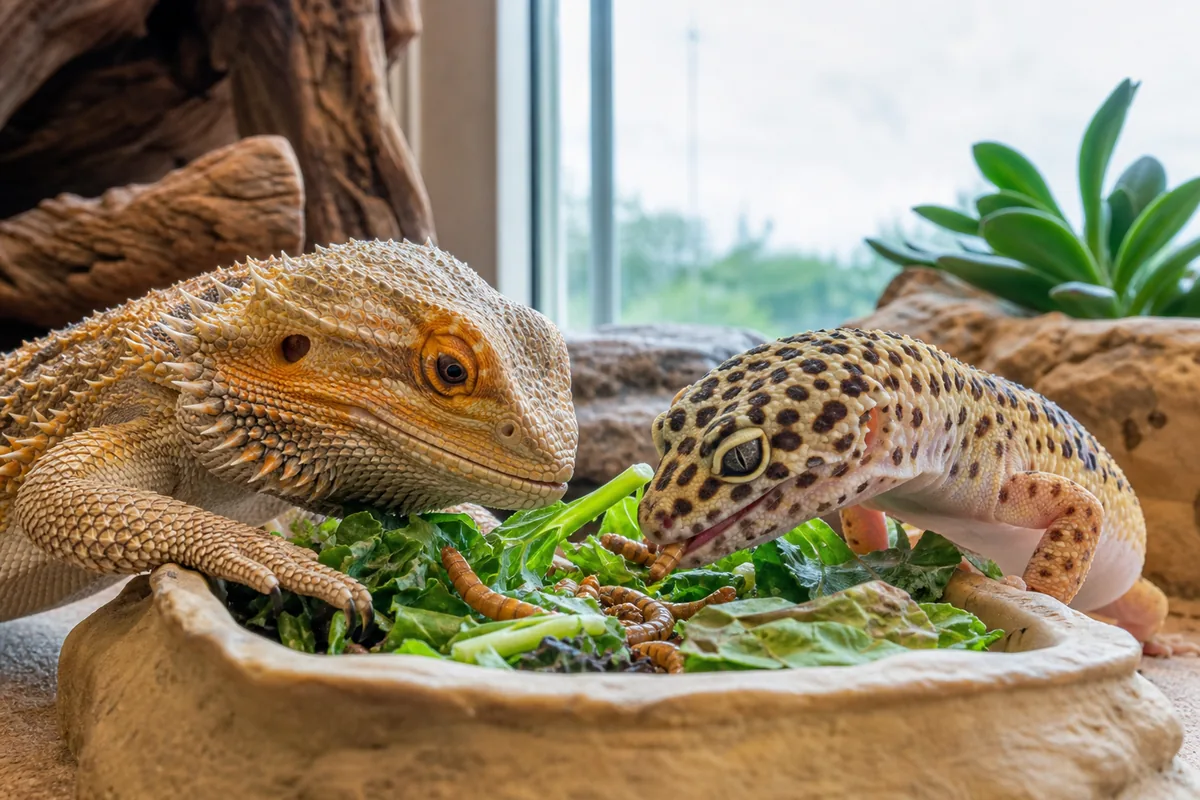
Keepers weighing overall care complexity between common beginner lizards may find the bearded dragon vs leopard gecko comparison useful, because substrate safety is one of the clearest differences between the two.
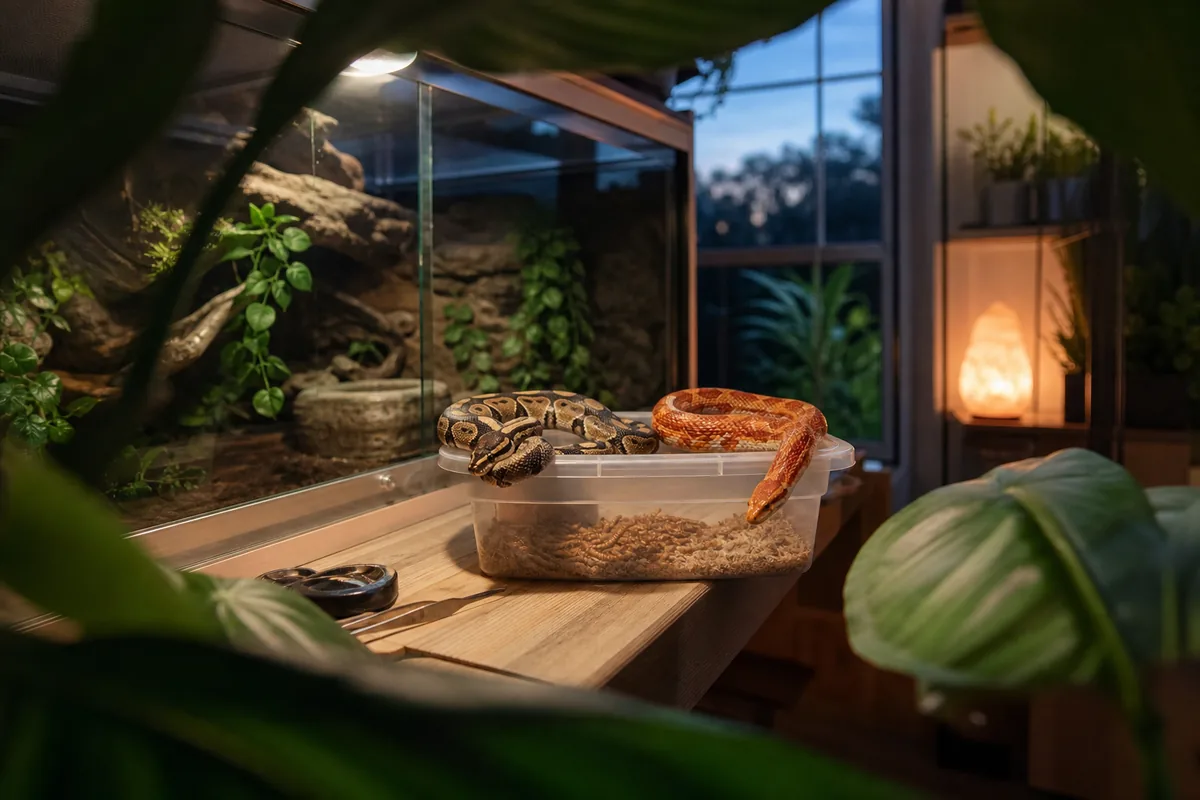
If you later move into species that need more humidity, the ball python care guide and corn snake care guide show why some snakes can use moisture-retaining loose substrates without the same impaction profile.
- Pick the safest baselineStart with a solid, impaction-safe substrate before worrying about aesthetics.
- Match it to heat and ageUse tile or paper towel for juveniles, quarantine setups, and any enclosure where belly heat matters most.
- Install and testSet the substrate in place, check heat transfer on the warm side, and confirm cleanup takes only a few minutes.
- Monitor and adjustWatch waste, humidity, and shed quality for the first two weeks before committing long term.
Sources and references
- Gastrointestinal foreign body impaction in captive reptilesof Veterinary Diagnostic Investigation, 2018
- Eublepharis macularius captive husbandry reviewReptiles Magazine / Reptiles & Amphibians Journal, 2021
- Substrate Safety Assessment for Gecko SpeciesAssociation of Reptilian and Amphibian Veterinarians, 2019