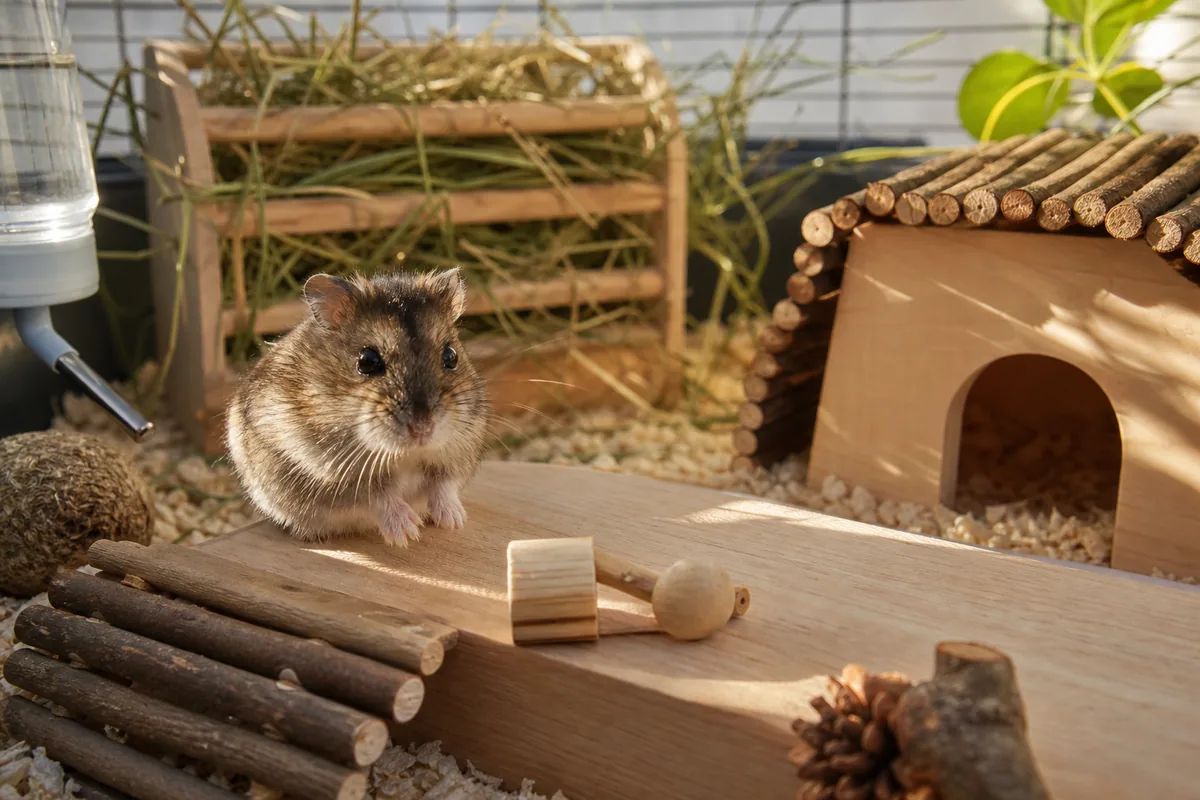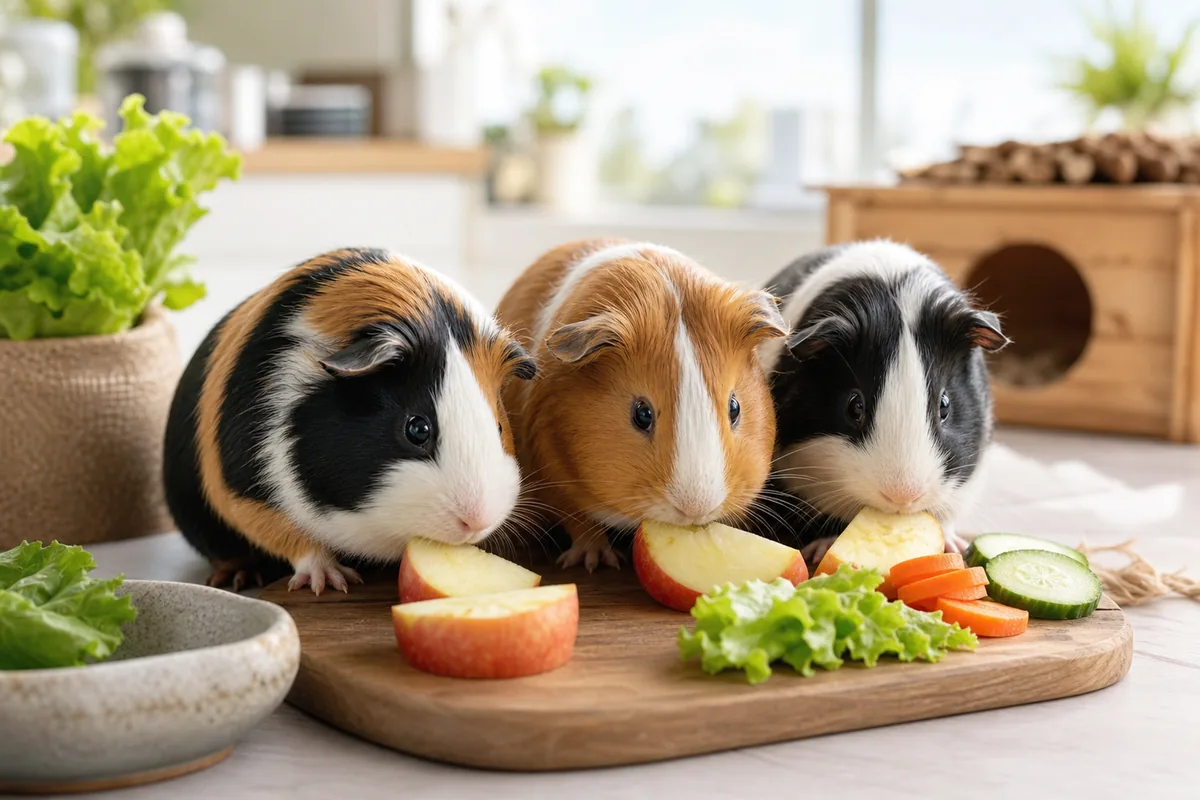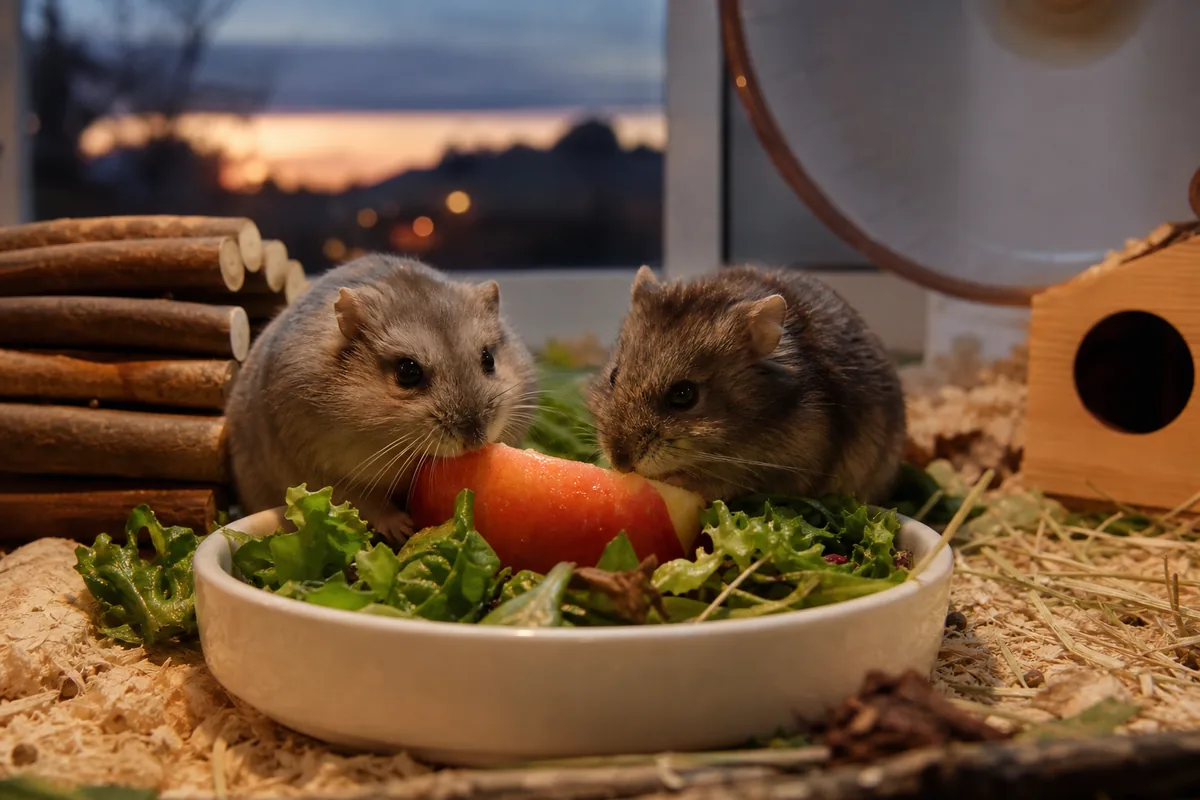
Apple is one of the most commonly offered hamster treats, and with the seed caveat handled, it earns its place in a varied small mammal diet. The flesh is firm enough to support chewing, low enough in acid to avoid digestive upset, and popular with nearly every hamster breed.
The skin contains most of the quercetin, an antioxidant linked to anti-inflammatory effects in small rodents. Leaving the skin on after thorough washing delivers more nutritional value than peeling.
Rabbits face the same apple seed warning. If you also keep rabbits, our guide on rabbits and apples covers the same seed removal rule with species-specific portion guidance.
Apple for Hamsters
- Apple flesh and skin (washed thoroughly)Safe
- Seeds and core (amygdalin content)Unsafe
- apple leaves and stems in large quantitiesUnsafe
Prep: Wash thoroughly, remove all seeds and core, cut to thumbnail-sized piece with skin on Freq: 2-3 times per week Amount: One thumbnail-sized piece (approximately 3-5g) per serving
Apple Nutrition: 10g Sugar and Useful Antioxidants Per 100g
Raw apple flesh contains 10g of sugar per 100g, primarily fructose. That places it between carrots (4.7g) and grapes (16g) on the sugar scale, making it a moderate-frequency treat suitable for most hamster breeds.
The antioxidant profile makes apple truly useful rather than just palatable. Quercetin and catechins are concentrated in the skin and have been shown to support immune function in rodent models.
- Sugar: 10g per 100g, primarily fructose, moderate risk for obesity with overfeeding
- Fiber: 2.4g per 100g, supports gut motility and cecotrope production
- Vitamin C: 4.6mg per 100g, modest immune support
- Quercetin: concentrated in skin, anti-inflammatory antioxidant
- Water: 85.6g per 100g, contributes to hydration alongside the water bottle
The high water content means apple also provides a mild hydration boost, which is useful in warm environments. It does not replace a clean water source, but it adds to daily fluid intake.
For a lower-sugar fruit treat to use on alternate days, blueberries for hamsters match apple's sugar level and add a stronger antioxidant punch through anthocyanins.
Why Apple Seeds Are Never Safe
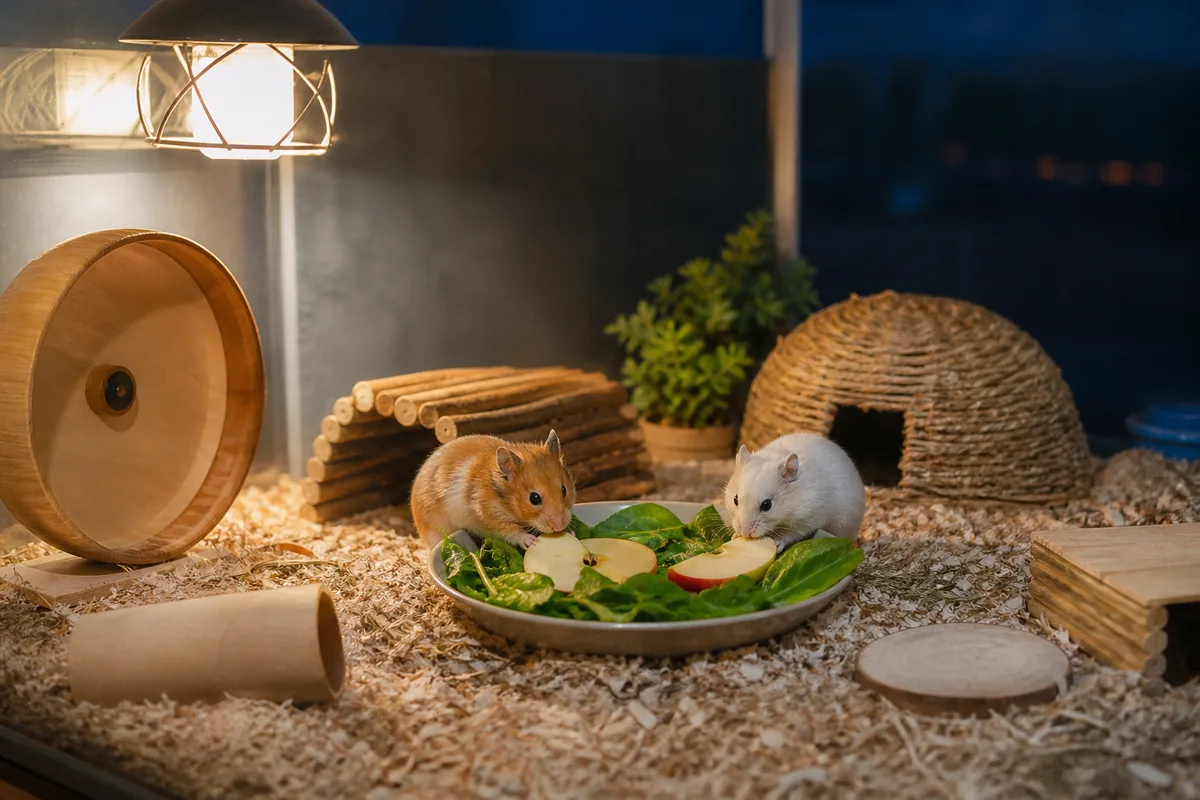
Apple seeds contain amygdalin, a cyanogenic glycoside that releases hydrogen cyanide when chewed and digested. In humans, the amount in a few seeds is trivial.
In a 100g hamster, it is not.
A single apple seed can contain 1-4mg of amygdalin. The lethal dose of hydrogen cyanide for a small rodent is estimated at 1-3mg per kilogram of body weight.
Even partial seed consumption represents a meaningful exposure relative to the hamster's size.
Guinea pigs face the same apple seed risk. Our guinea pig care guide explains why seed removal is equally non-negotiable in that species.
Skin: Worth Keeping On
Many owners peel apples for their hamsters under the assumption that the skin is harder to digest. The opposite is closer to the truth for small rodents.
The skin fiber supports digestion, and the antioxidant concentration in the skin exceeds that in the flesh by a significant margin.
The only reason to peel is pesticide residue, and washing addresses that. Scrub the apple under running water for 30 seconds before cutting.
For organic apples, washing alone is sufficient. For conventionally grown apples, a brief scrub with a produce brush removes the majority of surface residues.
Chinchillas are another small mammal where fruit portion control is critical. Our chinchilla care guide covers how even safe fruits must be limited for animals with sensitive digestive systems.
Portion and Frequency by Breed
| Breed | Body Weight | Piece Size | Max Frequency |
|---|---|---|---|
| Syrian | 100-150g | Thumbnail-sized piece | 2-3 times weekly |
| Campbell's Dwarf | 40-70g | Half thumbnail | Twice weekly |
| Winter White | 30-45g | Half thumbnail | Twice weekly |
| Roborovski | 20-25g | Quarter thumbnail | Once weekly |
| Chinese Hamster | 50-75g | Half thumbnail | Twice weekly |
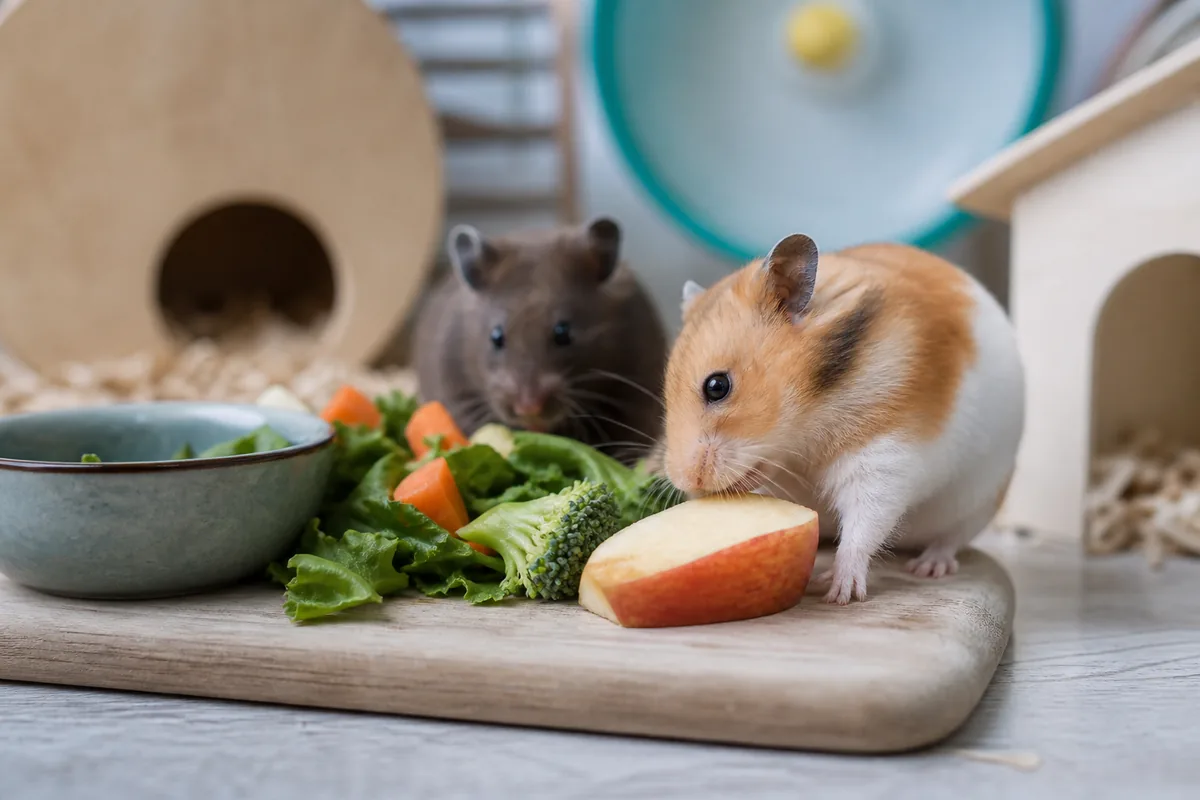
Roborovski hamsters are the smallest breed, and their entire body weight is roughly the same as a large grape. Even a thumbnail-sized apple piece represents a significant portion of their daily caloric intake, so the reduced frequency shown above is not overly conservative.
For a complete picture of how to structure hamster treat days across the week, our full hamster care guide covers diet planning with multiple treat categories.
How to Prepare Apple for Hamsters
Apple flesh browns quickly after cutting due to oxidation. Browning does not make the apple toxic, but it signals cell breakdown and mild flavor change.
Serve freshly cut pieces and remove them before significant browning occurs.
To understand how a lower-sugar vegetable treat fits alongside apple in a weekly rotation, see our full breakdown of carrots for hamsters and the dental benefits raw vegetables provide.
Signs of Too Much Apple
Apple is safe, but the sugar and water content together can cause digestive disruption if portions are too large or frequency too high.
- Soft or watery stool: excess fructose and water content, reduce portion or frequency
- Wet fur around tail: indicates diarrhea, stop fruit treats and monitor for 24 hours
- Pellet refusal: sweet treat is displacing balanced food, offer apple after regular feeding
- Weight gain: visible abdominal rounding with regular oversized apple portions
A single episode of soft stool after a new food introduction is common and usually resolves within 24 hours. Persistent loose stool lasting more than 48 hours, or any sign of wet tail, requires veterinary attention.
Banana at 12g of sugar per 100g is a higher-sugar treat that should not be paired with apple on the same day, and our guide on banana portions for hamsters covers the diabetes risk for dwarf breeds.
Grapes at 16g of sugar per 100g are the highest-sugar common fruit and should be kept entirely separate from apple days, as our piece on grape limits for hamsters explains.
Strawberries at 4.9g of sugar per 100g are a lower-sugar companion fruit for rotation days, and our guide on strawberry treat rules for hamsters covers the dwarf breed adjustments.
Watermelon pairs poorly with apple on the same day due to combined water load, and our piece on watermelon treats for hamsters explains why moisture-dense fruits need spacing.
Cheese is a safe protein treat to offer on non-fruit days, and our guide on cheese safety for hamsters covers the low-lactose varieties that are appropriate.
Plain bread is another occasional carbohydrate option, though it offers far less nutritional value than apple, which our piece on bread treats for hamsters covers with the sodium risk context.
Sources and references
- Amygdalin content and cyanogenic potential of apple seedsFood Chemistry, 2021
- Nutrient composition of raw apple with skinUSDA FoodData Central, 2023
- Quercetin and its health benefits in small animal modelsNutrients, 2020