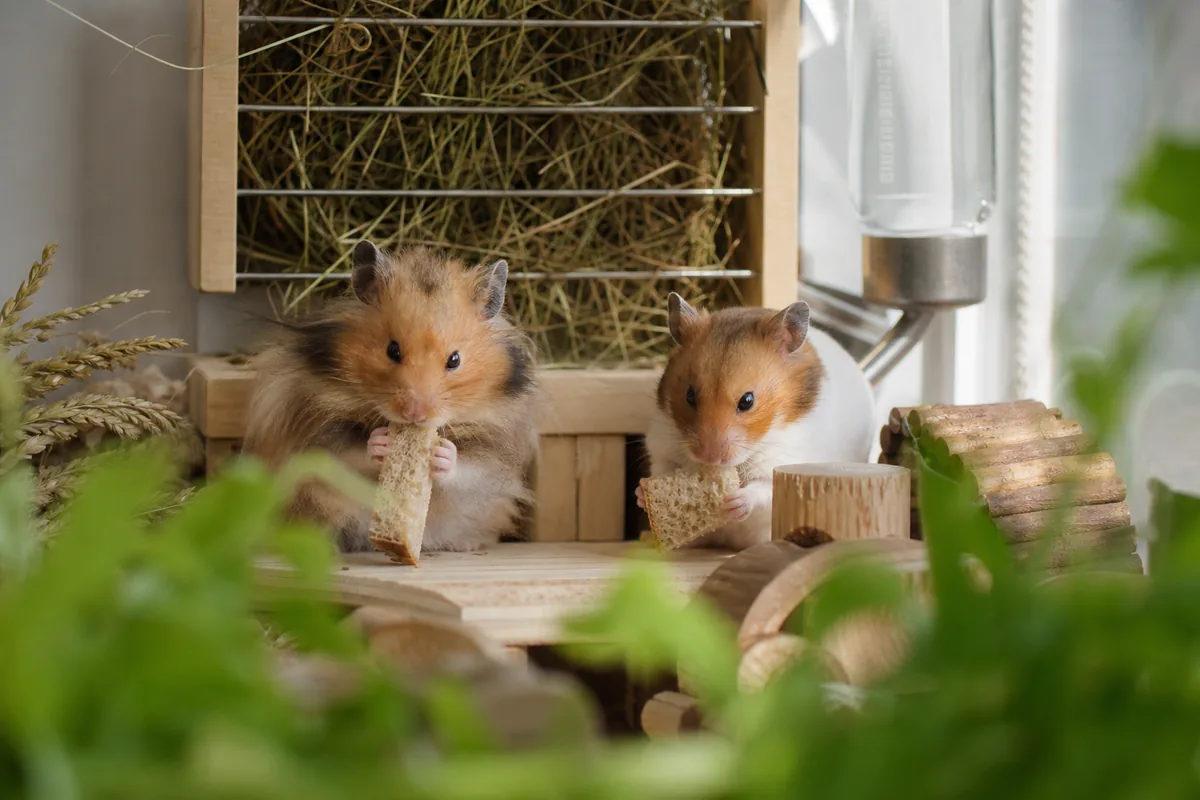
Bread is one of those foods that hamsters will eat enthusiastically without any indication it is doing them harm. In small mammal nutrition, that enthusiasm is not evidence of safety.
Hamsters are opportunistic foragers who will accept almost any calorie-dense food offered.
The concern with bread is not acute toxicity but poor nutritional return and the risk of displacing better foods. A hamster that fills up on bread is a hamster eating fewer seeds, proteins, and vegetables.
For a carbohydrate treat that offers far more nutritional return than bread, see our guide on carrots for hamsters, which delivers fiber and beta-carotene without sodium risk.
Bread for Hamsters
- Plain wholegrain or wholemeal breadSafe
- small dry pieceSafe
- Bread with garlicUnsafe
- onionUnsafe
- raisinsUnsafe
- seeds treated with xylitolUnsafe
- or heavily salted varietiesUnsafe
- raw dough (yeast hazard)Unsafe
Prep: Tear a pea-sized piece, let it dry slightly if fresh to reduce stickiness, no spreads or toppings Freq: Once a week at most Amount: Pea-sized piece only (approximately 1-2g)
Bread Nutrition: High Carbs, Low Value for Hamsters
White bread is roughly 49g carbohydrate per 100g, with most of that as rapidly digested starch. The glycemic response in a small animal is faster and more pronounced than in humans.
Wholegrain bread improves the profile marginally. Its higher fiber content (6-7g per 100g) slows starch digestion, but the overall caloric density remains high relative to the nutritional payoff for a 100g animal.
- White bread carbs: 49g per 100g, mostly fast-digesting starch, spikes blood sugar
- Wholegrain carbs: 41g per 100g with higher fiber, slower glucose release
- Sodium: 477-600mg per 100g in commercial bread, far above safe limits for hamsters
- Protein: 8-9g per 100g, present but incomplete amino acid profile
- Fat: low at 1-3g per 100g, not a fat concern but no beneficial fatty acids
The sodium figure is the most serious issue. At 477mg sodium per 100g, even a 2g piece of bread delivers roughly 9.5mg of sodium.
Hamster kidneys are not equipped to process excess sodium efficiently, and regular exposure contributes to kidney strain over time.
The same sodium risk applies to any pet rat that gets offered bread scraps. Our pet rat care guide covers why kidney-safe feeding matters for small rodents across species.
Why White Bread Is Worse Than Wholegrain
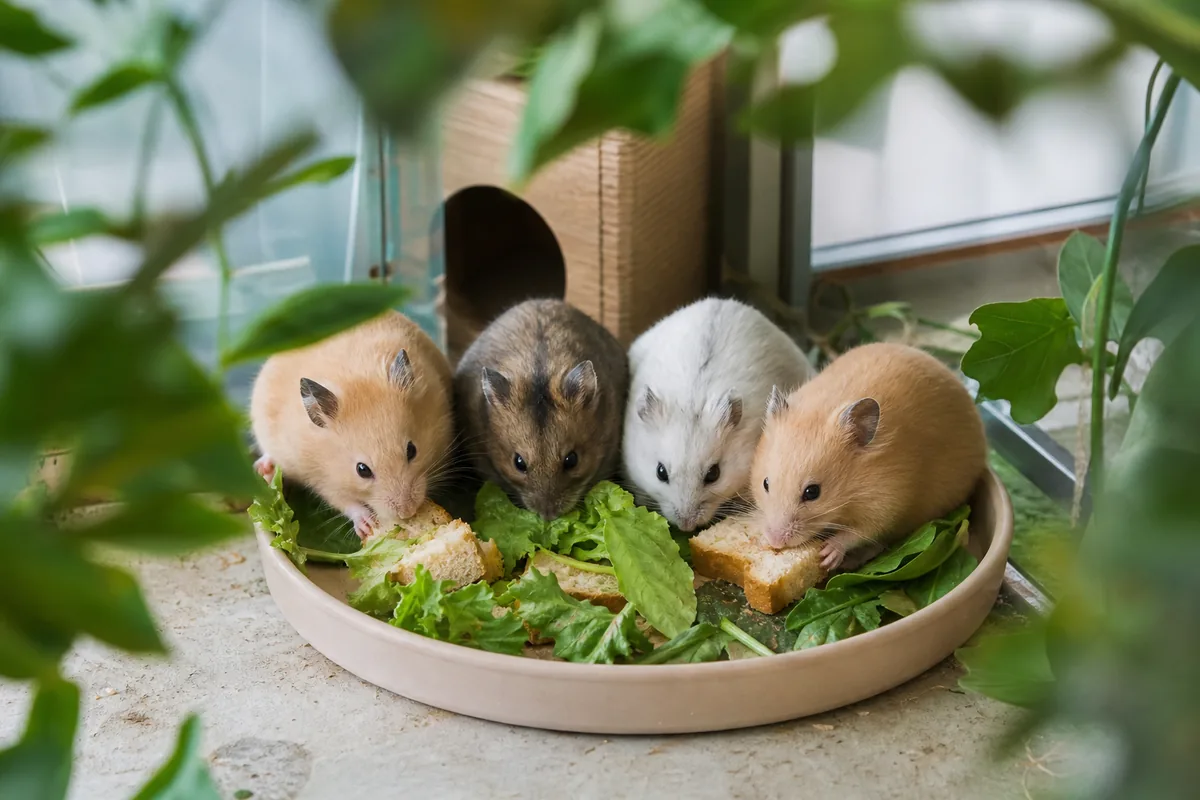
The processing that produces white bread strips out most of the bran and germ, leaving primarily starch. That starch converts to glucose rapidly after digestion, producing a blood sugar spike with no compensating fiber to slow it.
Wholegrain bread retains the bran layer, which contributes fiber and a modest amount of B vitamins. For a hamster, the difference is meaningful because fiber supports cecotrope production, the hindgut fermentation process through which hamsters recycle nutrients.
Strawberries are a far better source of natural sugars with genuine vitamin C value. Our article on strawberries for hamsters explains why they outperform carbohydrate treats on every metric.
Varieties to Avoid Entirely
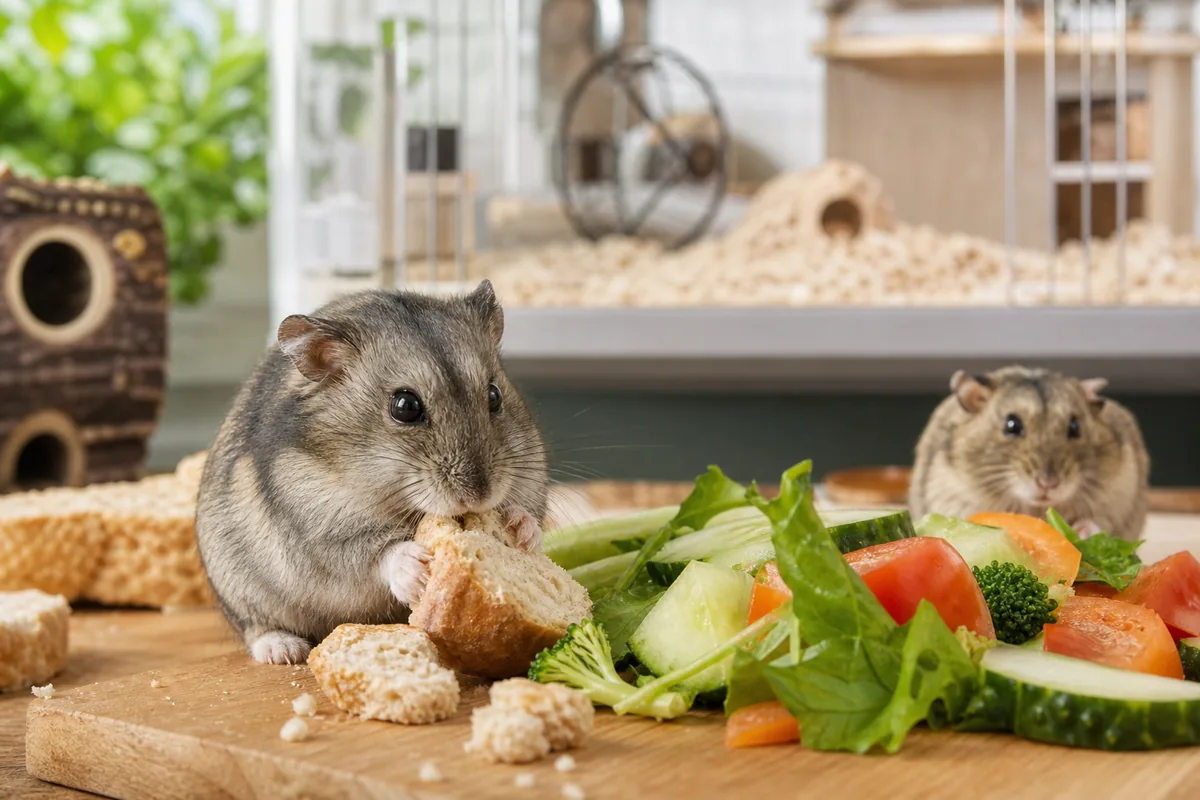
Most supermarket bread contains additives that are harmless to humans at normal serving sizes but reach hazardous concentrations at hamster-scale portions.
| Bread Type | Main Hazard | Verdict |
|---|---|---|
| Plain white bread | High sodium, fast starch | Caution, tiny piece only |
| Plain wholegrain | High sodium, better fiber | Caution, preferred option |
| Garlic bread | Garlic (toxic to rodents) | Never |
| Raisin bread | Raisins (concentrated sugar) | Never |
| Seeded bread with salt | Excess sodium | Avoid |
| Raw dough | Active yeast fermentation | Never |
| Sweet rolls / brioche | High sugar and fat | Never |
Garlic in any form is a firm hazard for hamsters. It contains organosulfur compounds that damage red blood cells and can cause hemolytic anemia with repeated exposure.
Even garlic-flavored bread carries enough residue to pose a risk.
Cheese poses a similar concern about additives.
Garlic and herb cheese spreads are as dangerous as garlic bread.
Read our guide on cheese safety for hamsters before offering any dairy products.
How to Offer Bread Safely
If you choose to offer bread, keep the preparation minimal. The goal is to remove the stickiness that can cause the piece to lodge in cheek pouches and to confirm the piece contains no hazardous additives.
Stickiness is a genuine concern specific to hamsters. Fresh bread can form a gluey mass that packs into cheek pouches and does not release cleanly.
Slightly dried bread crumbles rather than compressing, making it far safer for pouch storage.
Watermelon is another food where texture and moisture require careful management. See how we handle watermelon serving size for hamsters to understand how consistency affects hamster safety.
Better Carbohydrate Treats Than Bread
If you want to offer a carbohydrate-based treat, several options deliver more nutrition with less risk. These foods share the chewable, calorie-dense qualities hamsters enjoy without the sodium and additive load of commercial bread.
- Plain cooked brown rice: lower sodium, easier to digest, no additives
- Plain unseasoned pasta (cooked): firm texture, low sodium if cooked without salt
- Plain oats (dry rolled oats): excellent fiber, hamster-appropriate portion is 3-4 oat flakes
- Small piece of plain rice cake: low sodium alternative with similar chew satisfaction
Dry rolled oats are arguably the best carbohydrate treat for hamsters. They require chewing effort, deliver soluble fiber, and contain no salt or additives in their plain form.
A pinch of 3-4 oat flakes two to three times per week is far superior to bread.
For owners deciding between a small rodent and a larger small mammal, our comparison of best small pets for kids explains how dietary simplicity factors into choosing the right animal.
Banana at 12g of sugar per 100g is another high-sugar treat that shares bread's blood sugar risk, and our piece on banana portions for hamsters covers why dwarf breeds need even stricter limits.
Grapes at 16g of sugar per 100g are the highest-sugar common treat and should never be paired with bread on the same day, as our guide on grape treat limits for hamsters covers.
Apple at 10g of sugar per 100g is a better-balanced treat to offer in place of bread on treat days, and our piece on apple treats for hamsters covers seed removal and portion sizes.
Blueberries deliver antioxidant value with less sugar disruption than bread, and our guide on blueberries for hamsters covers the natural portion sizing that makes them convenient.
Guinea pigs have very different carbohydrate tolerances from hamsters, which our guide on guinea pig care covers for keepers who own both species.
Sources and references
- Nutrient content of white and wholegrain breadUSDA FoodData Central, 2023
- Cheek pouch impaction in hamsters: causes and managementVeterinary Clinics of North America: Exotic Animal Practice, 2020
- Sodium toxicity and renal function in small rodentsof Small Animal Practice, 2019