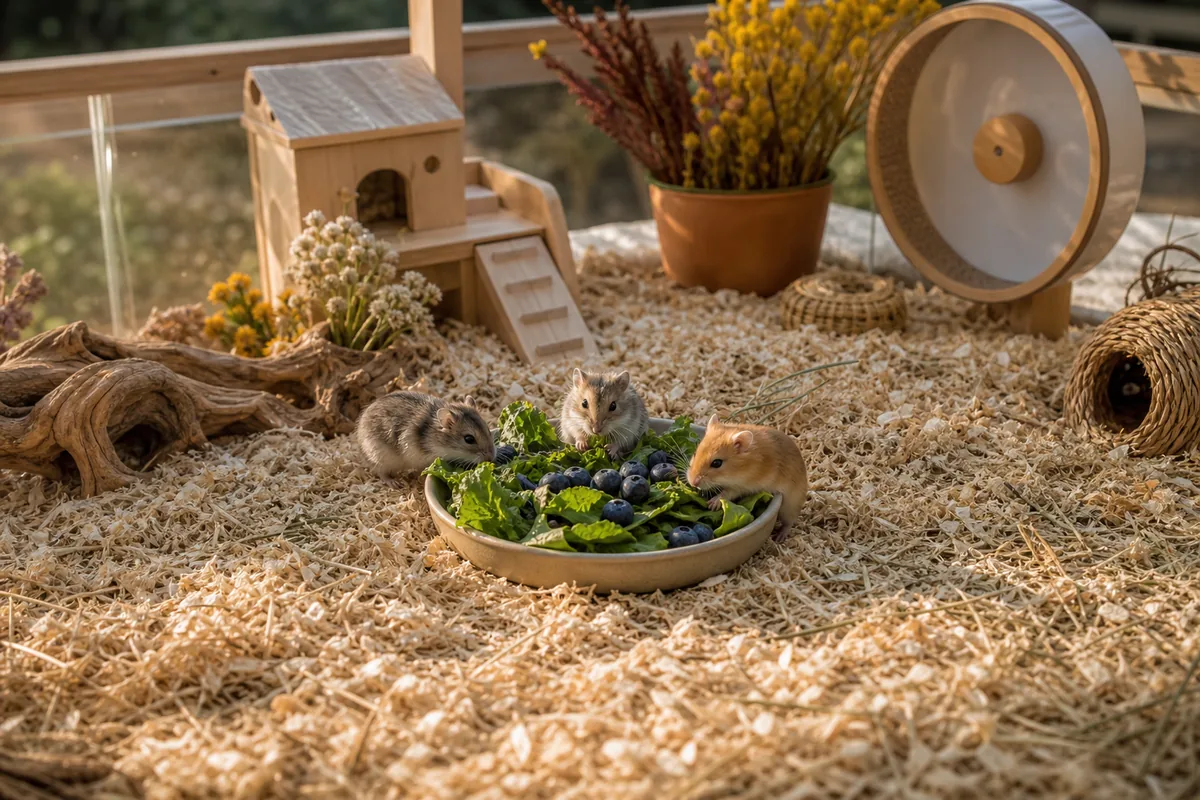
Blueberries earn their reputation as a superfood in hamster treat circles too. Their small mammal nutrition profile is truly strong: moderate sugar, high antioxidant density, and a size that makes portioning easy without cutting.
One whole small blueberry weighs approximately 2-3g, which falls neatly within the safe treat range for Syrian hamsters. The built-in portion sizing makes blueberries one of the most convenient fruit treats to offer correctly.
For a broader view of how antioxidant-rich treats fit into hamster care, our full hamster care guide explains how to build a treat rotation that supports long-term health.
Blueberries for Hamsters
- Whole fresh blueberry flesh and skinSafe
- No toxic components identifiedUnsafe
- avoid dried blueberries (concentrated sugar) and blueberry products with added sugar or preservativesUnsafe
Prep: Wash thoroughly, serve whole for Syrians or halved for dwarf breeds Freq: 2-3 times per week Amount: 1 small blueberry or half a large blueberry per serving (approximately 2-3g)
Blueberry Nutrition: 10g Sugar and High Anthocyanin Density
Fresh blueberries contain 10g of sugar per 100g, primarily fructose and glucose. That places them at the same level as apple and well below grapes (16g), making them appropriate for regular treat rotation.
The distinguishing nutritional feature is their anthocyanin content, the blue-purple pigment compounds that act as potent antioxidants. Research in rodent models shows anthocyanins reduce oxidative stress markers and support cognitive function.
- Anthocyanins: 163-487mg per 100g depending on variety, highest of common hamster fruits
- Vitamin C: 9.7mg per 100g, meaningful immune support per small serving
- Vitamin K: 19.3mcg per 100g, supports blood clotting and bone density
- Fiber: 2.4g per 100g, supports gut motility and cecotrope production
- Sugar: 10g per 100g, moderate, suitable for 2-3 times weekly rotation
Wild blueberries contain roughly twice the anthocyanin concentration of cultivated varieties. If wild or frozen wild blueberries are available, they represent a superior nutritional choice, though the serving size and frequency remain the same.
Guinea pigs also benefit from blueberries. Our article on blueberries for guinea pigs shows how the same treat is portioned for a larger small mammal with different dietary needs.
Anthocyanins and Why They Matter for Small Rodents
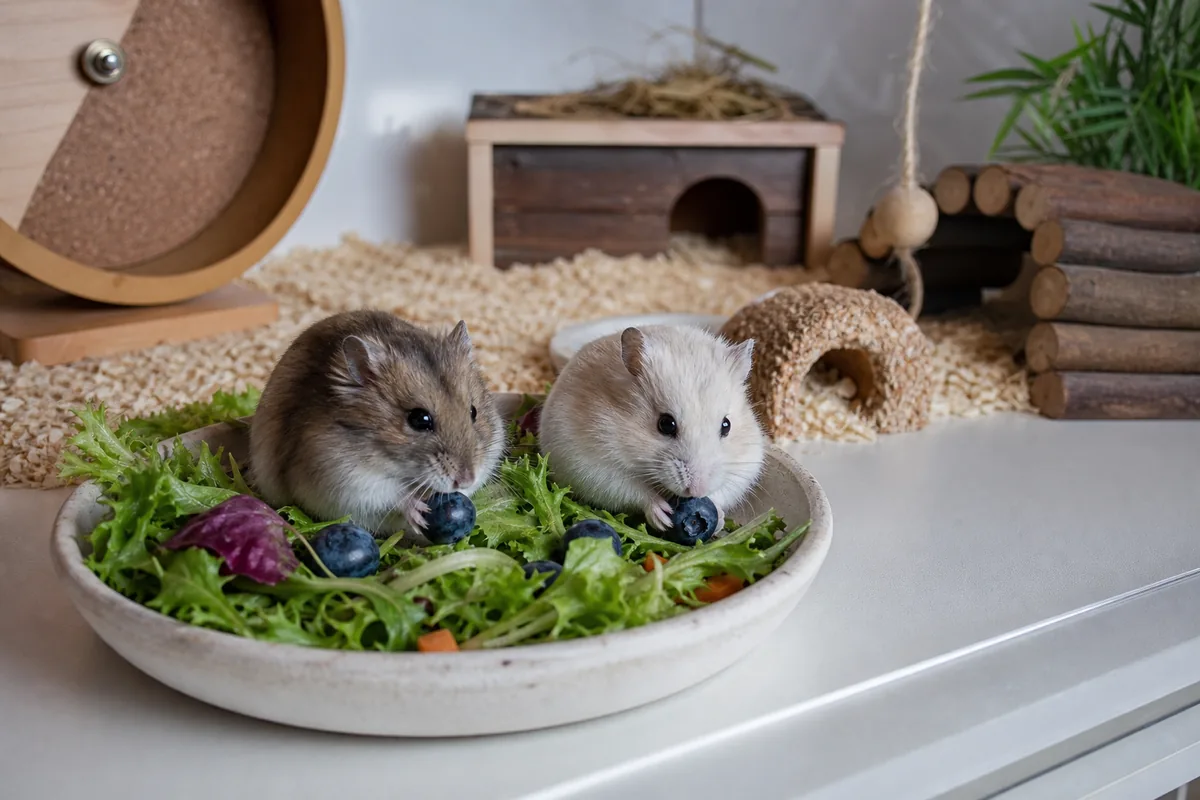
Anthocyanins are water-soluble flavonoids that give blueberries their characteristic deep blue color. In small rodent studies, regular anthocyanin intake correlates with reduced inflammatory markers and improved spatial memory performance.
For a pet hamster, the practical benefit is immune support and antioxidant protection against cellular damage from normal metabolic processes. Hamsters have short lifespans (2-3 years for Syrians), and antioxidant-rich foods may support quality of life during their senior period, typically from 18 months onward.
Strawberries offer a different antioxidant profile that complements blueberries. Our guide on strawberries for hamsters explains why rotating both berries provides broader antioxidant coverage than relying on either alone.
Portion Guide by Breed
| Breed | Body Weight | Serving Size | Frequency |
|---|---|---|---|
| Syrian | 100-150g | 1 whole small blueberry | 2-3 times weekly |
| Campbell's Dwarf | 40-70g | Half a blueberry | Twice weekly |
| Winter White | 30-45g | Half a blueberry | Twice weekly |
| Roborovski | 20-25g | Quarter blueberry | Once to twice weekly |
| Chinese Hamster | 50-75g | Half a blueberry | Twice weekly |
For dwarf breeds, slicing the blueberry in half also helps confirm there are no overripe soft spots in the center. Overripe blueberries that are very soft and beginning to ferment should be discarded rather than served.
Grapes sit at 16g sugar per 100g, nearly double blueberries. Our guide on grapes for hamsters helps clarify when each treat is the better choice based on weekly sugar totals.
How to Prepare Blueberries for Hamsters
Fresh blueberries can stain cage bedding and the hamster's fur a deep blue-purple color. This is harmless and comes from the anthocyanin pigments.
If you notice blue staining around the mouth or paws, it is cosmetic and resolves naturally during the hamster's grooming routine.
Bananas are another popular treat. Our banana guide for hamsters covers the high sugar content that limits how often banana can be offered alongside blueberry rotation days.
Signs of Too Many Blueberries
Blueberries are safe, but frequency and portion discipline still matter. Overfeeding any single fruit shifts the diet away from the balanced pellet base that provides complete nutrition.
- Soft stool or diarrhea: excess fructose or fiber intake, reduce frequency
- Blue-stained loose droppings: high anthocyanin output in stool is normal but signals high intake
- Pellet refusal: the hamster is filling up on sweet treats instead of balanced food
- Weight gain: unlikely from blueberries alone but possible if combined with other frequent sweet treats
Pellet refusal is the most practical concern. If your hamster consistently leaves its food bowl after receiving blueberries, try offering the blueberry only after the hamster has eaten its regular meal, or reduce to once-weekly treats until normal eating patterns resume.
Apples are another fruit treat that requires moderation. Our apple guide for hamsters covers seed removal and the sugar management that applies when combining apple with blueberry in a weekly rotation.
Bread and grain treats can round out the rotation. Our bread safety guide for hamsters covers which types are appropriate and how to balance them against fruit treat days.
Watermelon is a hydrating option for warm months. Our watermelon guide for hamsters covers the moisture management needed when offering high-water-content treats alongside blueberries.
Cucumber is one of the lowest-sugar treat options. Our cucumber guide for hamsters covers why it is one of the safest daily options for diabetes-prone dwarf breeds when blueberry frequency needs to be reduced.
Cheese provides protein variety. Our cheese safety guide for hamsters covers the sodium limits that apply when adding cheese to a rotation that already includes fruit treats.
Carrots are a low-sugar vegetable that pairs well with blueberry rotation days. Our carrot guide for hamsters explains why carrots on non-blueberry days help balance the weekly treat schedule.
Sources and references
- Anthocyanin content of fresh, frozen, and dried blueberriesof Agricultural and Food Chemistry, 2020
- Blueberry anthocyanins and cognitive function in rodent modelsNutritional Neuroscience, 2019
- Nutrient composition of raw blueberriesUSDA FoodData Central, 2023