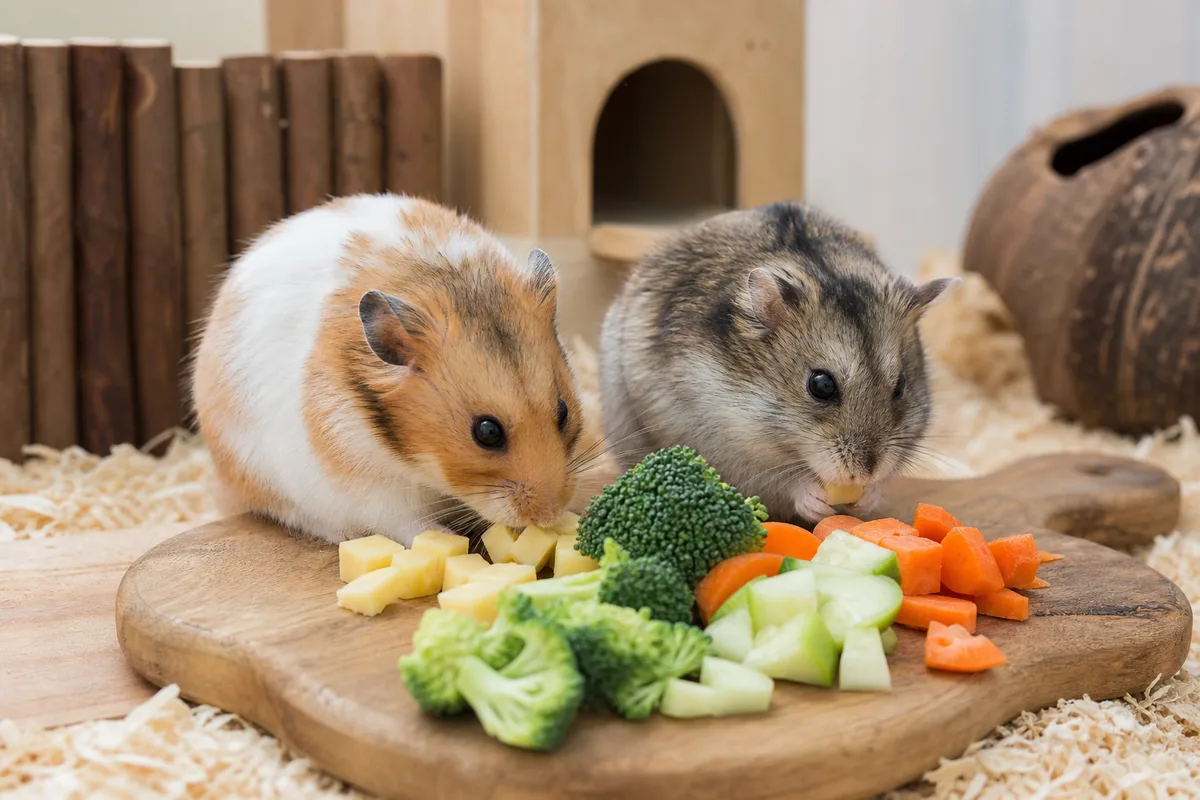
Cheese is one of the more debated foods in small mammal diets, and hamsters sit in a tricky middle ground. They are not strictly herbivores, so small amounts of protein-rich food fit their biology, but their digestive systems were never built to handle dairy.
Wild hamsters eat seeds, grains, insects, and occasional plant matter. Dairy is completely absent from that diet, which explains why most domestic hamsters struggle to process it efficiently.
If you keep other small pets alongside your hamster, reviewing our hamster vs guinea pig comparison shows how differently these two species handle the same foods.
Cheese for Hamsters
- Hard aged cheeses (cheddarSafe
- edamSafe
- gouda) in tiny amountsSafe
- Processed cheeseUnsafe
- cream cheeseUnsafe
- blue cheeseUnsafe
- any cheese with moldUnsafe
- garlic or herb additivesUnsafe
Prep: Cut to a pea-sized piece, room temperature, no rinds or coatings Freq: Once a week maximum Amount: 1 pea-sized piece (approximately 1g) per serving
Nutritional Value in Cheese: Protein Up, Lactose Down with Age
Aged cheeses contain lower lactose levels than fresh dairy because the fermentation process breaks down much of the milk sugar. Cheddar aged over 12 months typically contains less than 0.1g lactose per 100g.
The macronutrient profile of cheddar includes roughly 25g protein and 33g fat per 100g. For a hamster weighing 100-150g, even a pea-sized piece represents a significant caloric load.
- Protein: supports muscle and tissue repair, relevant for growing or recovering hamsters
- Calcium: present in meaningful amounts, aids bone density in small rodents
- Fat content: high enough to cause weight gain rapidly if portions exceed one small piece
- Lactose: lower in aged varieties, still present in amounts that can disturb digestion
The fat content is the second concern after lactose. Hamsters are prone to obesity, and fatty treats contribute directly to that risk.
Owners looking for safer protein alternatives should check what carrots offer hamsters as a lower-risk, nutrient-dense treat option.

Why Lactose Causes Problems for Hamsters
Hamsters produce very little lactase, the enzyme that breaks down lactose. Without sufficient lactase, undigested milk sugar ferments in the gut and produces gas, cramping, and loose stool.
The signs of dairy intolerance appear within 2-4 hours of feeding. Soft cecotropes, wet fur around the tail, or a hunched posture indicate the hamster is in digestive distress.
Gerbils face similar digestive sensitivities to dairy, which is worth knowing if you also keep gerbils alongside your hamster.
Dwarf hamsters (Roborovski, Campbell's, Winter White) have smaller body mass and a faster metabolism than Syrian hamsters. Their tolerance for lactose is even lower, so halve the portion size for any dwarf breed.
Which Cheeses Are Safe and Which to Skip
Not all cheeses carry equal risk. The key variable is lactose content, which correlates directly with how long the cheese has been aged.
| Cheese | Lactose Level | Verdict |
|---|---|---|
| Aged cheddar (12+ months) | Very low (<0.1g/100g) | Caution. tiny piece only |
| Edam / Gouda | Low (0.5-1g/100g) | Caution. very small piece |
| Mozzarella (fresh) | Moderate (1g/100g) | Avoid |
| Cream cheese | High (3-4g/100g) | Avoid |
| Blue cheese / Brie | Variable, plus mold | Never |
| Processed cheese slices | High + additives | Never |
Blue cheese and any soft-rind cheese add a second hazard: active mold cultures. Hamsters have no defense against the Penicillium strains used in blue cheeses, and even small amounts can cause systemic illness.
For a safe weekly treat that poses none of these risks, blueberries for hamsters deliver real antioxidant value without any lactose concern.
How to Prepare and Portion Cheese Safely
Cut a pea-sized cube from a block of aged cheddar. That is roughly 1 gram by weight, which is as much as a hamster should receive in one sitting.
Hamsters naturally hoard food, and cheese left in a burrow will grow mold within 24-48 hours in warm cage conditions. Remove any piece the hamster has not eaten during its active period.
Building a varied treat rotation matters more than any single food. Our guide to apple treats for hamsters covers another safe option to cycle into the weekly schedule.
Signs of Trouble After Feeding Cheese
Most reactions are digestive and appear within a few hours. Catching them early prevents escalation to more serious illness.
- Loose or watery stool: first sign of lactose intolerance, stop dairy and monitor for 24 hours
- Wet fur around tail: indicates diarrhea, which can signal early wet tail
- Hunched posture: sign of abdominal discomfort or cramping
- Reduced appetite: hamster avoids food bowl, possible nausea from fat overload
- Lethargy: unusual stillness during the hamster's active period warrants vet attention
If soft stool appears once and resolves within 12 hours after removing the cheese, no further action is needed. Persistent symptoms beyond 24 hours require a vet visit.
Owners who want to compare how a rodent with different anatomy handles similar challenges should read our complete hamster care guide, as it covers the full diet framework and breed-specific considerations.
Banana at 12g of sugar per 100g is a high-sugar treat that pairs poorly with cheese on the same day, and our guide on banana portions for hamsters explains the diabetes risk for dwarf breeds.
Strawberries at 4.9g of sugar are a better fruit alternative to pair with cheese-free days, and our piece on strawberry treat rules for hamsters covers the dwarf breed portions.
Watermelon on the opposite end of the treat spectrum offers hydration and low sugar, and our guide on watermelon for hamsters covers appropriate portion sizes.
Grapes at 16g of sugar per 100g are the highest-sugar common treat and should never be combined with cheese on the same day, as our piece on grape caution limits for hamsters covers.
For those curious how the same treat question plays out for another common small pet, our guide on guinea pig care covers their very different approach to protein and dairy foods.
Bread in very small amounts is another occasional carbohydrate treat, and our piece on bread treats for hamsters covers the limited circumstances where plain varieties are acceptable.
Sources and references
- Lactose content of dairy foods and its implications for human nutritionNational Dairy Council, 2022
- Nutritional requirements and diet recommendations for Syrian hamstersMerck Veterinary Manual, 2023
- Proliferative ileitis (wet tail) in hamsters: causes and preventionVeterinary Clinics of North America: Exotic Animal Practice, 2021