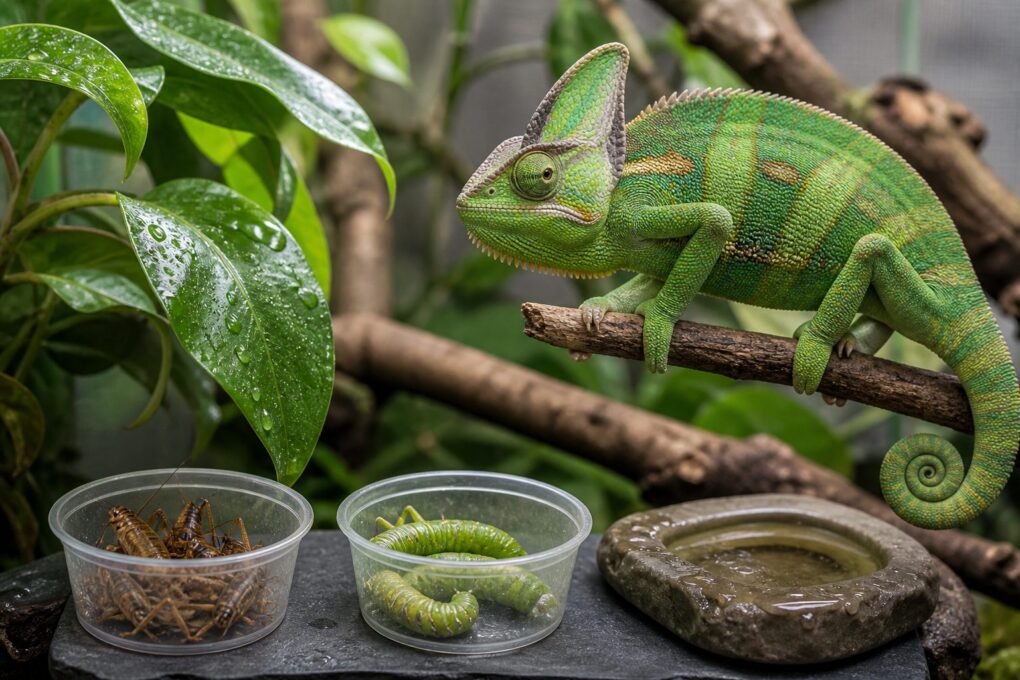
Chameleons require a specialized feeding plan that prioritizes live insect protein over plant matter. If you need the short version from this reptile care hub, think live bugs, proper dusting, and strict portion control.
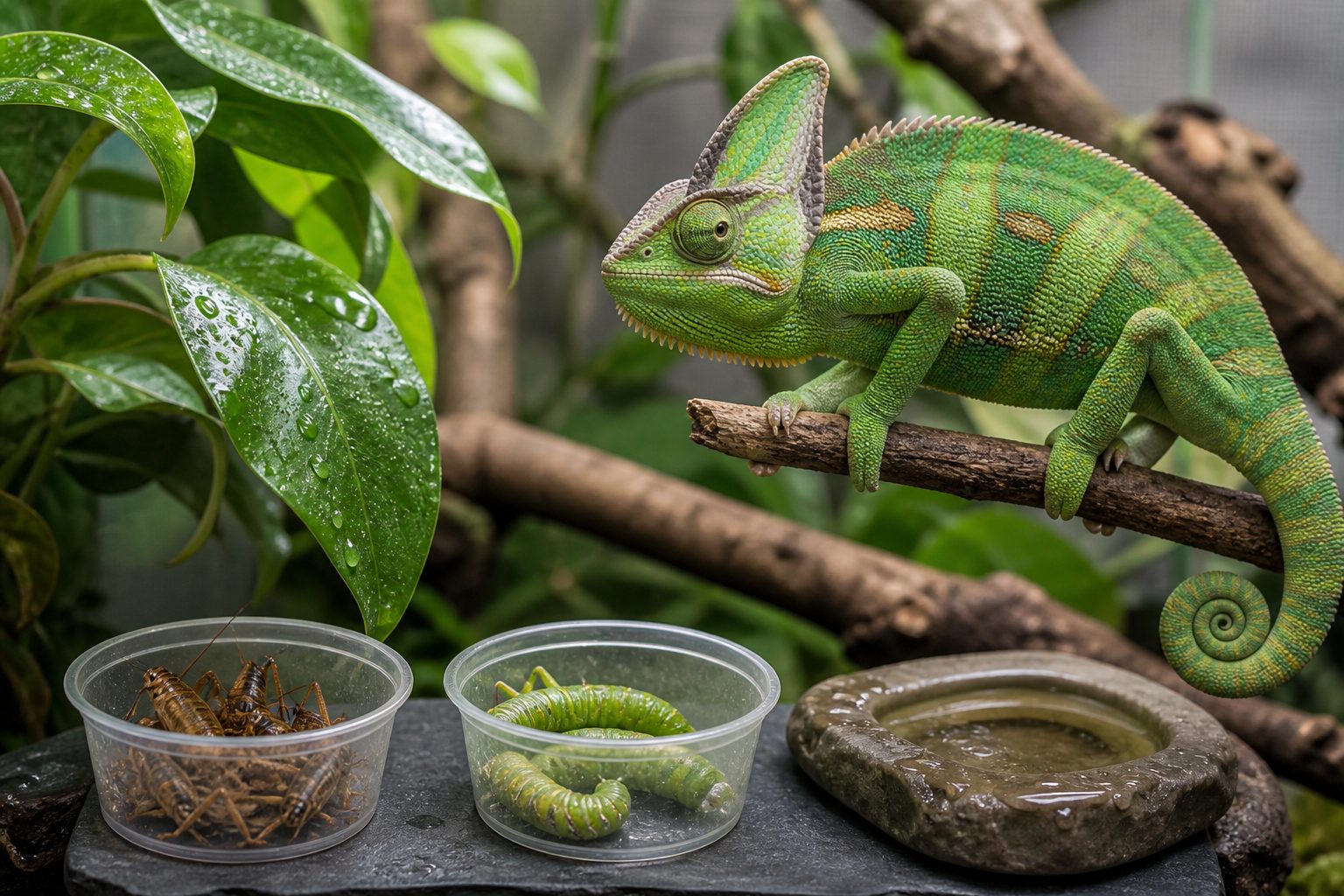
This structure matters because their digestive tracts are adapted to process chitin and animal protein. Feeding them fruit or vegetables as staples can lead to malnutrition and metabolic bone disease.
Our chameleon care guide covers the broader husbandry picture. This page focuses only on what belongs in their food bowl.
What Should Chameleons Eat Each Week?
A healthy chameleon diet relies heavily on live feeder insects rather than stationary food sources. Most pet chameleons will ignore dead prey or plant matter if their instinctual hunting drive is not triggered.
Remember it later
Planning to try this recipe soon? Save it for a quick find later!
The foundation of this diet consists of staple feeders that provide balanced nutrition. Crickets and dubia roaches are the most common choices for daily feeding.
We judge a good chameleon diet by steady growth, bright eyes, and consistent shedding, not by how much fruit they consume.
- Best daily base: gut-loaded crickets and dubia roaches for most species
- What staples do: provide protein, fat, and chitin for digestive health
- What to avoid as the base: wild-caught insects and pesticide-exposed bugs
- Supplement note: always gut-load insects before offering them to your pet
Which Feeder Insects Work Best For Chameleons?
Dubia roaches are often considered superior to crickets because they have a better calcium-to-phosphorus ratio. They also do not climb smooth vertical surfaces, which keeps your enclosure clean.
Crickets remain a staple for many keepers due to their availability and cost. However, they can be noisy and may bite if overpopulated in the enclosure.
Black soldier fly larvae and silkworms are excellent alternatives that offer high calcium content. These feeders are particularly beneficial for breeding females or growing juveniles.
| Insect | Nutritional Profile | Handling Difficulty |
|---|---|---|
| Dubia Roaches | High calcium, low fat | Easy (non-climbing) |
| Crickets | Balanced protein, moderate fat | Moderate (noisy, can bite) |
| Silkworms | Very high calcium | Easy (slow moving) |
| BSFL | High protein, good fat | Easy (self-liming) |
For adult chameleons, a mixed rotation of these staples works better than relying on a single insect type. This variety helps prevent nutritional gaps and keeps the diet interesting.
If you want a cleaner comparison point, look at how bearded dragons handle similar feeders. Bearded dragons are omnivores and eat more vegetables, while chameleons remain strict insectivores.
Which Feeders Should Chameleons Eat Less Often?
Fatty worms like mealworms, superworms, and waxworms should be treated as occasional snacks. These insects have high fat content that can lead to obesity if fed too frequently.
Hornworms are a great treat because they are high in water content and low in chitin. They are particularly useful for hydration during dry periods or hot weather.
We limit fatty worms to once or twice per week to maintain a healthy body weight. Overfeeding these insects can cause liver damage and metabolic issues over time.
- Treat feeders: waxworms, superworms, and mealworms for occasional rewards
- Hydration boost: hornworms provide moisture and easy digestion
- Portion control: limit fatty worms to small numbers per feeding
- Frequency cap: offer treat feeders no more than twice weekly
Some keepers use these high-fat insects to encourage breeding in females or to fatten up underweight adults. However, this should always be done under veterinary guidance.
If you want a cleaner comparison point, look at how leopard geckos manage their fat reserves. Leopard geckos store fat in their tails and can handle slightly more fatty feeders than chameleons.
Can Chameleons Eat Fruit, Vegetables, Or Plants?
Most pet chameleons do not eat fruit or vegetables as a primary food source. Their digestive systems are not designed to process large amounts of plant fiber or sugar.
Some species may nibble on soft fruits like berries or melon in the wild, but this is rare in captivity. Offering fruit bowls often leads to spoilage and bacterial growth in the enclosure.
We recommend avoiding fruit entirely unless specifically advised by a reptile veterinarian. The risk of digestive upset outweighs any potential nutritional benefit.
Vegetables are generally ignored by chameleons or cause impaction if forced. Unlike ball pythons which eat whole prey, chameleons hunt live movement and reject stationary plant matter.
If you want a cleaner comparison point, look at the best beginner reptiles like leopard geckos. These animals are more adaptable to varied diets including vegetables and fruits.
How Do Calcium, Vitamins, And Gut-Loading Fit In?
Calcium supplementation is non-negotiable for chameleons to prevent metabolic bone disease. Dusting insects with calcium powder before feeding ensures adequate intake.
Gut-loading feeder insects transfers nutrients directly into the prey item. This method is more efficient than dusting alone because it provides a broader spectrum of vitamins.
We recommend dusting with calcium once or twice per week for adults. Juveniles may require daily dusting due to their rapid growth rates.
| Life Stage | Calcium Dusting | Multivitamin Dusting |
|---|---|---|
| Juveniles | Daily or every other day | Once per week |
| Adults | Twice per week | Once per month |
| Breeding Females | Daily during egg development | As directed by vet |
Always use a calcium powder without vitamin D3 if your enclosure provides full-spectrum UVB lighting. Excess D3 can lead to toxicity if combined with strong UVB sources.
If you want a cleaner comparison point, look at the bearded dragon tank setup. Proper UVB lighting is just as critical as diet for preventing metabolic issues in both species.
What Foods And Feeders Should Chameleons Avoid?
Wild-caught insects pose a significant risk due to pesticide exposure and parasite transmission. These bugs should never be offered to pet chameleons under any circumstances.
Fireflies contain lucibufagins, which are highly toxic to reptiles. Even a single firefly can cause fatal seizures in a chameleon.
Oversized prey can cause impaction or injury to the digestive tract. Always choose insects smaller than the width between the chameleon's eyes.
- Avoid entirely: wild-caught insects and fireflies
- Size limit: prey must be smaller than the space between the eyes
- Toxic risks: pesticide-exposed bugs and certain houseplants
- Unhealthy staples: frequent feeding of fatty worms or fruit
If you want a cleaner comparison point, look at the leopard gecko tank setup. Proper enclosure hygiene helps prevent bacterial issues that can arise from spoiled or unsafe food sources.
How Much And How Often Should You Feed A Chameleon?
Feeding frequency changes significantly with age and species size. Juveniles require daily feeding to support rapid growth and development.
Adult chameleons typically eat less frequently, often on a schedule of several times per week. Overfeeding adults can lead to obesity and related health complications.
We judge proper portion sizes by the chameleon's body condition and activity level. A healthy chameleon should be alert and active during feeding times.
Ball pythons can handle long gaps between meals, but chameleons do not follow that pattern. Chameleons need smaller live prey on a steadier schedule that matches their age and body condition.